Clients receive 24/7 access to proven business and technology insights, expert guidance, benchmarks, diagnostics and more. Fill out the form to connect with a representative and learn more.
Or Send us an email
enquiry@daiom.in
By proceeding, you agree to the Daiom Terms of Services and Privacy Policy.
- Most brands struggle to track app revenue, often settling for low performance metrics.
- Successful apps require dedicated strategies, budgets, and ownership, not just a copy of the website.
- Retention and engagement tactics must be tailored for app users to drive meaningful revenue growth.
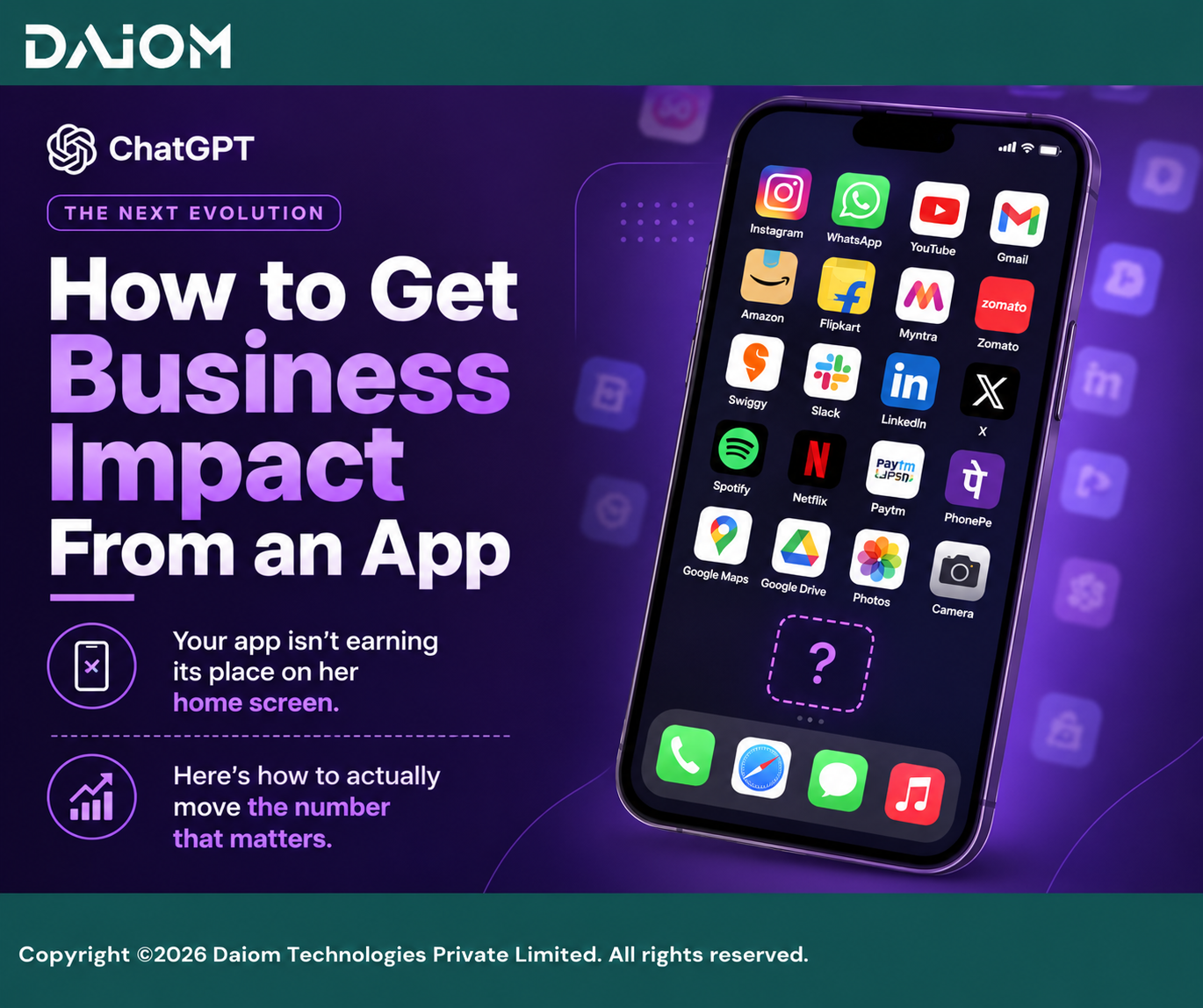
On an average there are approximately 70-80 apps on our phones. Building an app feels like the obvious next step in an omnichannel world. Everyone has one, leadership assumes you need one, and getting it live feels like real progress.
After all, consumers spend 3.5–4+ hours a day inside apps, check their phones nearly 60 times daily, and for 18–24-year-olds, that adds up to ~112 hours a month.
Yet months after launch, most brands still can’t answer a basic question: is our app actually earning its place in those 9–10 apps users open daily, or is it just another icon lost among the ~80 apps on their phone?
Most brands we talk to have an app. Very few of them can tell us what percentage of their D2C revenue actually comes from it.
That gap says a lot. The app usually gets built because a competitor launched one, goes live, gets a push notification budget, and then quietly settles at 8 or 10 percent of D2C revenue while everyone hopes it will grow on its own.
It does not grow on its own. In our work with consumer brands across fashion, beauty, home furnishing and pharma, the brands sitting at 35 to 40 percent app contribution are not the ones with the best-designed app. They are the ones who decided, deliberately, that the app was going to be a channel with its own strategy, its own budget, and its own owner.
There are really two separate problems here, and most brands confuse them. The first is getting the right people to install the app. The second is getting the people to actually use the app and make purchases. They need different tactics, different budgets, and different metrics.
Here is what actually moves the number, in both halves.
Part 1: Driving App Installs
Installs are the input, not the outcome. But you cannot grow app revenue without a base of the right users, and most brands are building the wrong base.
1. Would Anyone Download Your App Without the 10 Percent Off Coupon?
Almost every brand runs the same install play. A sticky banner on the mobile site offering a flat discount for downloading the app.
It does drive installs. That is the trap. The installs look good in a monthly report, and then you check the 30-day retention number and find that most of those users opened the app once, used the coupon, and never came back.
Discount-led installs bring in the customer who was going to buy anyway, and you have just paid her to switch channels. That is not incremental revenue. That is the margin you gave away for a vanity metric.
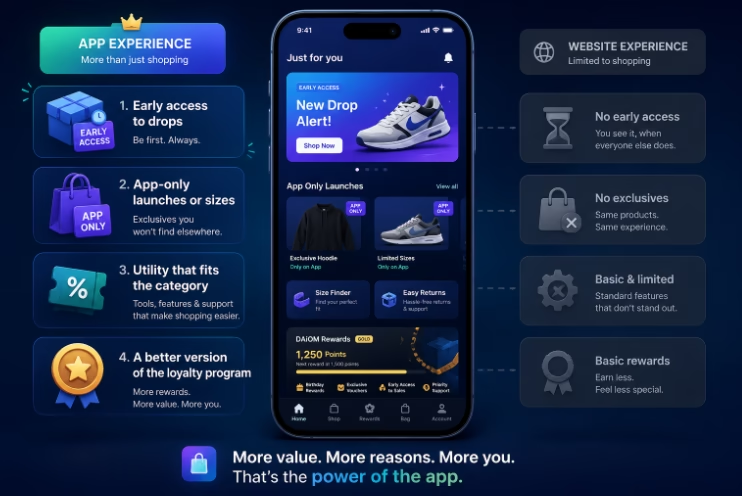
What holds up better over time is giving the app something the other channels genuinely do not have:
Early access to drops. If new products go live on the app 12 or 24 hours before the website, the customer who cares about your newness has a real reason to be there.
App-only launches or sizes. Even a small subset of exclusive inventory changes behaviour.
A better version of the loyalty program. Points visible on the home screen, tier progress, and redemption that takes two taps instead of a support email.
Utility that fits the category. A skincare brand can hold her routine and reorder timing. An apparel brand can hold her fit and size history. A grocery brand can hold her recurring basket.
One apparel brand we advised was spending a meaningful share of its performance budget on install campaigns while its app retention sat well below its own website repeat rate. We paused a portion of that spend and moved the launch calendar so that every Friday drop went app-first. Installs slowed slightly. Revenue per install went up, which is the number that actually pays for anything.
Ask yourself a simple question about your app: if you removed the discount tomorrow, would anyone still open it?
2. Are You Asking for the Install Where Intent Is Highest?
Most brands ask for the install at the worst possible moment, which is the first three seconds on the mobile site, before the customer knows anything about you.
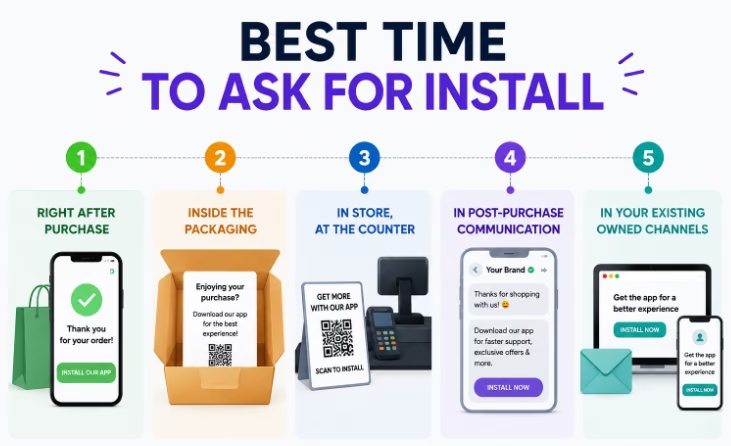
The best moment to ask is when she has already decided she likes you. That means:
Right after purchase. The order confirmation screen is the single highest-intent moment you will ever get. She has just paid you. Ask there, and frame it around tracking her order.
Inside the packaging. A QR code on the box or the invoice, tied to a genuine reason like a warranty registration, a how-to-use guide, or her loyalty points.
In store, at the counter. If you have physical retail, your staff can drive more quality installs than a month of paid campaigns. Give them a simple ask and a reason for the customer to say yes.
In post-purchase communication. The delivery update email and WhatsApp message get opened far more than your promotional ones. Put the install prompt there.
In your existing owned channels. Newsletter footer, WhatsApp broadcast, Instagram bio and story highlights.
The pattern is the same everywhere. Ask after value has been delivered, not before.
3. Can People Even Find Your App When They Look for It?
This one is unglamorous and constantly ignored. A meaningful share of installs comes from people searching your brand name in the Play Store or App Store, and most brands have never optimised for it.
Worth checking:
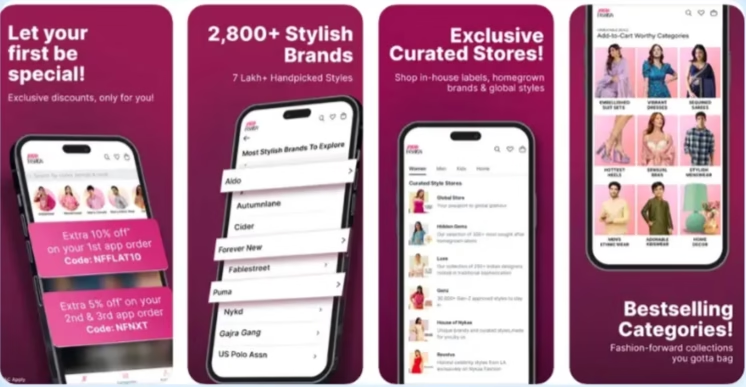
Your store listing. Title, subtitle, and description should carry your category keywords, not just your brand name.
Your screenshots. These are the actual conversion asset on the store page. Most brands upload five untouched product screens. The brands that convert well use screenshots that communicate the benefit of the app itself.
Your ratings and reviews. Rating directly affects both store ranking and install conversion. Prompt for the rating after a good experience, like a delivered order, not randomly on app open.
Your app size and load time. On a mid-range Android phone on patchy data, a heavy app loses installs before it ever opens. This matters more in India than most global playbooks admit.
4. What Happens in the First 60 Seconds After the Install?
Between the download and the first purchase sit two moments that quietly decide whether that install was worth anything: whether she logs in, and whether she lets you contact her again. Most brands treat both as afterthoughts.
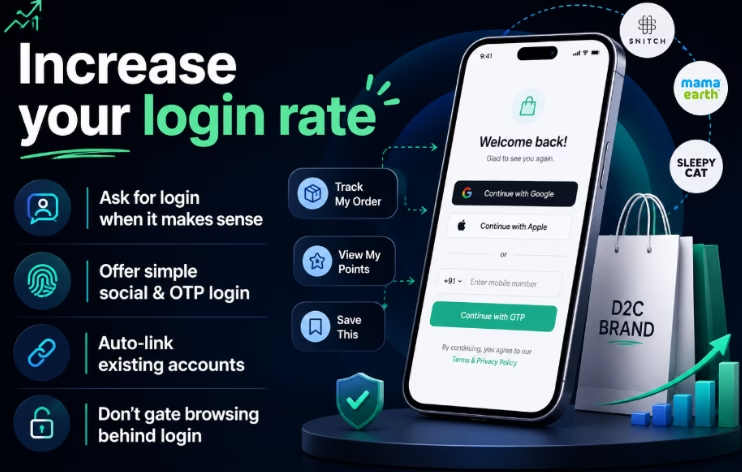
Login rate. If she browses as a guest, you have an install with no identity attached. No purchase history, no personalisation, no way to connect her app behaviour to the customer she already is on your website. The app’s entire advantage disappears.
What moves this number:
Ask for the login when there is a reason to. When she taps “track my order,” “view my points,” or “save this,” logging in becomes something she wants, not something you demand.
Offer social and OTP login. Every additional field is a drop-off. Phone-number OTP is still the lowest-friction option for Indian users.
Auto-link her existing account. If the phone number matches an existing web customer, recognise her.
Never gate browsing behind a login wall. Let her look first. The login should come at the moment of value, not the moment of arrival.
Notification opt-in. On iOS this is a single, permanent decision. Ask badly, get declined, and you have lost your cheapest retention channel for the life of that install.
Use a pre-permission screen first, so declines land on your screen (reversible) rather than the system one (not)
Keep the timing correct, right after her first order, framed around delivery updates
Be specific. “Turn on notifications” is a request. “Get notified when your size is back” is an offer
A brand with 100,000 installs, a 40% login rate and a 35% opt-in does not have 100,000 reachable users. It has about 14,000. That gap never shows up in an install report, and it is the most common reason app revenue stalls at 10 percent.
Part 2: Driving App Revenue
This is where the actual money is, and where most of the opportunity sits untouched. Every point below is about customers who already have your app installed.
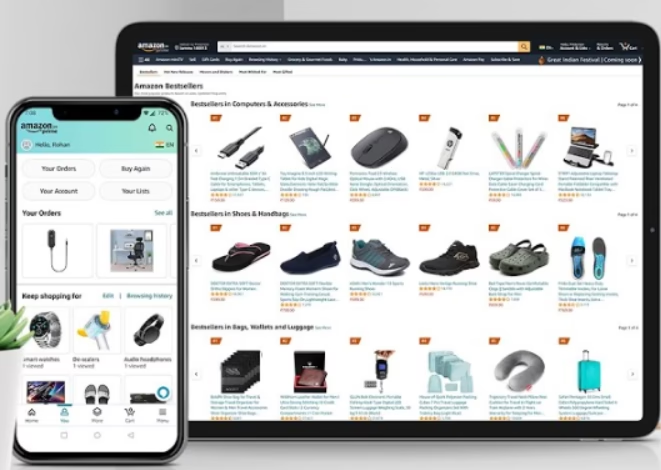
5. Are You Building an App, or Just Wrapping Your Website in One?
This is the first thing we look at when a brand tells us their app is underperforming, and nine times out of ten it is the whole problem.
The app has the same homepage as the website. The same category structure. The same banner carousel that nobody scrolls past the second slide of. The customer opens it, sees exactly what she saw in her browser, and cannot think of a single reason to open it again next week.
Your app landing page has to work harder than that. It should feel like it was updated this morning, not last quarter. That means the ongoing sale is the first thing she sees, this week’s new arrivals sit above the fold, her app-exclusive offer is visible without hunting for it, and the whole page looks different from what it looked like the last time she opened it. A landing page that changes gives her a reason to check back. A static one teaches her there is nothing new to find.
An app earns its place on someone’s home screen by doing something the website cannot. That usually means:
Speed that is obviously better. Not marginally faster, but the kind of difference where the customer notices she is not waiting. Cached product images, no repeated login, saved payment methods, one-tap checkout.
A home screen built for a returning customer, not a new one. Your website homepage has to convince a stranger. Your app homepage is talking to someone who already bought from you twice. Those are completely different jobs.
Fewer steps to the thing she actually came for. Reorder, track order, and continue where she left off should be visible without a single tap.
If your app and your mobile website are functionally the same product, you do not have an app problem. You have a positioning problem.
6. Your App Knows Things Your Website Never Will. Are You Using Any of It?
Your app has a persistent identity. You know who she is every time she opens it, without a login prompt, without a cookie, without guessing. You can see how often she opens it, what she browses, what she puts in her cart and abandons, and how long she waits before buying.
Most brands collect all of it and then send everyone the same 11 AM push notification.
The brands that grow app revenue use that data in three specific ways:
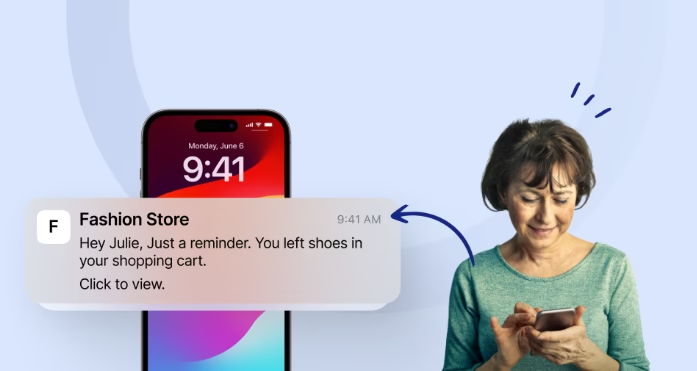
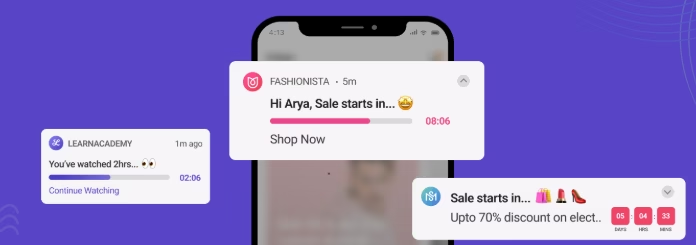
Segmented notifications instead of broadcast ones. A customer who browsed three products yesterday and did not buy needs a different message from someone who has not opened the app in 45 days. Sending both the same “New arrivals are live” is how you train people to swipe your notifications away.
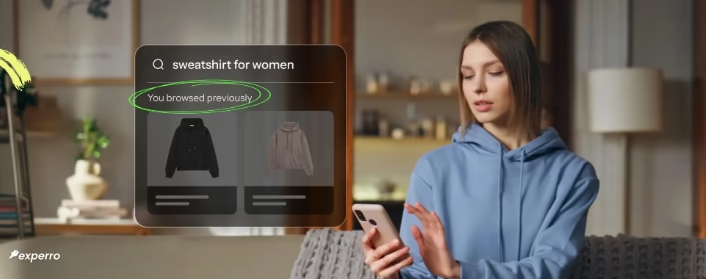
Personalised merchandising on the home screen. Category order, recommended products, and even the hero banner can respond to what she actually looks at. This does not need a complicated recommendation engine to start. Even simple rules based on last-viewed category beat a static homepage.
Timing based on her behaviour, not your calendar. If she historically buys every 45 days, the reorder nudge should land around day 38, not on the first of the month with everyone else.
7. Why Is Your Most Loyal Customer Still Checking Out on the Website?
Here is a pattern we see constantly, and it is almost always fixable.
The brand has a genuinely loyal repeat customer. She has bought it six times in a year. She has the app installed. And she still completes most of her purchases on the mobile website, because that is the link that arrives in her WhatsApp message, her email, and her Instagram bio.
Every channel you own is quietly pushing her back to the website.
None of this is exciting work, but it moves the number:
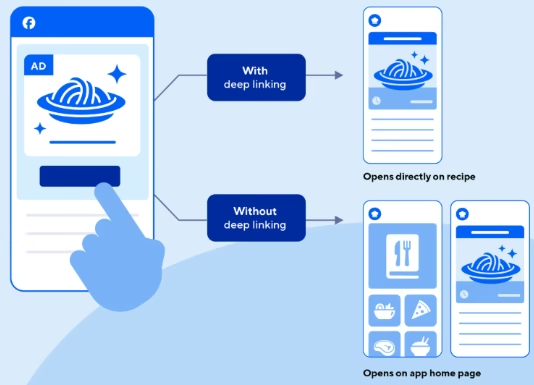
Deep link everything. Every email, every WhatsApp message, every SMS, and every ad should open the app if it is installed, and land on the exact product, not the home screen.
Check what your Instagram and WhatsApp journeys actually do. In most audits we run, at least one high-traffic journey is dropping app users into a browser for no reason.
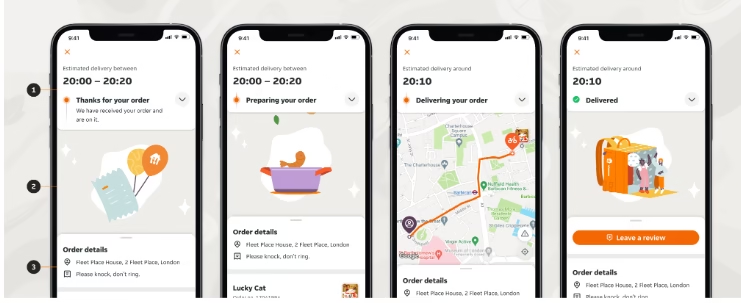
Make the app the default for anything post-purchase. Order tracking, reviews, returns, exchange requests, and support should all live properly inside the app. Post-purchase is when she opens your brand most often, and that traffic is free.
Do not force re-login. It sounds obvious. It is also the single most common reason a returning app user abandons and goes back to the browser where she is already signed in.
Shifting existing loyal customers from web to app is the cheapest app revenue available to any brand, because you are not paying to acquire anyone. You are just stopping the leak.
8. Are You Growing Basket Size, or Just Counting Orders?
Even if your app order count is healthy, app revenue stalls when AOV sits flat. And the app is actually the easiest place to move it, because you know exactly who is shopping.
Where we usually find room:
Bundles and routines instead of single products. If she is buying a face wash, the app already knows whether she has ever bought the moisturiser. Show the pair, not a generic cross-sell grid.
Reorder and subscription flows. For any category with a predictable repurchase cycle, a saved basket she can reorder in one tap is worth more than any campaign.
Cart-level nudges that are specific. Free shipping thresholds and tier upgrades work far better when the app tells her exactly how much more she needs to add.
Checkout friction. Saved addresses, saved payment methods, and a genuine one-tap flow. Every extra field between her and the order is revenue leaving the building.
In-app search. For most brands, customers who use search convert at a much higher rate than those who browse. Poor search results is one of the most expensive silent problems in any app.
Part 3: The Thing That Makes Both Work
9. Who Actually Owns App Revenue at Your Company?
This one is not a tactic. It is the reason none of the points above get done.
In most brands we work with, the app falls into a gap. Performance marketing is measured on installs. CRM or retention owns the notifications. Tech owns the build and the release cycle. And app share of revenue? That belongs to nobody in particular.
When nobody owns the app share of revenue, it becomes everyone’s third priority. The app gets whatever attention is left over after the website and the marketplaces have been handled.
What we recommend instead:
Name an owner. One person accountable for app share of D2C revenue, with the authority to influence the roadmap.
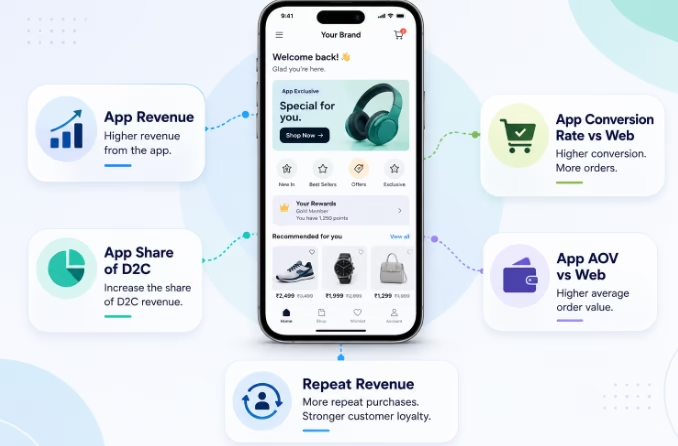
Report it weekly, next to your other channels. App revenue, app share of D2C, app conversion rate versus web, app AOV versus web, and 30-day retention (repeat purchase). Five numbers, every week, in the same place your other channels get reviewed.
Give the app its own quarterly roadmap. Not a list of bug fixes carried over from the website backlog, but actual channel goals.
Judge it on the right metric. Installs are an input. Share of revenue and retention are the outcomes. Reward the second set.
The brands that treat the app as a real channel, with a real owner and a real target, tend to compound. The ones that treat it as a project that finished at launch stay stuck around 10 percent and keep wondering why.
10. So What Does a Good App Actually Look Like?
The honest answer is that it depends heavily on your category and repeat rate. A skincare or grocery brand with a 45-day repurchase cycle should expect a much higher app contribution than a furniture brand where a customer buys once every four years.
But as guiding principles:
App conversion rate should be visibly better than mobile web, not equal to it.
App AOV should be higher, because personalisation and loyalty both push basket size up.
30-day app retention should be better than your overall repeat rate, or your install mix is wrong.
App share of D2C revenue should be growing every quarter, even slowly.
If any of those are flat, the app is not underperforming because of design. It is underperforming because it is being treated as a smaller website instead of your highest-intent channel.
That is a strategy problem, and strategy problems are the fixable kind.
Working through your own app or omnichannel strategy? Reach out at alibha@daiom.in. For more brand deep-dives and retention insights, follow DAiOM and subscribe to our newsletter.
- Most brands struggle to track app revenue, often settling for low performance metrics.
- Successful apps require dedicated strategies, budgets, and ownership, not just a copy of the website.
- Retention and engagement tactics must be tailored for app users to drive meaningful revenue growth.
Enter your details below to get instant access to [enter lead magnet name here]
We process your personal data as stated in our Privacy Policy. You may withdraw your consent at any time by clicking the unsubscribe link at the bottom of any of our emails.