




There was a time when the run-up to 15th August looked like planning a flag hoisting and picking which patriotic film to watch that evening. Now, for most D2C brands, it looks like a month-long sprint: banner calendars locked in June, countdown timers live by July, and “biggest sale of the season” emails hitting inboxes weeks before the actual holiday.
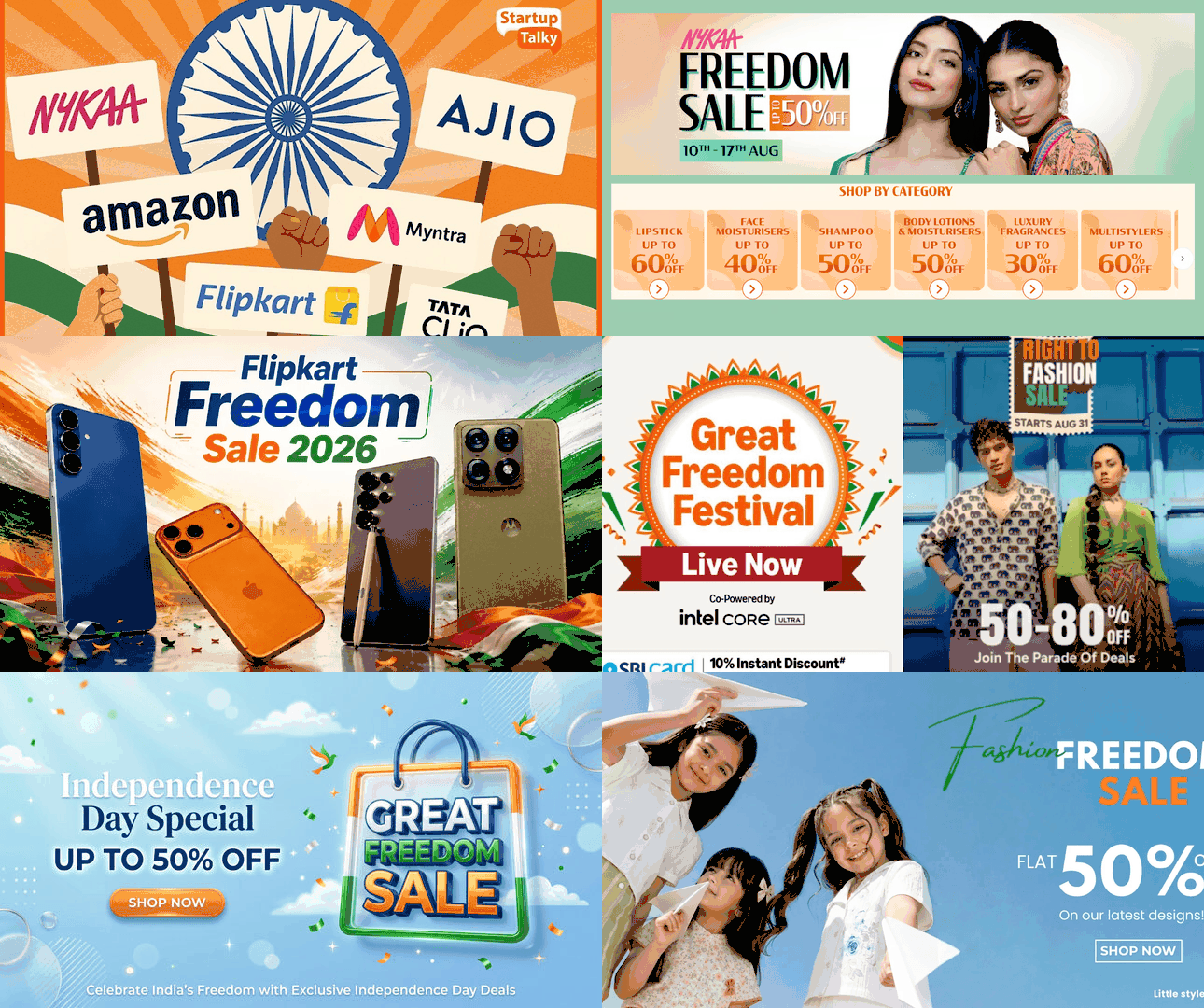
This is India’s version of Black Friday, and D2C brands have already built their entire festive playbook around it. Consumers no longer wait for 15th August either. They wait for the sale. By the time the flag actually goes up, a large chunk of the year’s festive revenue has already been won or lost.
For marketers and brand leaders, that shift matters more than the patriotism angle ever did. This is now a predictable, high-stakes revenue event, the same way Black Friday is in the US, and it deserves the same level of planning, channel strategy, and post-mortem analysis. Fynd’s three-year Freedom Sale Report gives us exactly that lens, tracking 2024 through 2026 across online, offline, platform, city, and state.
Here are the five things in it that matter most if you’re the one deciding where ad spend, inventory, and pricing go next year.
1. Online GMV: Better Than Last Year, Still Behind the Peak
Verdict: Improved vs. 2025, but not fully recovered.
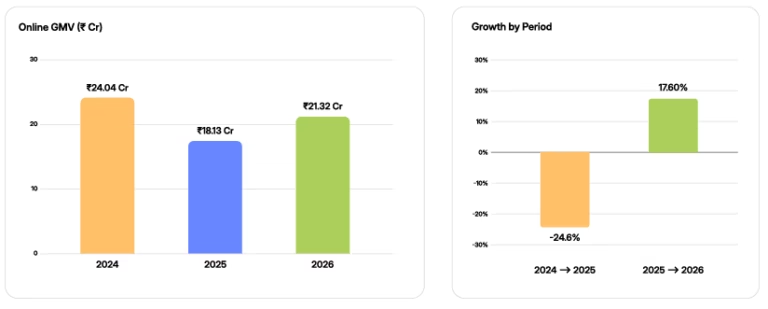
Online sales during the Independence Day window fell sharply in 2025, down 24.6% year-on-year, then rebounded 17.6% in 2026 to reach ₹21.32 crore. That’s real, measurable recovery. But it’s still 11.3% short of where online GMV stood in 2024.
For a marketer, the framing matters here. So this isn’t a straight-line growth story. It’s a recovery story, and recovery stories are always more interesting than growth stories, because they force you to ask what actually broke and what actually got fixed. The compound growth rate across the three years works out to minus 5.8% a year. That’s a sobering number for anyone who assumed the sale season only ever gets bigger.
2. The Platform Battle: Myntra Is Still Winning, But Losing Ground Fast
Verdict: Worse for Myntra, significantly better for Flipkart.
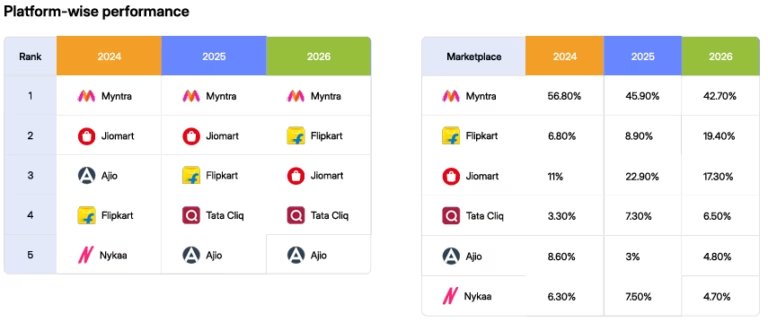
Myntra has topped every single year of this data. But its share of the online sale has fallen from 56.8% in 2024 to 42.7% in 2026, a full third of its dominance handed over to competitors in three years, even while it stayed at #1.
The real movement is at #2. Flipkart went from a distant 6.8% share in 2024 to 19.4% in 2026, overtaking JioMart, growing over 156% year-on-year. That growth wasn’t confined to fashion. It signals the festive sale broadening into general merchandise and electronics, categories Flipkart is naturally stronger in.
What this means for planning: if your media budget for next year’s sale is still weighted the way it was two years ago, with Myntra treated as the default and everything else as an afterthought, that allocation is now measurably out of date.
3. Tier 3 Cities: The Only Segment Fully Recovered
Verdict: Meaningfully better, and the standout finding of the whole report.
This is the number that should reshape how brands think about festive demand. This is the finding that changed how I think about festive shopping in India altogether. Tier 3 markets supplied nearly two-thirds, 62.4% to be precise, of the entire 2026 recovery in online sales. And Tier 3 is now the only tier that has actually returned to its 2024 levels. Tier 1 remains 18.1% below where it stood three years ago, and Tier 2 is down 22.4%.
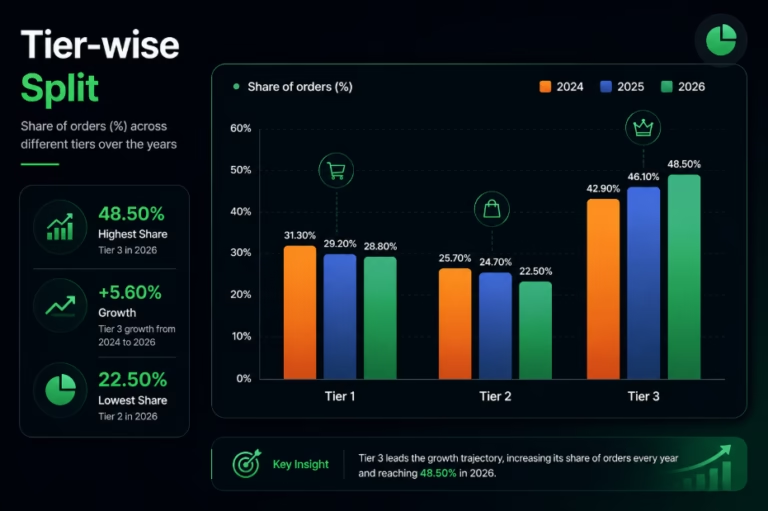
The metros brands typically plan around are still catching up. The smaller cities never really left.
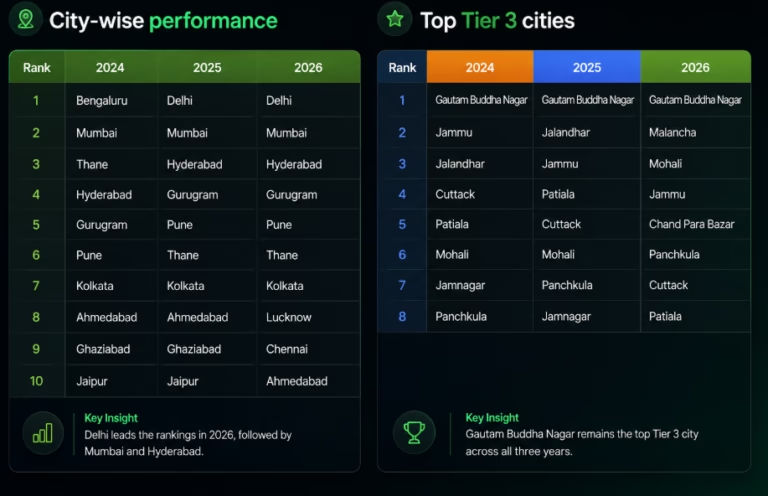
Inside that Tier 3 number sits a genuinely useful signal for anyone managing inventory: Malancha, a town in West Bengal, jumped from essentially zero recorded sales in 2025 to the #2 Tier 3 spot in 2026. At the state level, West Bengal climbed from the 9th largest state by online sales in 2025 to 5th in 2026, a 64.8% jump, the single largest state-level increase of the year. Delhi has also held the #1 city position since 2025, overtaking Bengaluru.
What this means for planning: demand forecasting and warehouse allocation built primarily around metro assumptions are now missing where a majority of the recovery is actually happening.
4. Offline Retail: The Biggest Swing in the Entire Report
Verdict: Substantially better, and the sharpest reversal year-on-year.
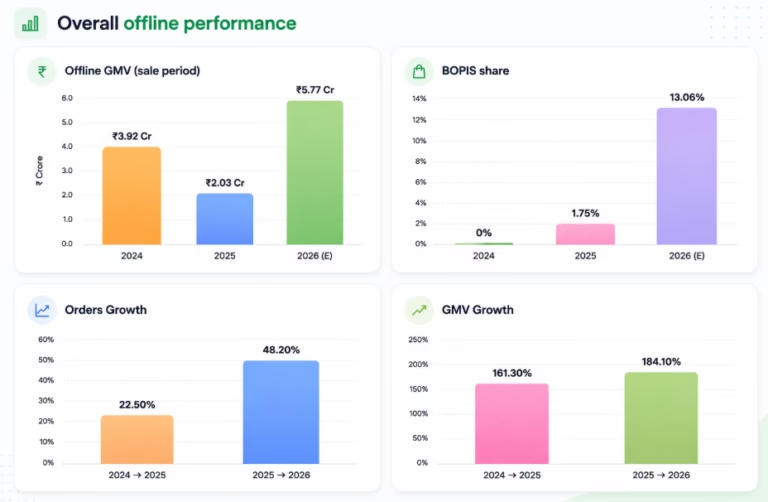
I’ll admit I went into the offline numbers expecting a slow, sad decline, the usual narrative about footfall dying as everyone moves to apps. What I found instead was the opposite. Offline GMV during the sale period actually collapsed even harder than online did in 2025, falling from ₹5.77 crore in 2024 down to ₹2.03 crore, before rebounding an enormous 184.1% in 2026. Orders followed a similar pattern, growing 22.5% between 2024 and 2025, then surging 48.2% the following year.
What’s driving people back into stores during a sale that was supposedly built for online shopping? Part of the answer, I think, is something the report calls out directly. Stores offer something no app can, the ability to touch a product and walk out with it the same day, and that matters more during a festive sale than at any other time of year, when everyone wants their purchase to feel immediate.
BOPIS, buy online pick up in store, tells a similar story. It went from virtually no adoption in 2024 to 13.06% of offline orders by 2026. That’s not a niche checkout option anymore. That’s a meaningful share of in-store revenue, and honestly, it maps onto exactly what I do myself. I’ll order online for the certainty of stock, then walk in to collect it rather than wait for a delivery slot.
What this means for planning: if store footfall and staffing plans for the sale period haven’t scaled with this recovery, that’s very likely leaving revenue on the table during the exact window it matters most.
Interestingly, Bangalore took the top spot for offline shopping in 2026 after sitting at second or third place in the two years before that, which is the single biggest shift in the offline city rankings across the whole report. Kolkata, meanwhile, held a top-three offline position in all three years, which lines up neatly with West Bengal’s strength in the state-level numbers.
5. The Channel-Blending Problem: Worse for Brands, Not for Shoppers
Verdict: Getting worse for brands that haven’t fixed pricing consistency.
This is the insight with the most direct, immediate cost attached to it. By 2026, 48.7% of shoppers were researching or comparing across two or more channels before buying, up sharply from a third of shoppers in 2024. Multi-channel comparison isn’t a fringe behaviour anymore. It’s close to the norm.
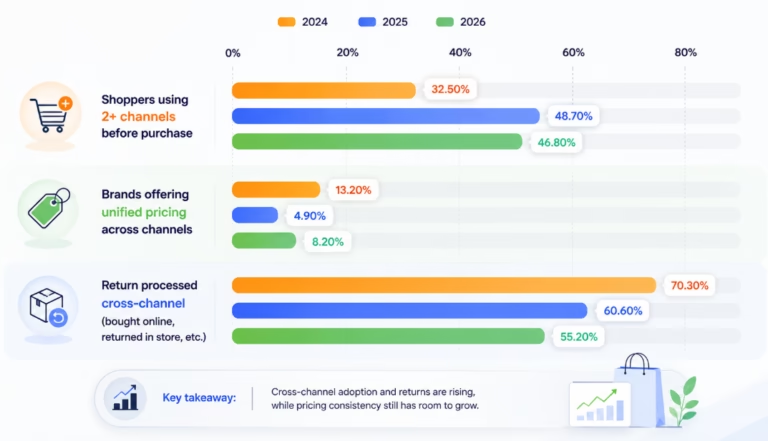
Brands have not caught up. Only 8.2% offer consistent pricing across channels. Every shopper comparing prices across two or three places is likely to hit a mismatch, and that mismatch either costs the brand the sale, or costs it margin scrambling to match a price it never intended to offer.
Cross-channel returns reinforce the same point: over half of all returns now involve buying in one channel and returning through another. The line between “online customer” and “store customer” has effectively disappeared. Most brands’ internal systems still treat them as two separate people.
What this means for planning: pricing consistency is one of the few items on this list that’s entirely fixable before the next sale cycle, and currently the least fixed.
6. So What Should Brands Actually Take Away From This?
Line these five up together and a single theme runs through them: the brands winning this sale season are not the ones offering the steepest discount.
If there’s one thing this three-year lookback makes clear, it’s this:
- Betting everything on one channel, one city tier, or one marketplace is a losing strategy going into next year’s sale.
- Myntra is still winning, but its lead is shrinking every year.
- The real momentum isn’t in the big metros anymore. They’re still the largest markets in absolute terms, but growth is coming from places like Noida, Kolkata, and small pockets in West Bengal that most brands aren’t watching closely enough.
- The customer herself has stopped thinking in channels altogether. She’s just trying to get the best version of what she wants, wherever she happens to find it first.
Looking at these numbers now, it’s clear about a system, which is quietly built over three years of festive sales, that got very good at catching people exactly at the right moment. The brands that understand that system, rather than just discounting harder, are the ones who are going to own the next one.