



Something shifted this year, and I don’t think most brands have fully caught up to it yet.
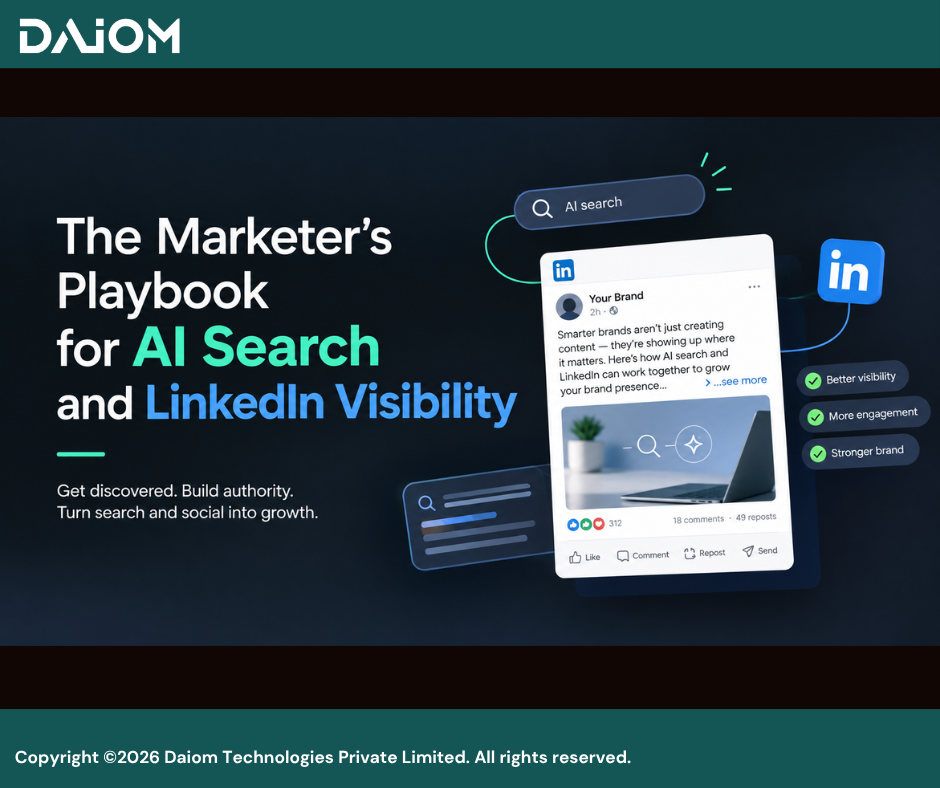
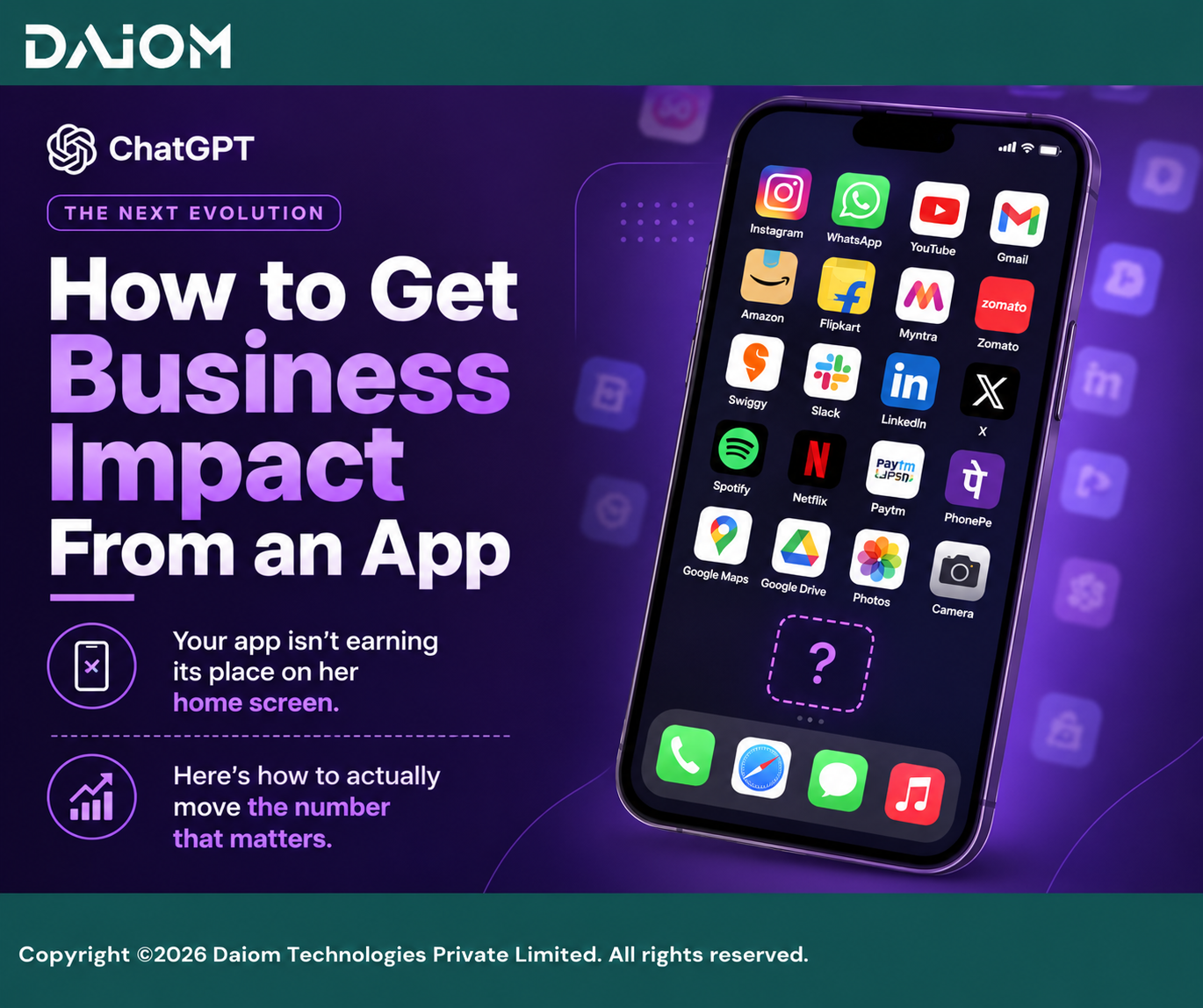
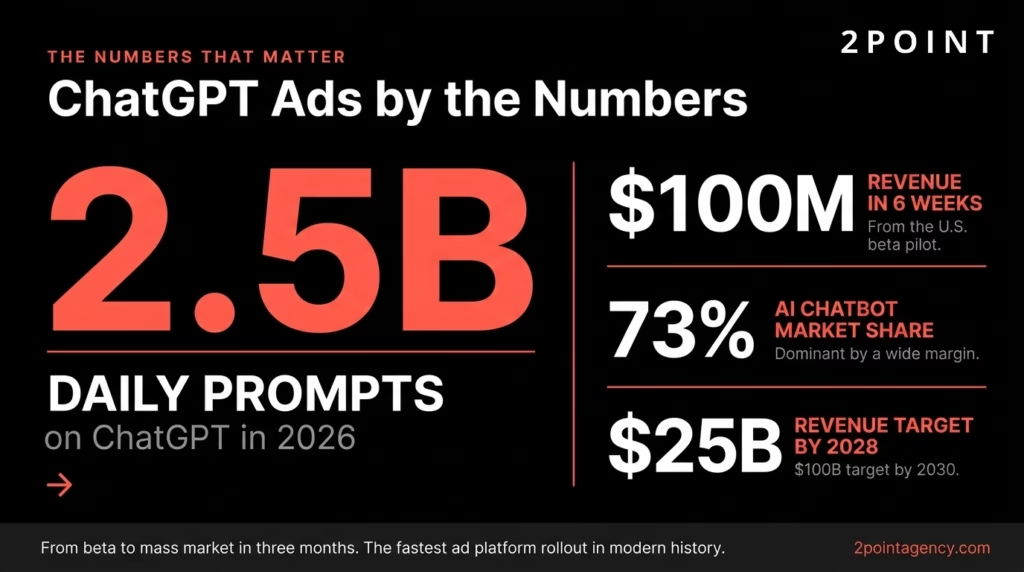
For the last decade, “search” meant Google. You optimized a page, you ranked, you got a click, and that click was the whole game. ChatGPT is breaking this model as more people are turning to it every single day, not just for quick answers, but for the kind of things that used to send someone straight to a Google search. It’s faster, it’s conversational, and it just gives you the thing you asked for instead of ten blue links to sort through yourself. ChatGPT alone now sees approximately 2.5 billion prompts a day, and a growing share of those are queries that would have been a Google search two years ago.
1. The Problem: We’re Everywhere, and Somehow Still Invisible
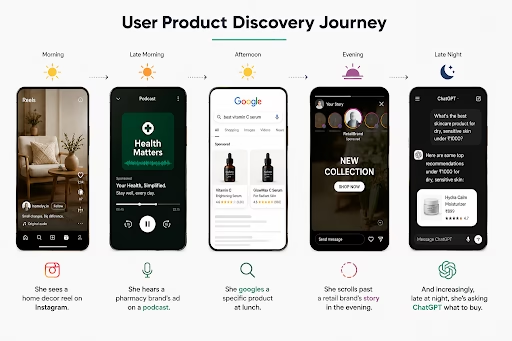
Here’s what a typical week looks like for a customer of almost any brand I work with. She sees a home decor reel on Instagram before she’s even had her coffee. She hears a pharmaceutical brand’s ad on a podcast during her commute. She googles a specific product at lunch. She scrolls past a retail brand’s story in the evening. And increasingly, late at night, she’s asking ChatGPT to just tell her what to buy.
The problem for brands is what is now being called the zero‑click search issue. Someone asks an AI a question, gets an answer inside the chat and never clicks through to a website at all. The traffic that used to land on our pages simply does not happen anymore when our content is the thing the AI is quoting from.
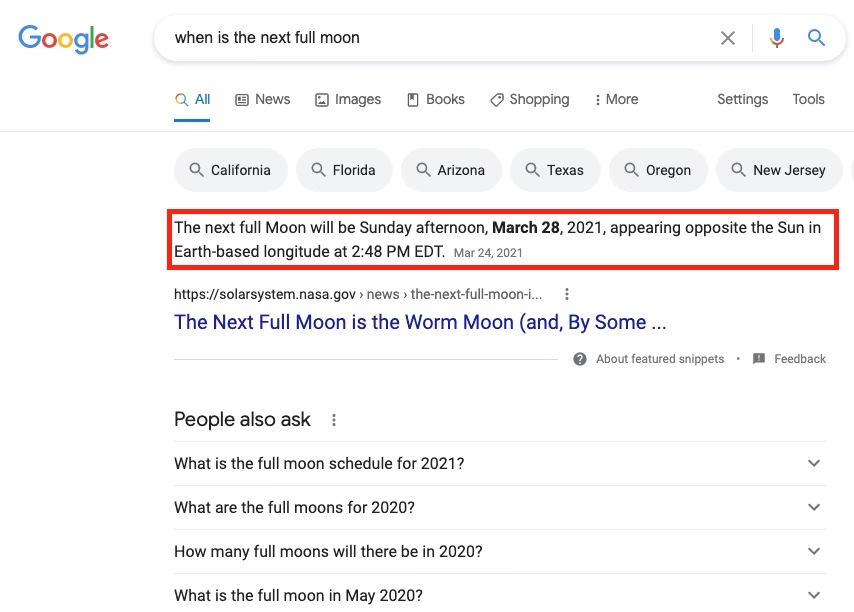
I’ve watched organic visibility numbers dip across brands I work with over the last few months, not because the content got worse, but because the destination for that content moved. And the tool driving most of this shift, by a wide margin, is ChatGPT. It’s the one every brand I talk to needs to take seriously first, simply because of scale and behavior. It’s become the default “just ask it” tool for a huge number of people, and it’s only getting faster and more embedded into how people search day to day.
2. Where the Money Is Going: My Experience With ChatGPT Ads
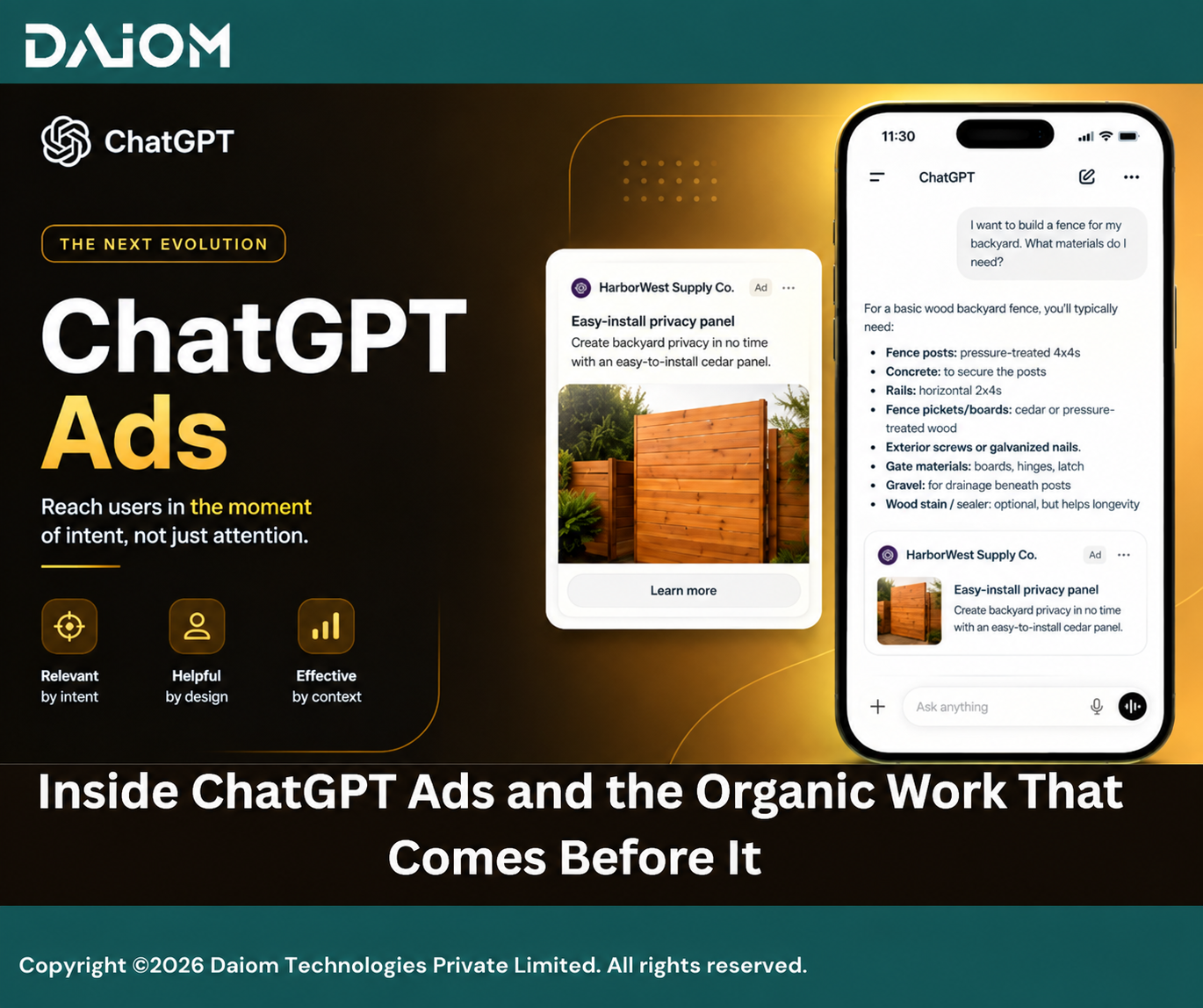
Here’s where it gets genuinely interesting for anyone in marketing right now. ChatGPT has rolled out its own advertising product, and I’ve actually gone in and used it myself over the past few months, so I want to walk through what that experience is actually like, not just what the press release says.
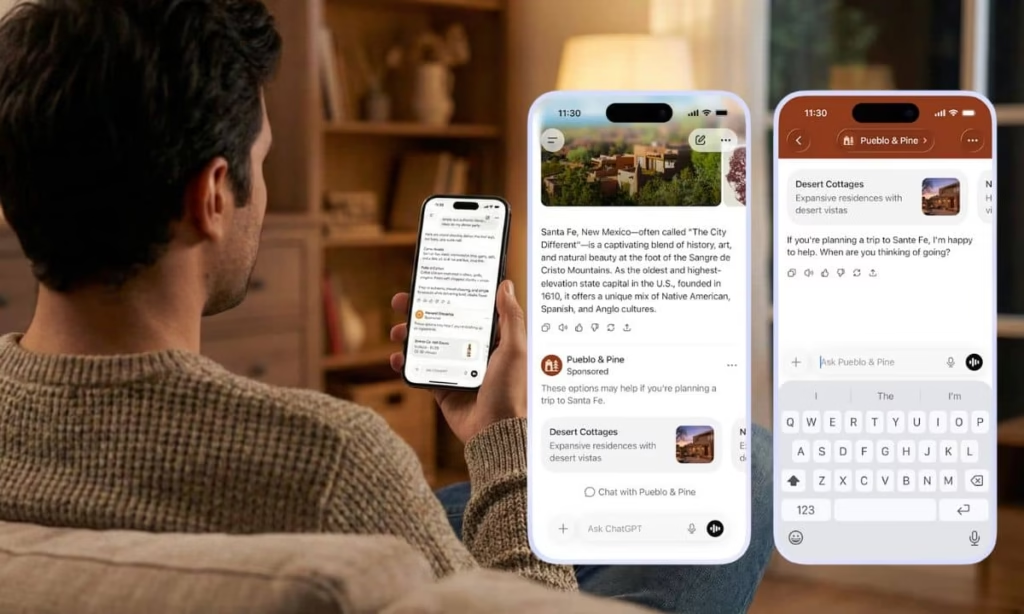
ChatGPT Ads currently show up as a clearly labeled sponsored card that appears just below the AI’s answer, matched to the context of your conversation rather than interrupting it. They’re only visible to users on the Free and lower-cost paid tiers (like Go) right now, while subscribers on Plus, Pro, Business, and Enterprise stay ad-free. It’s a genuinely native placement, not a banner, so it feels more like a suggested next step than a traditional ad.
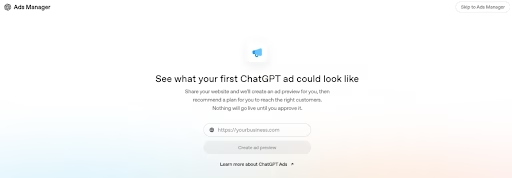
Setting it up came down to three steps for me.
- First, connecting the account and getting the basic brand and product information in.
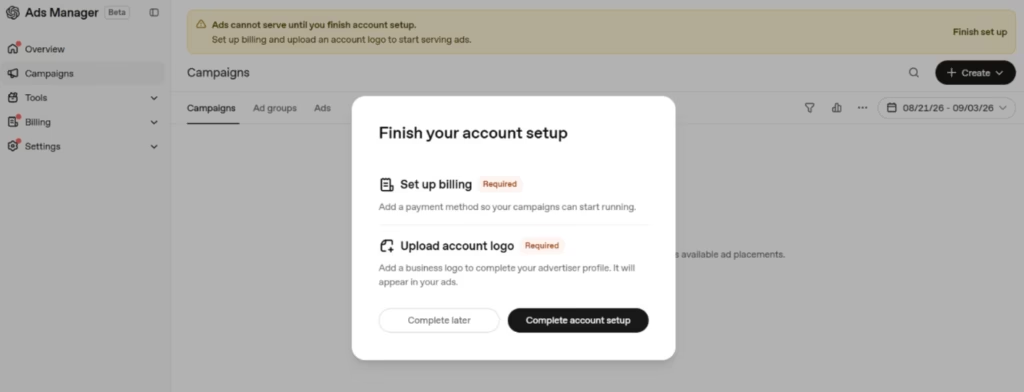
Second, choosing the ad format and audience context, essentially telling the system what kind of conversation your ad should show up alongside.
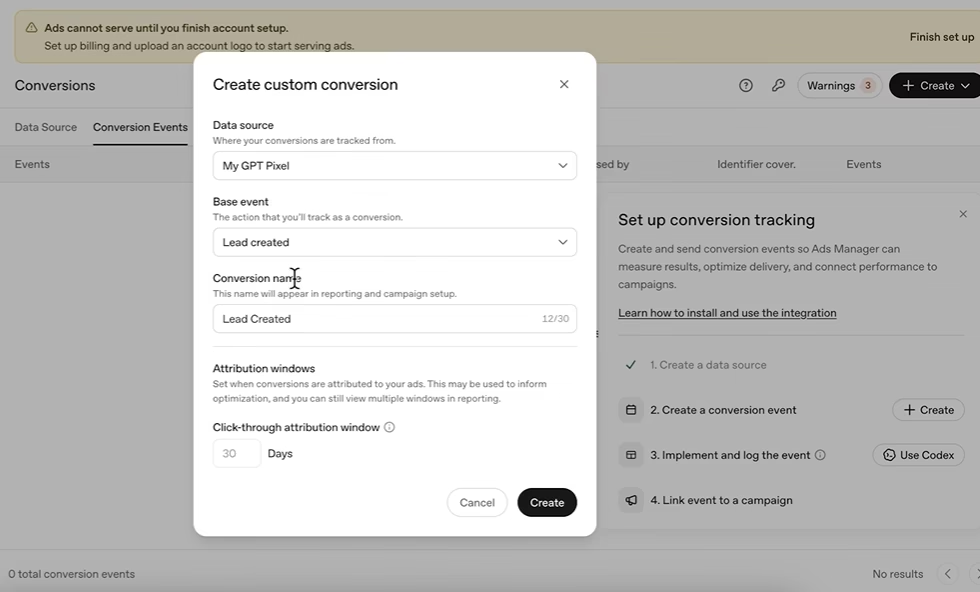
ChatGPT Ads also lets you build audience segments the same way you’d expect from any modern ad platform, based on context, interests, and the kind of conversations people are actually having. Instead of guessing who might be interested, you can target people whose queries or chat context signal genuine intent around your category, which tends to feel far more relevant than broad demographic targeting. I found the segment builder simple enough to set up quickly, but specific enough that the audience actually felt aligned with what I was advertising, rather than just a wide net.
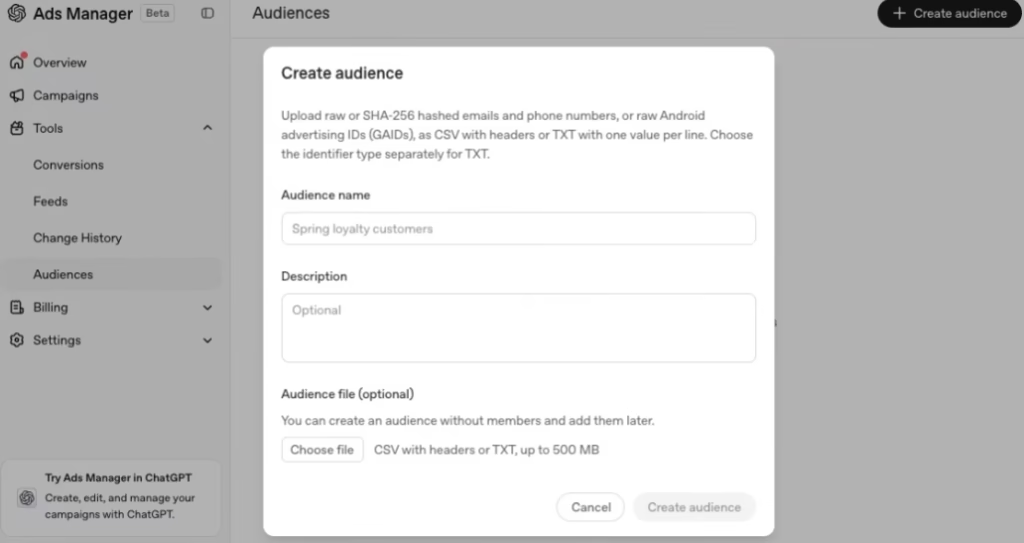
Third, setting your bid and budget and launching.
On format, there are three distinct types of ads to choose from, ranging from a simple sponsored card that appears below a relevant answer, to a more product-focused format for shopping-style queries, to a format that sits more directly inside the flow of the conversation itself. Which one makes sense depends entirely on what you’re selling and what kind of question you want to show up next to.
- Sponsored Answer Placement: Includes the advertiser’s brand name, favicon, a headline, a one‑line description and a clickable link.
- Shopping Carousel: Displays product cards featuring details like the product name, price, stock status and delivery time.
- Image Format with Call to Action: A larger visual ad variant that includes a call‑to‑action button (currently in testing).
Bidding is flexible in a way I appreciated. You can set your own bids manually if you want tight control, or let the system run on automatic bidding and optimize toward your goal for you. I tested both, and honestly the automatic setting did a reasonable job faster than I expected, though I’d still recommend anyone new to this start with a small manual test just to understand what a “good” cost actually looks like in this environment before handing control over.
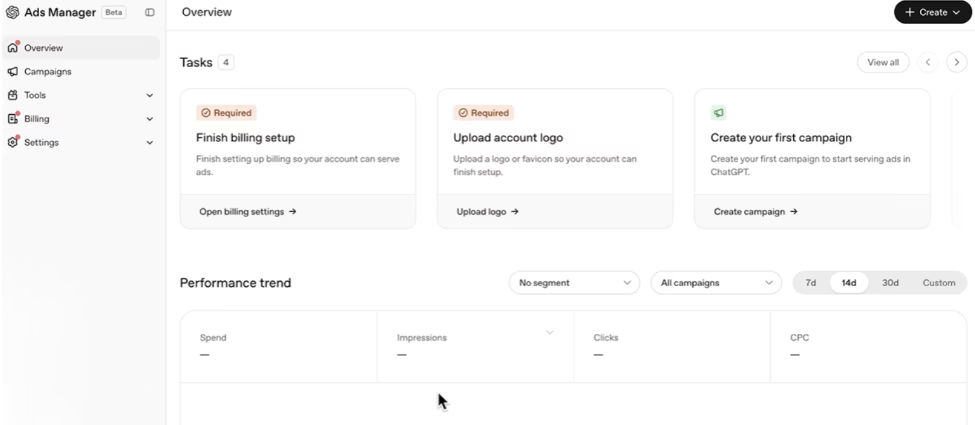
The UI itself deserves a mention, because it’s genuinely well built. It doesn’t feel like a bolted-on afterthought the way some platforms’ ad managers do. It feels like it was designed by people who actually thought about how a marketer would want to move through campaign setup, and that made the whole process faster than I expected the first time through.
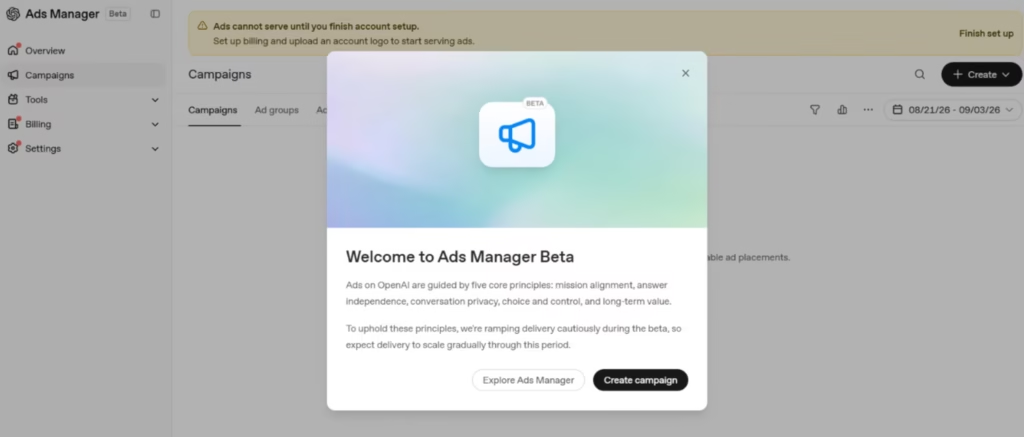
The part that I think matters most long-term, though, is the connector for ads and conversion tracking. There’s a native way to plug your own conversion data back into the system, so it’s not a black box where you spend money and just hope something happened on your website. Once that connector is wired up properly, it starts to automate a lot of the optimization work itself, shifting spend and targeting based on what’s actually converting rather than just what’s getting clicked. That’s the piece that turns this from a novelty into something you can actually run a real budget through.
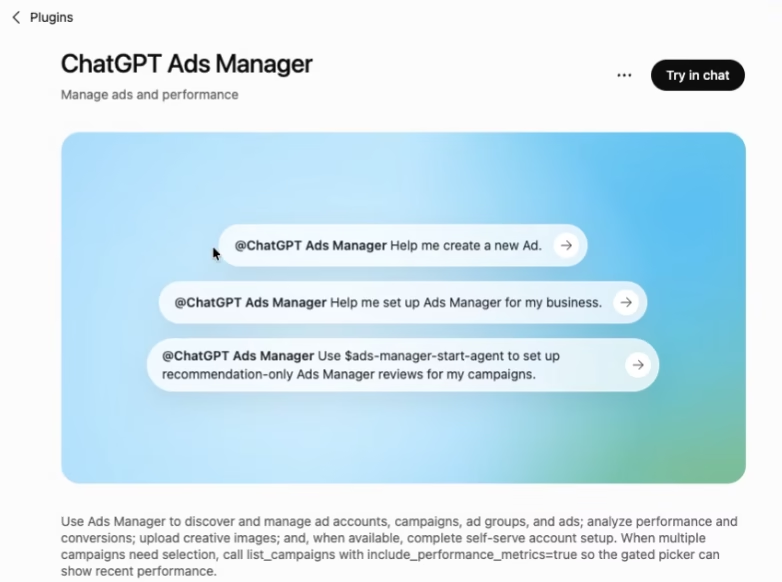
What struck me most, stepping back from all of this, is how reimagined the entire interface is. This isn’t a search ads dashboard with a chatbot bolted onto the side. It’s built from the ground up as a chat-based interface for running ads, which is a genuinely different mental model than anything I’ve used for search or social advertising before.
One thing that still needs work: the Shopify connector for D2C brands. Right now, getting your product catalog and conversion data flowing cleanly between Shopify and ChatGPT Ads is more complicated than it should be, and it’s the one part of the setup that slowed me down the most.
3. Before Ads: How to Actually Rank Organically
All of that said, I don’t think ads are where anyone should start. Before you spend a rupee on ChatGPT Ads, there are three organic things I think matter more, based on what I’ve watched play out with brands I advise and with my own work building a podcast channel from scratch.
Here’s what I’d actually prioritize:
- Build a real body of content. Blogs, reviews, ratings, if there’s nothing out there, there’s nothing for an AI engine to cite.
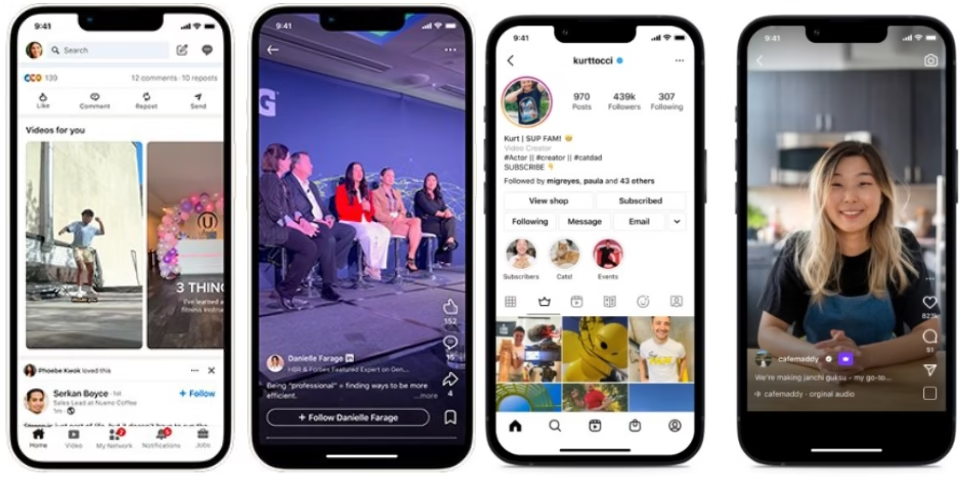
- Show up on social, not just your own site. LinkedIn and Instagram content is increasingly what AI tools pull from, more than it used to be, more than Reddit was a year ago.
- Write to be quoted, not just to rank. Lead with the direct answer and a specific number, not a soft claim buried three paragraphs in.
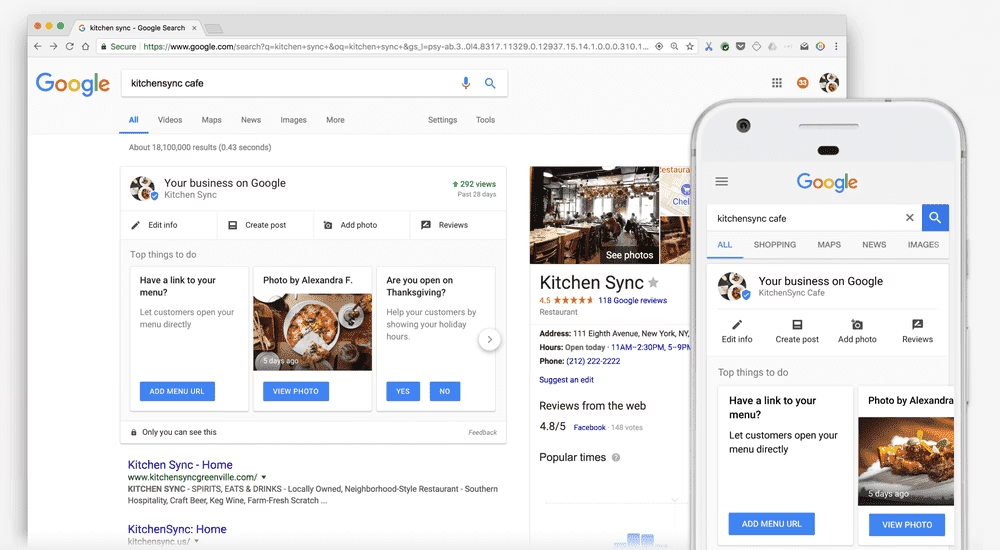
- Fix your footprint everywhere else. Google Business Profile, marketplace listings, directory entries, keep your name, address, and details consistent across the web.
- Treat findability as trust. An AI engine cites brands it can verify. Being thin or inconsistent outside your own website costs you visibility even when your content itself is strong.
I’ve watched this play out directly with my own podcast: content on LinkedIn and Instagram surfaced in AI search results at a noticeably higher rate than our website content alone ever did. That’s a genuinely different distribution strategy than the SEO playbook most of us grew up on, where the goal was always to own the destination. Now a meaningful part of the goal is showing up well inside platforms you don’t own, and being consistent and verifiable everywhere your brand exists, not just where you’re publishing content.
4. Where I’d Put My Attention Right Now
I want to be honest about this: it’s still too early to know exactly how this ChatGPT ads pans out. I’ve run two separate experiments on my own content trying to isolate what actually moves the needle here, and I don’t have a clean, confident answer yet. I’m hopeful about where the early results are trending. Anyone telling you they’ve cracked the exact formula for AI visibility right now is probably overselling what they actually know. This is genuinely new ground, and the honest position is to keep testing and stay skeptical of anyone claiming certainty.
If I had to boil this down to one piece of advice for another marketer reading this: don’t treat ChatGPT Ads as a replacement for organic work, and don’t treat organic work as something you can set up once and walk away from. The zero-click shift is real, and it’s not reversing. But the brands that win here will be the ones building real content, real reviews, and a real presence on the social platforms that AI engines are quietly pulling from, while also learning how to run disciplined, well-tracked tests on the paid side before it gets crowded and expensive the way every other ad platform eventually does.