



A few weeks ago I was speaking with a doctor who runs her own clinic.
She said something that stayed with me. As a regular doctor, your job is the patient in front of you. But the moment you run your own practice, the job doubles. You are now managing patient flow, handling leads, staying visible online, collecting reviews, and making sure a room full of expensive infrastructure does not sit empty.
For most doctors and hospital groups, marketing is not optional. It is how the lights stay on. But healthcare marketing is not about big campaigns. It is far more specific. Managing reputation. Being visible when a patient searches. Getting good reviews and responding to the bad ones. Getting leads into a system that follows up. All of this requires technology, and most doctors are simply not tech-savvy.
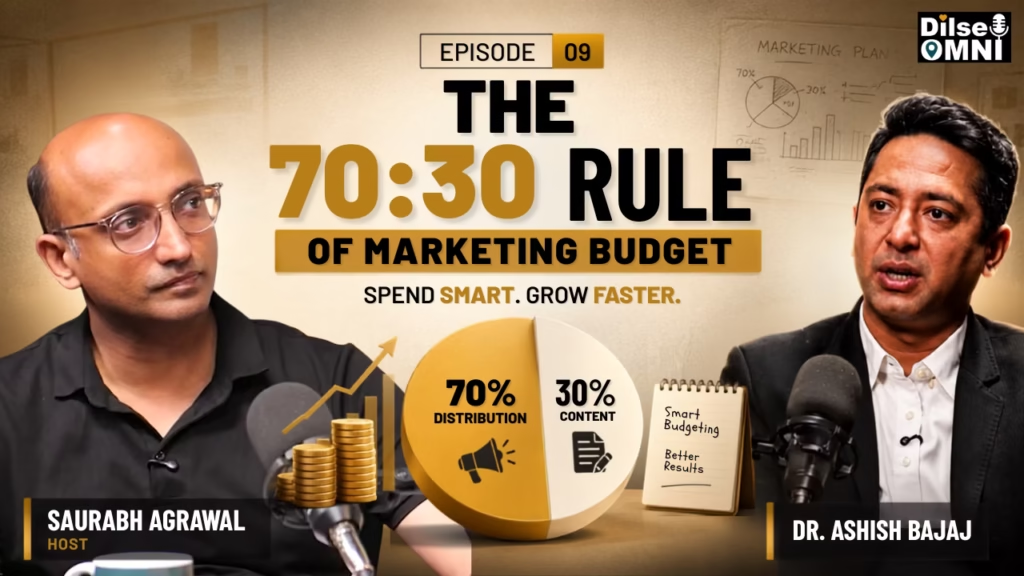
That is the gap Martech fills. And it is what Episode 9 of DilSe Omni Talks, featuring Dr. Ashish Bajaj, former Group CMO at Narayana Health and author of The Martech Playbook, unpacked in detail.
We have already covered the core MarTech stack that every brand needs in our earlier piece: 5 Key Components of a MarTech Stack every brand needs to get right.
India’s healthcare market now exceeds $400 billion in FY26. The digital health segment is expected to grow from $14.5 billion in 2024 to $107 billion by 2033. The brands that figure out Martech in this context will not just market better. They will build something that consumer brands have spent years building, patient trust at scale.
1. What Has Actually Changed for Doctors Today?
Not long ago, a doctor’s job was clear. Diagnose. Treat. Deliver good care. Today that is only part of it.
Healthcare providers, whether running an independent clinic or a large hospital group, now have to think like business owners. They need a steady patient flow, efficient appointment systems, a strong online reputation, and the ability to communicate across multiple channels while managing expensive infrastructure.

The fixed cost problem is real. Every empty consultation slot and every idle diagnostic machine is money leaving the business. Patient acquisition is not just a marketing metric in healthcare. It is an operational survival metric. And with patients now comparing hospitals online and reading reviews before walking in, the journey starts digitally long before they arrive in person.
2. Is Healthcare Finally Taking MarTech Seriously?
For a long time, the honest answer was no. Healthcare lagged behind retail and banking in Martech adoption. Most hospitals ran on disconnected systems, manual processes, and word-of-mouth referrals.
That is changing. Major hospital chains are actively building Martech stacks. India’s Martech market is growing at 25.5% CAGR and is projected to reach $186 billion by 2033. Healthcare, as of 2025, holds the largest share of Martech adoption globally across all industries. The gap between where Indian healthcare is today and where it needs to be is not a gap in intent. It is a gap in execution.
3. What Are the Real Use Cases in Healthcare Martech?
The core Martech stack, CRM, CDP, automation, analytics, applies to healthcare too. We have covered that in detail: 5 Key Components of a MarTech Stack every brand needs to get right. But the use cases here are different enough to spell out.
Reputation and visibility: Patients search “cardiologist near me” before anything else. Martech manages local SEO, Google Business profiles, review collection, and social listening. This is word of mouth in the digital age.
Lead capture and management: Appointment booking that works, WhatsApp integration, chatbot triage, and a CRM that tracks every lead from source to outcome. Without this, leads fall through constantly.
In-facility experience: Digital check-ins, queue updates, real-time wait notifications, campus navigation. This is where most Indian hospitals are still the weakest.
Post-visit follow-up: Lab report notifications, prescription reminders, follow-up nudges. Automated but needing to feel personal. A generic SMS after surgery is not enough.
Preventive care and wellness: Screening reminders, health camp updates, personalised wellness content. These build a relationship with the patient who is healthy today but will need care again.
4. What Mindset Shift Does the Industry Actually Need?
The entire sector is built around individual transactions. A surgery. An OPD visit. A diagnostic test. Narayana Health, one of India’s largest hospital groups, derives 70% of its revenues from surgeries. That reality has created a transactional mindset: find the patient at the point of need, convert, close.
The shift the industry actually needs is from transaction to relationship. Healthcare should be in the business of keeping patients healthy, not just treating them when they are already unwell. That preventive model demands a completely different marketing brief.

A brand that only shows up at the moment of illness will always be reactive. The brand a patient trusts before they need help is almost always the one they call when they do.
“Healthcare should ideally be about keeping patients healthy, not just treating them when they are already sick.” — Dr. Ashish Bajaj, DilSe Omni Talks Ep. 9
5. Why Is the Patient Digital Journey Still So Broken?
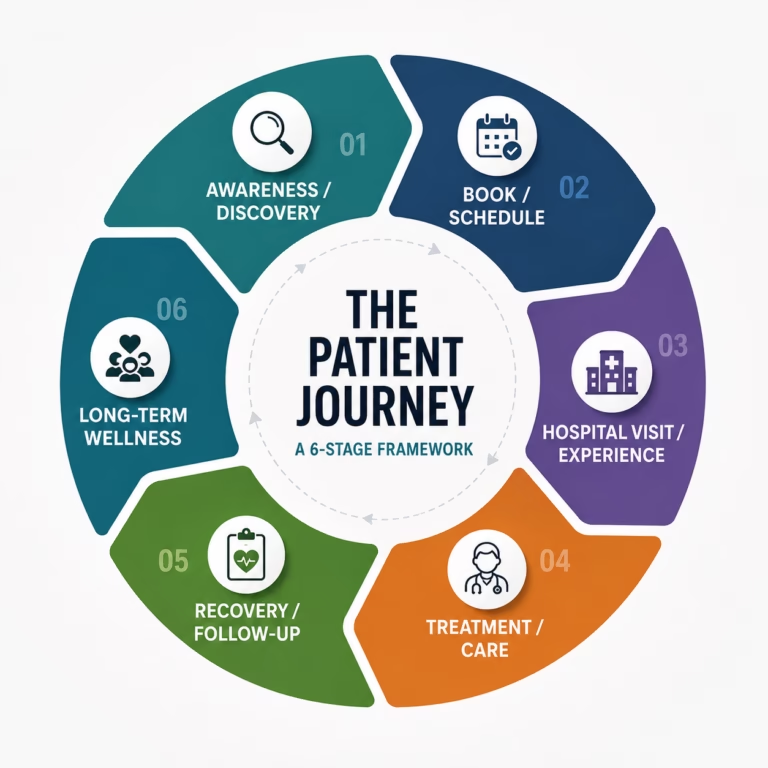
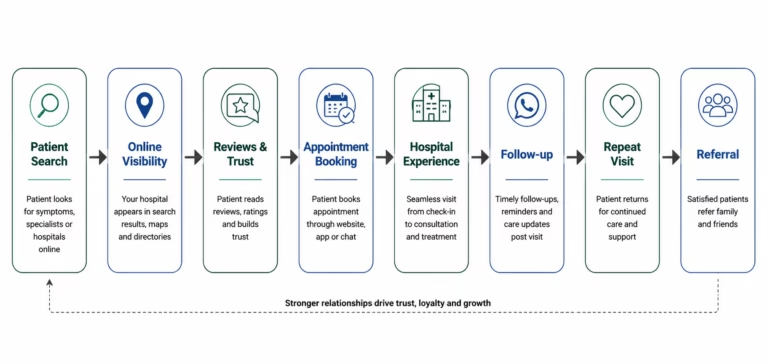
Healthcare isn’t a series of isolated interactions, it’s one connected patient journey. Every touchpoint, from the first Google search to post-treatment follow-ups, shapes how patients perceive a healthcare brand.
This is where MarTech creates the most value. Rather than focusing only on generating appointments, it helps hospitals deliver seamless, personalized experiences across every stage of the patient journey.
1. Awareness & Discovery
The journey begins when patients search for symptoms, compare hospitals, or read reviews. MarTech helps brands build trust through SEO, educational content, reputation management, and an informative digital presence.
2. Booking & Scheduling
A simple, hassle-free booking experience sets the tone. Online scheduling, automated confirmations, reminders, and WhatsApp communication reduce friction before the visit even begins.
3. Hospital Visit
Patients value clarity as much as clinical care. Digital check-ins, queue updates, navigation assistance, and real-time notifications help reduce anxiety during the hospital experience.
4. Treatment & Care
Clear communication is essential. Digital prescriptions, accessible reports, and centralized patient records ensure patients understand their treatment and next steps.
5. Recovery & Follow-up
Care shouldn’t stop at discharge. Medication reminders, follow-up appointments, lab report notifications, and ongoing communication support better recovery and stronger patient relationships.
6. Long-term Wellness
The strongest healthcare brands stay connected beyond treatment through preventive care reminders, wellness education, annual screenings, and personalized health programs—helping patients stay healthy, not just treating them when they’re sick.
6. What Does Lifetime Value Mean in Healthcare?
In most industries, Lifetime Value is a revenue calculation. More spend over time equals higher LTV. Healthcare breaks this model completely.
In healthcare, LTV has to be redefined as consistent, helpful interactions with the patient long after they leave. A patient who received clear follow-up, had their discharge summary explained, and was reminded about their next check-up is a patient who comes back when needed and refers the people around them.
That referral dynamic is enormous. A patient who trusts you is the most powerful marketing channel you have, far more effective than any paid ad. Every post-consultation touchpoint is a brand moment, not a task to automate and forget.
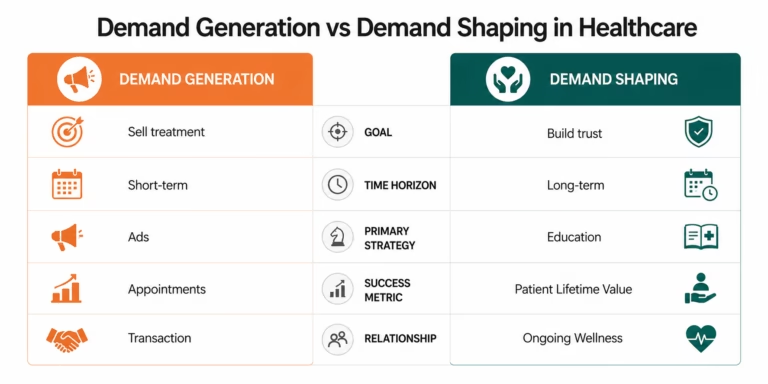
7. Demand Shaping vs Demand Generation: Why the Difference Matters
In most categories, the marketing job is to create demand. Make someone want something they did not know they needed. Healthcare is different.
In healthcare, the demand already exists. People get sick. People need surgeries. The patient is already searching for help. The question is only which brand they choose.
This is the difference between demand generation and demand shaping. The challenge is not convincing someone they need a hospital. It is making sure that at one of the most stressful moments of their life, they choose you over the competitor down the road.
That requires a different tone entirely. Calm, credible, trustworthy, not loud or promotional. The patient searching for cardiac surgery information at midnight does not want a discount offer. They want a reason to trust.
The Mayo Clinic is the global benchmark for this, having built one of the most trusted health content libraries in the world by simply answering the questions patients are already asking. In India, medical tourism is the most advanced domestic example of this working. Hospitals use Martech from first WhatsApp enquiry through CRM nurturing, multilingual content, and arrival logistics. India’s medical tourism market is already valued at $7.69 billion and projected to reach $14.31 billion by FY29.
8. Where Does This Leave Healthcare Brands Today?
For clinics and smaller practices, the starting point is simpler than it sounds. Get your Google presence in order. Sort your reviews. Make appointment booking work. Set up a WhatsApp follow-up flow. That alone puts you ahead of most competitors.
For larger hospital groups, the shift is bigger. A connected patient data platform, a mapped patient journey from awareness to long-term wellness, and every touchpoint in between designed to feel human and coherent.
From transaction to relationship. From demand generation to demand shaping. From measuring clicks to measuring trust. Healthcare brands that make this shift are not just doing better marketing. They are building something that no campaign can replicate.
“Marketing is not about clever ideas. It is about understanding real people.” — Dr. Ashish Bajaj, The Martech Playbook
Catch the full conversation on DilSe Omni Talks, Episode 9 on YouTube.