
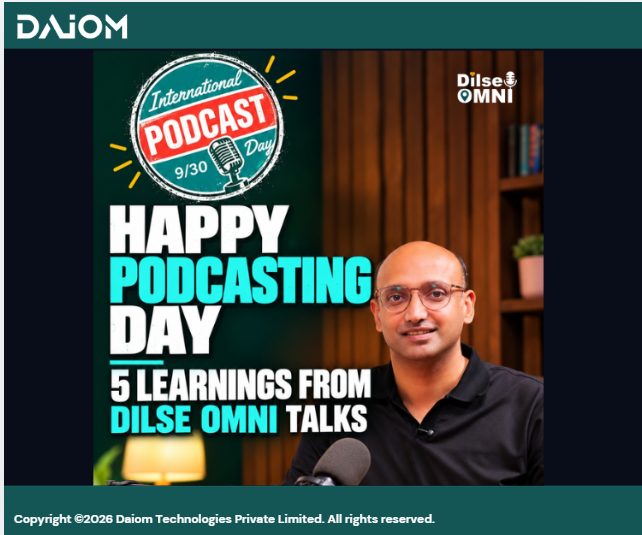



September 30th. International Podcast Day. A day that, until a couple of years ago, meant nothing to me beyond another date on the calendar. Today, it means something, because somewhere between hitting “record” for the first time and sitting across hundreds of guests on Dilse Omni Talks, I became someone who thinks in conversations.
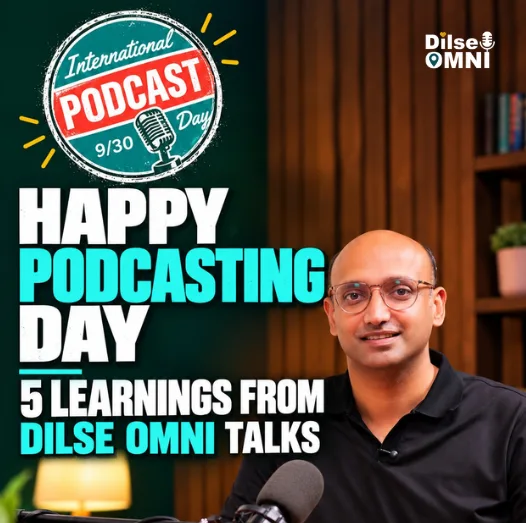
I didn’t start this podcast because I had all the answers. I started it because I had more questions.
That one line has stayed with me through every single episode. I wanted to pause and write down what this journey has actually taught me, not the polished, LinkedIn-caption version, but the real one.
Here are five lessons.
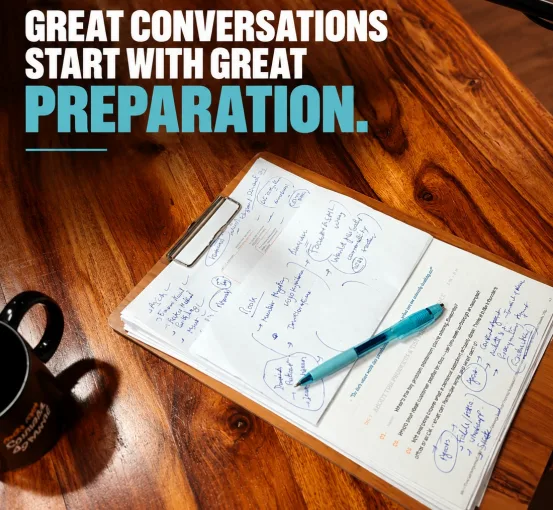
Lesson 1: Great Conversations Start With Great Preparation
Before every episode, there’s a clipboard. Handwritten notes, half-circled names, arrows connecting one idea to another, a coffee-stained page of questions that never made the final cut. That mess is the real work.
I used to think good conversations just happened, that two smart people in a room would naturally produce something insightful. They don’t. The best episodes I’ve recorded were the ones where I over-prepared, read everything I could about the guest, and then forgot half of it because the conversation took its own direction anyway. Preparation isn’t about control. It’s about earning the right to listen well.
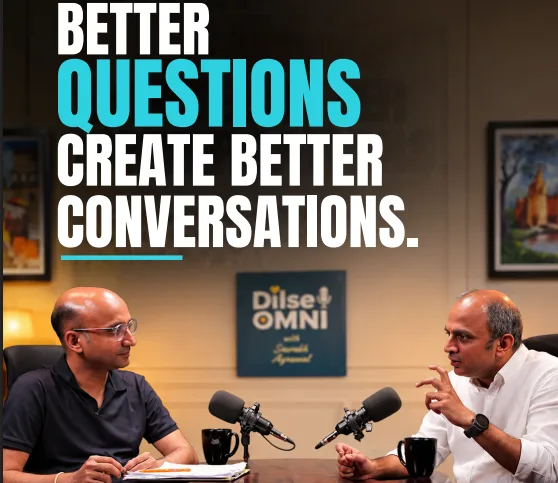
Lesson 2: Better Questions Create Better Conversations
I’ve sat across founders, operators, and industry veterans who’ve built things I’ll never fully understand. And every time, the instinct is to prove you know enough to be in the room. I had to unlearn that.
The job isn’t to have the answers. It’s to ask the question that makes the guest pause for a second before they answer, because that pause is where the real insight lives. A good question is worth more than ten good opinions.
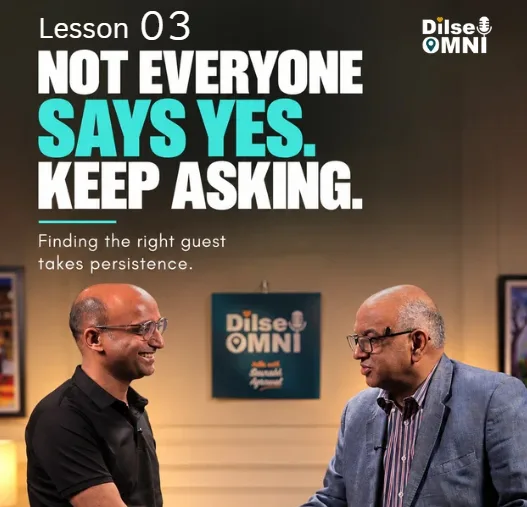
Lesson 3: Not Everyone Says Yes. Keep Asking.
This one stings a little every time, but it’s true. Finding the right guest takes persistence — emails that go unanswered, follow-ups that feel awkward, warm introductions that lead nowhere.
And then, every so often, someone says yes. And it’s worth every rejection that came before it.
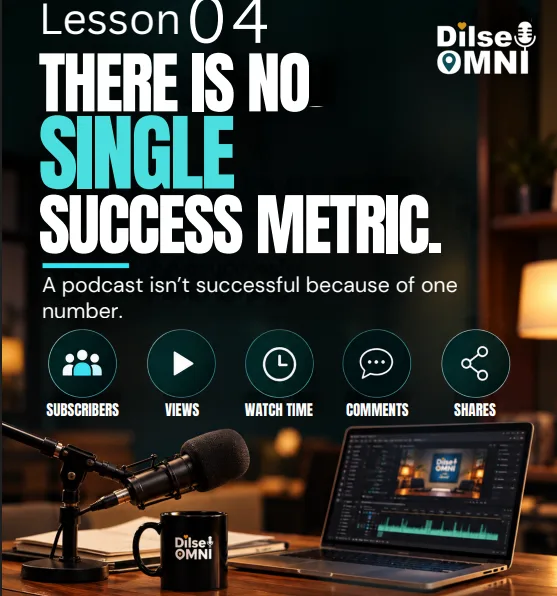
Lesson 4: There Is No Single Success Metric
A podcast isn’t successful because of one number. Subscribers matter. But so do views, watch time, comments, and shares, and more than any of them, whether someone actually finished the episode and felt like they got something out of it.
I stopped obsessing over subscriber counts a while ago. Now I look at the whole picture, because a quiet comment saying “this episode really changed my perspective” tells me more than a spike in followers ever could.
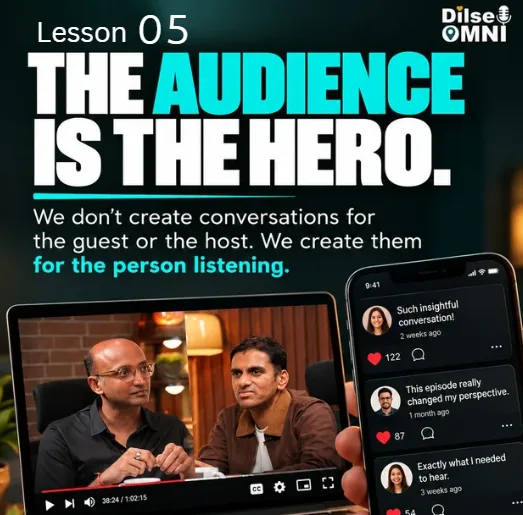
Lesson 5: The Audience Is the Hero
This might be the one that took me the longest to internalize. We don’t create these conversations for the guest. We don’t create them for me, as the host. We create them for the person listening, on their commute, in between meetings, trying to make sense of their own business or career.
Every time a listener writes in saying an episode gave them exactly what they needed to hear, I’m reminded: they’re the reason this exists.
Bonus Lesson: Publishing Is Only the Start
Hitting “upload” feels like the finish line. It isn’t. The real work is getting the episode in front of the people who need it, distributing it across platforms, caring about the edit, the sound, the thumbnail, that’s what separates a podcast that gets made from one that gets heard.
The Conversations That Taught Me This
None of these lessons came from theory. They came from the people who sat across that table and trusted me with their time and their stories, conversations like the one with Souparno Bagchi, where we unpacked how India actually built the “UPI kar do” habit and what it would take to unbuild it.
Or the conversation with Beerud Sheth, CEO of Gupshup, where thirty years of separate bets, MIT research, a gig marketplace, messaging infrastructure, turned out to be three stages of one single thesis.
Or the episode with Arjun, where a line about giving up on a channel entirely stuck with me far longer than I expected it to.
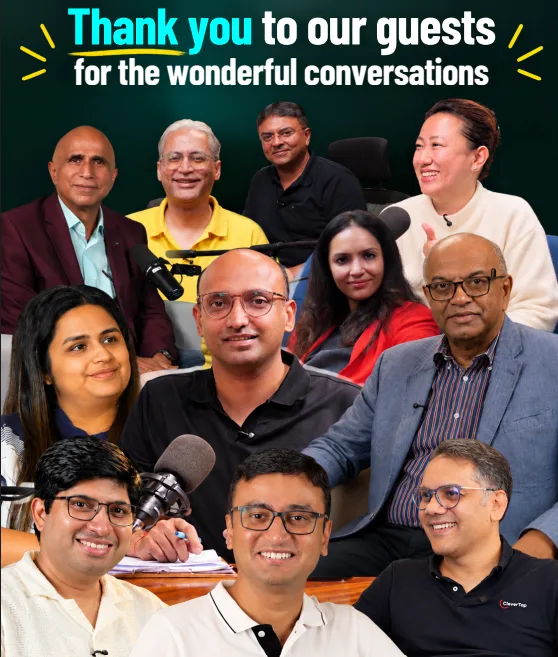
Every guest who said yes, prepared with me, pushed back on my questions, and trusted the process, thank you. This show exists because you showed up for it.
Where This Leaves Me
International Podcast Day isn’t really about podcasts. It’s about conversations, the fact that 584.1 million people around the world are choosing to sit with someone else’s voice and ideas for an hour, and that number is only growing. Global podcast listenership is projected to reach over 619 million listeners, driven by surging multi-platform distribution and video integration and India is rapidly expanding as the world’s 3rd largest market, projected past 200 million listeners. From Africa’s engagement to Asia-Pacific becoming the largest market, this is a quietly massive shift in how people learn and connect.
Dilse Omni Talks is a small part of that. 96.3K subscribers, 856 videos in, and still, every single week, I learn something I didn’t expect to.
Five lessons. Many more questions to go.
The journey is just beginning.
Watch Dilse Omni Talks on YouTube for more conversations like these.