



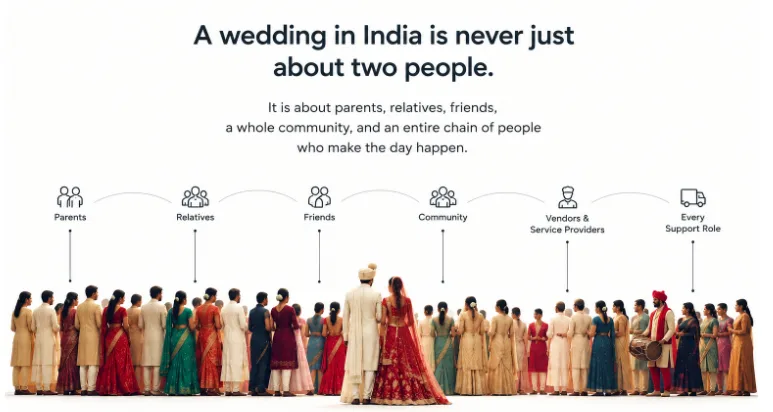
A wedding in India is never just about two people. It is about parents, relatives, friends, a whole community, and an entire chain of people who make the day happen.
There is no other country on earth where a single family event can move as much money as an Indian wedding.
I have been watching this market closely for a while now, and the numbers still catch me off guard every time I revisit them. According to the reports of Grand View research, the India wedding services market was valued at roughly $104 billion in 2024 and is projected to cross $228 billion by 2030, growing at a CAGR of over 14%.
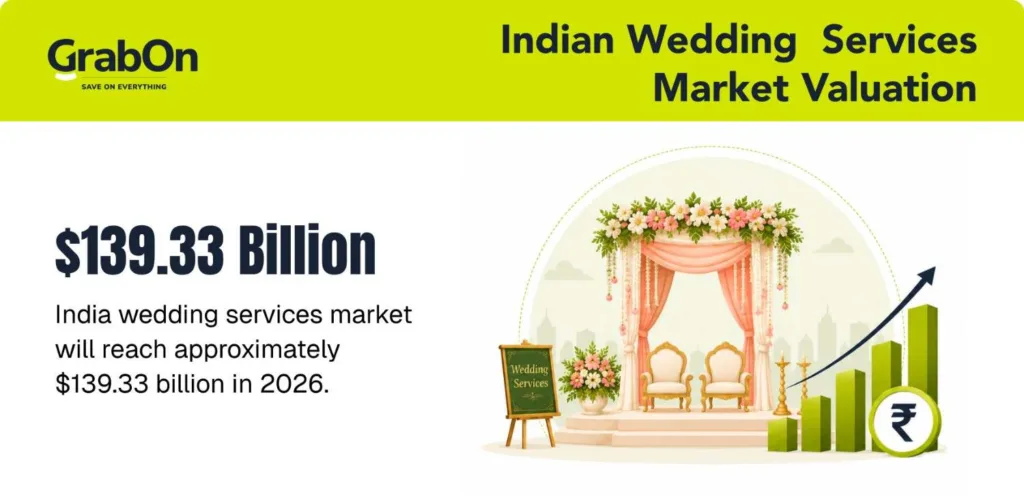
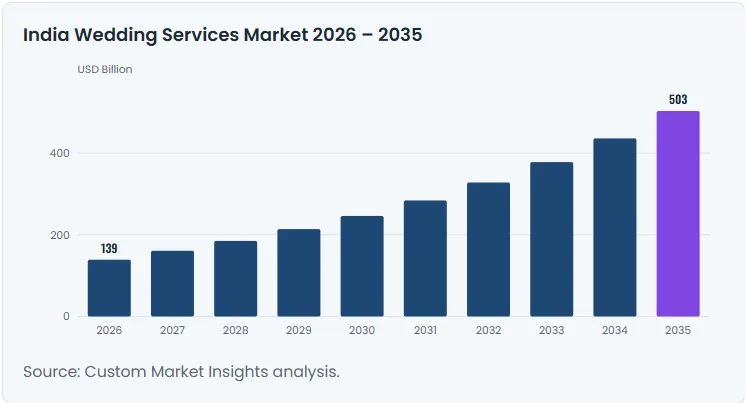
A separate estimate from Custom Market Insights puts it at $139 billion in 2026, on its way to $503 billion by 2035 at a CAGR of 15.3%. Whichever number you use, the conclusion is the same: this is one of the largest consumer markets in India, and it is accelerating.
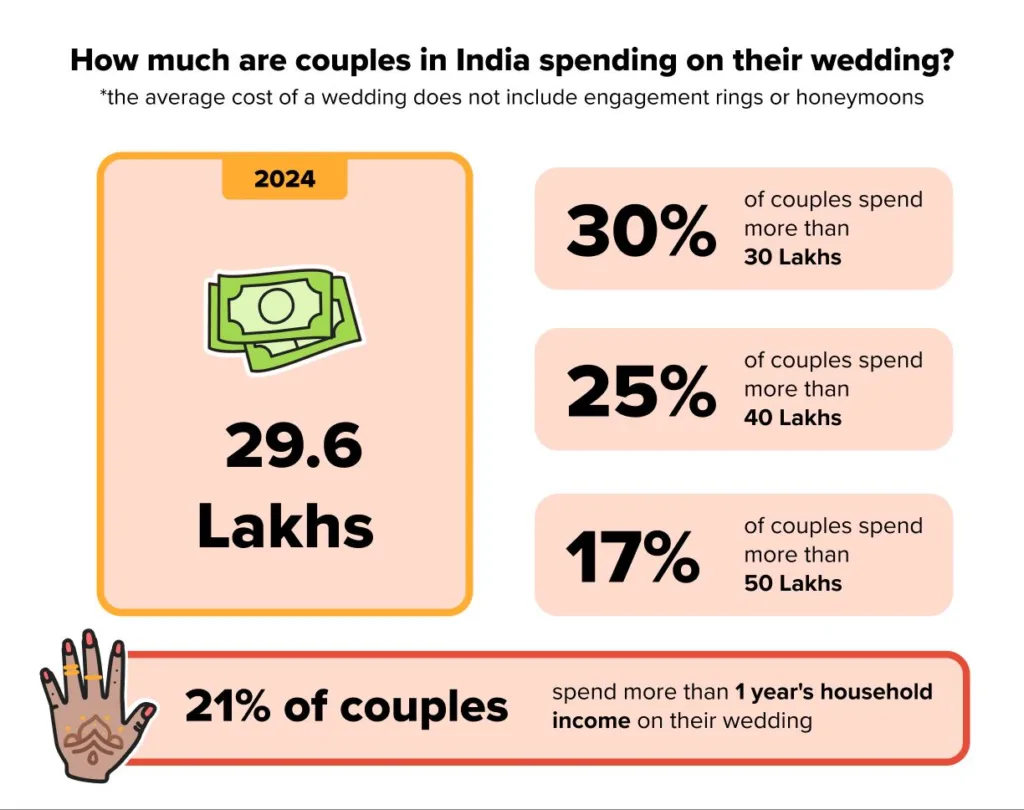
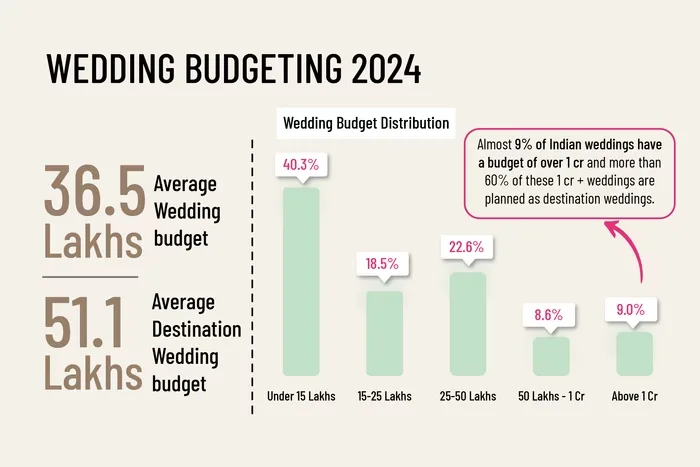
The average Indian wedding now costs around ₹28 lakh, a 36% jump from just 2022 and 53% of couples end up increasing their budget at least once during the planning process because the costs run ahead of expectations. India is already the second-largest wedding market globally, and every year approximately 10 million weddings take place across the country. That is not a niche market. That is an economy within the economy.
What is genuinely interesting to me, though, is not the size. It is how marketing and brand strategy around this market are changing in ways that most people outside the fashion and event industries have not fully registered.
From unorganised to organised market
For years, the Indian wedding ran on a cousin’s contact, a family tailor and a handshake with the caterer. That is changing from both ends.
Traditional players are organising: ethnic wear and jewellery chains, venue groups and caterers are building proper brands, pricing and online booking. New-age players never knew another way. WedMeGood, WeddingWire India, Meragi, The Wedding Company and Ferns N Petals Weddings & Events started as organised businesses.
There is no clean figure for how much of the market is organised yet. But planners were used in about 27% of destination weddings and 10.5% of local weddings in 2024, and about 83% of couples planned with digital tools (Ken Research). The market is still mostly informal, but couples now search, compare and book online.
How Brand Marketing Is Evolving Around Weddings
Five years ago, wedding marketing in India was largely seasonal. Brands would ramp up campaigns between October and February, push heavy discounts during Diwali and the November-January wedding belt, and then go quiet for the rest of the year. That playbook has fundamentally changed.
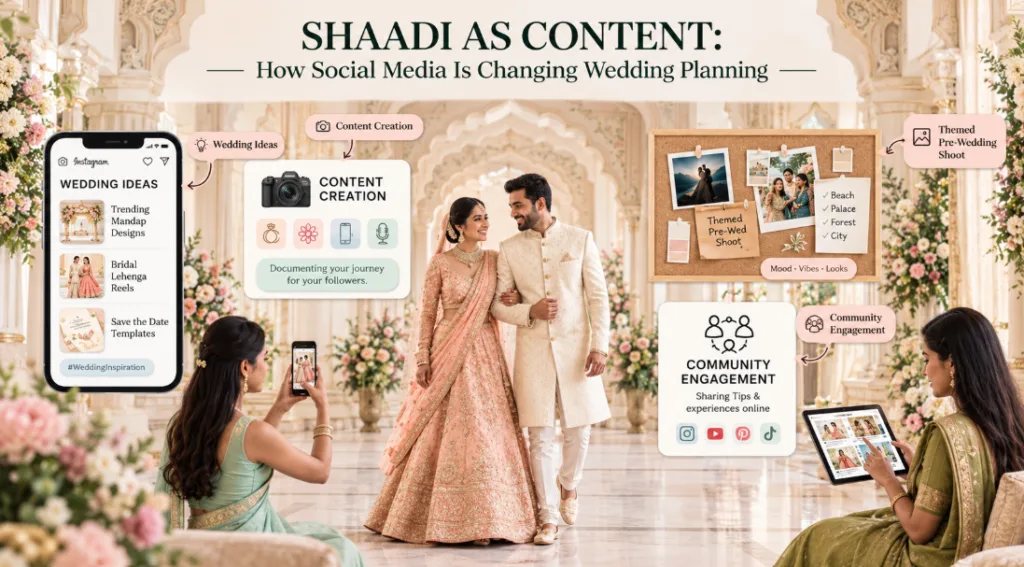
Social media rewired the entire demand cycle. Couples now start planning, and browsing, six to twelve months before the wedding date. Instagram, Pinterest, and YouTube have become the primary discovery platforms for everything from outfits and jewellery to venues and planners.
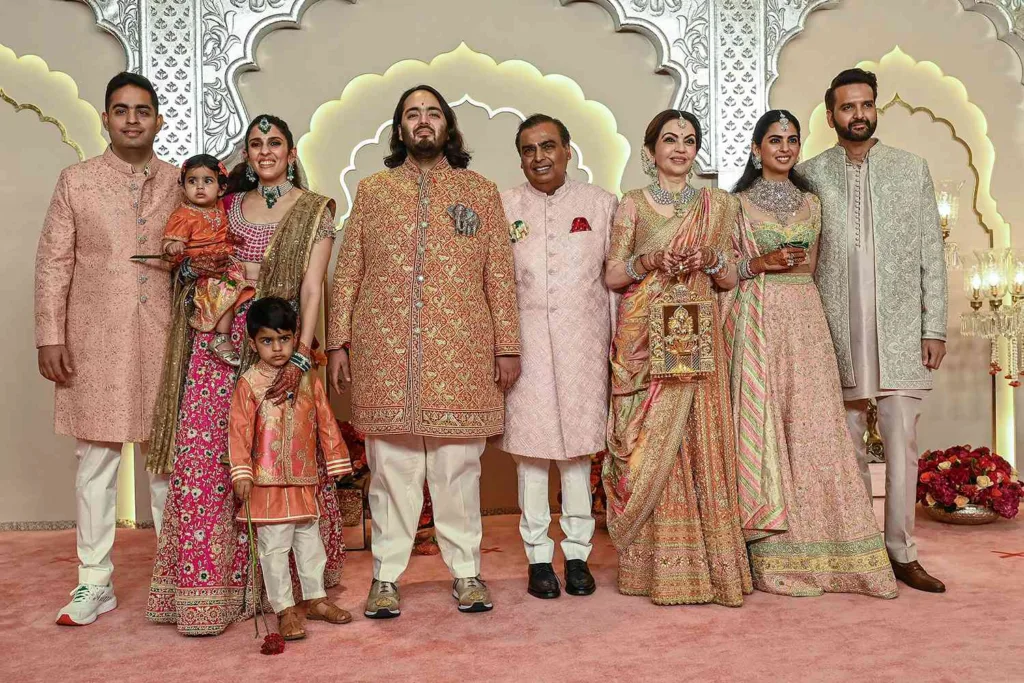
When the Ambani wedding became a national talking point, it did not just generate media coverage, it set a visual standard that filtered down to middle-class wedding Pinterest boards within weeks.
What this means for brands is that the window for influence has expanded dramatically. The customer is not walking into a store in November having decided nothing. They arrive with a mood board, a shortlist, and a price expectation, all shaped by content they consumed months earlier. The brands that win in this environment are the ones that are present during the research phase, not just the buying phase.
The other shift is that wedding marketing has become deeply omnichannel. A bride may discover a lehenga on Instagram, check reviews on WedMeGood, visit a store to try it on, negotiate on WhatsApp, and pay online. That is five touchpoints across digital and physical, and the brands that stitch them together seamlessly are the ones converting. The ones that treat online and offline as separate businesses are losing customers in the handoff.
Content marketing has also become central. Brands like Sabyasachi do not run traditional advertisements, they produce editorial-quality visual storytelling that communicates aspiration, heritage, and exclusivity. Their Instagram is not a product catalogue; it is a world. And that world does more selling than any print ad ever could.
The India Segmentation Framework: Different Indias, Different Weddings, Different Brands
This is the part that most reports and articles miss entirely, and it is the part that matters most for anyone building a brand or a marketing strategy around this market.
India is not one wedding market. There are at least three.
If you use the India 1-2-3 framework that we have talked about on Dilse Omni Talks and our blog before, the picture becomes much clearer.
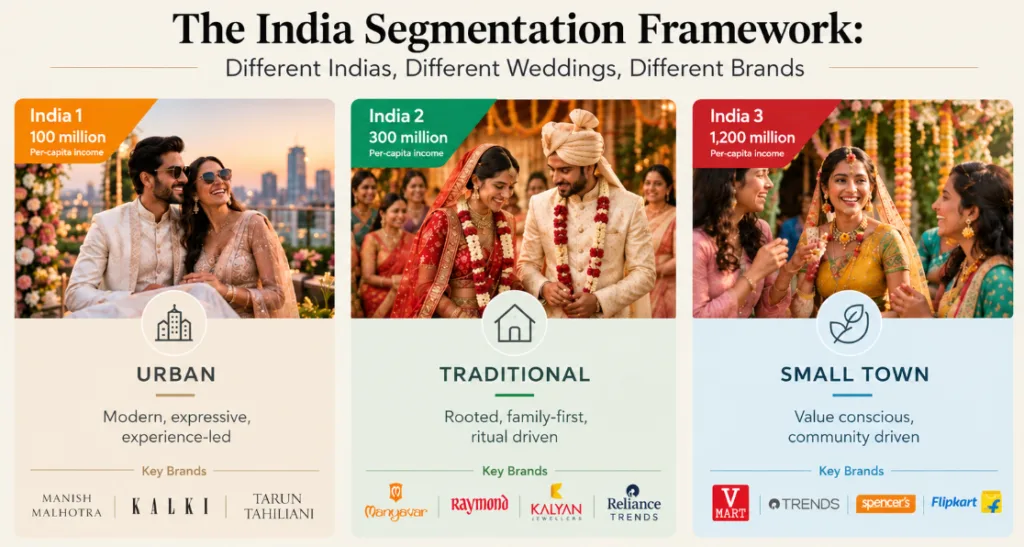
India 1: the top 30–40 million households, urban, affluent, digitally native, globally aware. This is the market that Sabyasachi, Tarun Tahiliani, and Manish Malhotra serve. Weddings here are destination affairs: Udaipur, Goa, Jaipur, increasingly Thailand, Bali, and Europe. The 49% of Gen Z respondents planning destination weddings come from this segment. The average spend is ₹50 lakh to multiple crores. Marketing here is about aspiration, exclusivity, and earned media. These customers do not respond to discounts, they respond to cultural positioning.
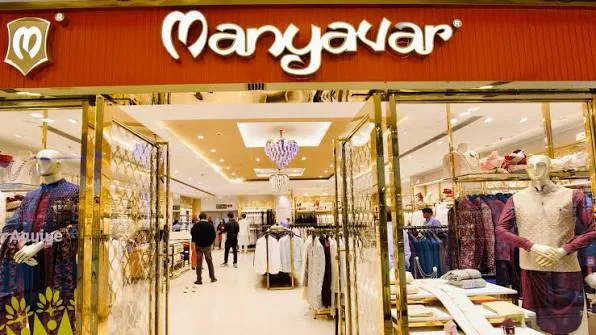
India 2: the next 100–150 million households, urban-to-semi-urban, aspirational middle class, growing incomes, heavy social media consumers. This is where Manyavar, Mohey, Libas, Tasva, and Fabindia compete. Weddings here are local, elaborate, and budget-conscious but not cheap. The average ₹28 lakh spend comes largely from this segment. Marketing here is about trust, value, and social proof. WedMeGood and WeddingBazaar are the planning platforms. Instagram Reels and YouTube are the discovery channels. These families rely heavily on word of mouth, 51% of couples use recommendations to find vendors, and 30% use wedding websites.
India 3: the remaining 200+ million households, small-town and rural India, where weddings are deeply traditional, community-driven, and largely unbranded. Local tailors, family jewellers, and neighbourhood caterers dominate. The online booking share here is minimal, 75% of all wedding bookings nationally are still offline, and in this segment it is closer to 95%. Brands that want to reach India 3 need physical distribution, vernacular content, and pricing that starts at ₹500 for a kurta, not ₹5,000.
The important thing to understand is that these are not just income segments, they are different cultures of consumption. The emotional meaning of a wedding, the role of family versus the couple in decision-making, the importance of brand versus craft versus price, all of these shift dramatically across the three Indias.
A brand strategy that works in India 1 will fail in India 2. A digital-first approach that converts in India 2 is invisible in India 3.
Five Sectors Riding the Wedding Wave, and the Campaigns That Got Talked About
Not every category gets lifted equally by the wedding boom. The ones that gain the most are those that attach themselves to a feeling, not just a purchase.
Here are five sectors where I think this played out best, each with a real campaign.
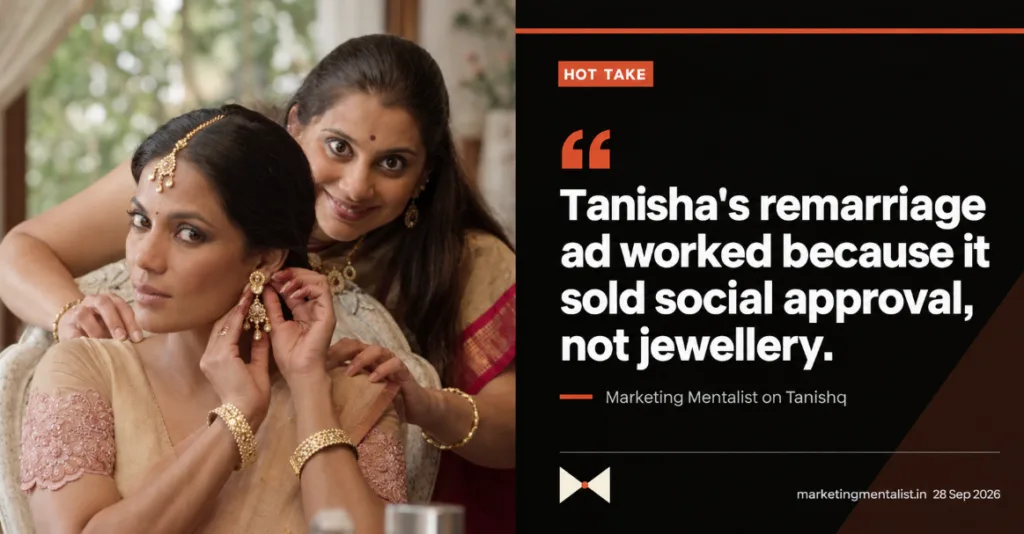
- Jewellery: Tanishq’s remarriage film. In October 2013, Tanishq launched a TV film that portrayed a non-traditional marriage positively and starred a dark-skinned lead. It showed a woman getting remarried, and her young daughter asking the groom if she could call him “Daddy.” It broke two taboos at once, and it was watched by 500,000 people on YouTube in three days. It also didn’t rely on bling. The makers deliberately kept the wedding from looking lavish, with simple aesthetics. A jewellery brand won attention by taking a stand on something people were already talking about.
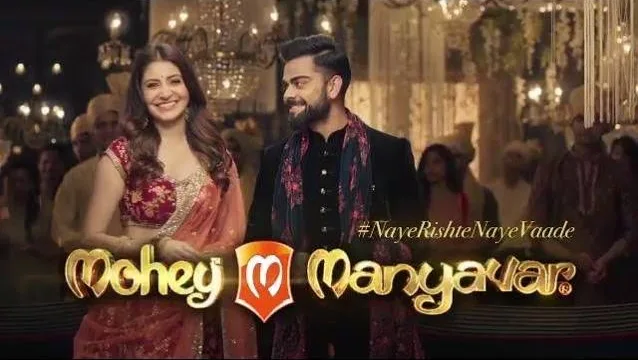
- Clothing: Manyavar’s “wedding vows” film. On 20 October 2017, Manyavar released a film for its Mohey collection with Anushka Sharma and Virat Kohli at a friend’s wedding, guessing the vows the couple was exchanging and then setting some “rules” for themselves. Exchange4media listed it among the month’s top viral ads, at 4 million YouTube views. Then came the twist. The couple married less than two months later, wearing Sabyasachi, yet several people on social media believed they wore Manyavar. That is timing money can’t buy.
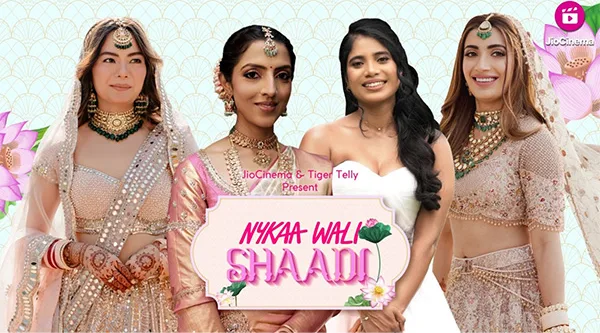
- Beauty: Nykaa Waali Shaadi. In 2024, Nykaa teamed up with top makeup artists for beauty guides and a contest offering free bridal makeovers, which drew over 3,000 registrations. Both campaign films trended at sixth place on YouTube India within 24 hours and passed 3.6 million views. It also spoke to the country’s range, since it covered bridal looks from north to south and east to west, in vernacular languages.
- Hospitality: Hyatt’s Perfectly Yours. Hotel ads usually look the same. Hyatt’s film instead showed hotel employees getting “into the shoes” of the couple. The campaign came with a changed offering. Hyatt’s wedding revenue in 2023 grew 200% over 2019 and 50% over 2022. The ad worked because the service behind it did too.
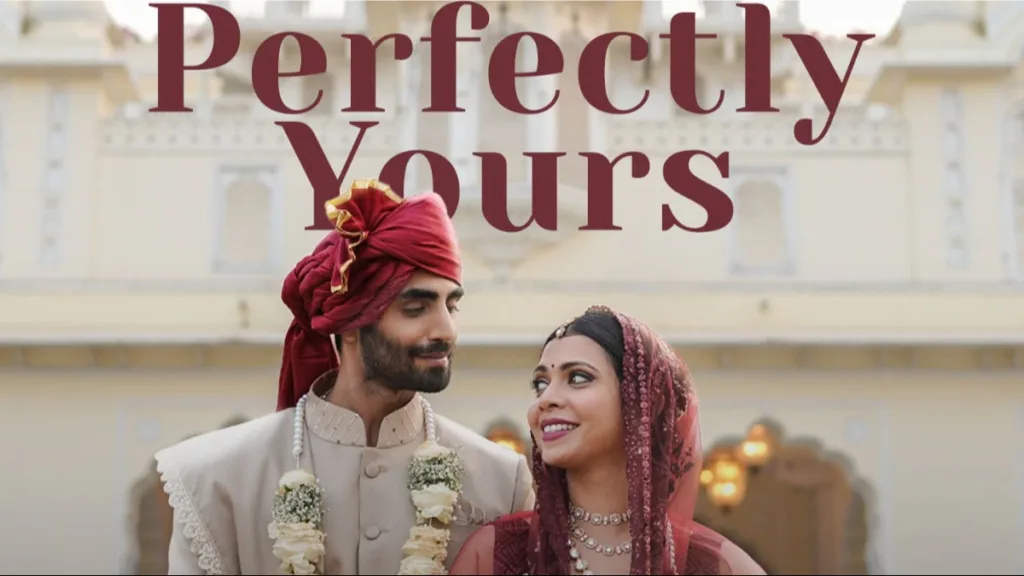
What I like is that none of them started with a product. Tanishq started with a taboo, Manyavar with a couple, Nykaa with the bride’s looks and Hyatt with the family’s stress. The wedding rewards brands that begin there.
- Social media and photography
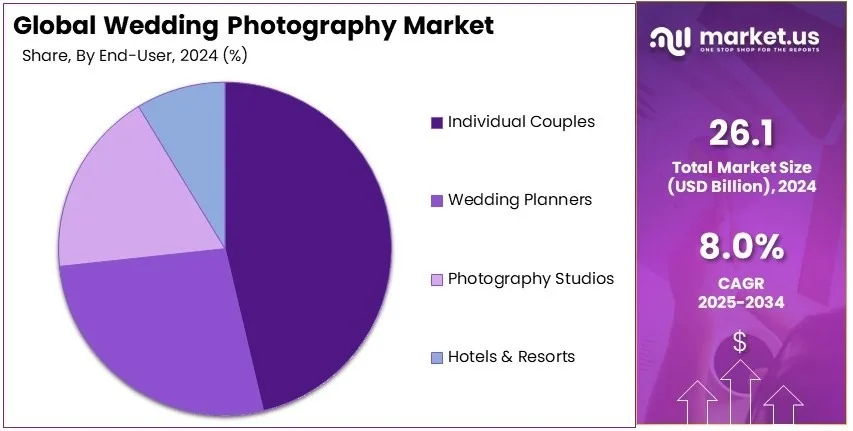
Photography used to be the line item you cut. Now it is the one couples fight to keep.
- Wedding photography is about 3% of a roughly $130 billion wedding market, and its share is rising.
- At luxury weddings, photography and film are now 12% of the budget, up from 5% in 2016.
- Over 92% of photos are now taken on smartphones, so professionals have to offer something a guest’s phone can’t.
Social media created a new job: the wedding content team. Agencies like The Wedding Gram charge ₹2.5–4.5 lakh for a three-day wedding, and Shaadi BTS charges ₹1.5–2 lakh. Brands in this space are selling reach, not just photos.
Tourism and travel: the destination wedding
The wedding is now a trip. One in four Indian weddings is a destination wedding, and about 90% of those stay in India.
- Spend: the average destination wedding budget was ₹52 lakh in 2025, against ₹39.5 lakh across all weddings.
- Guests: about 280 on average, versus 420 at a local wedding (WedMeGood).
- Where: Udaipur, Jaipur and Goa lead, then Kerala, Rishikesh, Mussoorie and Corbett. Thailand, Bali, the UAE and Mauritius are popular abroad.
- Gen Z: according to Skyscanner 2024, 49% were considering a destination wedding, against 33% of millennials.
Hotels, airlines, palaces, planners and local vendors all gain from this.
5 things to note about the growing wedding market
- The pre-wedding shoot is now standard. One studio says 82% of its 2026 bookings include one, up from about 40% in 2019. Costs run from ₹10,000 to several lakhs, and top photographers charge ₹2.5–5 lakh a day (ThePrint).
- Social media decides what gets planned. Entrances, outfit changes and trending audio are designed to be filmed and shared.
- Photography is growing. Its share of the budget is rising, and vertical video (reels) is now a standard deliverable.
- Brand collaborations are moving in. Jewellers, ethnic wear brands, hotels and beauty brands now plan for the wedding season. Gifting hampers, bridal campaigns and destination partnerships are all part of the plan.
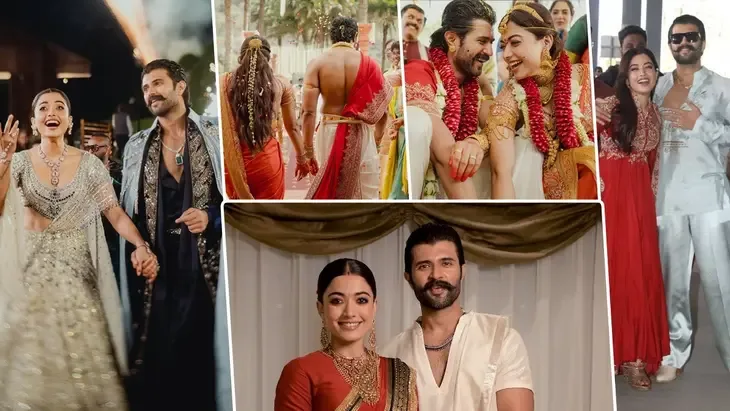
- Celebrity weddings set the template.
- Rashmika Mandanna and Vijay Deverakonda announced “The Wedding of VIROSH” on Instagram. It was reported for 26 February 2026 in Udaipur, with a Hyderabad reception on 4 March.
- Sponsors: Gulf News reported that an unnamed OTT platform was said to be covering costs of over ₹200 million, which is unverified.
- Brand moments: A viral invite box reportedly held a “National Crush” perfume and a T-shirt from Vijay’s own brand, Rowdy. One blog said a Manyavar Mohey bridal campaign was timed to the news, but offered no evidence of a deal. Treat both as unconfirmed.
The Brands That Are Getting It Right
Indian wedding wear is one of the few categories where brand loyalty is surprisingly high, once a customer associates a brand with a life milestone, that association sticks. A few brands have understood this better than the rest.
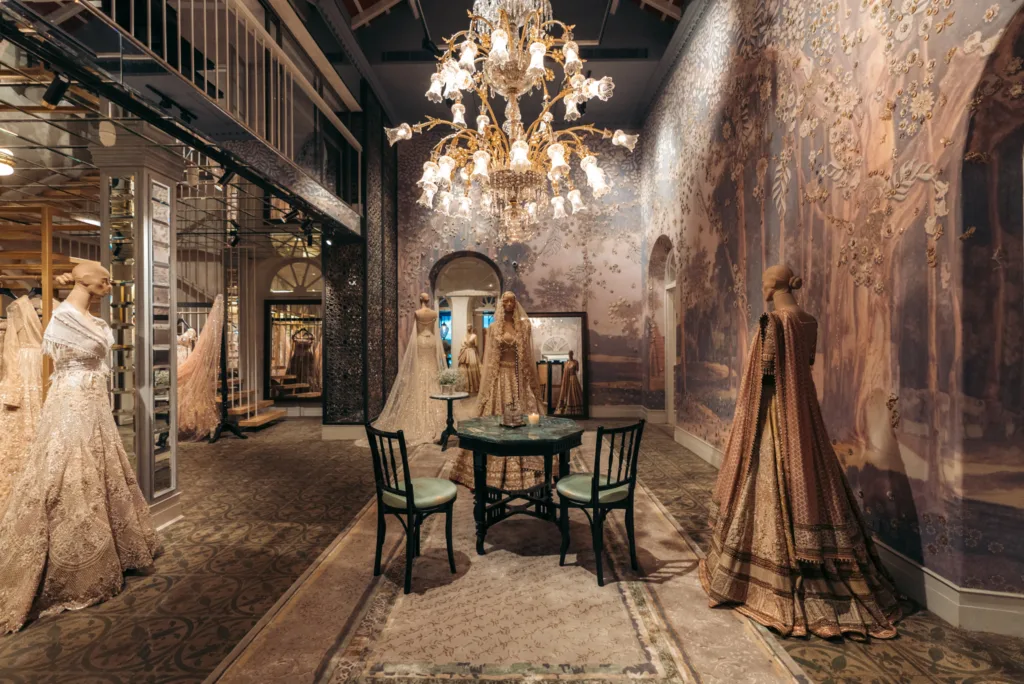
Sabyasachi operates in category one. The brand has turned wedding wear into cultural currency. A Sabyasachi lehenga is not just clothing, it is a statement, a social signal, and increasingly, an heirloom. The brand’s marketing is almost entirely earned media: celebrity weddings, influencer tagging, editorial coverage. They rarely discount. They rarely run performance ads. The product and the visual identity do the work. Bridal pieces start at ₹2 lakh and go well beyond ₹50 lakh, and the waitlist is a feature, not a bug.
Manyavar and Mohey are at the other end of the spectrum, and arguably more important to the overall market. Manyavar built the branded men’s ethnic wear market in India almost single-handedly, holding roughly 38% of the organised segment as of FY22. With over 600 stores, they made wedding shopping accessible to the aspirational middle class, the family that spends ₹12 lakh on a wedding and wants the groom to look the part without spending a lakh on a sherwani. Mohey extended that into women’s wear. Their challenge now is that organised competition has exploded, Tasva by Aditya Birla, Raymond’s ethnic line, and a wave of D2C brands are fragmenting the market they created.
Koskii is where the wedding guest goes when the invite arrives and the outfit isn’t sorted yet. It is digital-first, built around sarees, lehengas and festive sets, and it lives where wedding shopping now starts: Instagram, search and the phone screen. Its content leans on drape, colour and “ready for the function” styling rather than heavy brand storytelling, and that works for the mehendi, sangeet and cocktail crowd. For a guest who wants to look festive without paying designer prices, it is easy to find and easy to say yes to.
Aza Fashion works differently from a single brand. It is closer to a curator, putting many of India’s well-known designers in one place, online and in its stores. That makes it a natural stop for the bride, the sister of the bride and the guest who wants a designer outfit without picking one label. Its marketing is built around discovery and styling, with lookbooks, edits and designer features. In a category driven by trust and taste, that curation does a lot of the selling.
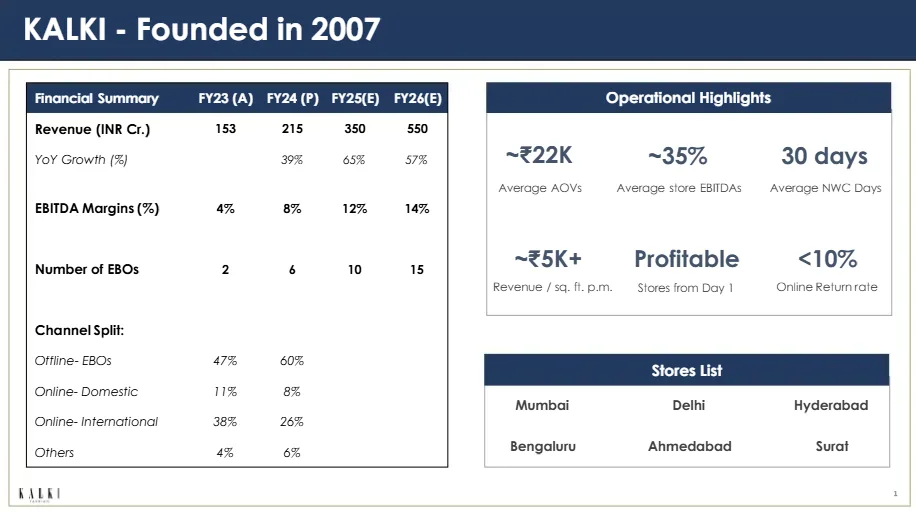
Kalki Fashion sits in the middle ground that many wedding guests are looking for: statement lehengas, sarees and gowns that look occasion-ready without being couture. It is strong on occasion-led merchandising, with edits for the bride, the bridesmaid and the guest. Its content works best when it shows the outfit in motion at a real celebration. That makes it a useful example of how a brand can own “the wedding season” as a shopping moment, not just a collection.
What Comes Next
The brands that will win the Indian wedding market over the next five years are not necessarily the ones with the best designs or the biggest budgets. They are the ones that understand which India they are serving, build their marketing around the actual customer journey in that segment, and treat the wedding not as a single transaction but as a relationship that begins months before the event and extends into years of brand loyalty afterwards.
The technology is there. AI-driven planning tools, virtual venue tours, personalised recommendations, and WhatsApp-based commerce are all live and growing. Online wedding bookings are expected to grow at a CAGR of over 15%, and event planning services at nearly 18%. The infrastructure is catching up to the ambition.
But the real unlock is simpler than technology. It is understood that behind every one of those 10 million annual weddings is a family making the single largest emotional and financial investment of their year, often their decade. Brands that respect that, that show up with genuine value during the research phase and not just the buying phase, and that connect their digital presence to their physical experience without friction, those are the brands that will own this market.
Everyone else is just selling clothes.