



Working with many brands over the past few years, I’ve noticed a pattern that almost never changes.
The conversation starts the same way every time. A founder or a CMO walks in, complaining about ROAS. They’re spending heavily on Meta and Google, running campaigns across five channels, and still can’t figure out why their retention is flat and their CAC keeps climbing.
But here’s what nobody is saying out loud: performance marketing alone is not the answer.
The brands consistently getting 5x better returns aren’t doing it through more ad spend. They’re doing it through Martech investment, specifically, through retention marketing powered by the right technology stack. And the difference in ROI between a brand that has cracked this and one that hasn’t is not marginal. It’s transformational.
They have data, tools, and dashboards. But nothing is talking to each other, and nobody really knows what’s working. The spend goes up and the returns don’t follow.
That’s not a performance problem. That’s a Martech problem.
And it’s far more common than most brands want to admit.
When I sat down with Dr. Ashish Bajaj on DilSe Omni Talks, a former CMO who has worked across healthcare, mobility, and tech, and the author of The MarTech Playbook, the conversation revolved around something I had been thinking about for a long time.

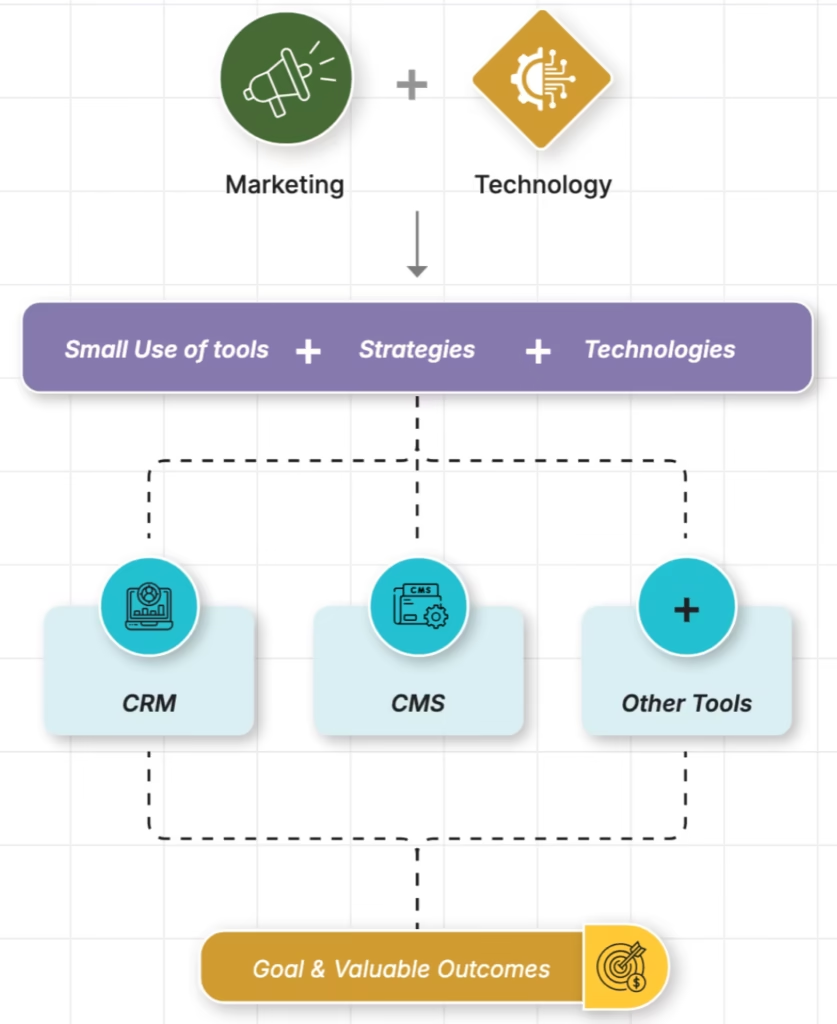
As he put it: “Martech is simply where marketing and technology meet, so brands can stop guessing and start knowing.”
That one line is the entire argument for why Martech matters.
Source: The Martech Playbook
1. Why Martech Is No Longer Optional
Think about your customer’s journey for a moment.
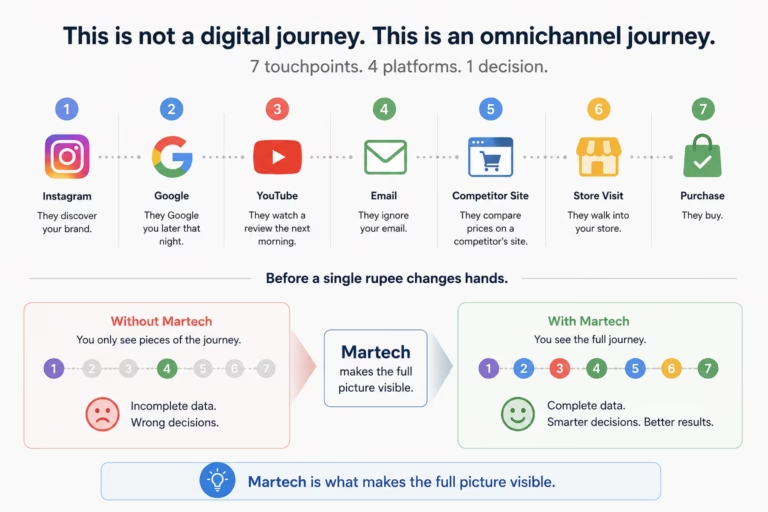
They discover your brand on Instagram. They Google you later that night. They watch a YouTube review the next morning. They ignore your email. They compare prices on a competitor’s site. And then, maybe, they walk into your store and buy.
That is not a digital journey. That is an omnichannel journey, with seven touchpoints across four platforms before a single rupee changes hands. And if your marketing system can only see one or two of those touchpoints, you are making decisions based on an incomplete picture.
Martech is what makes the full picture visible.
At its core, Martech is the combination of marketing and technology — tools, platforms, and systems working together to understand your customer, automate your communication, measure your performance, and drive revenue. It is not a single tool but it is a connected ecosystem.
And the brands that build this ecosystem well, the ones where data flows cleanly between platforms, where every customer interaction is tracked and acted on, where teams stop guessing and start knowing, those are the brands building a compounding advantage.
The brands that don’t? They keep paying for the same customer twice.
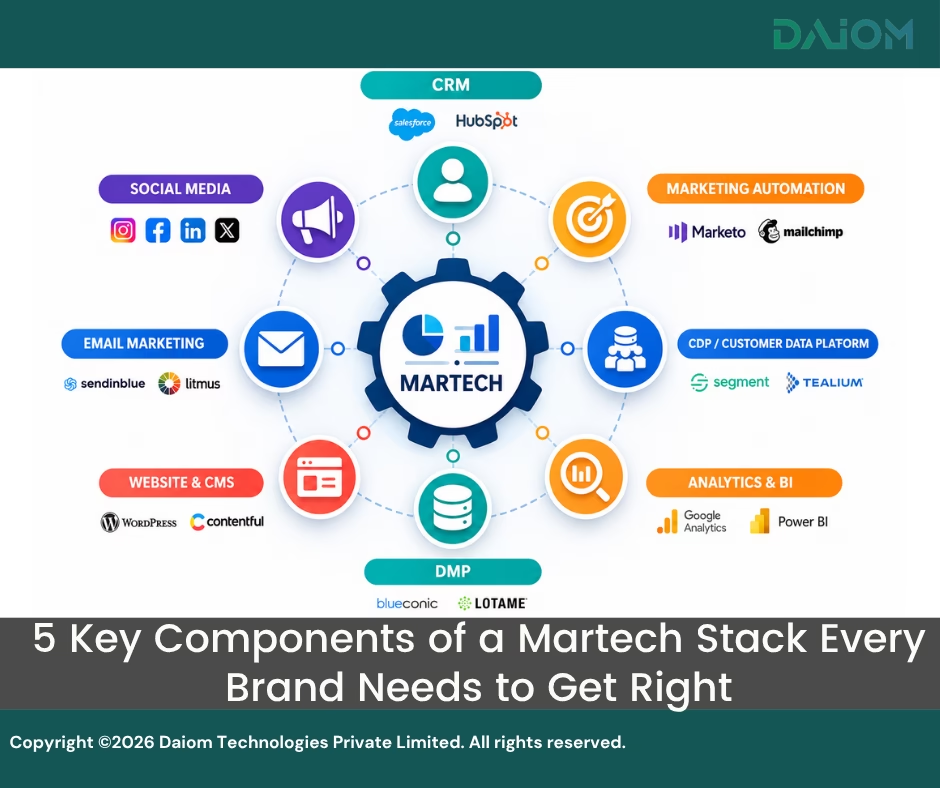
2. The 5 Key Components Every Martech Stack Needs
Over years of working with brands across retail, D2C, healthcare, and fashion, I have seen what works and what doesn’t. Here are the five components that matter most, and what each one actually does for your business.
2.1. Customer Data Platform (CDP)
Everything starts here. If you don’t know who your customer is, everything downstream is guesswork.
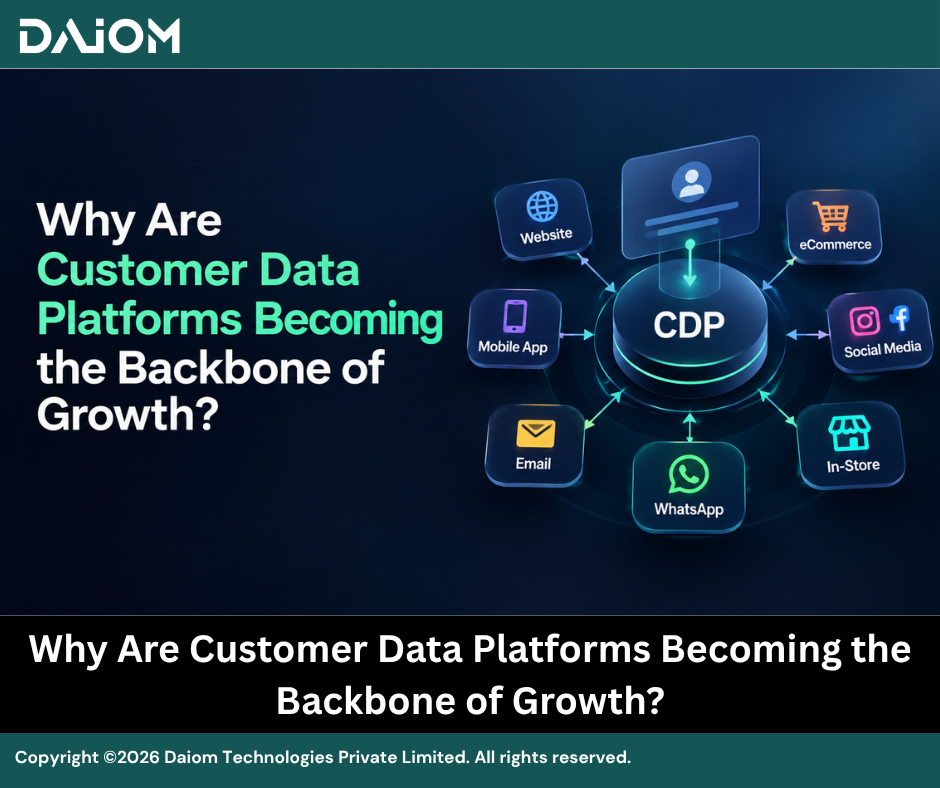
A CDP collects and unifies data from every touchpoint: your website, app, offline store, WhatsApp conversations, email opens, purchase history…and builds a single profile for each customer. It tells you who they are, what they care about, what they saw, what they clicked, and why they converted or didn’t.
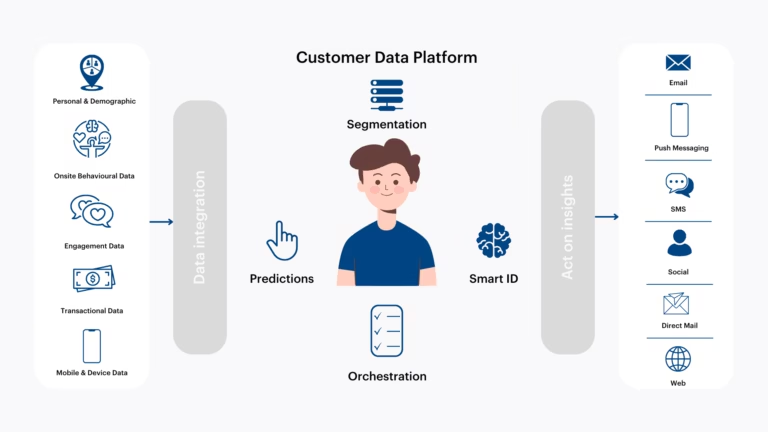
Without a strong CDP, your segments are based on assumptions. With one, they are based on behaviour.
As Anand Jain, Co-founder of CleverTap, put it memorably on our podcast: “A CDP without messaging is like Thakur without arms. He sees Gabbar. But he can’t shoot.“ The data alone doesn’t do anything. It’s what you activate from it that drives revenue.
2.2. CRM and Marketing Automation
If the CDP is the brain, the CRM is the voice.
A good CRM system takes the data from your CDP and turns it into coordinated, personalised communication across every channel — email, WhatsApp, SMS, push notifications, in-app messages — all from one place.

The goal is to move from mass marketing to 1-to-1 customer conversations at scale. A customer who just bought a dress shouldn’t get a generic newsletter. They should get a message about what pairs well with it, timed for when they are most likely to open it.
That is what marketing automation enables. And in India’s mobile-first, WhatsApp-native market, brands that have a strong CRM layer see dramatically better retention, higher repeat purchase rates, and lower CAC, because they are not constantly paying to re-acquire customers they already have.
2.3. AI and Conversational Chatbots
AI is no longer something brands plan to adopt. The brands winning right now are already using it, and the gap between them and everyone else is widening fast.
On the front end, conversational chatbots handle first-response queries, qualify leads, recommend products, collect zero-party data, and guide customers through a purchase, all without human intervention, at any hour of the day. For Indian brands, WhatsApp-native chatbots are particularly powerful because that’s where customers already are.

On the back end, AI is reshaping how brands forecast trends, generate content, optimise campaigns, and predict which customers are about to churn before they actually do.
Ashish Bajaj shared something in our conversation that has stayed with me: the three pivotal moments in marketing were search, social media, and now AI. The first two took five to eight years to mature. AI won’t take that long. The brands that start building AI into their Martech stack now are not just keeping up, they are pulling ahead.
2.4. App Attribution
If you are running a mobile app and you don’t know which channel, campaign, or creative drove each install, each purchase, and each drop-off, you are optimising blind.
App attribution tools help in tracking the full user journey from the first ad impression to the final in-app conversion. They tell you not just that someone downloaded your app, but why, from where, and what they did next.
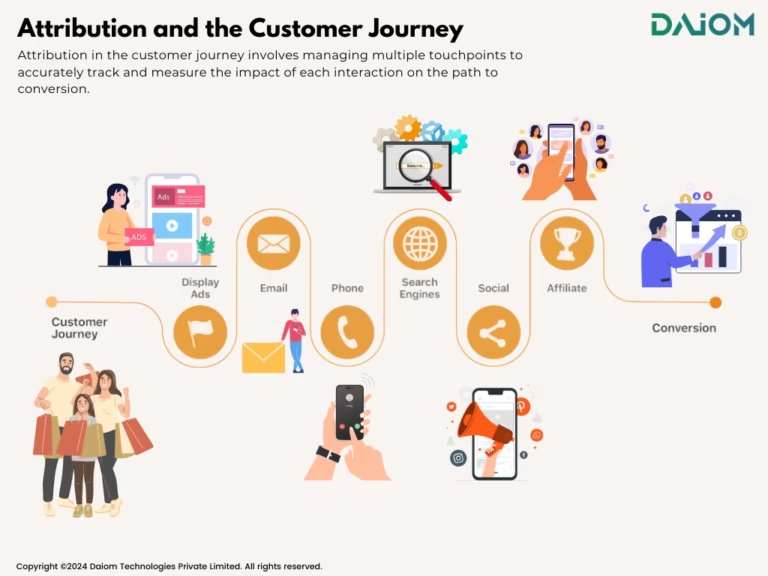
In India’s Android-heavy, mobile-first market, this is one of the highest-ROI investments a brand can make. Because without attribution, you are running five campaigns and genuinely not knowing which three are working and which two are burning your budget.
Attribution does not just save money. It tells you where to invest more of it.
2.5. Analytics and Business Intelligence
Data is only valuable if someone can read it, and act on it.
Analytics and BI tools like Google Analytics 4, Mixpanel, Power BI, Tableau, Looker..transform raw numbers into dashboards, cohort analyses, funnel reports, and revenue attribution models. They connect every Martech activity back to the outcomes that actually matter for the business: revenue, retention, and ROI.
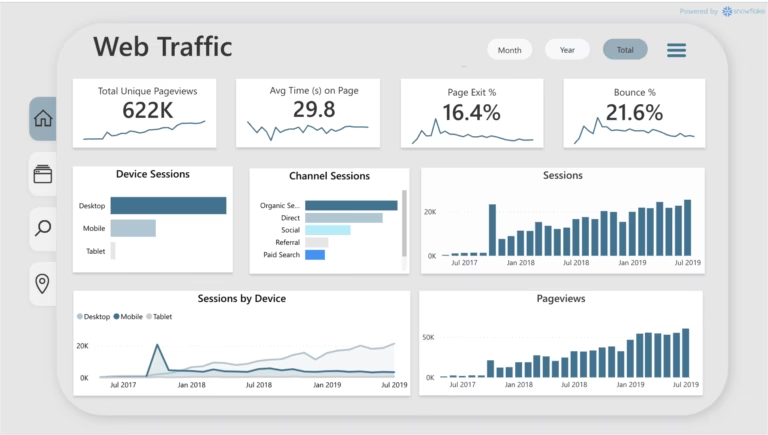
The five core features of any good analytics tool are data collection, insight generation, performance tracking, predictive analysis, and visualisation. Each one builds on the last. You collect the data, arrange it into insights, track performance against it, predict future trends from it, and then make it visible enough for the whole team to act on.
Without this layer, you might have a great CDP and a powerful CRM, but nobody in the room can tell you whether any of it is working.
3. The Martech Stack in Practice
A solid Martech setup has two sides: front-end technologies and back-end technologies.
The front end: your website, app, chatbots, and email templates, it is where the customer experiences your brand. The back end: your CRM, CDP, data storage, automation platforms, and analytical engines, it is where the intelligence lives.
As The MarTech Playbook puts it clearly: a weak back end will affect front-end personalisation, and poor front-end design will lower conversion. Both sides must be aligned in planning and execution.
There are over 14,000 Martech tools available today. Most marketing teams meaningfully use fewer than 10.
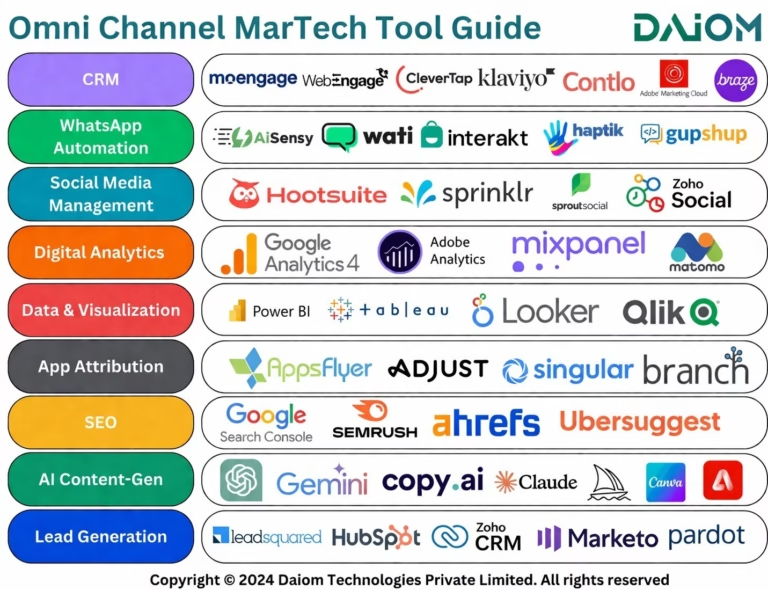
The answer is not more tools. It is using the right ones, connected to each other, fed with clean data, operated by people who understand what they are measuring, and evaluated against revenue rather than vanity metrics.
Start with the CDP. Build the automation layer. Add attribution. Let AI accelerate it. Measure everything against business outcomes.
That is the stack and the playbook. And for brands willing to build it properly, it is one of the most durable competitive advantages available today.
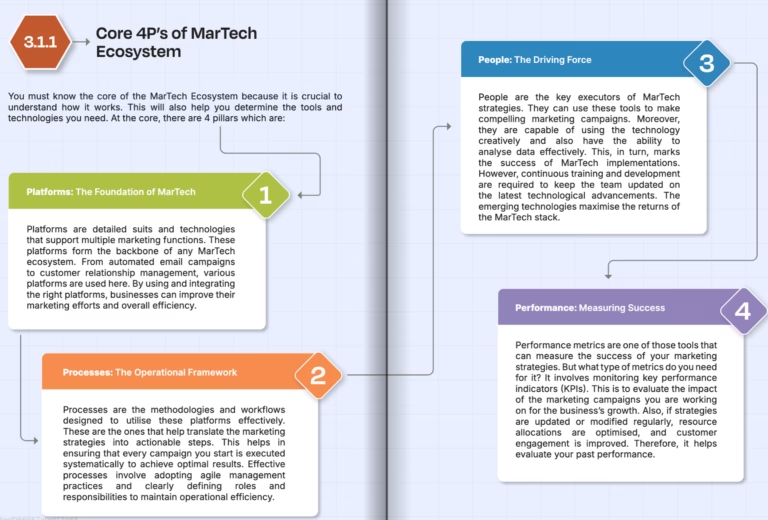
And at its core, the Martech ecosystem rests on four pillars: Platforms, Processes, People, and Performance. The tools are only as good as the processes built around them, the people trained to use them, and the performance metrics used to measure their impact.
This is exactly what I see when I work with brands that have great stacks but flat results.
Source: The Martech Playbook
4. Where Does This Leave Brands Today?
If you’re a brand, Martech is no longer a side project or a vanity layer. It’s how you:
- Move from channel silos to true omnichannel journeys.
- Turn first-party data into something meaningful
- Justify your budgets with real business value, not just impressions
- Build careers and teams that are future-ready, not stuck in 2010
Most importantly, it’s how you show up for your customers: consistently, intelligently, and humanly, no matter which screen, store, or stage of life they’re in. And that’s the real promise (and pressure) of Martech today.
The Martech Playbook offers a clear, structured framework for understanding this transformation. For leaders, marketers, founders, and growth teams navigating omnichannel complexity, it serves as both a strategic guide and an operating manual.
In a world that feels increasingly fragmented, Martech, if done right can bring clarity.
And clarity is what modern brands need most.