




Marketers are under constant pressure to personalize every message, show up on every channel and prove the return on every rupee or dollar spent. Doing that by hand no longer works.
Customers move between search, social media, email, chat, apps and physical stores before they buy. Each channel produces its own data, its own reports and its own to-do list.
This is why AI has moved from “nice experiment” to a core line in marketing budgets.
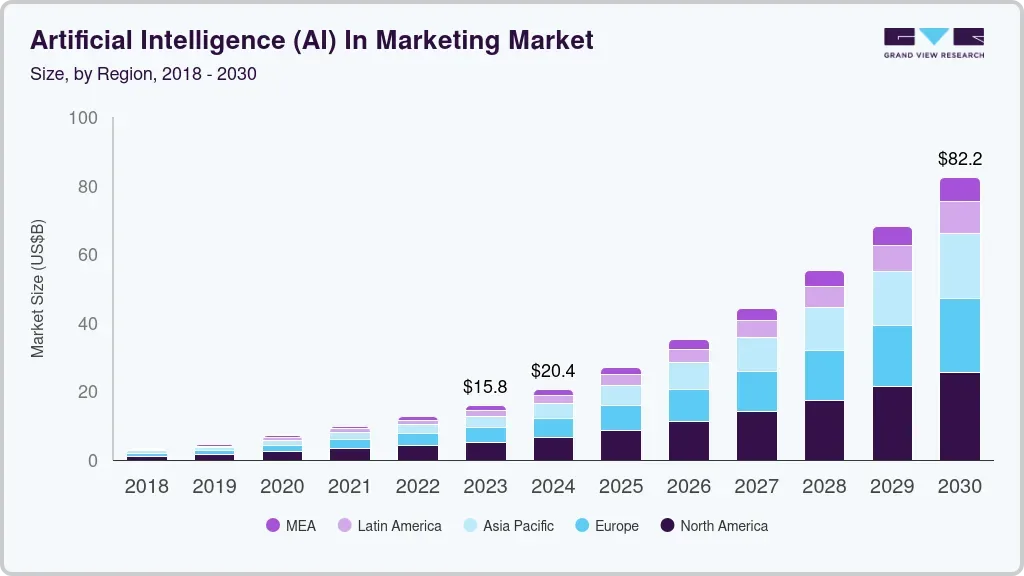
The numbers back it up. According to Grand View Research, the global AI in marketing market was worth USD 20.4 billion in 2024. It is estimated at USD 35.0 billion in 2026 and projected to reach USD 82.2 billion by 2030, growing at a CAGR of 25.0% between 2025 and 2030. That makes the market roughly four times larger in 2030 than it was in 2024.
But a big market number only helps if you know where the growth is coming from, and what to do about it.
This blog breaks the report down into plain language: what is driving adoption, which segments and regions lead, who the major players are, and how marketing teams can act on it.
1. Why Is AI in Marketing Growing So Fast?
Four forces keep showing up behind the growth.
1.1 Personalization Has Become the Baseline
Customers now expect brands to know what they want. AI helps marketers segment audiences more precisely and tailor offers to each person using their browsing and purchase behavior. Retail, insurance, finance, automotive and healthcare brands are all using it for this.
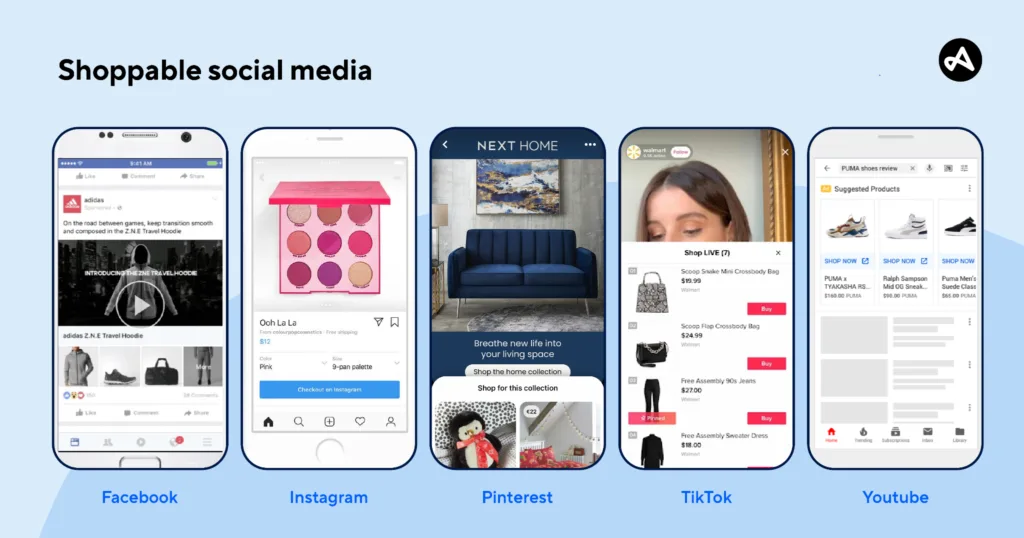
1.2 Social Media and Online Shopping Keep Expanding
More time spent on social platforms and more purchases made online means more data and more ad inventory. AI is the only practical way to make sense of both at the speed customers move.
1.3 Brands Are Shifting From Product-Led to Customer-Led
Companies are putting more weight on long-term relationships: a good experience before and after the sale, repeat orders and loyalty. AI helps them predict behavior from past purchases and act before the customer drifts away.
1.4 Creative Work Is Getting Faster and Cheaper
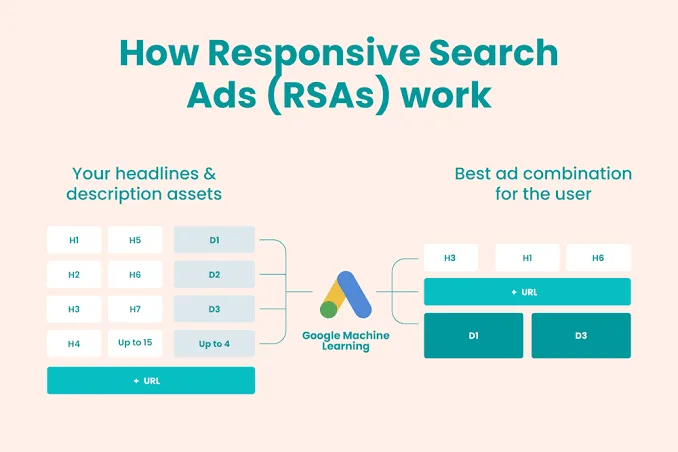
AI tools can now produce ad copy, images and video based on the advertiser’s goal, audience and message. Google’s Responsive Search Ads is a simple example: advertisers supply multiple headlines and descriptions, and the platform assembles and tests combinations. For many teams this reduces dependence on agency turnaround and cuts production cost.
Underneath all four sits one driver the report calls out directly: growing adoption of machine learning and AI across marketing platforms.
2. Segment Insights: Where the Growth Is
The report splits the market four ways: by component, application, technology and end-user industry.
2.1 By Component: Services Lead, Software Is Catching Up
- Services: This segment held the largest share in 2024, at 59.3%. It covers AI-led customer service and support, such as personalized recommendations and faster, more relevant responses built from purchase history and browsing behavior.
- Software: This segment is expected to post a significant CAGR over the forecast period. AI marketing software automates decisions using collected data and market trends. One example in the report is Seventh Sense, a platform that optimizes email campaign timing and engagement.
2.2 By Application: Content Curation Leads, Virtual Assistants Rise
The report tracks seven application areas: social media advertising, search engine marketing, virtual assistants, content curation, sales and marketing automation, analytics platforms and others.
- Content curation (largest share in 2024): Recommendation engines learn from user behavior to serve relevant content, while language models help produce posts and updates at scale for specific audiences and channels.
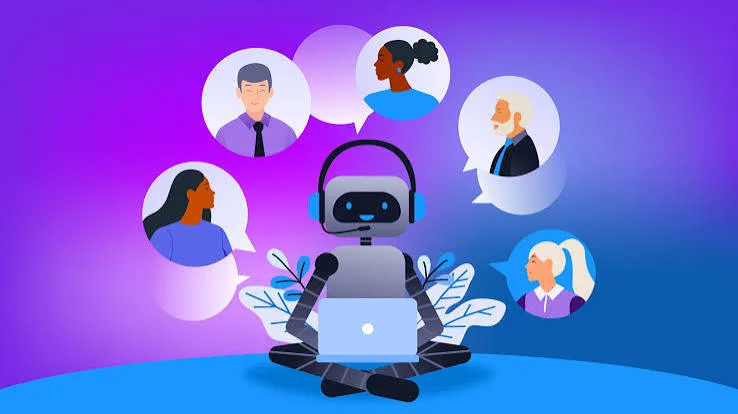
- Virtual assistants (significant CAGR): Chatbots, digital avatars and voice assistants use language processing, computer vision and machine learning to handle customer requests. Alexa, Siri and Google Assistant are the familiar examples.
2.3 By Technology: Machine Learning Dominates, Computer Vision Grows Fastest
- Machine learning: The largest segment in 2024. It powers recommendations, chatbots, sentiment analysis and text generation.
- Natural language processing: Tracked as its own segment, and closely tied to the chatbot and content use cases above.
- Computer vision: Expected to grow at the fastest CAGR. It can read images and video on social platforms to give marketers real-time signals about consumer behavior. The report points to Meta’s work on models that detect and classify objects in images and video without human labeling.
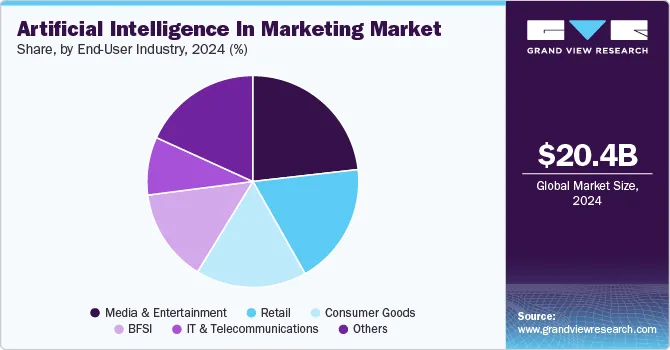
2.4 By End-User Industry: Media and Entertainment in Front
- Media and entertainment: The largest share in 2024, driven by strong traction for AI in advertising. The report cites Cadbury’s 2022 initiative that let small business owners create ads for free using AI tools and a celebrity’s voice and likeness.
- BFSI: Virtual assistants monitor transactions and customer behavior and log data for compliance systems.
- IT and telecommunications: Expected to grow steadily through 2030, with the industry both using AI for its own marketing and selling AI-powered marketing solutions to others.
- Retail and healthcare: Retailers use real-time data to personalize shopping, as with IBM Watson. Healthcare marketers use chatbots to raise engagement and predictive analytics to forecast demand by demographic group.
3. Regional Insights
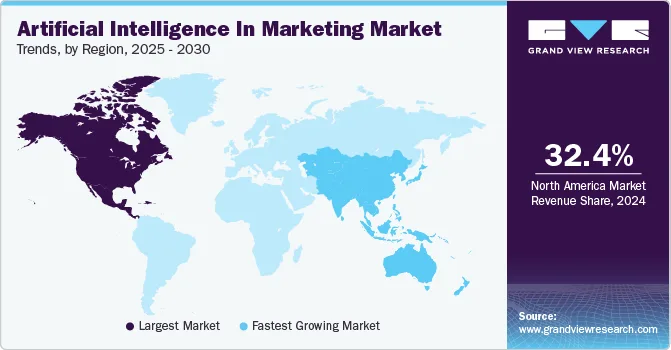
- North America (largest, 32.4% share in 2024): The report credits the spread of AI across retail, BFSI, healthcare and automotive, plus a dense base of technology companies. Businesses of all sizes in the region adopt AI faster than in most other markets.
- Asia Pacific (fastest-growing, 2025–2030): Growth is expected to outpace every other region. The report’s country coverage here includes China, Japan, India, South Korea and Australia.
- Europe, Latin America, Middle East and Africa: All are covered in the forecast. Country-level coverage includes the UK, Germany, France, Brazil, Mexico, Saudi Arabia, the UAE and South Africa.
For brands selling in India or across Asia Pacific, the takeaway is simple: this is where adoption is expected to climb fastest, so early investment in data and tooling matters.
4. Who Is Leading the Market?
The report describes a competitive market where a handful of global players hold a large share and focus on new products and partnerships. The ten companies it profiles are:
- Amazon
- Baidu
- Intel
- IBM
- Microsoft
- NVIDIA
- Oracle
- Salesforce
- Twitter (now X)
Two recent moves from the report show where the competition is heading:
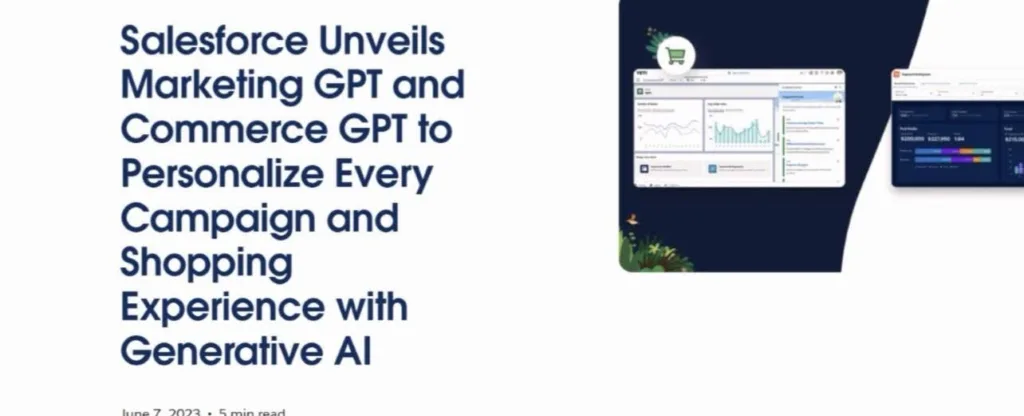
- Salesforce (June 2023): Launched Marketing GPT and Commerce GPT, generative AI products for personalized emails, audience segmentation, automated journeys and tailored shopping experiences.
- Bain & Company and OpenAI (February 2023): Announced a global services alliance to bring OpenAI tools into consulting work, with The Coca-Cola Company as the first enterprise client.
5. Challenges Marketers Should Plan For
Fast growth does not mean smooth adoption. These are the risks to plan around, based on common industry experience rather than the report itself:
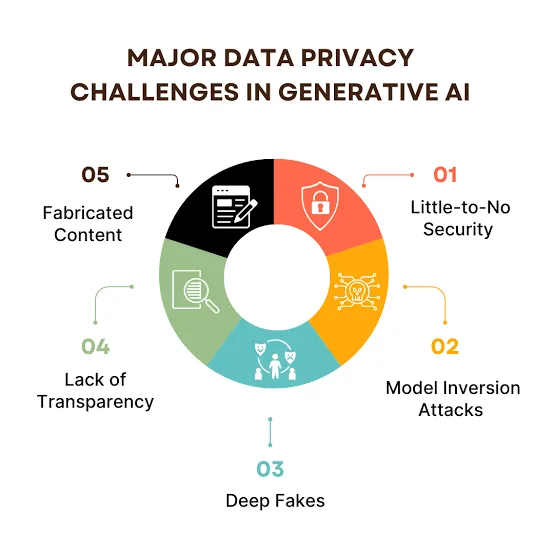
- Data privacy: AI relies on customer data. Weak consent and storage practices can lead to regulatory trouble and lost trust.
- Bias in data: If past data under-represents certain groups, AI will repeat the gap in targeting and content.
- Brand tone drift: Automated content can sound generic or off-brand without review.
- Vanity metrics: Without clear goals, AI can optimize for clicks or opens instead of revenue and retention.
- Vendor concentration: With a few large players dominating, switching costs and dependence on one platform can grow.
- Skills and integration gaps: Tools are only useful if your data is clean and your team knows how to act on the output.
The safest approach is to set clear goals and limits, keep humans in charge of strategy and sensitive content, and review results on a regular schedule.
6. How to Put These Trends to Work
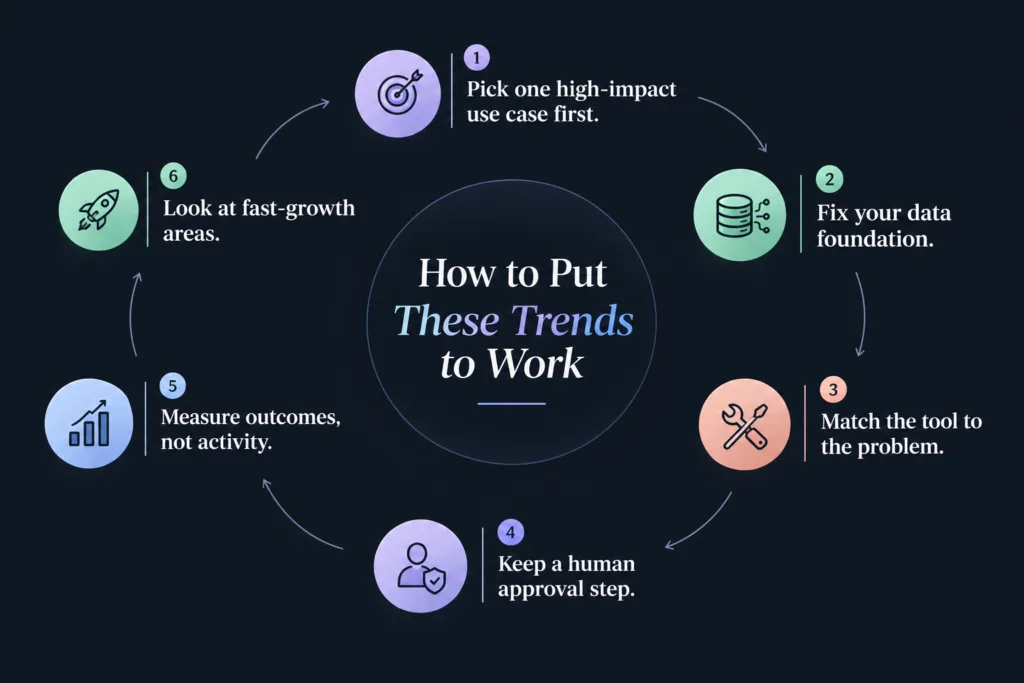
- Pick one high-impact use case first. Content curation, chatbots and email timing are proven starting points.
- Fix your data foundation. Connect website, app, CRM and store data before adding more AI on top.
- Match the tool to the problem. Decide whether you need content generation, analytics, automation or customer service support, then choose accordingly.
- Keep a human approval step for customer-facing messages and ad copy.
- Measure outcomes, not activity. Track conversion, retention and customer lifetime value alongside clicks and opens.
- Look at fast-growth areas. Virtual assistants and computer vision are expected to grow quickly, so test them early on a small scale.
7. Conclusion
AI in marketing is moving from experiment to standard practice. The market is projected to grow from USD 20.4 billion in 2024 to USD 82.2 billion in 2030, with services, machine learning, content curation and media and entertainment currently leading, and virtual assistants, software and computer vision set to grow quickly.
The brands that benefit most will not be the ones that adopt the most tools. They will be the ones that start small, connect their data, pick clear goals and keep people in control of the final call.