



Marketing is getting more expensive. Acquisition costs are rising, paid media is crowded, and the returns are shrinking. The brands that are winning today have shifted focus, from chasing new customers to maximising the value of the ones they already have. And the foundation of any serious retention strategy is one simple idea: know your customer.
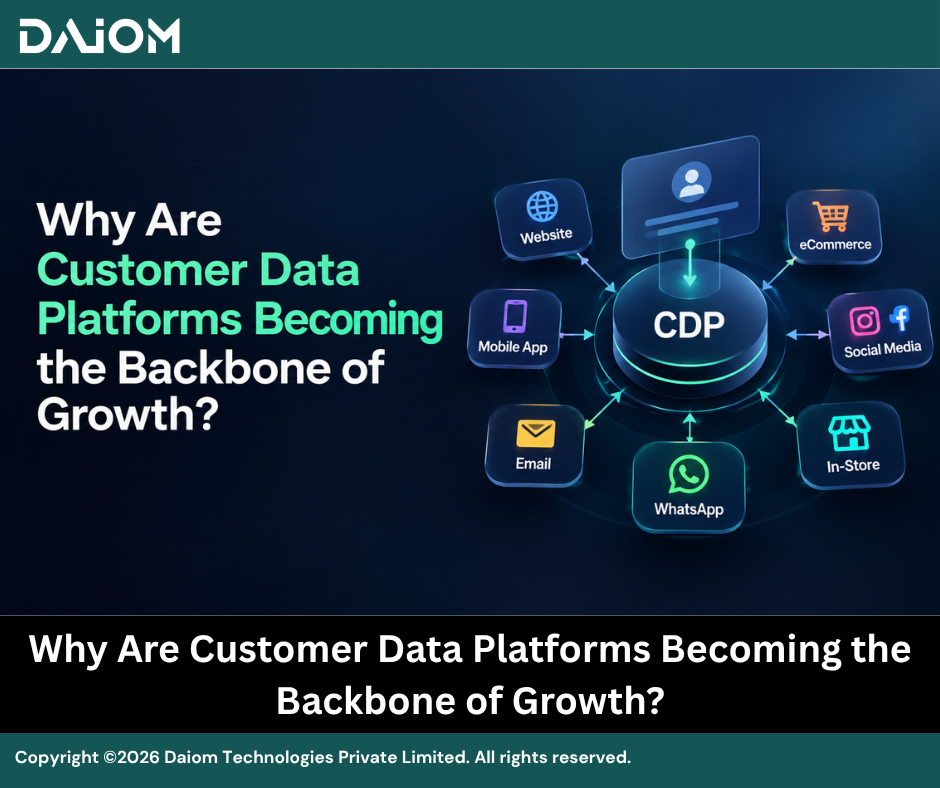
Knowing your customer means having their data, all of it, from every touchpoint stored in one place where you can actually use it. That is what a CDP (Customer Data Platform) is. Not a tool. Not a platform feature. A database of your customer, built from everything they have told you, directly or through their behaviour.
In the age of AI, this foundation becomes even more important. AI is only as good as the data it can reach, and that data has to be accessed through the right privacy layers, aggregated properly, and then made available for consumption. A CDP is what makes that possible. It sits between raw customer data and the AI systems that act on it, making sure the right information flows to the right place, safely and in a form that can actually be used.
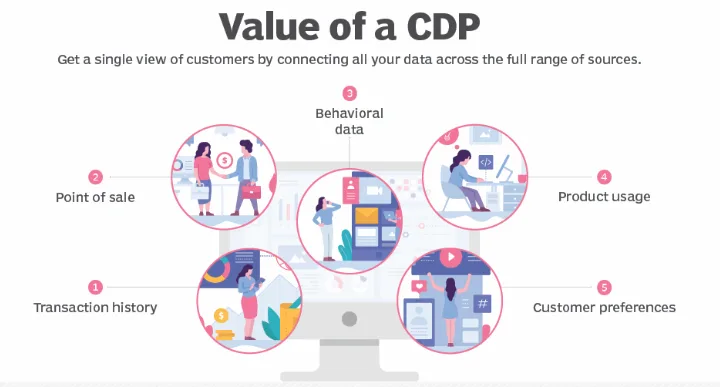
But here’s where it gets complicated. Most brands hear “CDP” and immediately ask what the key components are, which platform to pick, and how much it costs. The honest answer is that the components matter less than the connection. A CDP is only as powerful as how close it sits to where you actually do your marketing. If your data lives in one place and your campaigns run from another, you’re already losing.
The other thing worth understanding is that not all CDPs are built the same way. Some are embedded directly into your marketing stack, some sit as a separate layer, and some overlap with your CRM in ways that create more confusion than clarity. Knowing which type fits your business is the real question, not which one has the most features.
In this blog, we will discuss what CDP really means and how brands should think about choosing a retention platform from Anand Jain, Co-founder of CleverTap, whom we hosted on the recent episode of Dilse Omni Talks.

“Great retention starts with a single truth about the customer—and that truth lives in the CDP.”
What Actually Lives Inside a Modern Retention Platform?
When people talk about retention platforms or CRM tools, they often think only about messaging.
But going deeper, a modern retention platform has several components working together.
And the foundation of all of it is the CDP. We can think of the platform in layers.
A good Customer Data Platform (CDP) is critical because it stitches together the anonymous, known‑customer, and identity layers of the journey into a single, actionable view.
According to Gartner’s guidance on CDP capabilities, core components include:
- Data collection across anonymous and known identifiers
- Identity resolution to unify profiles
- Segmentation plus activation for orchestration across the full customer journey.
When these components are robust, marketers can consistently recognize individuals across channels, personalize in real time, and optimize touchpoints, directly improving customer impact, lifetime value, and marketing ROI.
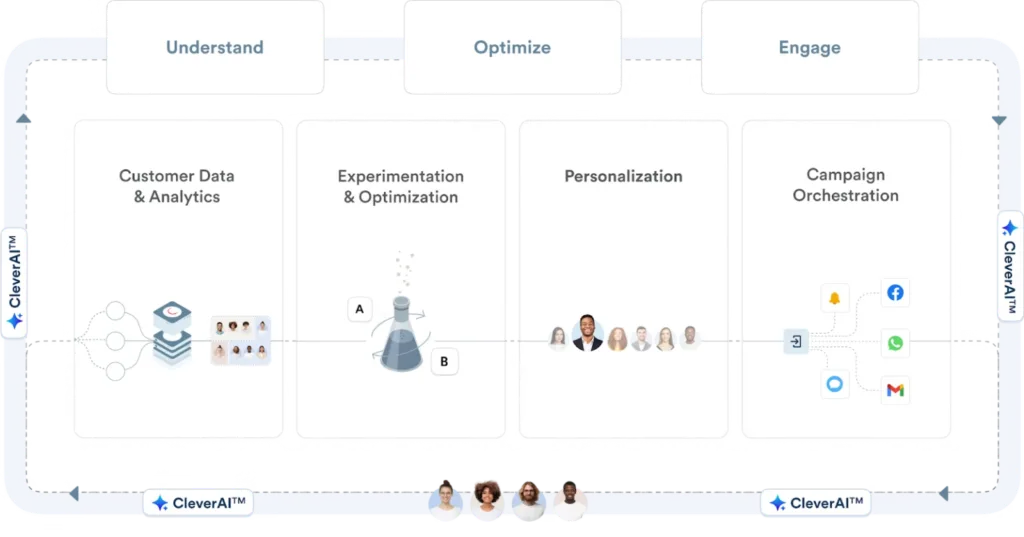
1.1. The Data Foundation (CDP)
The first layer stores all customer data. This includes not only customer identity but also behaviour: every click, view, search, purchase, and interaction across channels.
Earlier, when data storage was expensive, brands stored only transaction data. Only customers who had signed up or purchased were recorded.
Today storage is not a problem, and this means brands can store visitor data as well.
Even if someone simply browses a website without buying anything, that behaviour can be captured and stored.
This creates a much richer understanding of intent.
1.2. Analytics
Once the data is stored, the next layer is analytics.
This layer answers questions like:
- Which users are most likely to churn?
- Which users are likely to purchase again soon?
- Which campaigns brought high-value customers?
Analytics turns raw data into insights.
1.3. Messaging and Orchestration
The next layer is message orchestration.
This is the system that decides:
- Which message should be sent
- On which channel
- At what time
- How frequently
Channels can include:
- SMS
- Push notifications
- In-app messages

The central control system ensures customers are not spammed, and messages are delivered at the right moment in their journey.
1.4. Offers and Loyalty
Retention is rarely driven by communication alone. Here, offers and loyalty programs play a big role.
A modern platform needs the ability to manage different types of incentives such as:
- Buy-one-get-one offers
- Flat discounts
- Product-specific promotions
- Spend-threshold rewards
These incentives help nudge customers toward the next purchase.
1.5. Personalization
Personalization ensures that communication reflects what the customer actually cares about.
The ultimate goal of personalization is “individualization”, a state where the communication feels so natural that the user doesn’t even realize they are being targeted.
If someone only buys during sales, the system should recognize that behaviour.
If another customer prefers WhatsApp over email, the system should adapt accordingly.
Today, AI is layered across all of these systems.
AI models help predict churn, recommend products, optimize message timing, and identify high-value customer segments.
AI increasingly drives the intelligence behind modern retention marketing.
What Is a CDP Really?
At its most fundamental level, a CDP is a database that brings together everything a brand knows about a customer into one unified profile. Four types of data typically live inside it:
- Demographic data: who they are: age, location, gender, income bracket
- Behavioural data: what they do: pages visited, products browsed, time spent, cart activity, purchase frequency
- Attribution data: how they found you: which campaign, which channel, which touchpoint brought them in
- Transactional data: what they bought, when, how much, and how often
Together, these four layers stop the customer from being a set of disconnected signals across different systems, and turn them into one complete, actionable profile.
Each system knows a piece of the customer story but none of them knows the whole story.
This creates a strange situation where brands technically have a lot of data, but still lack a clear view of the customer journey.
And this is exactly where the Customer Data Platform (CDP) becomes important.
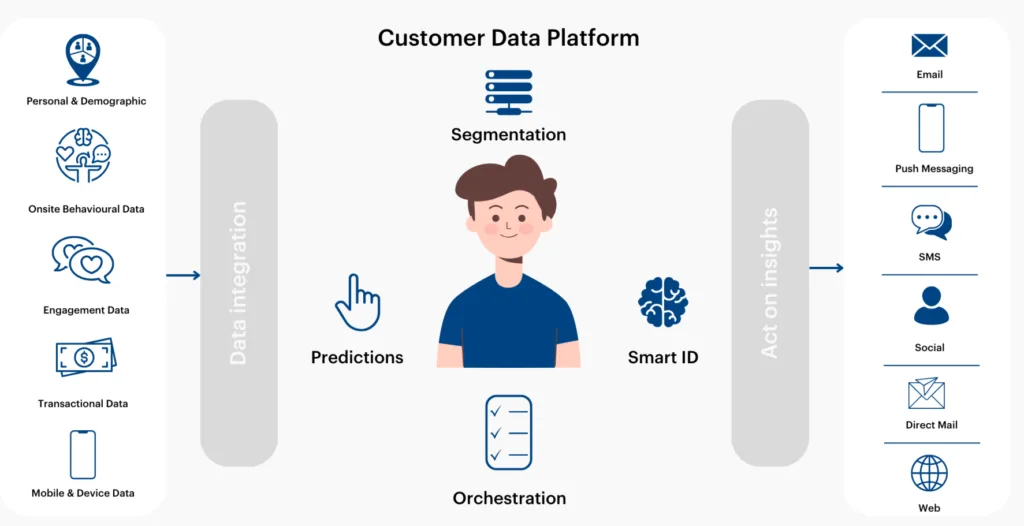
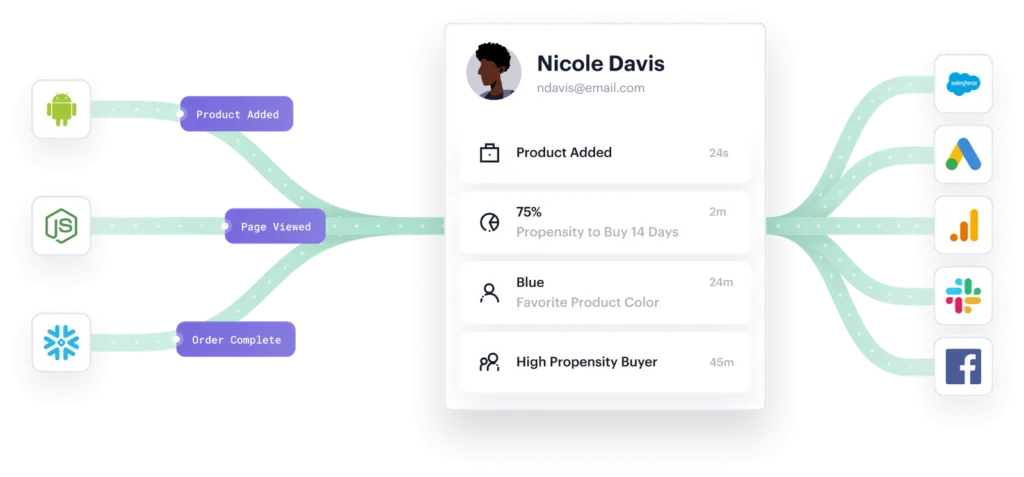
At its core, a Customer Data Platform (CDP) is a unified system that collects customer data from every touchpoint and stitches it together into one complete profile.
Let’s say a customer named Priya interacts with a brand across different channels:
- On Monday, she visits the website and adds a kurta to her cart but doesn’t purchase it.
- On Wednesday, she walks into a store and tries a similar product.
- On Friday, she clicks an Instagram ad and finally buys through the app.

Without a CDP, these interactions appear as three different customers in three different systems.
With a CDP, it becomes one customer journey.
Every action, every interaction, every signal gets connected to a single customer profile.
That unified view becomes the foundation for everything else in retention marketing.
Who Actually Needs a CDP?
Not every brand needs one. Before investing, ask one honest question: do you have first-party customer data?
- If you run a loyalty programme: yes, you need a CDP. You are collecting rich behavioural and transactional data and you need somewhere to store, unify, and act on it.
- If you have first-party data but no loyalty programme: yes, still worth it. Any brand with a D2C website, an app, or direct customer relationships has data worth organising.
- If you sell only on marketplaces: no, not yet. Marketplace sellers do not own their customer data. Amazon and Flipkart do. Until you have a direct relationship with your customer, there is no data to put in a CDP.
This brings up an important point: the single best way to start building first-party data is through a loyalty programme. A loyalty programme gives customers a reason to identify themselves — and gives you a reason to track them. It is the bridge between anonymous transactions and known customer relationships.
What Data Actually Goes Into a CDP
A modern CDP stores far more than basic customer information.
Traditionally, customer data meant things like: Name, Phone number, Purchase history
But today the system stores customer journey events.
For example:
- Which ad campaign brought the user to the website
- What product categories they browsed
- Which products they added to cart
- How long they spent on a page
- Which features they interacted with
Some businesses capture even deeper signals.
A travel platform, for example, may track how far in advance a user searches for trips.
A person browsing two months before a vacation may care about the size of the swimming pool.
A person browsing two days before travel probably just wants availability and price.
These signals capture intent, not just transactions.
And intent data is incredibly valuable for retention marketing.
Why Do Most Brands Fall Into the Same Trap?
There is a pattern that appears again and again in marketing teams which is: Retention numbers are flat.
When retention numbers fall, the first instinct of most teams is to blame the tool and go for a new platform. But even after onboarding new tools, the number rarely goes up. Because the problem was never the tool in the first place.
If you are already using one of the top platforms in the market, the gap is almost never in the software, it is in how well your data foundation is set up underneath it. No platform, however powerful, can deliver results on top of broken or disconnected data.
In the legendary Indian film Sholay, there is a character named Thakur. He is a powerful figure who can see the villain, Gabbar, but he cannot shoot him because he has no arms. This is exactly how most traditional Customer Data Platforms (CDPs) operate today.
Some CDPs are excellent at storing and analysing data and they can tell you which users are about to churn.
They can predict which users might buy again.
But they cannot actually reach those users.
To act on the insight, you must export the data into another messaging platform.
And this creates a problem.
When data moves between systems, the context often gets lost.
The messaging tool may receive a list of users, but it may not understand the behavioural patterns behind that list.
The most effective platforms today combine data, analytics, and execution in one system.
This allows insights to immediately trigger actions… without delays, manual exports, or lost context.
Should You Build Your Own CDP or Just Buy One?
This question comes up constantly, and there are really two models to understand:
Standalone CDP: a separate data layer that sits alongside your existing tools. It collects and unifies data, but you still need other platforms to execute campaigns. The risk here is the Thakur problem: you can see everything but cannot act directly. Data has to move between systems, and context often gets lost in transit.
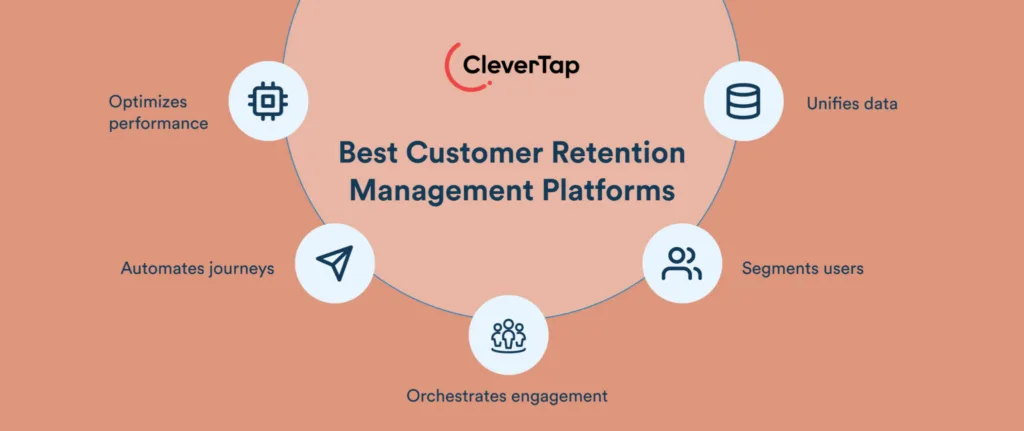
CRM platforms with built-in CDP: tools like CleverTap where the data layer and the execution layer are one system. Insights immediately trigger actions: no exports, no delays, no lost context. For most brands, this is the more practical model.
Unless building data infrastructure is core to your product, do not build your own. It becomes a side project, and side projects do not get the attention they need. Buy a proven platform and put your energy into using it well.
Questions to Ask Before Choosing a Retention Platform:
Before evaluating any platform, brands should step back and ask a few key questions.
- Does the platform unify data from every touchpoint — online, offline, and in-store?
- Can it act on insights in real time, or does it only generate reports?
- Does it store long-term customer memory, or only short-term activity?
- Can it help build customer cohorts to track retention health over time?
- Does the team have the capability to fully use the platform?
Technology alone cannot solve retention challenges.
People, processes, and data strategy matter just as much.
Conclusion
Most brands that struggle with retention are not struggling because of the tool. They are struggling because the data foundation underneath it is broken or disconnected. No platform, however powerful, can fix that for you.
A CDP is not the answer, it is the starting point. Fix the data foundation first. Know your customer. Everything else follows from that.
Unified customer data, real time execution, and a team that knows how to read the signals, that is what separates the brands growing on retention from the ones still pouring money into different tools.
And more often than not, the problem is not in the channel. It is in how well the brand truly understands the person on the other side. Fix that and retention stops being a problem you are chasing. It becomes a growth engine you are actually in control of.
In a world where AI can generate 50,000 campaign variations in a single day, the barrier to success is no longer the availability of data, it’s your ability to orchestrate that data into a seamless, human-centric experience.