




Everywhere we look this week, our feeds are full of Black Friday deals.
So I thought, why not share a very personal experience from 2008, when I first visited the US and experienced Black Friday first-hand… and ended up spending $4,800 on things I mostly didn’t need.
Four hours in a queue to buy things. Five hours in another queue to return them. And a rather unpleasant conversation with my wife in between.
That was my first Black Friday.
During my stint at American Express, I got to travel to the US seven times. On one of those trips, I landed right in the middle of Thanksgiving weekend.
Thanksgiving itself was family, celebration and, of course, turkey. What came the next day was something I had never seen before.
E-commerce was still in its infancy then. Circuit City was one of America’s leading electronics retailers, so I decided to walk into one of its stores and see what the fuss was about.
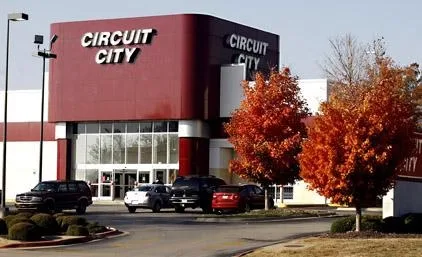
I stood in a queue for almost four hours.
I went in to buy a few things. But then I looked around and saw everyone filling their carts, and something shifted. Every product started to look like a great deal. Every deal started to feel like a once-in-a-lifetime chance.
The more people around me bought, the more I wanted to buy.
By the time I walked out, I had spent almost $4,800. That was somewhere between two and three times my monthly take-home salary back then.
When I called my wife and told her about my shopping adventure, she had a very different view of how much money I had supposedly saved!
The next day I went back to return some of it. The return queue was almost twice as long as the buying queue. It took me another five hours.
Back then I was just a customer caught up in the excitement. Today, after years in customer marketing and retail, I look at that weekend and see what an extraordinary shopping phenomenon it was.
So why is it called Black Friday?
Black Friday is the Friday after Thanksgiving, and in America it traditionally marks the start of the Christmas shopping season.
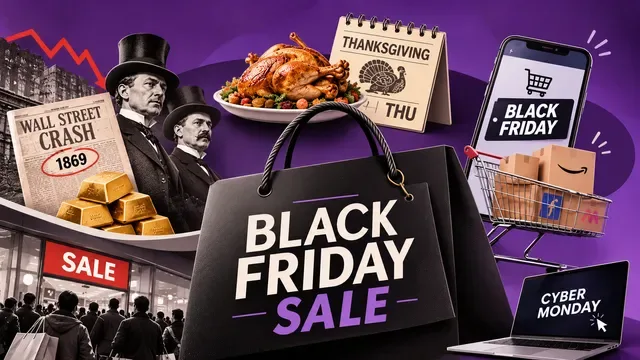
The name had nothing to do with discounts or profits at first. Britannica traces it to the early 1960s, when Philadelphia police began using the phrase for the chaos on the streets as huge crowds poured into the city after Thanksgiving. Some accounts date the usage back to the late 1950s.
Retailers later gave it a happier meaning. In old accounting, losses went in red ink and profits in black, and the popular story was that holiday shopping pushed retailers from red into black. That wasn’t the real origin, but it was brilliant retail storytelling.
More importantly, Black Friday was built around a real consumer need. Christmas was coming, people had gifts to buy, and retailers gave them a reason to finish early. It wasn’t a random day that marketers picked to offer discounts.
The brilliant economics hiding inside the crowd
What fascinates me about the original Black Friday is how neatly it combined consumer psychology with retail economics.
Retailers created scarcity with limited quantities, urgency with a short window, and excitement by putting thousands of shoppers under one roof. The physical environment itself became the marketing.
There were no personalised push notifications at Circuit City. No abandoned-cart campaigns. No recommendation engine nudging me. Just hundreds of people buying things around me.
And that was enough to make me spend $4,800.
Today we would call it social proof, FOMO and impulse buying. Back then, retailers were using the same principles without the vocabulary.
There was hard economics too. Retailers could pull Christmas spending forward, negotiate better deals with manufacturers, clear inventory and improve cash flow. A heavily discounted television got you into the store, and then you left with accessories and other products that carried better margins.
The goal was never just to sell one product at a discount. It was to capture a bigger share of the customer’s festive budget before a competitor could.
Relation between Black Friday & Cyber Monday
In 2005, as online shopping picked up, Shop.org (part of the US National Retail Federation) coined “Cyber Monday” for the Monday after Thanksgiving.
The distinction was neat. Black Friday was for going to stores. Cyber Monday was for finding deals on the internet.
For a while they felt like two different experiences. But as e-commerce grew, the lines blurred. Black Friday went online. Cyber Monday deals started earlier. Retailers merged the two into Cyber Week.
And eventually, even a week wasn’t enough.
Adobe Analytics says American consumers spent $11.8 billion online on Black Friday 2025, up 9.1% on the year before. Cyber Monday was bigger still at $14.25 billion, the largest single online shopping day in US history. Across the five days from Thanksgiving to Cyber Monday, online sales came to $44.2 billion. For the second holiday season running, Black Friday grew faster than Cyber Monday, as shoppers went for deals earlier.
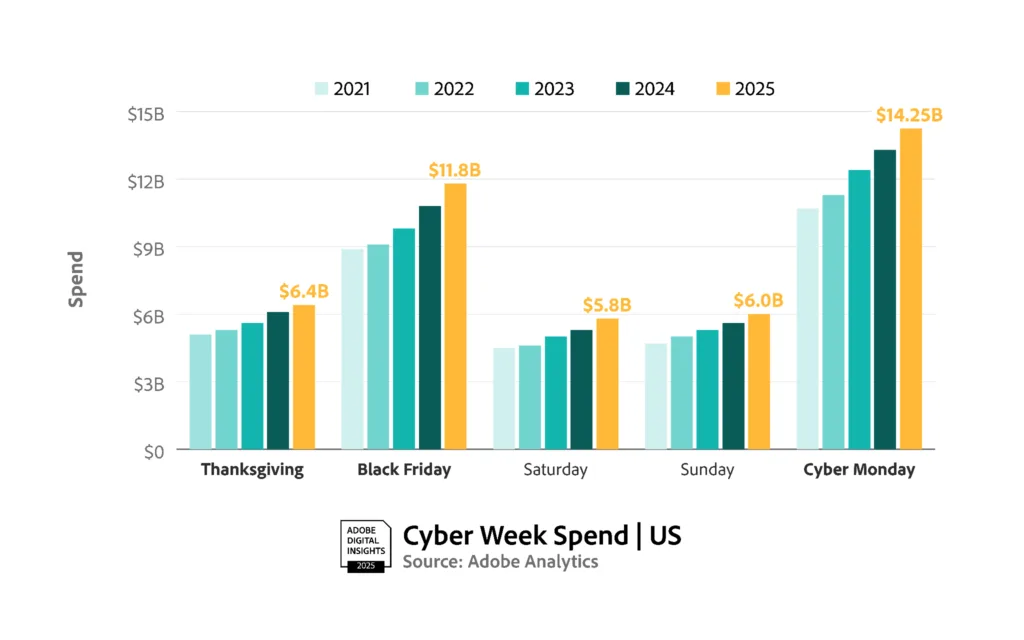
In revenue terms, the internet has made Black Friday bigger than ever. In terms of experience, I wonder whether it has cost us some of its spirit.
Did the internet kill the thrill?
These days, my inbox is full of Black Friday offers before Black Friday even arrives.
There is an early-access sale, then a pre-Black Friday sale, then the actual Black Friday sale, then an extended Black Friday sale, and then Cyber Monday.
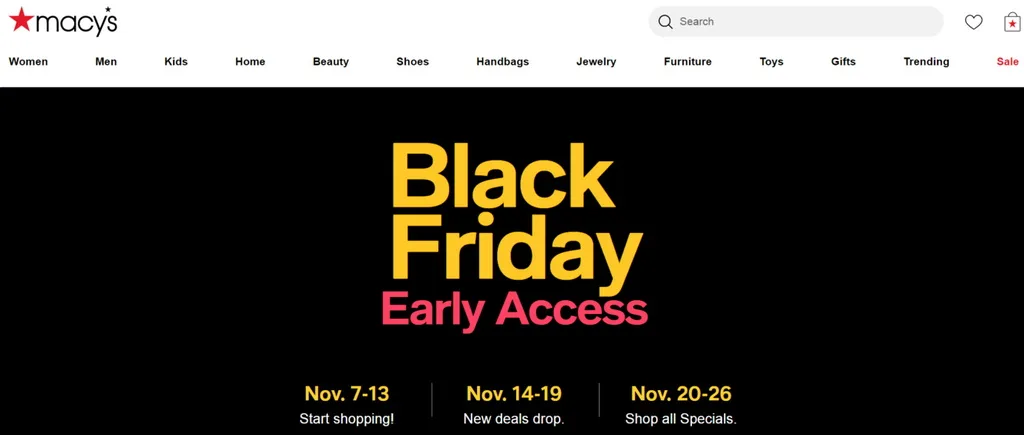
What used to be a few frantic hours has become a marketing campaign spread across weeks.
As a customer, I love the convenience. You can compare prices, read reviews, discover products and buy without leaving your bed.
But something has changed. The anticipation of waiting for one particular day, the thrill of spotting a great deal, the energy of shopping beside hundreds of strangers, the urgency of deciding right now: all of it has been diluted.
When a deal runs for ten days, it doesn’t feel special on day ten. And when every brand runs a sale almost every weekend, shoppers slowly stop believing that any sale is exceptional.
The challenge for retailers is to bring back the excitement of Black Friday without bringing back the inconvenience.
Black Friday has landed in India. Does it belong here?
Over the last few years I’ve watched more and more Indian brands celebrate Black Friday. Some have even given it a local spin, like Nykaa’s Pink Friday, which ran from 21 to 30 November last year across more than 1,800 brands.

From a business point of view I understand it. It gives brands one more chance to create demand after Diwali, win new customers and clear inventory.
But I keep coming back to one question.
What is the consumer occasion behind Black Friday in India?
In America, people were getting ready for Christmas. Gifting was already on their minds, and Black Friday simply sped up their decisions.
In India, Christmas is celebrated by many, but for a large part of the country the biggest shopping and gifting occasion is Diwali. By the time Black Friday arrives, plenty of Indian shoppers have already bought their electronics, clothes, furniture, jewellery and gifts.
Are we copying a successful global playbook without understanding the consumer behaviour that made it work in the first place?
What are India’s new-age brands actually doing with it?
Before I argue that India doesn’t need another sale, I should look at what Indian brands are really doing with Black Friday. And the data is really interesting.
GoKwik, which powers checkout for thousands of D2C brands, says Indian D2C brands on its network saw gross merchandise value jump 58% and total orders rose 63% over last year across the 28 November to 1 December 2025 window. That is more than twice the pace it saw in global markets. About 41% of shoppers came from Tier 3 India, and orders peaked at 10 PM on Friday, as post-dinner scrolling turned into buying.
GoKwik also says Black Friday overtook Diwali as the biggest shopping day on its network. A caution on that one: it covers only GoKwik’s D2C brands, and the report doesn’t say whether it counts orders or value.
So for digital-first India, Black Friday is already a second peak. Here are five brands, across different categories, and how each one plays it. Almost every number below is the brand’s own claim, so read them as signals rather than audited results.
| Brand | Category | What they reported |
| Snitch | Men’s fashion | 5 lakh+ units in 3 days; 90% through its own channels; 4x last year’s Black Friday (company statement) |
| NEWME | Gen Z fashion | Almost 10x traffic in a day; 1.5 lakh customers walked into its 18 stores in 3 days (founder’s claims) |
| MARS Cosmetics | Beauty | 2x last year’s sales; nearly half of orders from Tier II and III (brand’s claim) |
| GOBOULT | Electronics | Expected 30–35% more revenue and 30–35% lower CAC (expectation, not a result) |
| XYXX | Innerwear and basics | Last year: 80% revenue spike, 50% lower CAC (founder’s claim) |
1. Snitch: turn the sale into a product drop
Snitch, the men’s fashion brand, didn’t simply mark down old stock. Its 2025 sale offered flat 50% off on new drops, with fresh styles released specially for the sale, from 27 November to 1 December across its app, website and every store. According to the company, it sold over 5 lakh units in three days, which works out to roughly 116 units a minute. About 90% of sales came through its own channels, and the company called it four times last year’s Black Friday. What I like here is the discipline: Black Friday as an event for new product, run across online and stores at once, and sold through its own platforms rather than leaning on marketplaces.

2. NEWME: the queue is back
NEWME, the Gen Z fast-fashion label, says it was the first brand to run a Black Friday sale in India, about three and a half years ago, and that it now treats it as its biggest day. Its CEO told Marketing Mind the website and app saw almost 10x traffic in a single day. Indian Retailer reports the brand said 1.5 lakh customers visited its 18 stores in three days. Before the sale, the co-founder pointed to pre-registrations and store queues as early signals.

3. MARS Cosmetics: beauty as a discovery moment
MARS Cosmetics said its Black Friday sales were about 2x last year across all its retail touchpoints, with Tier II and III shoppers making up nearly half of orders. Its marketing VP had earlier called Black Friday a must-win window for younger beauty shoppers, and said he expected first-time customers who could be retargeted in December. That is a very different job from clearing stock: it is an acquisition event for the festive season’s next chapter.
4. GOBOULT: clearing the pipeline after Diwali
GOBOULT, the consumer electronics brand, expected Black Friday to bring 25–30% more traffic, 30–35% more revenue and a 30–35% fall in customer acquisition cost, with about 65% first-time buyers. To be clear, those were expectations before the sale, not results. The more useful insight came from Deloitte India’s Praveen Govindu: electronics brands launch new products before Diwali and end up with inventory, so Black Friday lets them clear the pipeline and make room for new stock. Which is exactly the old Circuit City logic of clearing inventory and improving cash flow.

5. XYXX: bundles, not just discounts
XYXX, the innerwear and basics brand, says Black Friday has become almost as impactful as Diwali for it, though it plays a different role. Founder Yogesh Kabra said that last year the brand saw an 80% revenue spike, a 50% drop in customer acquisition cost and a more than 200% jump in throughput on slow-moving styles. The brand leans on bundles, winter collections and special Black Friday packaging rather than a plain price cut.
What I take from these five. Across categories the pattern is the same. For new-age brands, Black Friday is less about the discount and more about acquiring customers cheaply, moving slow inventory and getting both stores and apps to work together. Those are also the reasons the original Black Friday worked. What I don’t see in any of them is a reason that belongs to the Indian shopper’s calendar.
That’s why the data makes my question sharper rather than weaker. If digital-first brands already treat Black Friday as a second peak, what is the occasion for the customer? Discounts alone are not an occasion. And remember the limits of this data. It comes from D2C brands and online platforms. It doesn’t speak for the neighbourhood retailer, who is where most of India’s festive money still goes, as the next section shows.
What if India’s Black Friday landed during Navratri?
India doesn’t lack shopping occasions. We have Navratri, Dussehra, Dhanteras, Diwali, regional festivals and a huge wedding season.
According to the Confederation of All India Traders, Diwali 2025 trade reached a record ₹6.05 lakh crore, made up of ₹5.40 lakh crore in goods and ₹65,000 crore in services, up 25% from ₹4.25 lakh crore the year before. CAIT also says that around 85% of it went through traditional, non-corporate markets.
The demand is already there.
If Black Friday’s original job was to get people to finish their Christmas shopping early, the closest Indian equivalent could be a shopping event during Navratri, a few weeks before Diwali.
Amazon’s Great Indian Festival and Flipkart’s Big Billion Days understand this behaviour very well. But they are largely platform-led events.
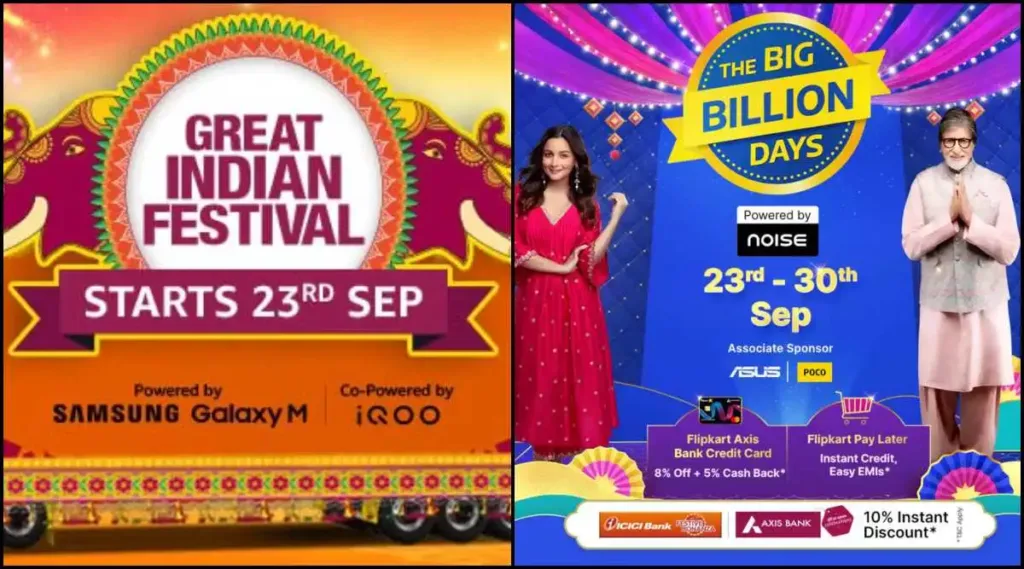
Imagine an occasion where thousands of independent retailers, shopping malls, D2C brands, neighbourhood stores, banks and e-commerce platforms come together for one or two days. A truly omnichannel shopping festival.
Customers could discover products online, experience them in stores, unlock exclusive offers and choose how they want to complete the purchase. It could become something families plan weeks ahead.
It need not be called Black Friday. It need not even fall on a Friday. It just needs real cultural and consumer relevance.
India doesn’t need another sale
What made Black Friday work wasn’t only the percentage off. It was culture, timing, consumer psychology, economics and a memorable physical experience, all arriving together.
In our race to digitise everything, we have become exceptionally good at making shopping convenient. We haven’t necessarily got better at making it exciting.
Almost two decades later, I still remember my first Black Friday at Circuit City. I certainly don’t remember most of the online sales I have joined in the last few years.
That, to me, is the difference between a sales campaign and a shopping phenomenon.
Maybe the next big opportunity for Indian retail isn’t to import another American shopping tradition. Maybe it’s to build one of our own.
America built Black Friday around Christmas.
Can India build its own iconic shopping occasion around Diwali?
And hopefully, without making anyone spend nearly three months of salary in four hours!