



Every D2C founder eventually reaches the same milestone:
Should we open our first store?
It’s one of the most exciting decisions in a brand’s journey—but it’s also one of the easiest ways to burn capital if approached without a clear strategy.
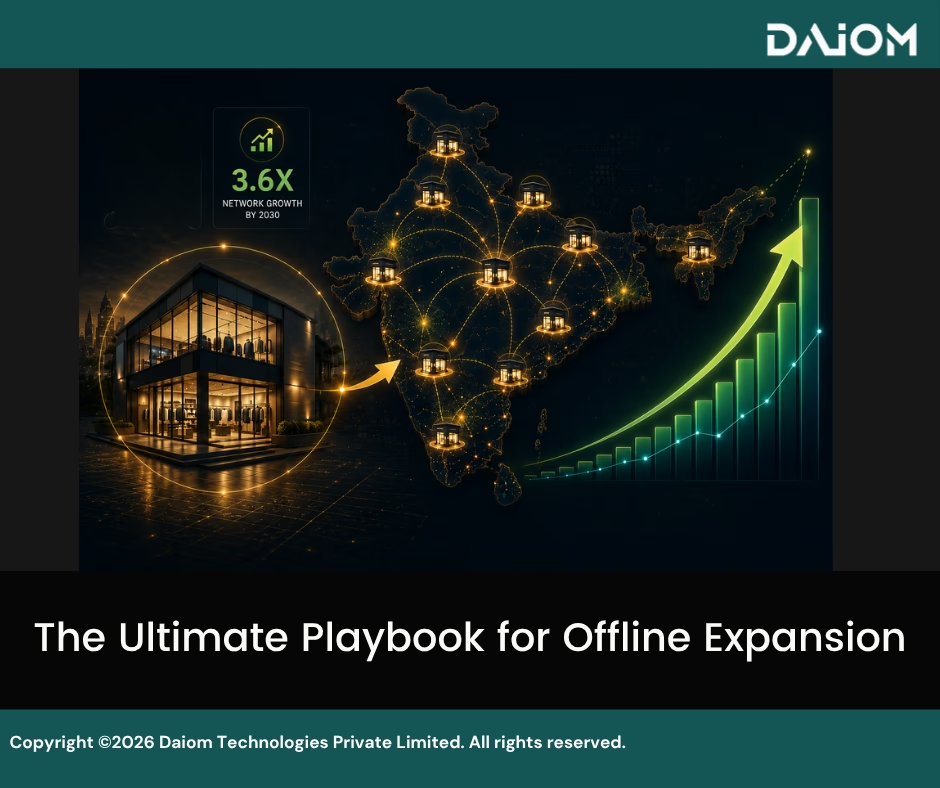
India’s retail market is projected to grow from nearly $1 trillion today to around $2 trillion by 2030. Yet, despite the rapid rise of ecommerce, around 90% of retail sales are still expected to happen offline. What has changed isn’t where people buy—it’s how they buy.
Consumers increasingly discover brands online, compare products across channels, and then choose the most convenient place to complete the purchase. Digital has become the discovery engine, while offline remains the transaction and experience engine.
For consumer brands, this fundamentally changes the role of physical retail. Offline is no longer just another distribution channel—it’s a powerful lever for customer acquisition, trust, product discovery, and long-term growth.
That’s why brands like NewMe, GIVA, Lenskart, CaratLane, and The Sleep Company are investing heavily in physical stores. They’re not moving away from ecommerce; they’re building an omnichannel business where online and offline strengthen each other.
But opening stores is only the beginning.
The real challenge is knowing where to expand, how to fund growth, and how to build a profitable retail network that can scale.
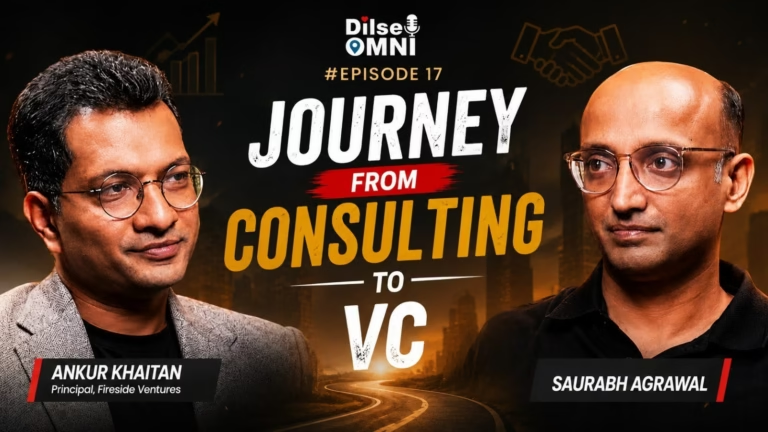
Drawing insights from Ankur Khaitan, Principal at Fireside Ventures, on Dilse Omni Talks, along with findings from the Accel × Fireside × Redseer Omnichannel Report, this guide explores the four questions every founder should answer before signing the next lease.
1. Why Expand Offline?
For years, the D2C playbook was straightforward:
- Build online first. Open stores later.
Today’s consumer has rewritten that playbook.
Shopping is no longer linear. A customer might discover a product on Instagram, compare reviews on Google, visit a store to experience it, and eventually complete the purchase online or offline. The journey is omnichannel, even if the transaction happens in one place.
This is why physical retail has become far more than a sales channel. It helps brands build trust, increase conversions, reach new customers, and create stronger customer relationships.
- Build Trust for High-Consideration Purchases
Some products simply require a physical experience.
Whether it’s jewellery, mattresses, eyewear, or premium skincare, customers often want to see, touch, or try products before making a purchase.
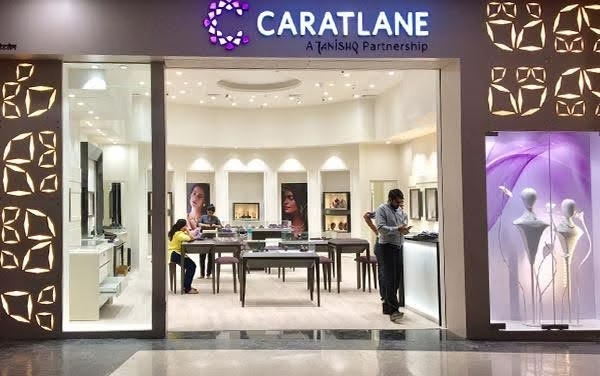
Brands like CaratLane and Lenskart use stores to reduce purchase hesitation by combining digital discovery with in-store experiences. Customers browse online, but confidence is built offline.
Source: CaratLane
2. Increase Conversion and Average Order Value
Stores don’t just generate sales—they improve buying confidence.
Customers can compare products, ask questions, and receive personalised assistance, leading to higher conversion rates and often larger basket sizes than purely online purchases.
For categories with high average order values, offline becomes a natural extension of the buying journey.
- Reach Customers Beyond Digital
While ecommerce continues to grow, many product categories still generate most of their revenue offline.
Physical retail allows brands to reach customers who may never discover them through digital channels alone, while also strengthening visibility in existing markets.
- Create a True Omnichannel Experience
The best brands don’t think in channels.
They think in customer journeys.
A customer might discover a product on social media, visit a nearby store to experience it, place the order online, and later reorder through the brand’s app.
Each touchpoint strengthens the next.
That’s why omnichannel shoppers are significantly more valuable than single-channel shoppers—they interact with the brand more often and across multiple touchpoints.
2. Where Should You Open Stores?
Choosing the right city is only half the decision.
Choosing the right location, at the right time, using the right data is what separates successful retail brands from those that struggle to scale.
One of the biggest mistakes founders make is expanding into multiple cities too quickly after their first successful store.
Instead, successful omnichannel brands follow a disciplined three-phase approach.
Phase 1: Build a Winning Template
Your first store isn’t designed to maximise revenue.
It’s designed to maximise learning.
Start in your strongest market—where your brand already has awareness and customer demand.
Use your first few stores to understand:
- Footfall and conversion rates
- Product preferences
- Inventory productivity
- Store format
- Customer behaviour
This is where your retail operating playbook is built.
As Ankur puts it,
“Your first store proves demand. Your next few stores prove the playbook.”
Phase 2: Let Online Demand Guide Offline Expansion
Digital-first brands already possess something traditional retailers never had—customer data.
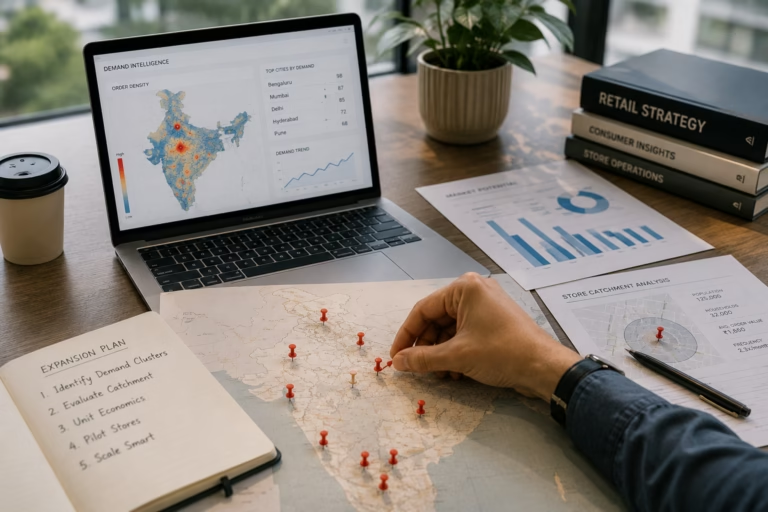
Instead of relying on intuition, use online signals to decide where to expand next.
Look at:
- Order density by city
- Repeat purchase rates
- Brand search trends
- Customer concentration
- Website traffic by geography
But demand alone isn’t enough.
Brands also need to understand whether a specific catchment can support a profitable store.
This is where location intelligence platforms like GeoIQ become valuable. By combining online demand with catchment analysis, demographics, customer density, spending potential, and competitive presence, brands can validate high-potential locations before making a capital-intensive investment.
Instead of asking,
“Which city should we enter next?”
Ask,
“Where has customer demand already been created, and which catchment gives us the highest probability of success?”
This data-led approach significantly reduces the risk of offline expansion while improving the quality of every location decision.
Phase 3: Expand in Clusters
Once you’ve built a repeatable operating model, resist the temptation to spread stores across the country.
Instead, build clusters.
Cluster expansion improves supply chain efficiency, inventory movement, local brand awareness, and operational consistency while reducing costs.
Only after proving success within one region should brands move into new markets.
3. Funding Offline Expansion: Choosing the Right Growth Model
Offline expansion is capital intensive. Every new store requires investment in interiors, inventory, technology, staffing, marketing, and working capital.
Before deciding where to expand, founders must decide how they’ll fund that expansion.
Broadly, brands have two options:
- Raise capital and build company-owned stores.
- Partner with franchisees to expand with lower capital investment.
There’s no universal answer. The right model depends on your stage of growth, operational maturity, and appetite for control.
Understanding COCO, FOCO & FOFO
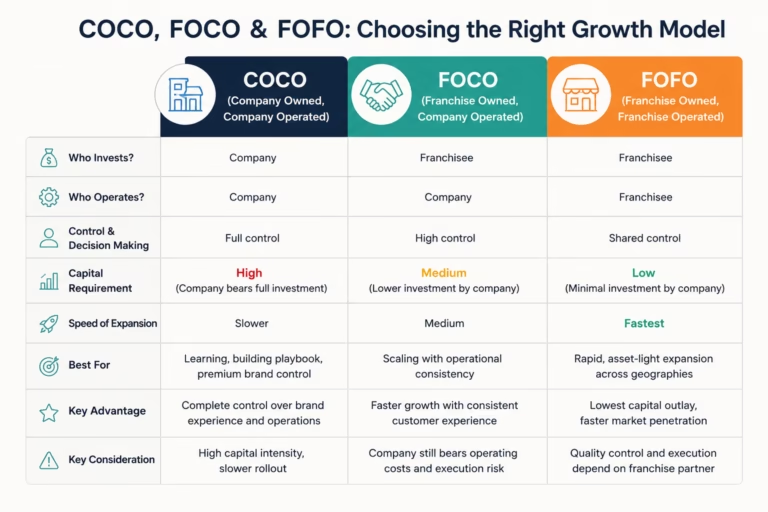
The model you choose should align with your business goals—not simply your growth ambitions.
As Ankur Khaitan puts it:
“You can outsource operations later. You can’t outsource learning.”
For most early-stage brands, building that learning through company-owned stores is often the strongest foundation for long-term growth.
4. Scaling Stores Is More Than Just Payback
Many founders judge a store’s success using one metric:
Payback period.
While payback is important, it only tells part of the story.
A scalable retail business measures success across four metrics:
- Break-even
The point where a store covers its operating expenses and stops consuming cash.
2. Payback Period
The time required to recover the total investment made in the store—including setup costs and any operating losses before break-even.
3. Same-Store Sales Growth (SSSG)
Opening new stores creates growth.
Growing existing stores creates sustainable growth.
Healthy same-store sales growth reflects improving merchandising, stronger customer loyalty, and better operational execution.
4. Store Funnel Analytics
The best retailers don’t just measure sales—they measure the entire store funnel.
Track key metrics such as:
- Footfall – Total visitors entering the store
- Trial Room Conversion – Percentage of visitors who try products
- Final Purchase Conversion – Percentage of trial room visitors who complete a purchase
These insights help brands identify bottlenecks, optimise the customer journey, and improve overall store productivity.
5. What Can Brands Learn from NewMe’s Offline Expansion?
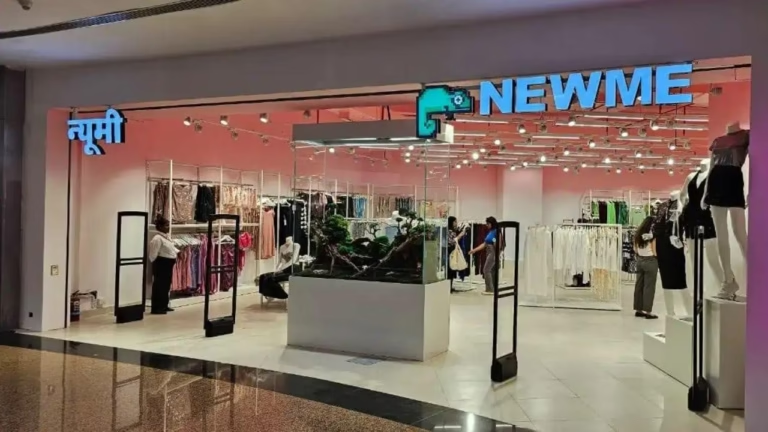
NewMe’s offline expansion demonstrates how modern consumer brands are using data—not instinct—to scale retail.
Instead of opening stores based on assumptions, the brand used online demand signals to identify where customers were already engaging with the brand. Cities with strong order density, customer concentration, and repeat purchases became natural candidates for offline expansion.
Source: NewMe
Once stores opened, every location generated new insights into customer behaviour, merchandising, inventory planning, and regional demand. These learnings were then used to improve future store launches.
Rather than treating online and offline as separate businesses, NewMe created a feedback loop where each channel strengthened the other.
That’s the real power of omnichannel.
Physical stores don’t just increase sales.
They improve decision-making.
6. The 7 Questions Every Founder Should Answer Before Opening the Next Store
Before signing your next lease, ask yourself:
- Why this location?
- Is customer demand already visible?
- Have we validated our first cluster?
- Which model fits us best—COCO, FOCO, or FOFO?
- How soon will this store recover its investment?
- Are our existing stores getting stronger?
- Are we scaling stores—or building a repeatable retail playbook?
7. Conclusion
Offline expansion is no longer the final milestone in a brand’s journey—it’s becoming a strategic growth engine.
The brands that succeed won’t simply be the ones with the most stores. They’ll be the ones that expand with discipline, using customer insights, data, and repeatable operating models to make every new store stronger than the last.
The playbook is simple:
- Expand because customers need it—not because competitors are doing it.
- Use online demand to decide where to open stores.
- Choose the funding model that matches your stage of growth.
- Measure success through long-term store economics, not just payback.
As consumer behaviour becomes increasingly omnichannel, founders no longer have to choose between online and offline.
The opportunity lies in making both channels work together.
Because in the end, the goal isn’t to open more stores—it’s to build a retail engine that can confidently open the next hundred.
Planning your offline expansion and want your store-level economics to actually work? We’d be happy to help — reach out to us at alibha@daiom.in.
For more such deep-dives and insights, follow and stay tuned to DAiOM.