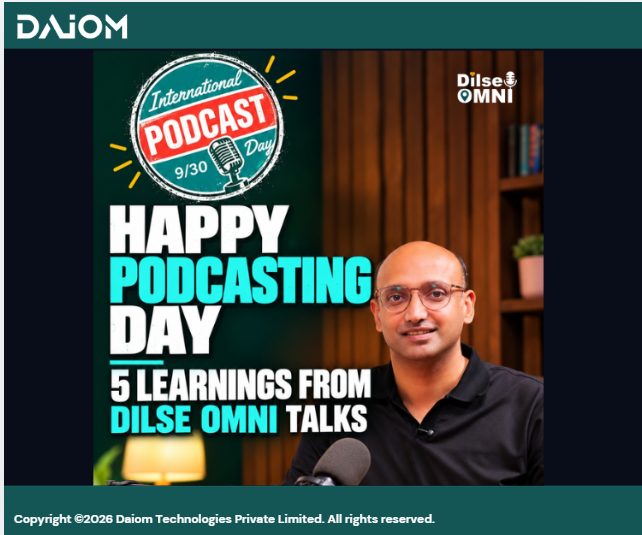

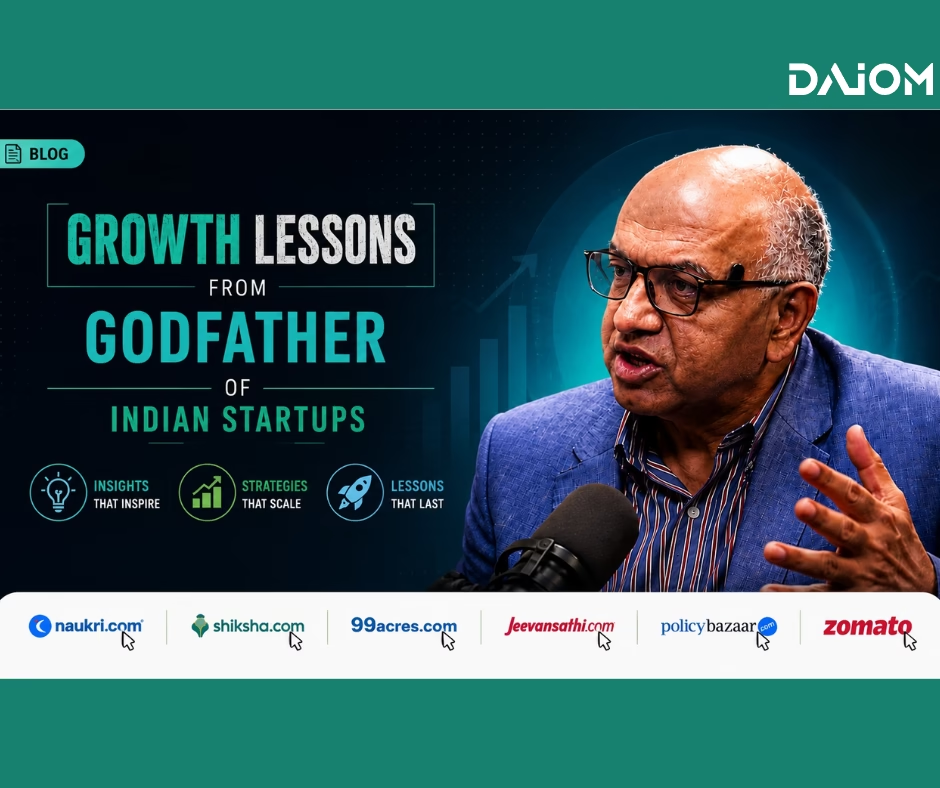



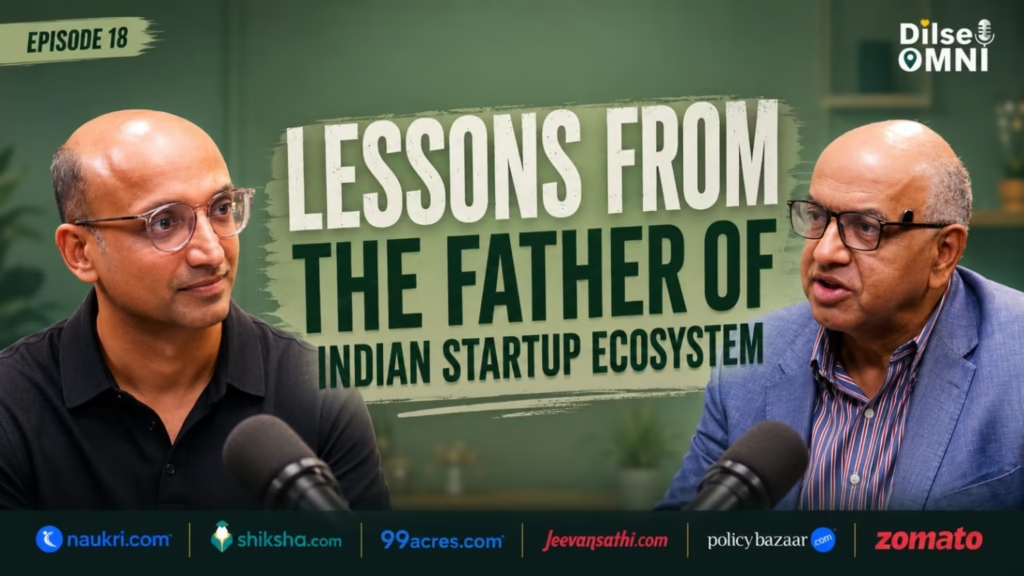
Some podcasts are interviews. Some are masterclasses.
My conversation with Padma Shri Sanjeev Bikhchandani on DilSe Omni Talks was unquestionably the latter.
Sanjeev Bikhchandani is the founder of Info Edge — the company behind Naukri.com, 99acres, Jeevansathi, and Shiksha. He is also one of India’s most celebrated and patient venture investors, having backed Zomato and Policybazaar, investments that are now worth many multiples of what was invested.
He received the Padma Shri in 2020. More than any of these credentials, he is a genuine student of people — someone who has spent 35 years observing human behaviour, asking sharp questions, and turning those observations into businesses that have touched hundreds of millions of Indian lives.
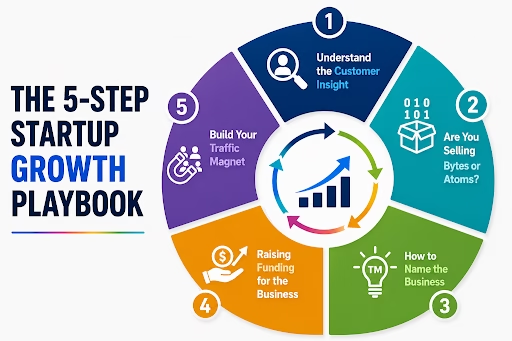
1. The 5-Step Startup Growth Playbook
I have been hosting this podcast for a while now. I have had the privilege of sitting across from some remarkable founders, investors, and builders. But this one was different. Not because of the credentials — though they are extraordinary. Not because of the portfolio — though it is among the most impressive in Indian startup history. But because of the way Sanjeev thinks.
He is not someone who operates on frameworks borrowed from business school. Every principle he shares is rooted in something he personally observed, lived through, or got wrong. And in a world full of people performing expertise, that kind of earned clarity is rare.
I walked out of that recording genuinely wiser. Here is the 5-step growth playbook I took away from it.
- Understand the customer insight
- Are You Selling Bytes or Atoms?
- How to name the business
- Raising funding for the business
- Build Your Traffic Magnet
2. Step1: Start With a Customer Insight, Not a Business Idea
Most founders start with a solution. Sanjeev started with an observation.
In 1989-90, he was working as a junior marketer at HMM — the company behind Horlicks, Boost, and ENO. The junior team sat in an open hall. Every week, when Business India magazine arrived, his colleagues, all MBAs from India’s best business schools, settled in good jobs at a prestigious MNC, would flip straight to the back.
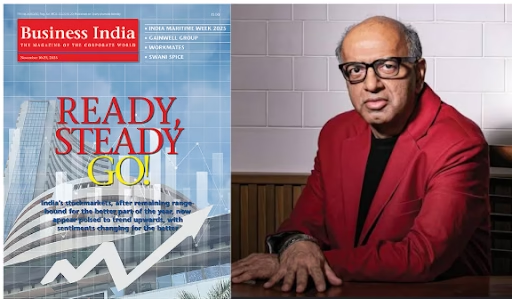
Thirty-five to forty pages of job advertisements. Read by people who were not looking for jobs, were not going to switch, and had no practical reason to read them.
Sanjeev’s conclusion: jobs are a high interest category of information.
That insight sat in a file for seven years. Then in 1996, he attended an IT expo and saw a stall that said “www” — a term he had never heard before. He asked for a demo. The person showed him Yahoo. He searched for “India” and saw travel sites, hotel sites, weather sites.
The penny dropped immediately: “Why can’t I put jobs on this and see what happens?”
That night he called his brother in the US, got a shared server for $25 a month, and began building what would become Naukri.com. Not because he had a grand vision for the internet. But because he had spent seven years holding a customer insight that was waiting for the right vehicle.
The playbook lesson: Before you build anything, find the human behaviour hiding in plain sight. The insight that nobody else has noticed. What are people doing that they shouldn’t need to do? What are they looking for that nobody is giving them? The best businesses are not invented. They are observed.
3. Step2: Decide Early – Are You Selling Bytes or Atoms?
This is the framework Sanjeev only articulated in hindsight — after it explained his most expensive misses.
Info Edge’s businesses are all information arbitrage businesses. Marketplaces that aggregate fragmented information, make it searchable, and enable handshakes between two parties. They deal in bytes, not atoms. Digital products, not physical goods.

When Flipkart came along — moving physical goods at scale with complex logistics — Info Edge passed. When Lenskart came — eyewear requiring touch, try, and customised manufacturing — they passed again. Ola, Snapdeal twice. All passed.
Were these mistakes? Objectively, yes. But Sanjeev’s explanation is more useful than regret: “We did not understand the unit economics of physical businesses deeply enough. That was a structural blind spot, not a random miss.”
The playbook lesson: Know what business you are actually in before you scale it. Bytes or atoms — the operating model, the unit economics, the team you need, and the investors who understand you are all determined by this one distinction.
4. Step3: How to name your business right?
Once you have the insight, the business needs a name. And this is where most founders get it badly wrong.
When Sanjeev searched for a domain name for what would become Naukri, he tried everything obvious first — Jobs India, Employment India, Recruitment India, Careers India. All taken. So he went to Hindi. Naukri — the Hindi word for job — was available. He took it.
Foodiebay became Zomato. Naukri stayed Naukri. Shiksha stayed Shiksha. Every one of those names communicates exactly what the business does before you even visit the website.
His framework for a great brand name:
A — It must communicate what you are about.
B — It must be easy to remember.
C — It must be unique.
D — It must have some zing — a coolness that makes it feel right.
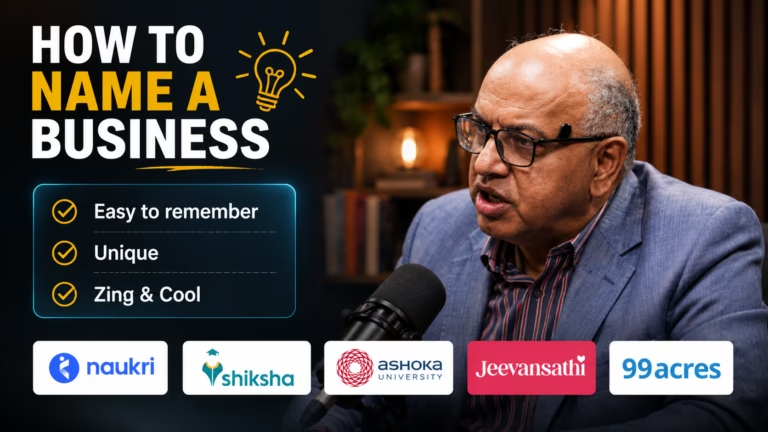
Zomato passes all four. So does Naukri. So does Shiksha. The names that fail are usually the ones where founders got too attached to something clever and ended up with something that means nothing to the person hearing it for the first time.
“A name must communicate what it’s about, be easy to remember, be unique, and have some zing and coolness about it. “
The playbook lesson: When you are a first mover creating a category, your name is your first and most durable piece of marketing. Get it wrong and you spend years explaining what you do. Get it right and the name does the work for you — forever. Do not innovate on the name when clarity is available. Clarity always wins.
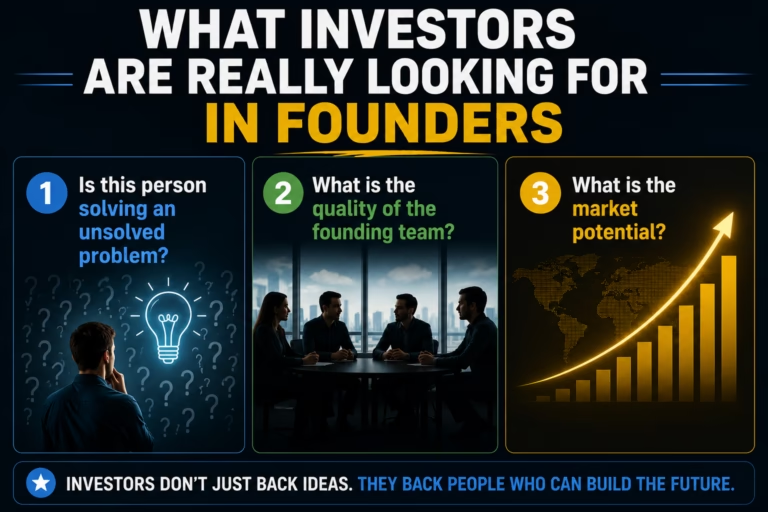
5. Step4: What Investors Are Really Looking For in Founders
This is perhaps the most misunderstood step in the startup growth playbook.
Sanjeev’s view is simple and ruthless: “Raising funds should be to accelerate a business, not to build a business.”
When investors approach Info Edge Ventures to pitch, Sanjeev does not start with the business. He starts with the person. He calls it building a mosaic, a conversation that covers background, early experiences, what drives someone, how they handle setbacks. By the time the business conversation starts, he already understands who is going to be making decisions inside it.
The questions that matter most:
→ Is this person solving an unsolved problem? If twenty companies are doing the same thing, there is no structural reason this one will win.
→ What is the quality of the founding team? Capabilities, commitment, and integrity — in that order.
→ What is the market structure? Not just size — but whether scale creates defensibility and network effects.
→ How does this person handle a question they don’t have a clean answer to? Manufactured confidence is a red flag. Honest uncertainty with clear thinking is a green flag.
And the reason the right capital matters as much as the right amount: Info Edge invested in Zomato in 2010 and Policybazaar in 2008. They are still invested — 16 to 18 years later. They had the structural patience that no VC fund with a finite life can replicate.
“We are just patient. We are good at selection and then we are patient.”
Capital from the wrong investor — one who does not understand your business model, your timeline, or your market, can be more damaging than no capital at all. And capital raised before the fundamentals are proven only buys you the right to make bigger mistakes faster.
The playbook lesson: Prove the flywheel before you raise. Know your traffic magnet. Understand your bytes vs atoms question. Build with discipline until the unit economics are clear. Then raise to accelerate — not to discover.
6. Step5: Build Your Traffic Magnet Before You Build Your Marketing Budget
Once the brand has a name and a product, the instinct is to spend on ads. Sanjeev did the opposite.
He understood something that Monster.com — the American competitor that entered India — never figured out: jobs are a traffic magnet. The more jobs on the platform, the more job seekers come. The more job seekers come, the more responses recruiters get. The more responses recruiters get, the more jobs they post.
So Naukri priced aggressively to maximise the number of jobs on the platform. Unlimited annual subscription at ₹6,000. The goal was not revenue per listing. It was the volume of listings, which drove traffic, which drove responses, which drove more clients.
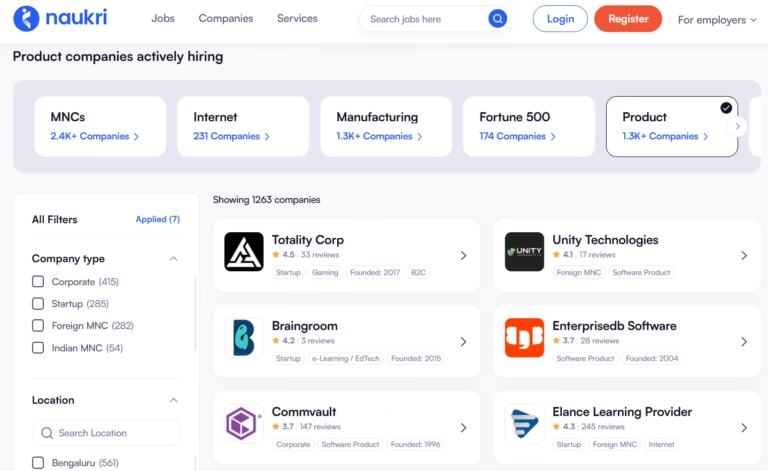
Monster charged premium rates per listing, had fewer jobs, drove less traffic, and never built the flywheel. Naukri did. And that network effect, built on a pricing insight rooted in a human observation from 1989, became the moat that has never been broken.
This principle extends beyond job portals. Every great brand has a traffic magnet — a reason people come before they are even ready to buy.
- For Shiksha, it was authentic college reviews.
- For 99acres, it was hyper-local property listings that actually matched what buyers were searching for in their specific neighbourhood.
- For Jeevansathi, it was the most comprehensive matrimonial profiles available in one searchable place.
The playbook lesson: Before you spend on ads, ask what your traffic magnet is. What is the thing people will come for before they need you? Build the product around that. Make access to it as frictionless as possible. Let the flywheel do the heavy lifting before you put money behind it.
7. Conclusion
This is the playbook Sanjeev Bikhchandani built across 35 years, four category-defining companies, and some of India’s most celebrated venture investments. It did not come from a framework borrowed from business school. It came from watching people, getting things wrong, and being honest enough to articulate both.
- Start with a customer observation no one else has made.
- Name the brand so clearly it markets itself.
- Build the traffic magnet before the ad budget.
- Know whether you are selling bytes or atoms.
- Raise capital to accelerate what already works
And if there is one thing I took from sitting across from him for over 100 minutes on DilSe Omni Talks — it is that the most powerful competitive advantage any founder can build is the habit of watching people more carefully than everyone else around them.
And here is where AI becomes the modern version of this question. Sanjeev’s view on AI is unambiguous:
“Either you do AI, or AI will do you.”
His advice for every founder and young professional right now: learn two or three AI platforms every month. By the end of the year, know ten of them. Not because AI is going to take your job — but because the person who learns it fastest will be the last one standing when the dust settles.
The best business ideas are not invented. They are observed.
Listen to the full conversation Sanjeev Bikhchandani on DilSe Omni Talks — available on YouTube, Spotify, and Apple Podcasts. For more insights on startup building, omnichannel strategy, and what India’s best founders are thinking — subscribe to our newsletter at daiom.in.