



I was reading HubSpot’s State of Marketing 2026 report — a survey of over 1,500 marketers across North America, Europe, Asia, and Australia — and two numbers, sitting right next to each other, caught my attention
61% of marketers say marketing is going through its biggest disruption in 20 years. And in the same breath, 61% say that taste and brand point of view matter more than ever before.
Source: HubSpot 2026 State of Marketing Report
Read those together and you have the whole story of 2026. AI didn’t make marketing easier in a way that lets everyone win. It made content infinitely cheap to produce — and in doing so, made the average completely worthless. When every competitor can generate a blog post, a caption, or a full campaign in seconds, what separates you is no longer output. It’s judgement.
For Indian D2C, retail, and BFSI brands racing to “add AI” to every workflow, that’s the uncomfortable part. The tool is now commoditised. The moat is what you point it at.
Here are the signals from the report that every Indian marketer should act on now.
1. Did AI Just Make Marketing More Human, Not Less?
The headline finding is a paradox. 67% of teams say AI saves them 10 or more hours a week, and they report it has meaningfully boosted productivity. Yet nearly two-thirds now say they need more unique, human-centred content to stand out.
In other words, AI handed marketers back their time — and the smartest ones are spending it on the things AI can’t do. Positioning. Storytelling. Customer insight. Trust.
HubSpot’s Kieran Flanagan put it bluntly:
“AI is not a critical marketing skill. Positioning is a critical skill. Storytelling is a critical skill… AI helps marketers with all of the above. But it will never replace marketers.”
The data backs him up. 40% of teams still haven’t documented their brand’s unique value proposition — they’re pointing a content-generation machine at nothing in particular. The result is the bland, “made-for-everyone” sludge the report warns about. The fatigue is already visible: more than half of marketers say AI makes content so easy to produce that it’s become less effective, and a similar share struggle to differentiate in an AI-saturated market. Easy-to-make has collided with hard-to-matter.
AI didn’t replace the marketer. It exposed the ones without a point of view.
Source: HubSpot 2026 State of Marketing Report
AI didn’t replace the marketer. It exposed the ones without a point of view.
2. Why Is Low-Traffic, High-Intent the New Normal?
This is the shift that should change how Indian brands measure success.
49% of marketers say search traffic has fallen because of AI answers. But 58% say the traffic that does arrive from LLMs like ChatGPT has far higher intent — visitors land much further along the buying journey. HubSpot’s own numbers are striking: blog traffic is down, but leads from LLMs are up sharply and convert several times better.
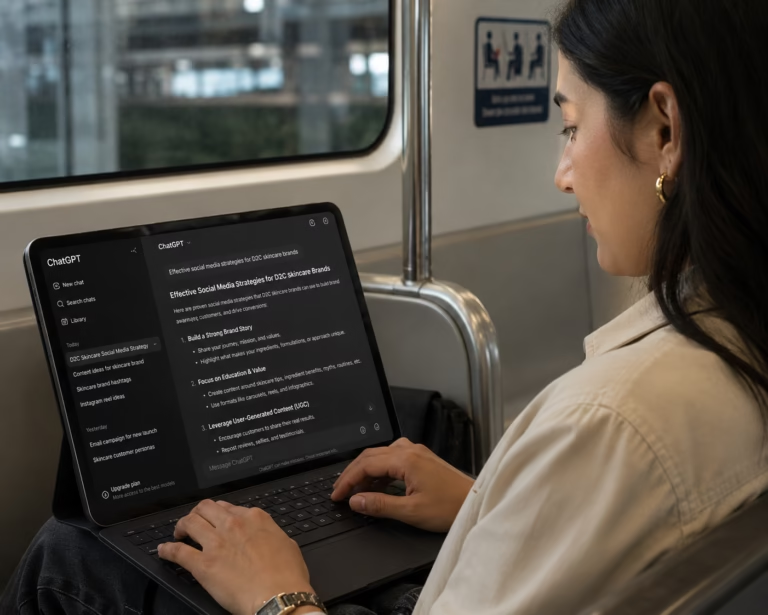
For a decade, Indian marketing teams optimised for volume — sessions, impressions, reach. That metric is quietly dying. When an AI answer does the customer’s top-of-funnel reading, the visitor who clicks through is no longer browsing — they’re deciding.
So what changes for brands? Two things:
- Write for both AI and people. Keep one version of your content clear and factual, so AI tools can easily read and quote it. Keep another that tells your story in your own voice, for the humans who land on your page.
- Make buying effortless. These visitors arrive ready to act. Give them a quick, simple way to buy — a helpful chat, an easy checkout — instead of making them hunt for it.
Less traffic, more intent. Stop counting visitors. Start counting decisions.
3. Is Short-Form Video Still the Highest-ROI Bet — Even Without TikTok?
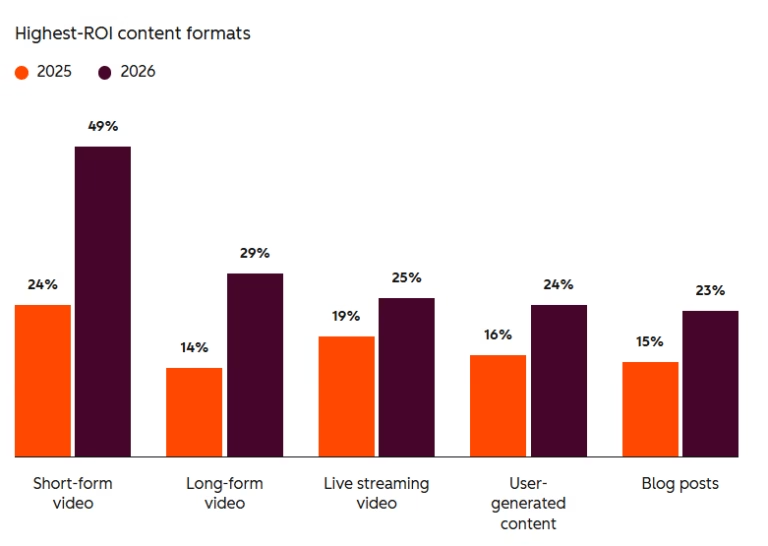
The report is emphatic: short-form video is the highest-ROI content format, by a long shot. 49% of marketers named it their most valuable format in 2026 — more than double the year before — and it’s where teams plan to invest most.
Source: HubSpot 2026 State of Marketing Report
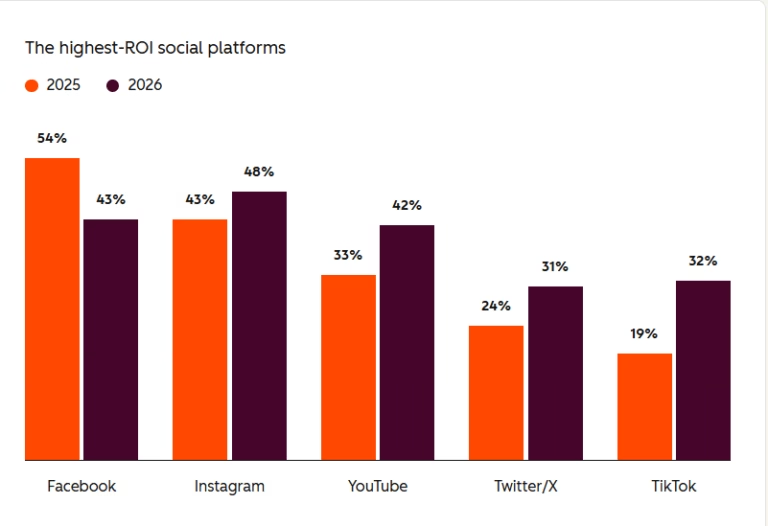
Globally, much of that momentum sits on TikTok, where usage grew 62% — but TikTok isn’t a route to the Indian consumer. The behaviour is. Instagram Reels and YouTube Shorts carry the same short-form attention here, and the lesson holds: in a sea of AI-generated text, the personal, face-to-camera, unpolished-but-real video is what cuts through.
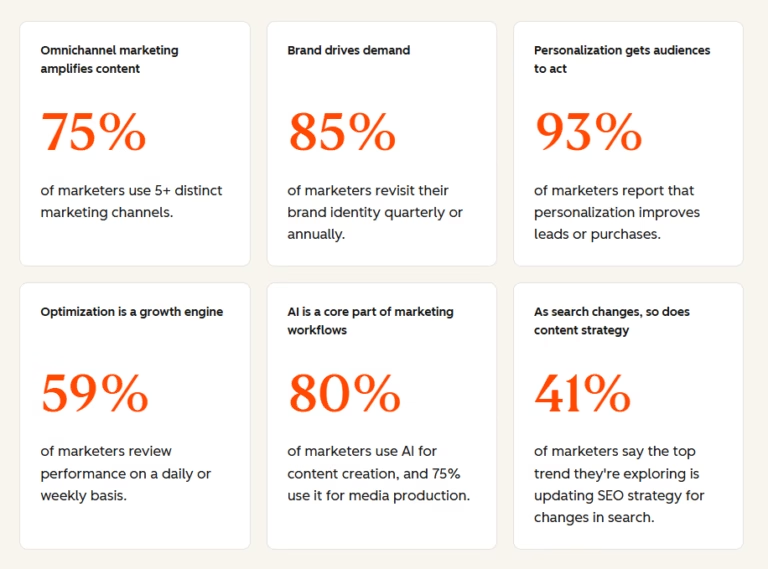
The written word isn’t dead — small businesses are more likely than average to see ROI from blog posts — but the centre of gravity has moved to video. And video doesn’t live alone: 75% of marketers now use five or more channels. The smartest teams take one strong piece of content and re-cut it for each platform. Take a single 60-second founder clip from a D2C coffee brand — here’s how it can travel:
- Instagram Reels: a punchy 15-second cut with trending audio, bold on-screen text, and a “Shop now” sticker.
- YouTube Shorts: the same clip with a strong spoken hook in the first three seconds and a searchable title like “Why we cold-brew for 18 hours.”
- WhatsApp: a quick broadcast to existing customers — the clip, one line on today’s offer, and a “reply to order” prompt.
- Email: the clip as a clickable thumbnail inside a short founder’s note to your subscriber list.
Same story, four shelves — each cut to fit how people watch on that platform.
Source: HubSpot 2026 State of Marketing Report
The format is video. In India, the platform is just a different name.
4. Have Creators Quietly Become Your Most Important Channel?
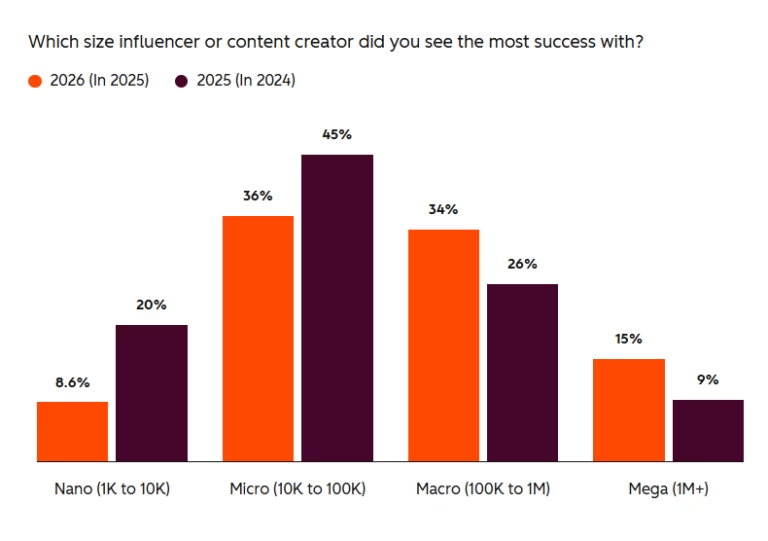
This is the number that genuinely surprised me. 89% of companies worked with a creator or influencer in 2025 — up from 50% the year before — and 77% plan to invest more in 2026.
But the more interesting detail is who is working. Micro-influencers (10K–100K followers) drove the most success, while nano-influencers fell to the least effective tier. The takeaway isn’t “go big” — it’s that brands now want creators with established, engaged communities rather than the cheapest available reach. HubSpot’s Alanah Joseph frames it as relationships over impressions: audiences are tuning out obviously transactional marketing, and brands that build genuine creator relationships keep them longer and see better results.
Source: HubSpot 2026 State of Marketing Report
For Indian D2C, this is already visible — regional creators and vernacular communities outperforming celebrity blanket campaigns. The funnel increasingly lives inside the creator’s feed.
Reach is rented. Community compounds.
5. Everyone Talks Personalisation — So Why Can’t Most Brands Do It?
93% of marketers say personalisation improves leads or purchases. And yet only 13% hyper-personalise using behavioural or lookalike data. Just 14% segment or personalise even half their content.
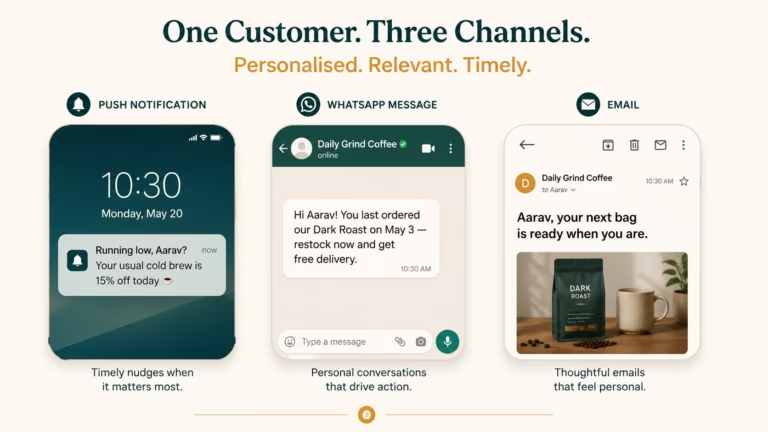
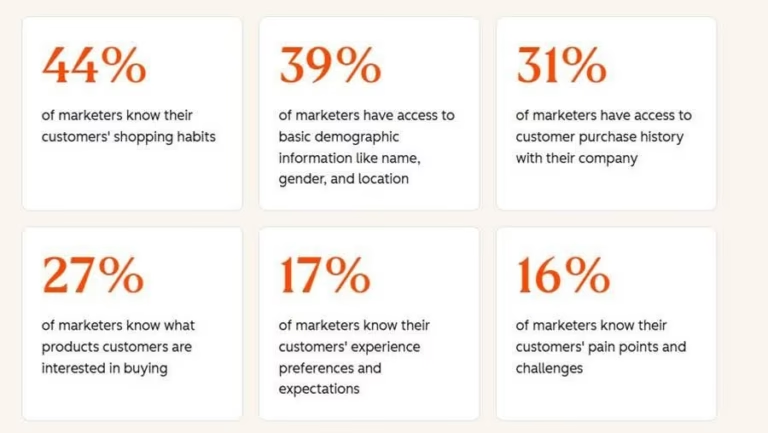
The gap isn’t ambition. It’s plumbing. Less than half of marketers know their customers’ shopping habits (44%); only 31% can see purchase history; only 16% know their customers’ actual pain points. You cannot personalise data you don’t hold.
Source: HubSpot 2026 State of Marketing Report
This is the most important line in the report for Indian brands: the channels that rank highest by ROI are almost exactly the channels that rank highest for personalisation success. The more a channel lets you personalise, the more it returns — that’s the whole game. It’s also why the channels you own matter so much. Your email programme and first-party CRM data are where personalisation compounds, because the data is yours and no algorithm can take it away. Most Indian brands are sitting on first-party data they’ve never activated.
Personalisation isn’t a feature you switch on. It’s a data foundation you build.
6. If Everyone Moves Fast, Is Measurement the Real Advantage?
Speed used to be a differentiator. Now it’s table stakes. 59% of teams analyse performance weekly or daily, and 73% push changes to live campaigns within days or hours. The report’s verdict is blunt: in the AI era, agility beats execution excellence.
But agility without accurate measurement is just guessing faster — and the KPIs marketers anchor to have shifted from vanity to value: lead quality and MQLs, lead-to-customer conversion, return on marketing investment, and customer acquisition cost. Exactly the numbers that survive when 73% say budgets are now tighter.
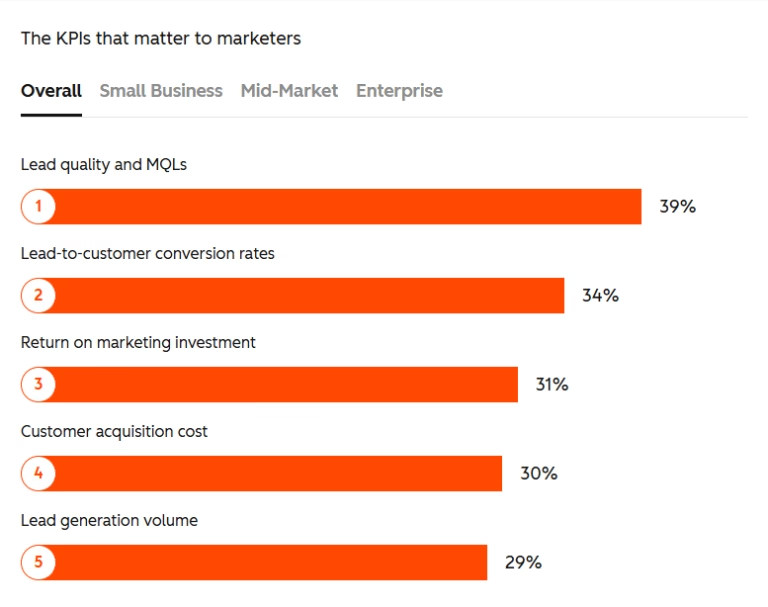
Source: HubSpot 2026 State of Marketing Report
For Indian brands running across Reels, Shorts, WhatsApp, email, and quick-commerce shelves — each growing at a different rate — this is the quiet moat. The winner isn’t the brand with the most channels. It’s the one that can see clearly across all of them.
7. The 5 Mistakes Brands Make With AI in 2026
If you take one section, take this one.
- Using AI before defining your POV. Generation without a brand foundation just scales the average. Document your UVP first.
- Optimising for traffic instead of intent. The high-volume metrics that mattered two years ago are increasingly noise.
- Writing only for humans — or only for machines. You now need both versions, deliberately.
- Chasing reach over relationships with creators. Micro and community beat cheap impressions.
- Talking personalisation without owning the data. No first-party foundation, no real personalisation.
8. Conclusion
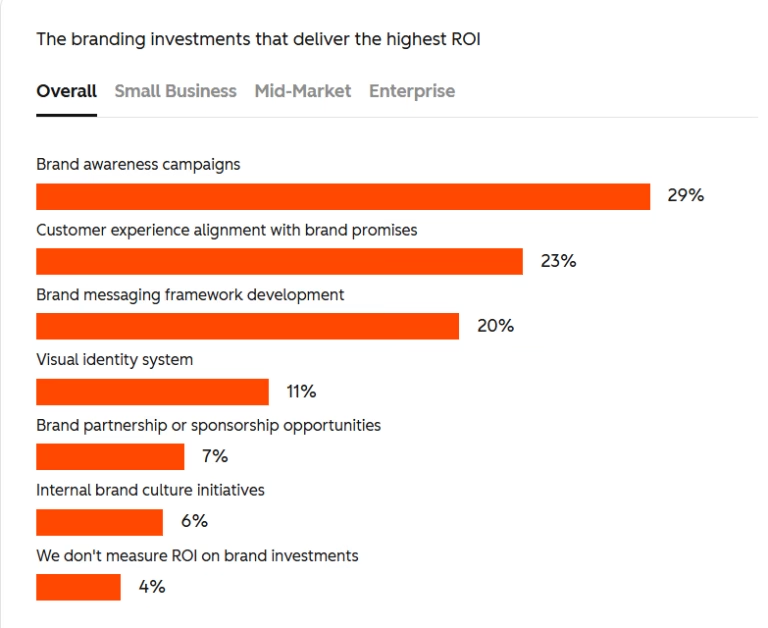
The thread running through every chart in HubSpot’s 2026 report is the same: AI made execution cheap, and in doing so made judgement expensive.
When everyone can produce content instantly, taste, point of view, and a unified data foundation are the only durable advantages left. The brands that win the next few years in India won’t be the ones generating the most content or bolting AI onto the most workflows. They’ll be the ones who know exactly who they are, own their customer relationships, and measure intent instead of volume — the foundation of any serious omnichannel strategy.
AI is the new baseline. Taste is the moat.
If you’d like to discuss how we can help build your brand POV, first-party data foundation, and omnichannel measurement, feel free to reach out to us at alibha@daiom.in
For more such deep-dives and insights, follow and stay tuned to DAiOM.