



A few years ago, when a brand wanted to reach a customer, it sent an email. Today it sends a WhatsApp message, runs an Instagram ad, fires a push notification, and retargets the same person across the internet. Somewhere along the way, email became the channel marketers forgot.
And yet every platform that was supposed to replace it comes with a catch. Algorithms change. Ad costs rise. Reach disappears the moment you stop paying. Email never had that problem — it quietly remained the one channel that lets a brand talk directly to its customers, without renting attention from someone else.
That’s why it still has a set of advantages no other channel matches all at once:
- Inexpensive — a fraction of the cost of WhatsApp, SMS, or paid ads.
- Permission-based, not intrusive — it waits in the inbox until the customer is ready.
- Measurable — every open, click, and rupee of revenue ties back to the send.
- Owned — your list is yours, and no algorithm can take it away.
Before we declare email dead, it’s worth seeing how big it still is.
1. How Big Is Email Marketing, Really?
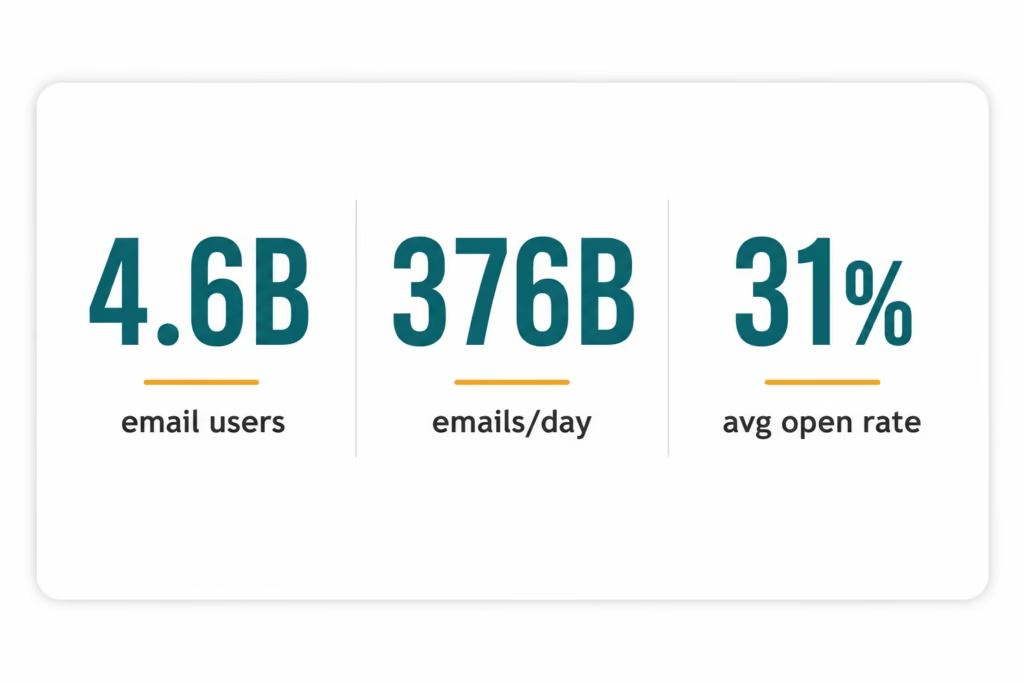
Email is still one of the largest digital ecosystems in the world. More than 4.6 billion people use it, and over 376 billion emails are sent every single day and both numbers keep growing. For most people, the inbox is the first thing they check each morning, before social or the news.
Most of that activity sits in a handful of providers: Gmail (~1.8 billion users), Apple iCloud Mail (~950 million), Outlook (~400 million), and Yahoo Mail (~225 million). In India, Gmail dominates. Whether someone is buying clothes, ordering groceries, booking travel, or opening a bank account, an email address is the universal identity layer connecting all of it.
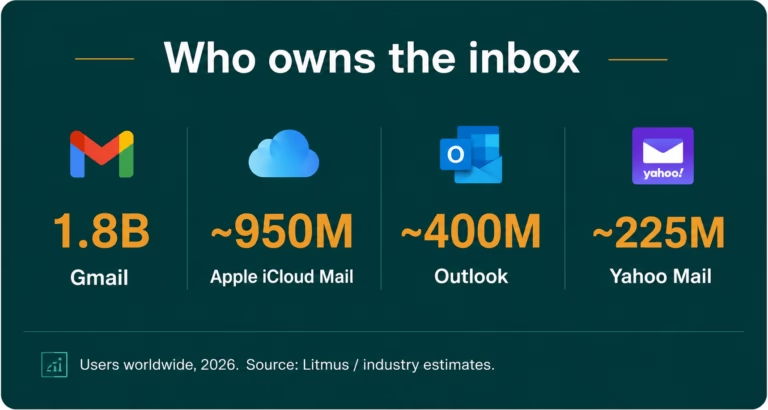
Email isn’t disappearing. It’s becoming infrastructure.
2. Why Email Still Wins
The biggest reason email survives is simple: economics. Here’s the approximate cost to reach one customer in India.
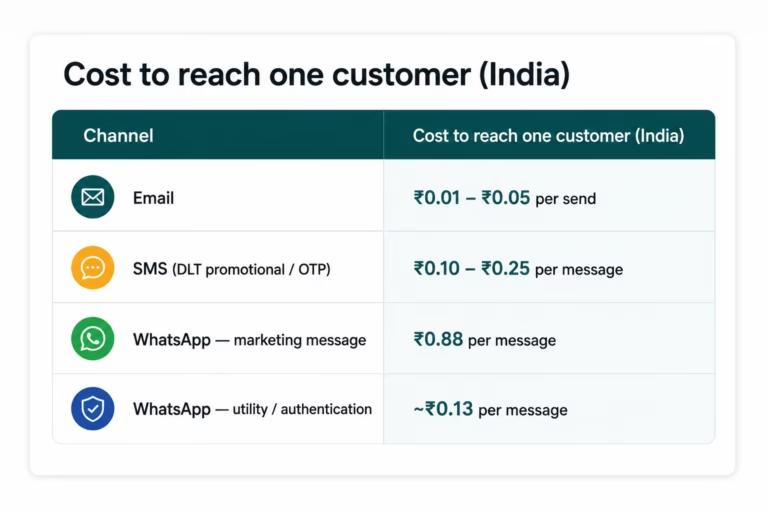
A marketing email costs a few paise. The same promotional message on WhatsApp costs nearly a rupee, and rises with every send. At scale, the difference is enormous.
But cost is only half the story. The bigger advantage is ownership. Your Instagram followers belong to Instagram. Your WhatsApp reach depends on Meta’s pricing. Your Google Ads stop the moment you stop paying. Your email database is yours.
“Attention can be bought. Relationships must be earned.” — Rajesh Jain, Founder, Netcore
This is why global benchmarks rank email among the highest-ROI channels going. In Netcore’s 2026 study, marketers rate email equal to or ahead of paid ads on ROI — 85% in North America, 89% in APAC, and 92% in Australia. The brands winning today aren’t abandoning email. They’re building around it.
3. How Email Has Evolved
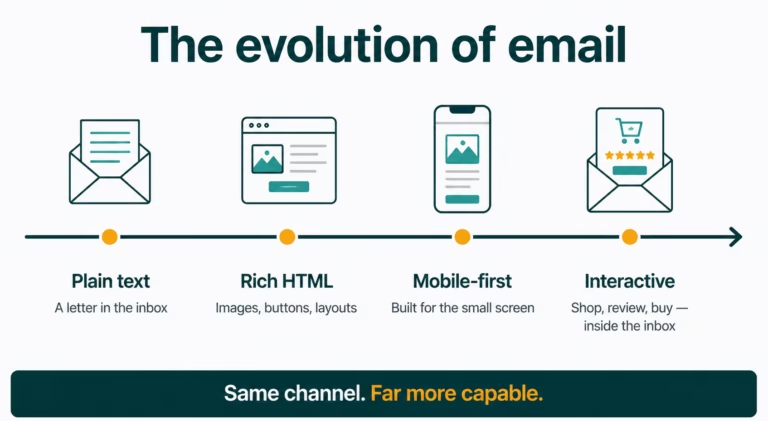
Part of why people think email is outdated is that they remember what it looked like ten years ago — a subject line, a banner, a “Buy Now” button. Today’s email is a different thing entirely. It has moved through clear stages:
- Plain text — the early inbox looked like a letter.
- Rich HTML — images, buttons, branded layouts.
- Mobile-first — responsive design built for the small screen.
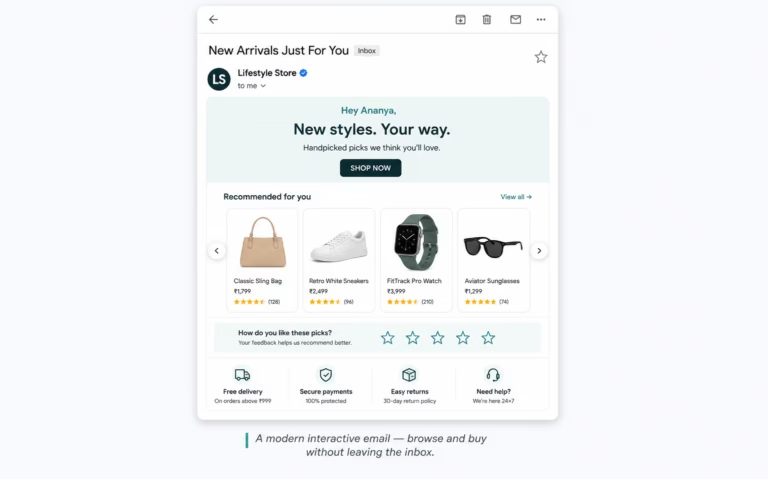
- Interactive — with AMP and Rich CSS, customers now browse products, take surveys, leave reviews, and sometimes buy, all without leaving the inbox.
The inbox has become a customer-experience platform — onboarding, education, loyalty, abandoned carts, back-in-stock alerts, recommendations. And the brands treating it that way are pulling ahead. Myntra used shoppable email to reach 4× engagement and 2× revenue. Globally, brands like Walmart, Unilever, Puma, and Domino’s — and in India, Airtel, ICICI Prudential, and Dream11 — run their email on platforms like Netcore precisely because a well-built programme compounds over time.
4. Are You Sending Campaigns, or Building a System?
This is where most businesses get email wrong. A campaign is temporary — a Diwali sale announcement. A system compounds — an automated sequence that welcomes a customer, reminds them about an abandoned cart, recommends products, and earns the repeat purchase.
The difference is measurable: automated emails earn around 10× the click-through rate of broadcasts, and less than 5% of sends generate over 35% of online revenue — almost all of it automation. The flows worth building first, with CTRs to aim for:
- Checkout abandonment — ~8.7%
- Cart abandonment — ~8.4%
- Welcome series — ~7%
- Back-in-stock — ~6.5%
- Browse abandonment — ~4.3%
Many Indian brands have a welcome email. Very few have a full journey — which is where the missed revenue lives. The payoff is real: in Netcore’s data, activating loyalty redemption through email triggers lifted repeat purchases from 10% to 30% (Colorescience) and frequency from 1.86× to 6.3× a year (Makesy).
5. Is Your Email Even Reaching the Inbox?
An uncomfortable fact: on average, only 81% of emails reach the inbox (Netcore). That means 1 in 5 never arrives — and an email in spam can’t be opened, clicked, or converted.
The fix isn’t better copy — it’s infrastructure. Authenticate properly with SPF, DKIM, and DMARC (Gmail and Outlook now reject bulk mail that isn’t), keep spam complaints very low, clean out invalid addresses, and stop emailing people who never open — inactive contacts drag down your reputation for everyone else.
6. Which Metrics Should You Actually Track?
Most brands track open rate. In 2026 it’s the least reliable number you have, because Apple Mail loads images whether or not the email was opened. Track these instead:
- CTR — who actually engaged.
- CTOR — whether the content matched the subject line.
- Revenue Per Email (RPE) — the number that ties email to the business.
Click Retention Rate (CRR) — a Netcore metric: of those who clicked this period, how many came back and clicked again. A click is a transaction; a returning clicker is a relationship.
7. The AI Reads Your Email Before Your Customer Does
The biggest change in email today isn’t design. It’s AI. Google is rolling Gmail into “the Gemini era” with AI Overviews that summarise threads, an AI Inbox that decides what’s important, and tools that draft replies for the user. Apple Intelligence already summarises emails before they’re opened.
So customers increasingly read an AI summary instead of your email — and if your value sits halfway down, the AI may never surface it. That changes how you write: clear writing, one message, one action, value in the first line. The future of email isn’t longer emails; it’s smarter ones. Used well, the upside is large — one footwear brand reported a 13× lift in marketing ROI using AI-driven, goal-based orchestration on Netcore.
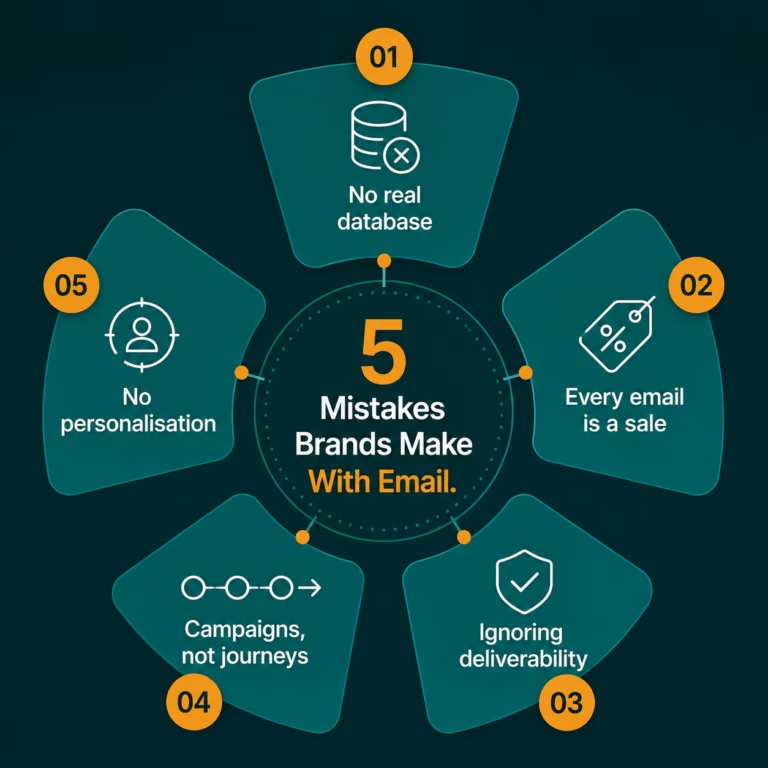
8. 5 Mistakes Brands Still Make With Email
If you remember one section, make it this one.
- Not building a real database. Bought or low-quality lists wreck deliverability. Fix: build slowly and intentionally, at genuine touchpoints.
- Treating every email like a sale. Fix: mix education, stories, and tips with promotions. Value first.
- Ignoring deliverability. SPF, DKIM, and DMARC decide whether you reach the inbox at all. Fix: set them up and keep complaints low.
- Sending campaigns instead of journeys. Blasts create spikes; automated journeys create predictable revenue. Fix: build triggered flows.
- Forgetting personalisation. One message for everyone is relevant to no one. Fix: segment by behaviour.
9. Conclusion
Email marketing isn’t dead. Most brands simply stopped investing in it — and while marketers chased new platforms, email quietly remained the biggest, cheapest, and only truly owned channel available.
But email doesn’t win alone. The strongest brands treat it as the backbone of a connected retention and omnichannel strategy — email for depth and ownership, working alongside WhatsApp for immediacy, SMS for reach, and RCS for richer mobile messaging. Each channel has a job; orchestrated together around first-party data and a single view of the customer, they compound. That is exactly what good omnichannel marketing and modern CRM and retention marketing are built to do.
Social creates discovery. Paid creates reach. WhatsApp and SMS create immediacy. Email creates the relationship — and relationships drive repeat purchases, loyalty, and lifetime value. The brands that win the next few years won’t be the ones spending most on ads. They’ll be the ones that own the relationship.
And that still starts with the inbox.