



Here’s something that happens a lot when we work with brands.
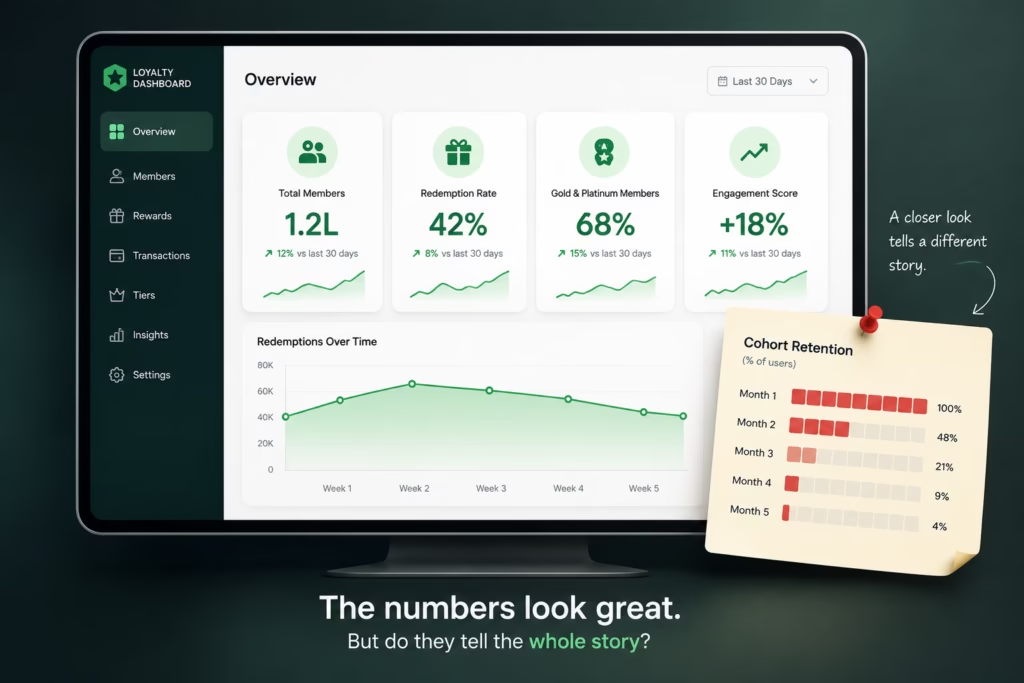
A founder pulls up their loyalty dashboard. Lakhs of enrolled members. A good redemption rate. Tier distribution that looks healthy on paper.
Then we look at the cohort data together.
Month-three drop-off is steep. Most repeat purchases happened only after a discount nudge or an expiry reminder. And when we filter for customers who came back and bought at full price — no offer, no notification — that number is small. Very small.
The program is working. But the loyalty isn’t.
This is the gap most brands don’t see. And it’s the gap this blog is going to talk about.
1. Repeat Purchases Are Not the Same as Loyalty
When a customer keeps buying from you, that’s great. But it doesn’t always mean they’re loyal to you.
There’s a difference between a customer who comes back because they want to — and a customer who comes back because they have points sitting in an app that they don’t want to lose.
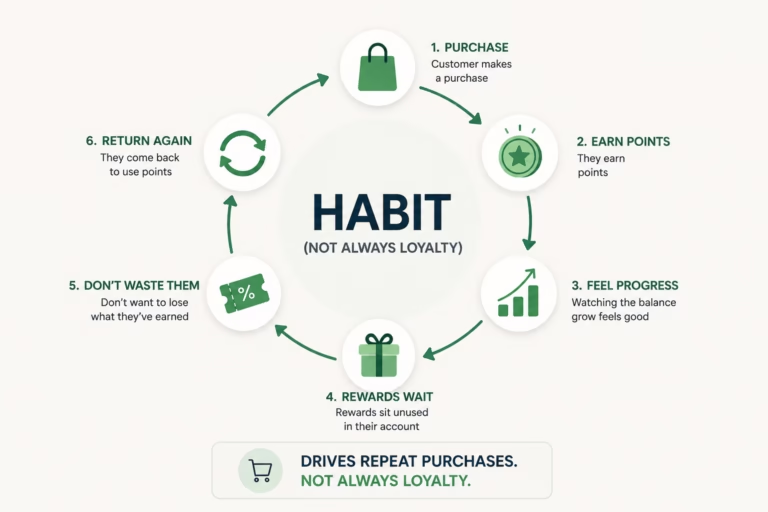
The first is genuine loyalty. The second is habit. And most loyalty programs are very good at building habit.
Here’s how it works. When a customer earns points, watching that balance grow feels like progress. That feeling keeps them engaged. And when they have rewards sitting unused, they don’t want to “waste” them — so they come back. Over time, the whole earn-and-redeem cycle becomes routine.
These mechanisms are real. And they do drive repeat purchases.
Bain & Company’s research shows that even a 5% increase in customer retention can improve profitability by 25–95%. Loyalty programs, when they work, genuinely contribute to that.
But here’s what the dashboard doesn’t tell you.
According to EY India’s Future of Loyalty report (2023), over 65% of loyalty program members in India are inactive. They signed up. Earned a little. And then stopped engaging entirely.
Why? Because the moment a competitor offers a better deal, all that progress motivation and loss aversion works in the other direction. The same psychology that made your program sticky becomes your competitor’s easiest way to pull customers away.
A simple test to run: look at your loyalty base and filter for customers who bought at full price in the last 90 days — with no offer or push notification driving the visit.
That number is your real loyalty rate.
Everything else is habit maintenance.
2. There Are Three Levels of Loyalty — Most Programs Only Reach the First
Loyalty isn’t one thing. It actually exists at three different levels — and most programs are only built for the first one.
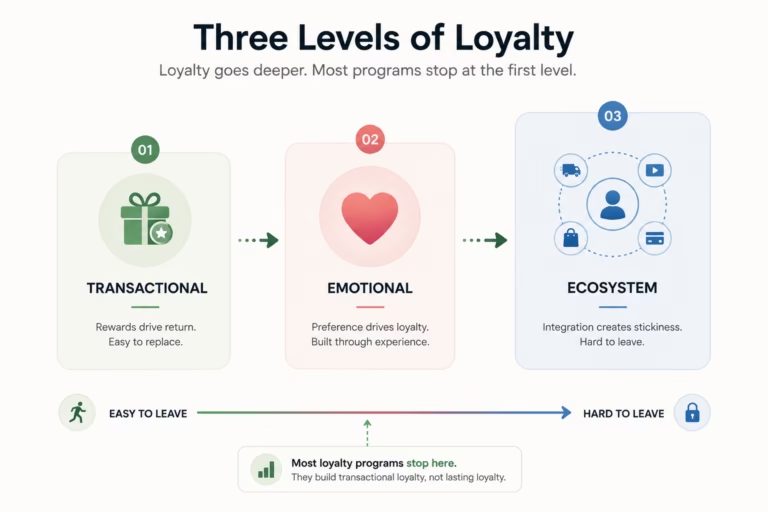
2.1 The first level is transactional loyalty.
This is where customers return because there’s a reason to — points, cashback, a tier benefit they don’t want to lose. It drives frequency and improves basket value. It’s useful.
But it’s also fragile. Take away the reward, and the relationship has nothing holding it together.
2.2 The second level is emotional loyalty.
This is when a customer genuinely prefers your brand. They come back without needing a push. They forgive you when things go wrong. They recommend you without being asked.
Emotional loyalty isn’t built through a program. It’s built through experience.
Wakefit is a good example. They didn’t earn strong repeat rates because of sophisticated loyalty mechanics. They earned them because their delivery, packaging, and customer support consistently built trust. The experience came first. The program followed.
2.3 The third level is ecosystem loyalty.
This is the hardest to build and the most powerful to hold. Customers stay because leaving has a real cost — not financial, but experiential. Their preferences are saved. Their history is connected. The brand is so woven into how they shop that switching would mean starting over.
Amazon Prime is the clearest example of this in India. There are no points. No tiers. Just a bundle of conveniences — fast delivery, saved addresses, Prime Video — where cancelling immediately feels like a downgrade.
Most loyalty programs are designed only for level one. Even when the goal was to build something deeper.
As Mahadevann Iyerr, who built loyalty programs for Tesco and Landmark Group, puts it:
“Don’t launch a loyalty program to create loyalty. Launch it to amplify loyalty you’ve already earned.”
That sequence — experience first, program second — is what most brands get backwards.
3. What Loyalty Programs Accidentally Build Instead
Given all of this, why do most programs still fall short?
Because each of these failure patterns is a logical outcome of treating the program as the strategy — rather than as a tool that supports one.
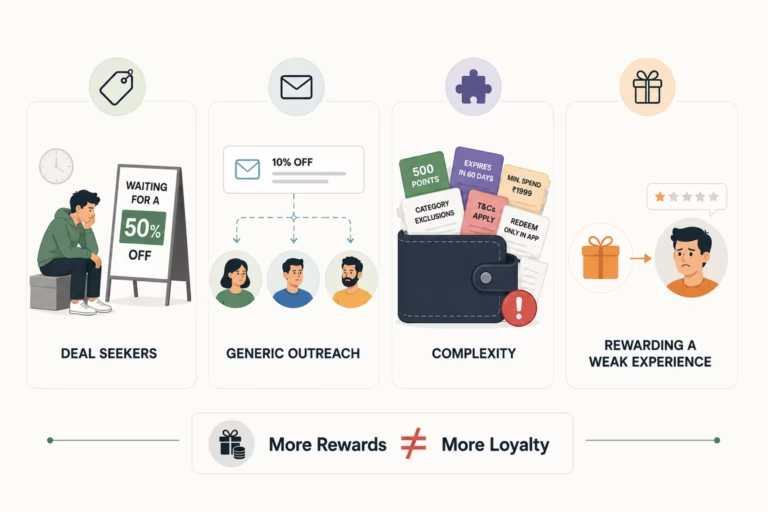
3.1 They train customers to wait for discounts.
When the main mechanic is cashback or points-off, customers quickly figure out how to play the system. They wait for high-reward windows. They skip full-price purchases. Every sale becomes a ceiling rather than a floor.
The program, which was supposed to reduce dependence on promotions, ends up creating a base of deal-seekers who only return when there’s an offer.
3.2 They send the same thing to everyone.
A customer who has spent ₹80,000 with you over two years gets the same “10% off” email as someone who bought once six months ago.
That’s not personalisation. That’s just a newsletter with a points balance attached.
Brands running tools like CleverTap, MoEngage, or WebEngage already have the capability to do better. The data is there. The failure is usually organisational — teams that aren’t set up to act on what the stack is already showing them.
3.3 They make it too complicated.
Points that expire in 60 days. Redemption minimums. Category exclusions buried three pages deep in the FAQ.
Every condition is a reason for a customer to disengage. Forrester’s research shows a direct link between program complexity and drop-off.
The goal isn’t a sophisticated program. It’s an effortless one. If a customer has to think about how it works, it’s already too complicated.
3.4 They try to substitute for a weak experience.
A program can make a customer come back. It can’t make them feel good when they get there.
If the product, the delivery, or the post-purchase support isn’t consistently good — the reward only delays the problem. It doesn’t solve it.
Points are not a replacement for a brand worth returning to.
4. What Actually Closes the Gap
The brands that have cracked this — in India and globally — share one thing in common.
The loyalty program isn’t a layer added on top of the experience. It’s built into it.
Think about why Starbucks Rewards works so well. Ordering, paying, earning, and redeeming all happen in one continuous flow inside the app. The customer never has to “think about the loyalty program.” They just use Starbucks, and the program quietly rewards them for it.
In India, Tata NeuPass is trying something even more ambitious — loyalty across an entire conglomerate, where NeuCoins earned at Air India can be redeemed at Croma or BigBasket. The wider the earn-and-redeem network, the higher the switching cost, and the closer you get to ecosystem loyalty.
Swiggy One does something similar — membership that ties together food delivery, dining, and Instamart into one relationship.
In both cases, the logic is the same. Loyalty grows every time the brand becomes more integrated into how a customer lives — not just how they shop.
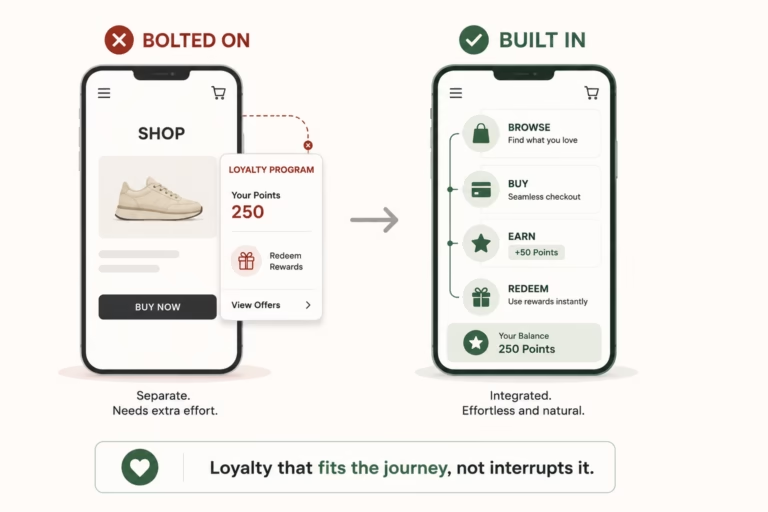
For most brands, you don’t need to build at that scale to apply these principles. There are three things worth doing right now.
4.1 Use your data to make customers feel seen — not just targeted.
Every enrolled member is a first-party data point. Purchase history, category preferences, channel behaviour — it’s all there.
Most brands use this data to send more offers. The better use is recognition. A message that acknowledges a milestone. A recommendation that actually makes sense for that customer. A birthday upgrade that wasn’t asked for.
These small moments are what turn a repeat buyer into someone who talks about your brand.
Read more – The 5-Step Framework for Building a Loyalty Program That Actually Retains Customers
4.2 Build for WhatsApp, not just the app.
Most Indian customers don’t spend their day inside brand apps. They’re on WhatsApp.
A loyalty program that requires an app download just to check a points balance is creating unnecessary friction. Points updates, redemption reminders, personalised offers — all of this can run on WhatsApp. For the Indian market, it probably should.
4.3 Connect online and offline into one identity.
For brands with both a D2C presence and physical stores, fragmented loyalty is a silent retention leak.
A customer who buys at your store, shouldn’t lose their points history when they order online the next week. One identity, one balance, consistent recognition — however they choose to shop.
Most Indian brands haven’t hit this bar yet. It’s worth being one that has.
Read more – Bridging Online and Offline: The Omnichannel Approach
5. Conclusion
So — do loyalty programs really drive loyalty?
Yes. But only a shallow version of it, and only for as long as the incentive holds.
The program creates the habit. It captures the data. It gives you a reason to keep showing up in a customer’s life. But the loyalty — the part where a customer chooses you without needing a reason — that has to be earned through the experience you consistently deliver around it.
Points make customers come back.
Experience makes them come back without points.
Brands that understand this are building retention that compounds. The ones that don’t are renting customers — one discount at a time.