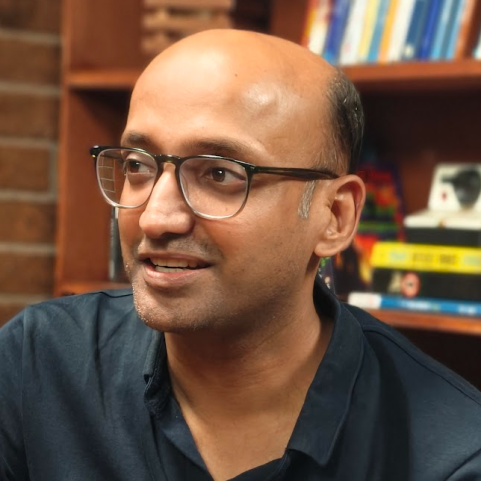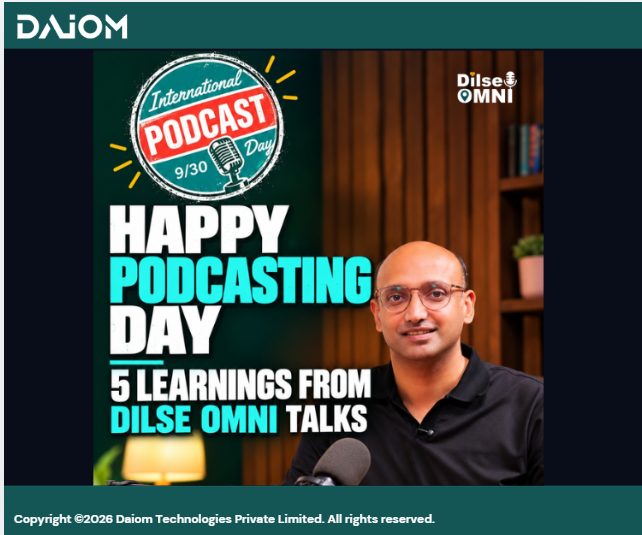

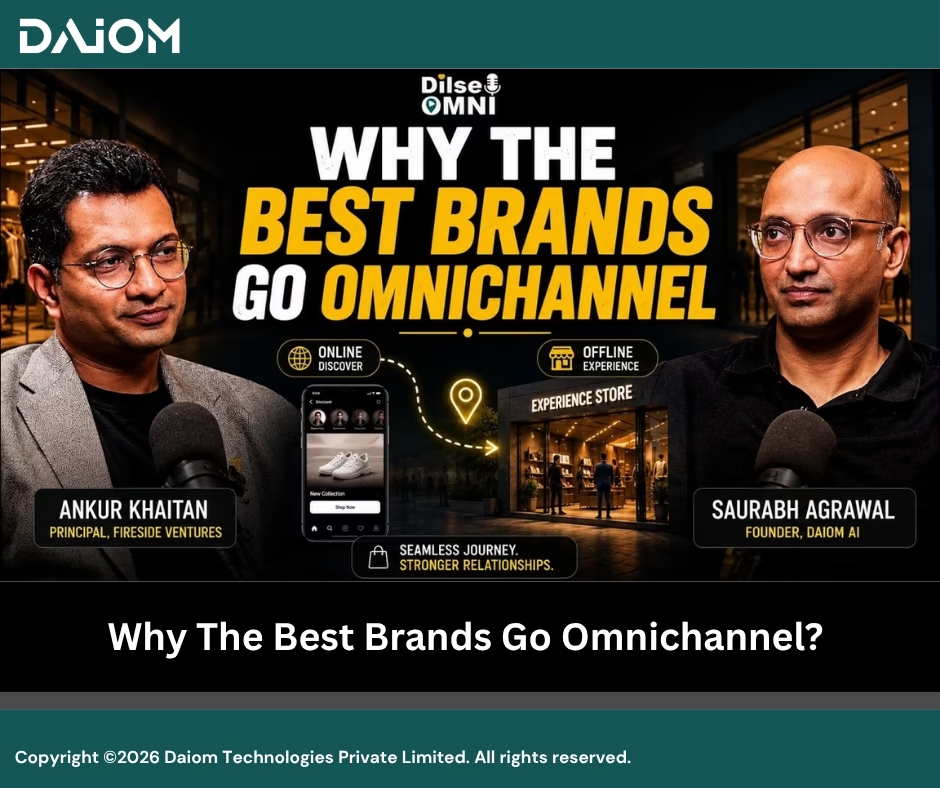



In this episode of DilSe Omni, Ankur Khaitan, Principal at Fireside Ventures, shares how India’s leading venture capital firms evaluate consumer brands, why omnichannel has become non negotiable, and what founders must do to build iconic businesses in the next decade.
I went into this conversation with a simple question around Fireside and the role omnichannel plays in its investment lens. What came out felt far bigger. This was not just a discussion about channels. It was a masterclass on how Indian retail is changing, how consumer behavior has already moved ahead of many brand playbooks, and why founders can no longer afford to think in silos.
Ankur made one thing very clear from the start. If you are building a consumer brand today, omnichannel is not a category. It is the natural journey.
“Every brand today, if not today then tomorrow, will be omnichannel in their journey.”
Omnichannel Is No Longer a Separate Strategy
One of the most important shifts in the conversation was this. We should stop treating online brands and offline brands as two separate buckets.
According to Ankur, most of the brands Fireside backs may start online first, or sometimes online and offline together, but eventually they all move toward an omnichannel model. And they are moving there much faster than brands did a few years ago.
That tells us something profound. Omnichannel is not an expansion plan that sits in a future roadmap deck. It is increasingly built into the DNA of modern consumer brand building.
What Omnichannel Actually Means
There is a shallow way to define omnichannel and there is a useful way.
The shallow definition is that a brand is present across multiple channels. A website, marketplaces, stores, social commerce, maybe general trade too. That is technically true, but it misses the point.
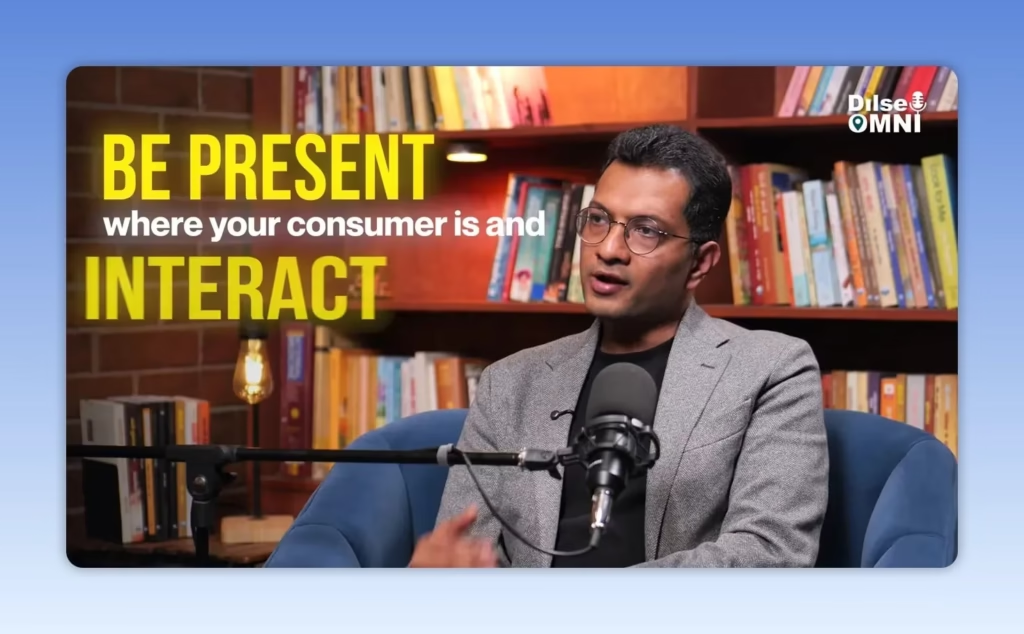
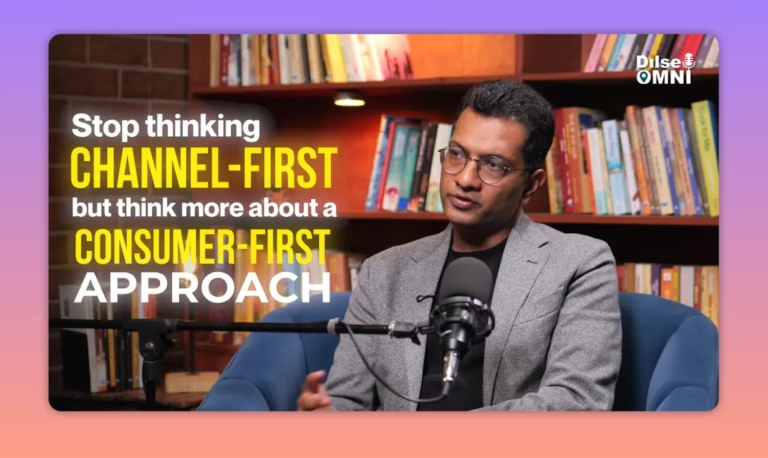
Ankur framed it much better. Omnichannel starts when a brand stops thinking channel first and starts thinking consumer first.
“Be present where your consumer is, and interact in a way your consumer wants.”
That line stayed with me because it reframes the entire operating model. The goal is not to tick channels off a list. The goal is to design the right shopping environments for different moments in the consumer journey.
Some channels acquire. Some educate. Some convert. Some retain. Some build trust. Some deepen habit.
This means omnichannel is really a system of coordinated brand interactions where the proposition stays the same, but the role of each channel changes.
A simple omnichannel framework
- Core brand proposition: What the brand stands for never changes.
- Consumer context: Where is the customer discovering, evaluating, buying, or returning?
- Channel role: Each channel should have a clear job, not just a presence.
- Interaction design: The shopping experience should match what that customer wants in that environment.
- System efficiency: The real value comes when channels work in tandem rather than compete internally.
India’s Retail Opportunity Is Massive and Omnichannel Will Drive It
I brought up a retail projection that India could move from roughly a 1 trillion dollar retail market in 2025 to nearly 2 trillion dollars by 2030. What I wanted to understand was simple. Where does omnichannel sit inside this growth story?
Ankur’s answer was bold. He sees omnichannel as the nucleus of this growth.
Why? Because consumer behavior has already blurred the lines between online and offline. People discover online, go offline to experience, buy offline, return online, compare on marketplaces, and then walk into a store with a clear point of view. The reverse is also true.
The old linear funnel has dissolved.
“Consumers will interact with brands on the channel of their choice.”
That is why a channel first view breaks down. The consumer is not thinking in channels. Only brands are.
And if this behavior is spreading across categories, then the brands built for this reality will naturally capture a disproportionate share of India’s next retail decade.
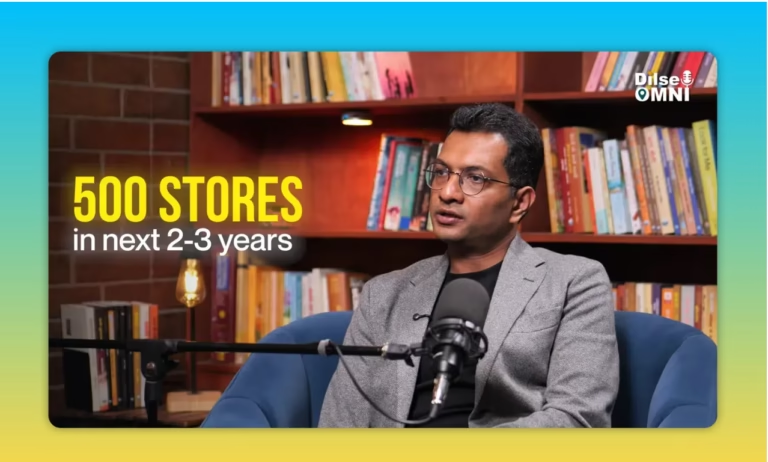
One statistic from Ankur really stood out. His hunch is that Fireside portfolio brands alone could open north of 500 EBOs over the next few years. That is not a side note. That is a serious signal.
If venture backed, digital native brands are opening exclusive brand outlets at this pace, then omnichannel is not theory anymore. It is capital allocation.
Why Discovery Is Fueling Offline Growth
There was another layer here that I found fascinating. Offline is not coming back despite digital. In many cases, offline is growing because of digital discovery.
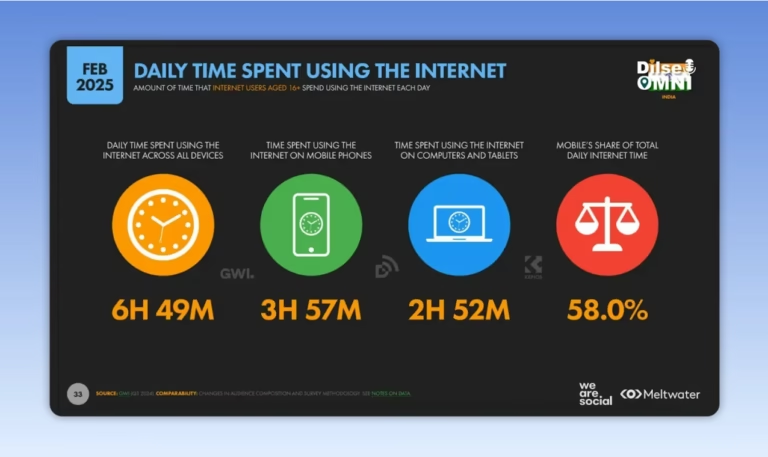
Consumers today spend huge amounts of time on the internet and social media. Discovery happens there first. That means the internet has become the new storefront for attention.
I shared an example from wedding retail where people discover looks on social media, take screenshots, carry those references, and then move into a buying journey that often needs in person trial, fit, and customization.
This is exactly how modern retail works. Discovery can be digital. Trust can be physical. Conversion can happen in either place.
Brands that are absent in discovery lose relevance. Brands that are absent in experience lose conversion. Omnichannel closes that gap.
Should Brands Go Offline Earlier?
This was one of the most practical parts of the conversation.
For years, the common playbook was straightforward. Start online. Build the brand. Establish product market fit. Then go offline.
Ankur believes that has changed meaningfully.
Today, offline is increasingly part of product market fit itself.
That is a huge shift. It means founders are not waiting for some distant stage of maturity before testing physical retail. They are using offline earlier to validate proposition, trust, shopping behavior, and repeatability.
Why has this become possible?
- There are now many working examples across categories.
- The ecosystem has built playbooks around online to offline conversion.
- Mall operators and landlords are more open to new age brands.
- Founders are more willing to experiment early.
So while the journey may still look sequential on paper, in practice the offline layer is being introduced much sooner than before.
What Changed in the Omnichannel Playbook Over the Last Five Years
I asked Ankur what has really changed in the last four to five years. His answer had two sides, demand and supply.
1. Demand side has matured
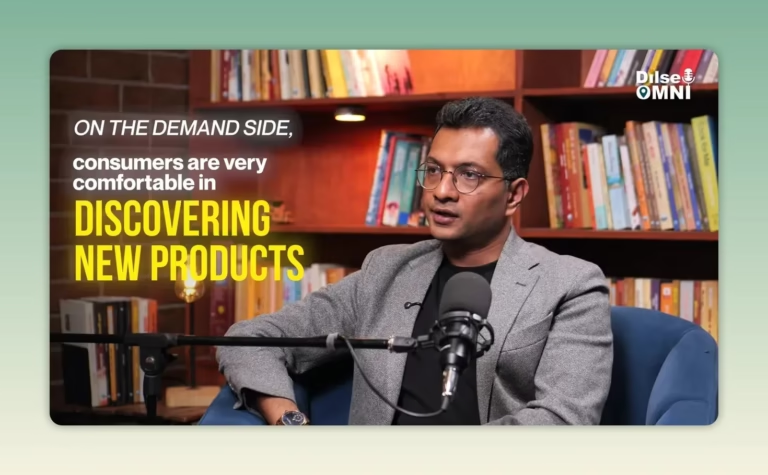
Consumers are now deeply comfortable discovering new brands online and then moving offline to touch, feel, try, and buy. This behavior is no longer niche. It is mainstream and expanding across categories.
2. Supply side has matured
Founders have become much more experimental. They are not ideologically attached to one channel. They are willing to test formats, timing, store types, and channel roles.
“On the supply side, founders have become very experimental.”
And importantly, the ecosystem around them has matured too.
Malls are no longer looking only for legacy anchors. High streets and developers increasingly recognize that new age brands bring novelty, energy, and footfall. Lease structures are becoming more flexible. Rental conversations are evolving. Operators are more willing to partner.
This combination of consumer readiness, founder experimentation, and ecosystem support is what makes the present moment special.
Ankur called it a match made in heaven. I agree.
Why New Age Brands Are Becoming Retail Anchors
One of the most compelling insights from the episode was how the role of traffic drivers in retail is changing.
For years, malls relied heavily on multiplexes and restaurants to drive visits. Today, that equation is shifting. Entertainment has more substitutes now. OTT has changed habits. But the need for novelty in shopping remains.
And that is where new age brands come in.
Ankur’s argument was simple. Consumers increasingly visit malls and market complexes because they want to discover fresh brands, fresh concepts, and fresh product experiences.
In that sense, many D2C and digital first brands are becoming the new anchors.
Not just symbolic anchors. Commercial anchors.
As Ankur pointed out, the real test is whether consumers walk out carrying shopping bags. And increasingly, they are.
He gave the example of brands like Newme and Yumee, where store openings generate real excitement, queues, and intent. That feels closer to a drop culture mindset than traditional retail merchandising.
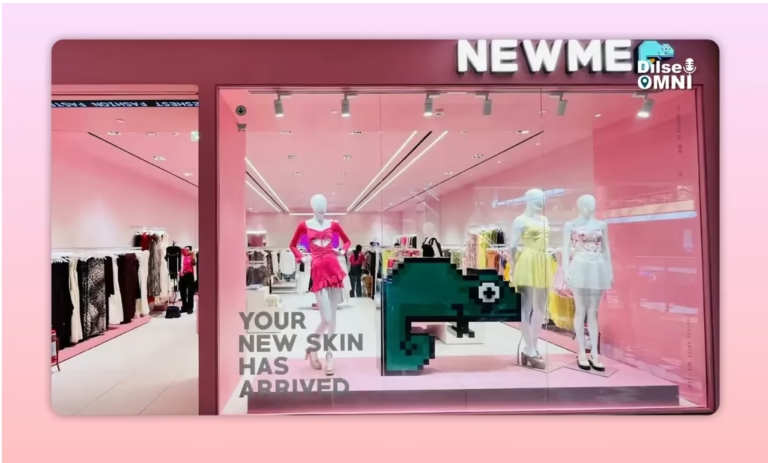
This is where omnichannel creates an edge. When a brand has already built desire online, the store opens with momentum. The physical location is not a cold start. It is an activation point.
Retail Analytics Is Quietly Becoming a Superpower
Toward the end, we got into one of my favorite areas, retail analytics.
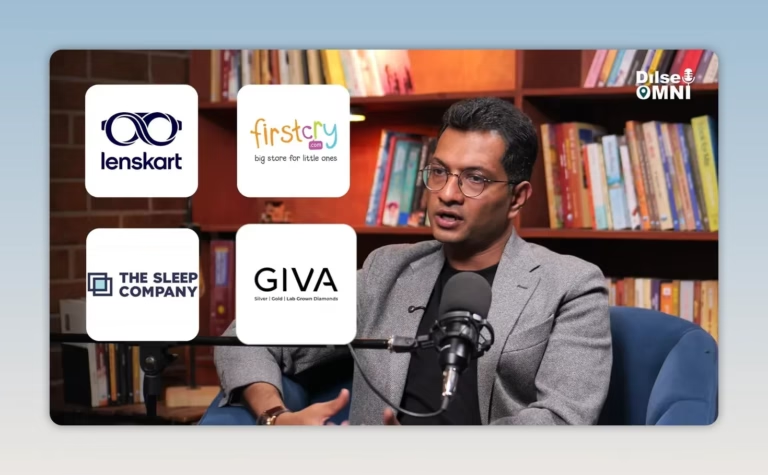
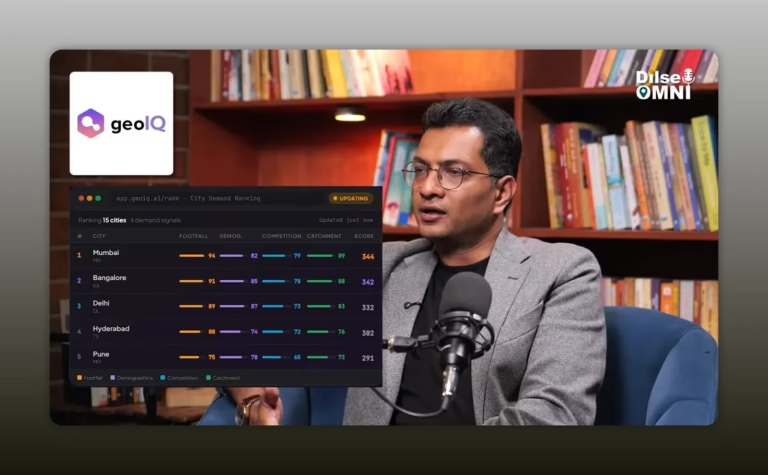
Ankur highlighted how some of the strongest omnichannel brands have used analytics deeply to understand store catchments, retail productivity, and channel interplay. He mentioned Lenskart as an example of a brand that has used retail analytics meaningfully.
He also referred to tools like GeoIQ that can help founders understand catchment areas in much greater detail. That changes the probability of success.
Instead of opening a store based on instinct, a founder can map:
- Who lives in the catchment
- What kind of spending power exists
- Whether the product proposition fits that micro market
- What surrounding ecosystem can support the store
That is powerful because omnichannel is not just about presence. It is about precision.
The Real Lesson I Took Away
What I learned from Ankur is that omnichannel in India is no longer a future trend waiting to happen. It is already the operating reality for serious consumer brands.
The winning brands will be the ones that understand three things clearly:
- The consumer journey is fluid. Discovery, trial, trust, and purchase can happen across different environments.
- Offline is not a legacy channel. It is a strategic layer for trust, experience, and scale.
- Playbooks now exist. Founders can move earlier, smarter, and more analytically than before.
If I had to condense the full conversation into one line, it would be this:
“The future belongs to brands that think consumer first, not channel first.”
That is the heart of omnichannel.
I am Saurabh Agrawal and we come with a new episode on Dilse omni talks every fortnight and cover different aspect of omnichannel with amazing speakers.
This article was created from the video Why Every Brand in India is Going Omnichannel