



If I ask you to name a fast fashion brand — NEWME, H&M, Zara come to mind instantly. But here is something worth pausing on. India is not a Western fast fashion market. India is ethnic at its core.
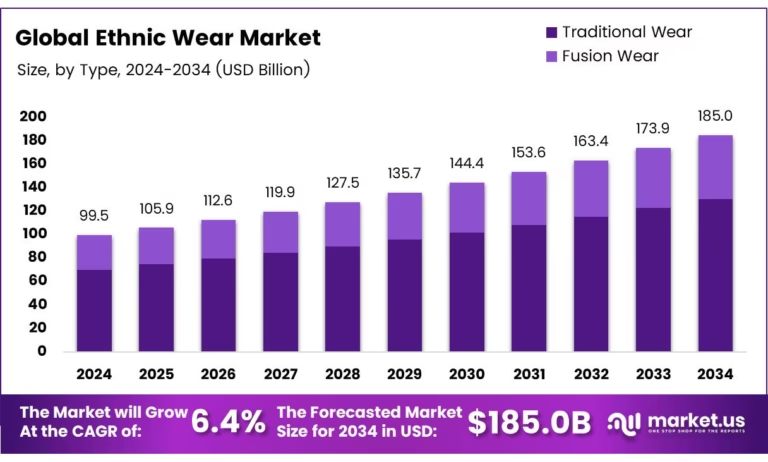
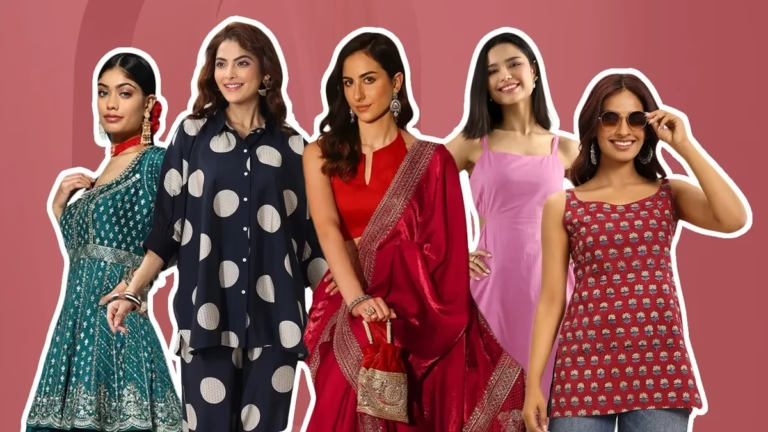
Spend any time in an Indian city today and you will see it clearly. The women around us are wearing kurtas and ethnic co-ords to the office. Not just for festivals or functions, but for Monday morning meetings, client calls, and everyday work. Indian wear has quietly become the new workwear. And it is not a trend. It feels like a genuine shift in how Indian women are choosing to show up, confidently, in their own aesthetic, every single day. And the brands that read this shift early are now building some of the most interesting retail businesses in the country. The Global ethnic market is expected to grow at the CAGR of 6.4% by 2034.
At DAiOM, we are obsessed with brands that are not just following the omnichannel playbook, but rewriting it.
We have studied many brands across this space, and one thing stands out consistently. This is still a largely unorganised category. The first set of organised players were brands like Biba and W. They cracked the market in their time. But they followed the old playbook — traditional retail, seasonal collections, celebrity campaigns, and limited digital thinking.
Today, a new generation of ethnic wear brands is rewriting the rules entirely. And Libas is one of the best examples of what the new playbook actually looks like.
“Libas” is a word of Arabic origin (meaning clothing, dress, or attire).
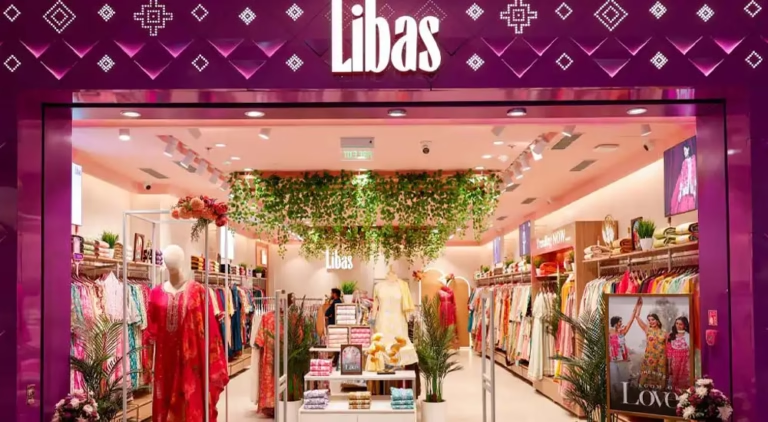
What makes Libas worth studying is not just the revenue number — ₹700 crore today and sprinting toward ₹1,000 crore. It is how they got there. No early funding round. No celebrity-led launch. No palace-themed store. Just a bootstrapped Delhi brand that built its entire foundation on discipline, data, and a very sharp understanding of what modern Indian women actually want to wear — and how they want to shop for it.
In this blog, we will look at how Libas has scaled with its omnichannel presence across three dimensions that every consumer brand needs to get right:
- Sales — how they sell across every channel
- Experience — From First Click to Post Purchase, Nothing Is an Afterthought
Marketing — how they build brand without burning cash
1. How the Indian Ethnic Wear Market Is Evolving
The Indian ethnic wear market is one of the largest segments in Indian fashion — and it is accelerating faster than most people realise.
Fast fashion in India is growing at nearly 30-40% year on year, significantly outpacing traditional fashion which grows at around 10%. The consumer driving this growth is urban, digitally native, between 18 and 35, and she is no longer buying ethnic wear only for weddings or festivals. She is buying it for work, for weekends, for casual outings, and for social media.
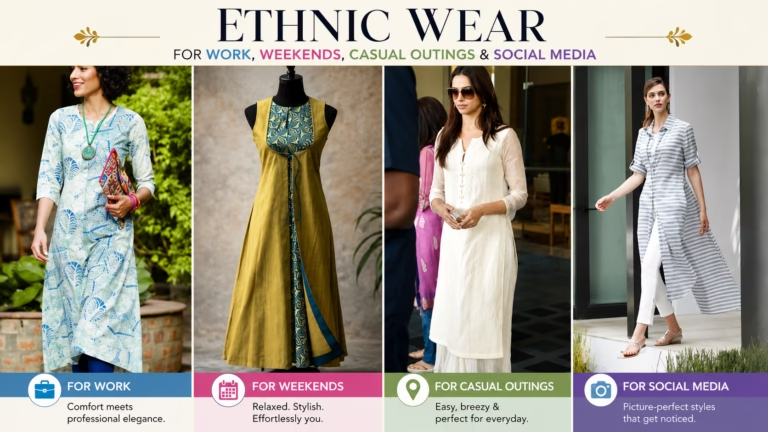
This shift has created a specific gap in the market — ethnic wear that is trend-first, affordable, available quickly, and designed for the way young Indian women actually live. Not the way brands assumed they did.
That gap is exactly where Libas found its right to win.
2. The Omnichannel Journey — How Libas Built Every Channel
Sidhant Keshwani built Libas with a simple, observable truth — there is a massive, underserved appetite for ethnic wear in India, and the existing market is too slow, too expensive, and too focused on the wrong customer to serve it well.
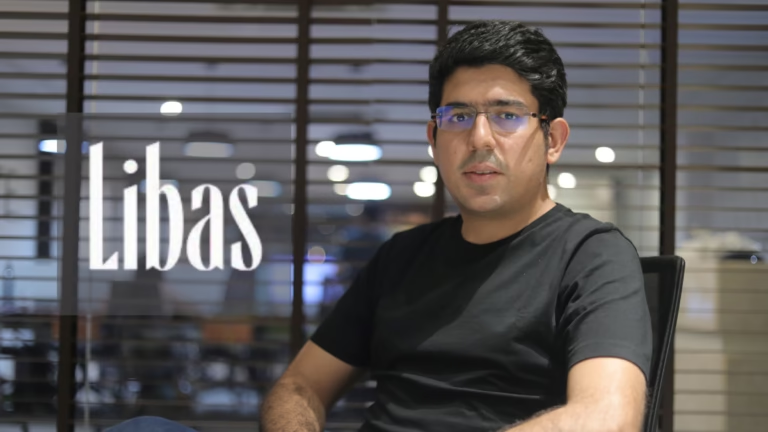
“Now we are on the way to building India’s first truly Indian wear brand which goes global.”
Libas was born from that observation. And everything that came after — the pricing strategy, the product velocity, the omnichannel expansion, the dark store model — traces back to that one moment of clarity.
Let’s look at the Omnichannel flow of Libas.
2.1 Sales
2.1.1 Website and D2C First
Libas started online. The early years were entirely D2C — building direct relationships with customers, learning what sold and what did not, and developing the data infrastructure that would power every future decision.
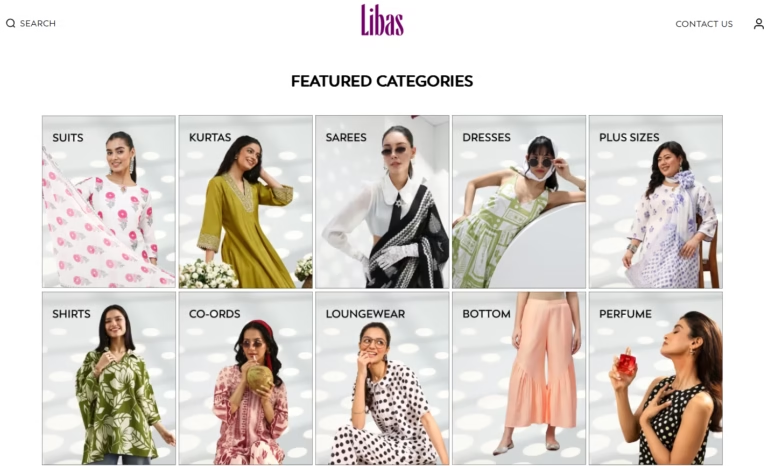
The discipline during this phase was extreme. Libas reached its first ₹100 crore in revenue with a team of just 20 people. The focus was singular: make a ₹500 product profitable without needing ₹700 in marketing to sell it. That constraint built the muscle that every scaling brand eventually needs — the ability to grow without burning.
2.1.2 The App — Real-Time Commerce
The Libas app became the nerve centre of their real-time fashion model. Every Friday, new designs go live. Within 48 hours, behavioural data from the app tells the team exactly which styles have life and which do not. Winners go into replenishment. Losers disappear — before they become dead inventory.
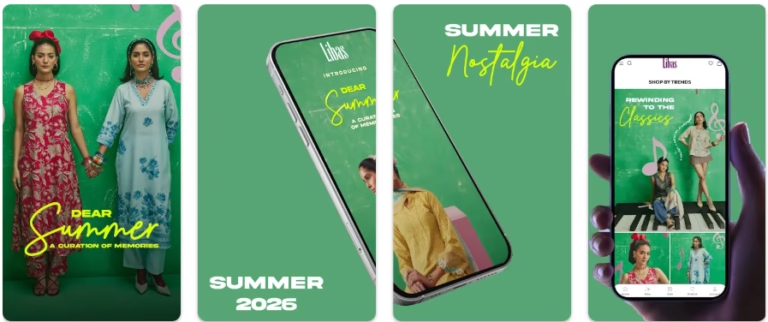
This 48-hour feedback loop, built into the app experience, is what allows Libas to launch 100 to 150 new designs every week and still maintain a 99% stock sell-through rate. The app is not just a sales channel — it is the primary demand intelligence system for the entire business.
2.1.3 Marketplaces — Strategic, Not Dependent
Libas is present across Myntra, Amazon, and other marketplaces. But the approach is deliberate — marketplaces are used for discovery and reach, not as the primary revenue engine. The goal has always been to build a brand that customers seek out directly, rather than one that lives and dies by marketplace algorithms.

2.1.4 Quick Commerce — The Dark Store Breakthrough
This is where Libas has done something genuinely innovative.
Rather than replicating inventory across thousands of partner warehouses — which is operationally impossible for a brand managing thousands of SKUs — Libas built its own mini dark stores in high-potential pin codes. These brand-owned dark stores feed into quick commerce delivery through platforms like Myntra and Zepto, enabling 30-minute deliveries without losing control of the inventory or the brand experience.
The result is a daily inventory churn rate of 5% — compared to 1% for standard retail. Libas effectively turns over its entire inventory every 20 days. That is not just logistics efficiency. That is a completely different business model.
2.1.5 Offline Stores
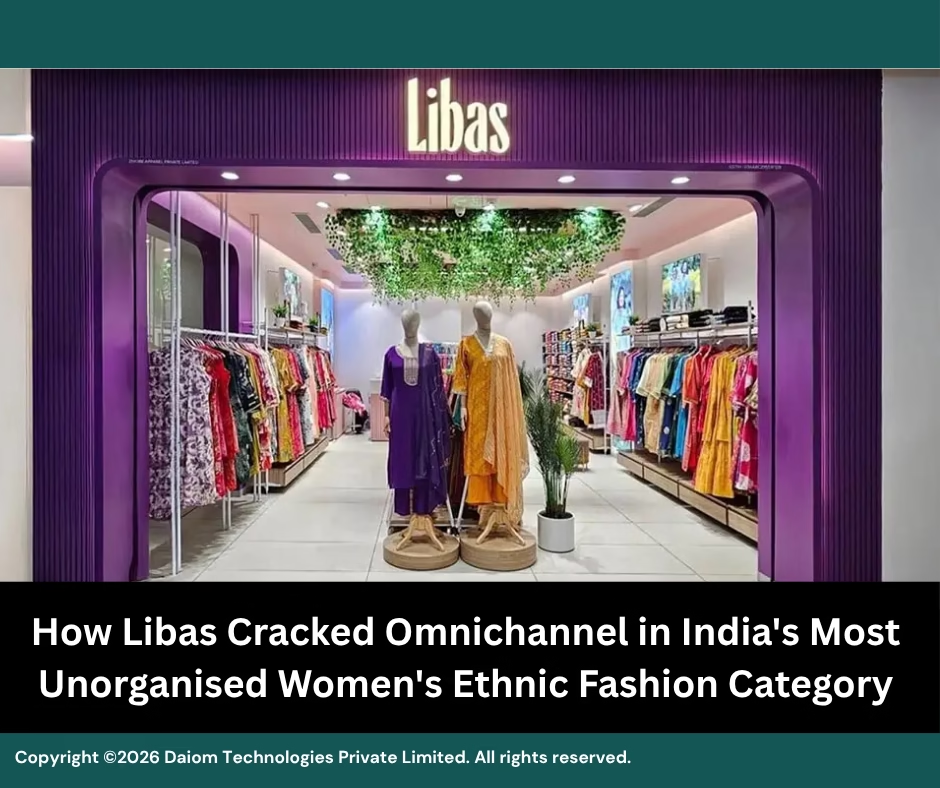
When Libas moved offline, they made a deliberate choice that most ethnic wear brands had not made before: they refused to build the traditional Indian retail experience.
No gold accents. No Rajasthani fort shoots. No high-pressure sales staff hovering over customers. Instead, Libas stores are modelled after Zara — stark white, clutter-free, designed for a self-serve browse-and-touch experience. A customer can walk in, explore, try, and buy in five minutes without feeling obligated or overwhelmed.
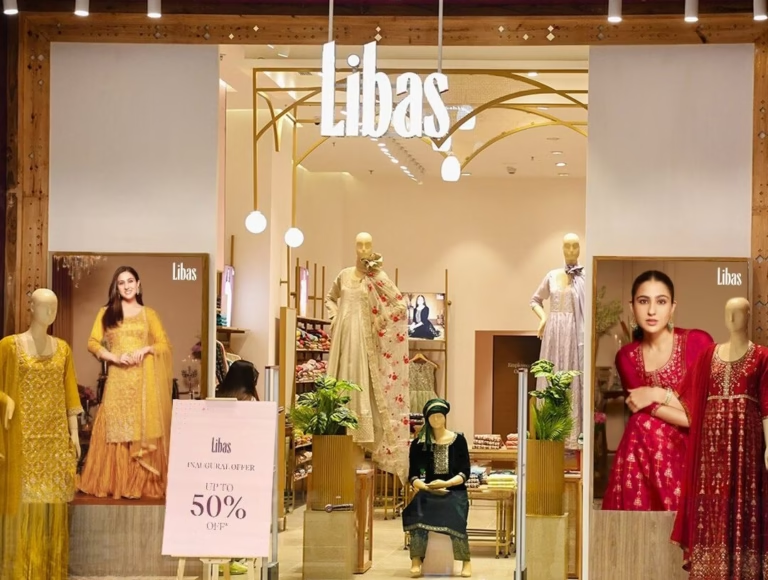
The strategic thinking behind this is sharp: if you make ethnic wear young and cool for an 18-year-old, the 40-year-old will follow naturally. The reverse — designing for the 40-year-old and hoping the 18-year-old follows — never works.
2.2 Marketing — From Celebrity Campaigns to Micro Creator Ecosystems
Libas’s marketing evolution is one of the most instructive parts of the brand story.
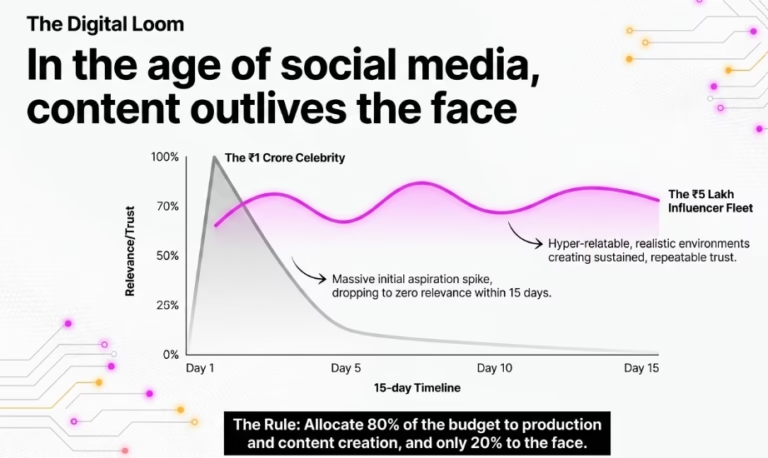
In 2025, Libas made a significant pivot — moving away from traditional high-budget celebrity campaigns toward a robust regional and micro creator ecosystem. The decision was data-backed. Micro and regional creators proved to deliver higher trust, more authentic engagement, and better conversion than mass celebrity placements.
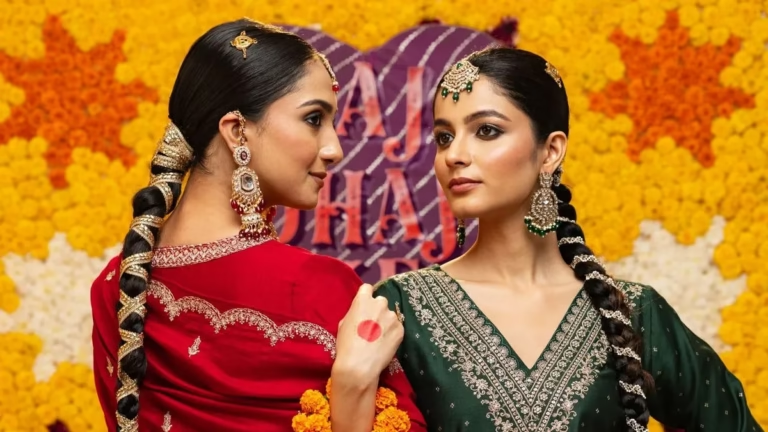
The campaign Saj Dhaj Ke became one of their most talked-about moments — a women-first narrative that positioned Libas not just as a clothing brand but as a platform for modern Indian women to express themselves. The campaign resonated because it reflected a genuine insight about the Libas customer — she is not dressing for occasions anymore. She is dressing for herself, for every day, on her own terms.
On Instagram, Libas has consistently leaned into styling reels, creator-led outfit ideas, and community content that drives organic discovery. The feed feels less like advertising and more like a style destination — which is exactly the intent.
2.3 Experience: How Libas Makes Every Touchpoint Feel Intentional
Experience is the hardest part of omnichannel to get right. It is not one thing, it is every interaction a customer has with your brand, from the moment she discovers you to the moment she decides whether to come back.
2.3.1 The App Experience
Customers consistently praise product quality for the price. For a brand launching 100 to 150 designs every week, maintaining that baseline at scale is itself an achievement.
A few deliberate experience choices stand out:
→ Inclusive sizing from XS to 6XL — with a dedicated plus-size collection called ‘Extra Love by Libas’ — a category most ethnic wear brands have historically ignored
→ New arrivals every week — fresh drops create a reason to keep opening the app
→ App-exclusive offers and early access — building habitual app usage over other platforms
→ Libas Purple Points loyalty programme — earning points on every purchase with early access to collections and exclusive sales — the post-purchase retention layer that keeps customers returning without relying entirely on discounts

2.3.2 Offline Experience
Physical stores were evolved into experience centres — hosting style events and curated drops rather than just transacting. The offline store is a brand experience designed to convert browsers into buyers and buyers into advocates.
2.3.3 Post-Purchase — The Honest Picture
This is where the reviews get more layered, and where the real omnichannel opportunity lies.
Positive feedback centres on product quality, value for money, and everyday wearability. Many customers describe Libas as their go-to brand for daily ethnic wear — exactly the positioning the brand has worked toward.
But the gaps are equally instructive:
→ Returns and refunds are the single biggest friction point across reviews. A difficult return experience is the fastest way to lose a customer who was otherwise happy with the product.
→ Size inconsistency appears across multiple reviews — same size, different fits across garments. In a category where fit drives purchase confidence this is a direct retention issue.
→ Customer service responsiveness — Libas does respond to app store reviews which is a positive signal. But responding with “please email us” while leaving the underlying issue unresolved is not the same as solving the problem.
The Takeaway:
Libas has built a strong discovery and purchase experience. The gap is in the post-purchase journey. Brands that win omnichannel do not just make it easy to buy, they make it easy to come back. And that starts with making it easy to resolve a problem when something goes wrong.
3. The Frameworks That Drive Everything
3.1 Real-Time Fashion Over Seasonal Planning
Traditional Indian fashion operates on an 8-month planning cycle. Libas eliminated seasons entirely. The only question that matters internally is: what does the customer want in the next 30 days, and can we deliver it before someone else does?
3.2 Speed Over Perfection
Libas launches products when a trend is 80% ready — not 100%. The remaining 20% is discovered in the market, through real customer behaviour, within 48 hours of going live. This approach means more experiments, faster learning, and fewer slow-moving SKUs sitting in warehouses.
3.3 The Art of Saying No
Despite the temptation to diversify into menswear, jewellery, and accessories, Libas said no for years. The focus stayed on women’s ethnic wear until the supply chain, the tech stack, and the distribution model were fully mature. As Keshwani puts it: “The biggest success comes not by saying yes, but by saying no.”
4. What Brands Can Learn from the Libas Playbook
Working with brands across D2C, fashion, and retail, a few things stand out consistently about what separates the ones that scale from the ones that stall.
Libas demonstrates all of them.
They built their data infrastructure before their marketing budget. They understood their customer’s actual lifestyle — not the lifestyle brands assumed she had. They moved offline at the right time, with a store format designed for their specific customer, not borrowed from someone else’s playbook. And they treated quick commerce not as a nice-to-have feature but as a genuine business model innovation.
The Indian ethnic wear market is large and getting larger. But the brands that will dominate the next decade will not be the ones with the most stores or the biggest ad spend. They will be the ones that move fastest, listen most carefully, and build operating models disciplined enough to compound over time.
Libas is building that.
*This article has been written using the publicly available info.