

A few weeks ago, we reviewed a media plan for a fast-growing D2C brand targeting Tier 2 cities. The audience? “NCCS A, Women 25–40.”
On closer inspection, nearly 68% of that market fell into NCCS A. That’s not a target audience — that’s almost everyone.
This highlights a bigger problem: India is not one market.
With 1.4 billion people, the label “Indian” tells you very little. A household in Bandra and one in rural Chhattisgarh may both be “Indian,” yet they earn, spend, and consume very differently.
If your targeting system can’t tell them apart, it isn’t doing its job.
In this blog, we break down why broad targeting is costing Indian D2C brands, and how to build a system that actually tells your audiences apart.
Table of Contents:
1. India 1, India 2, India 3: The Three India Framework
Originally framed by retail pioneer Kishore Biyani and later popularised by the Blume Indus Valley Report, this framework divides India into three distinct socio-economic worlds, not by geography, but by income, aspiration, and access.
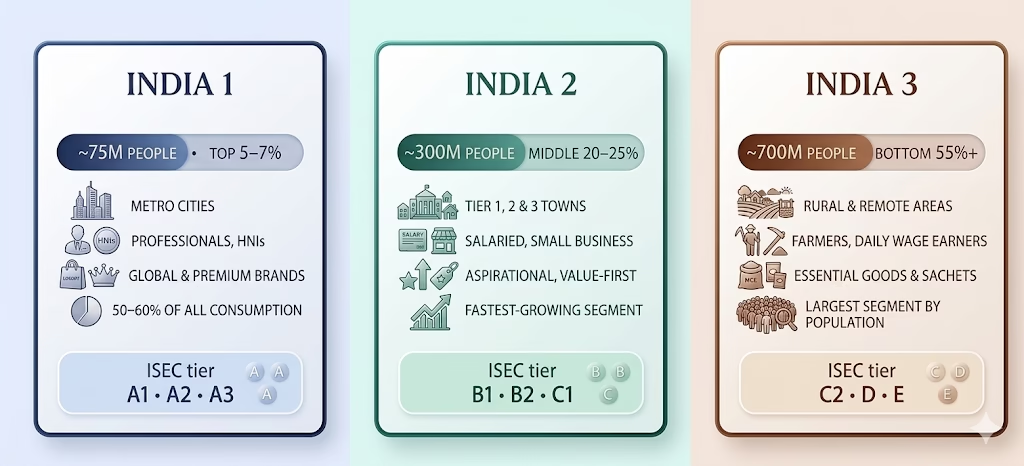
India 1 drives nearly 50–60% of all consumption despite being only 5–7% of the population. India 2 is the fastest-growing and most aspirational segment. India 3 is the largest by headcount, but the most underserved — the market of the future.
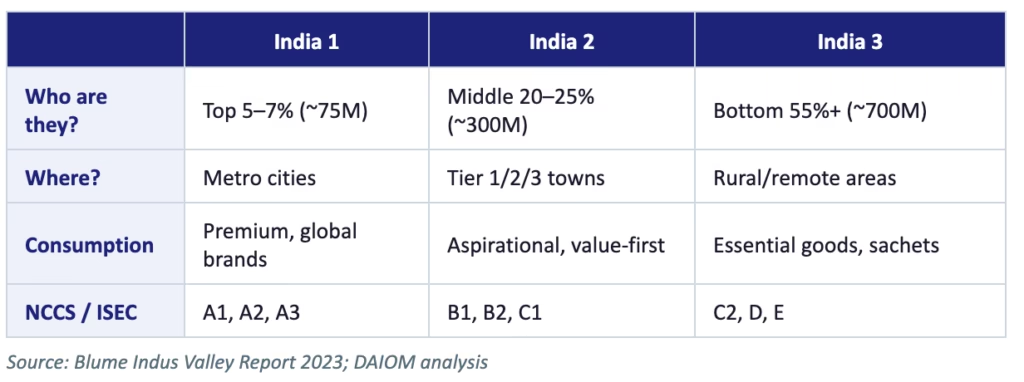
The problem every brand faces: how do you identify which India your customer belongs to — and how do you reach them precisely? That’s where classification systems come in.
2. Why Do We Need a Classification System?
Consumer classification is the common language of marketing. Across media buying, targeting, and retail planning, everyone needs a shared definition of the audience.
Without it, teams interpret “affluent” differently, research becomes inconsistent, and budgets are wasted.
India’s first system, SEC (1988), used education and occupation but classified urban and rural separately, making it fragmented. NCCS (2011) fixed this with a unified framework.
3. NCCS: The System That Ran India’s Marketing for 15 Years
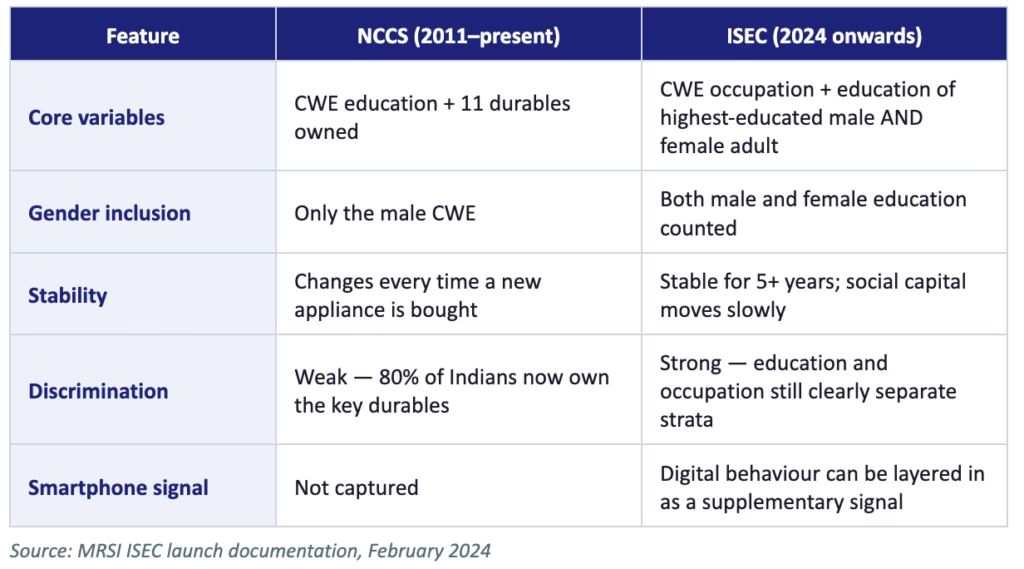
The New Consumer Classification System (NCCS) was introduced by MRSI and MRUC in 2011 and later adopted as the official TV measurement currency by BARC India (2015). For the first time, one grid covered both urban and rural India.
NCCS classifies households using two variables:
- Education of the Chief Wage Earner (CWE)
- Number of consumer durables owned (from a fixed list of 11 items)
The durables include electricity connection, ceiling fan, gas stove, two-wheeler, colour TV, refrigerator, washing machine, computer, car, air conditioner, and agricultural land (for rural households).
Combining these variables creates 12 tiers — from A1 (most affluent) to E3 (least affluent).
3.1 The NCCS Tiers at a Glance
The core idea behind NCCS was simple: what you own reflects how you consume better than what you report earning.
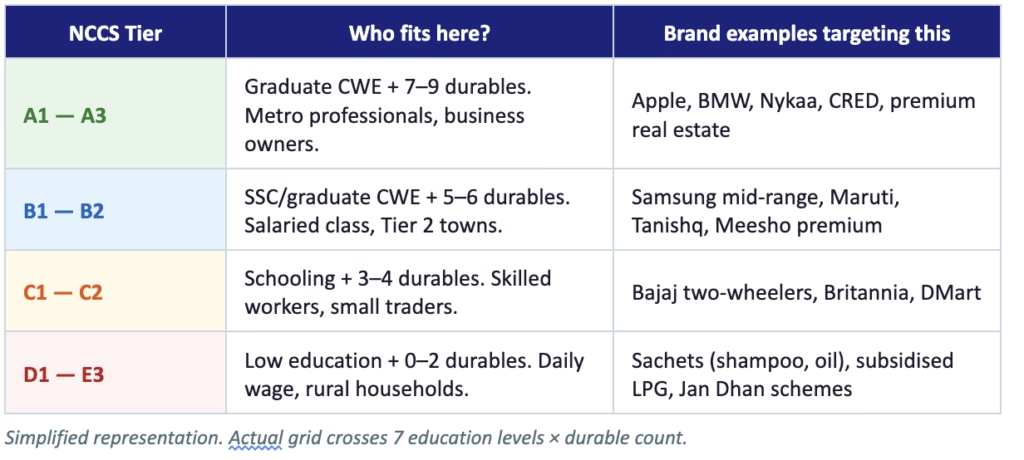
NCCS was genuinely revolutionary. It gave India’s entire advertising industry a shared, verifiable, and nationally consistent way to define audiences for the first time.
3.2 Why NCCS Stopped Working
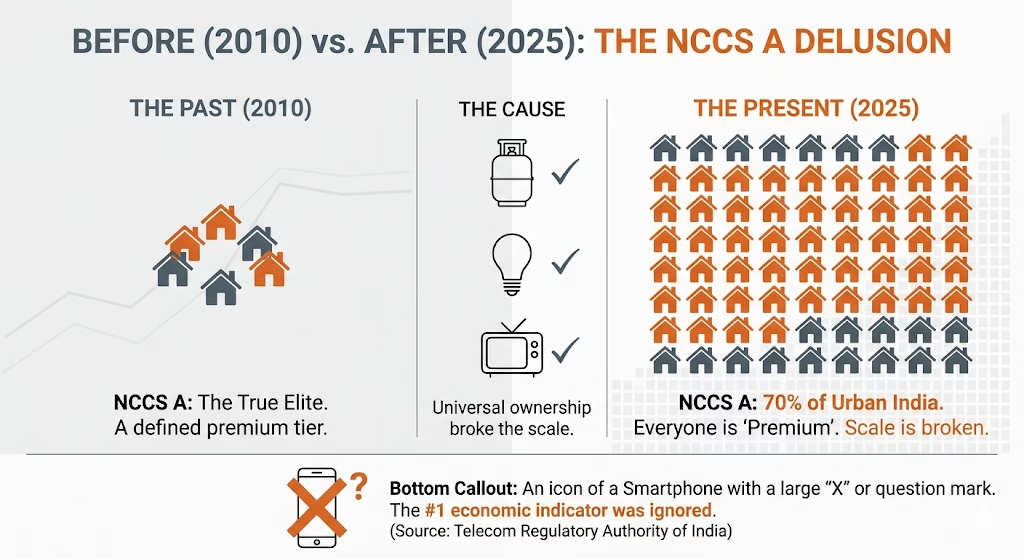
Here’s the irony: government welfare schemes accelerated the shift. Ujjwala expanded LPG access, Saubhagya brought electricity, and falling prices made colour TVs widely accessible.
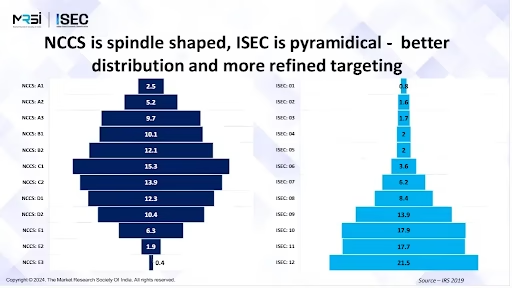
The result? Around 80% of Indians now own several of the 11 items. The system lost its ability to differentiate. In urban markets, nearly 70% of households fell into NCCS A — the supposed “elite” tier. When everyone is “premium,” the classification becomes meaningless.
Meanwhile, the smartphone — arguably the most powerful economic indicator today — was never included.
4. ISEC: A Better Way to Classify Indian Consumers
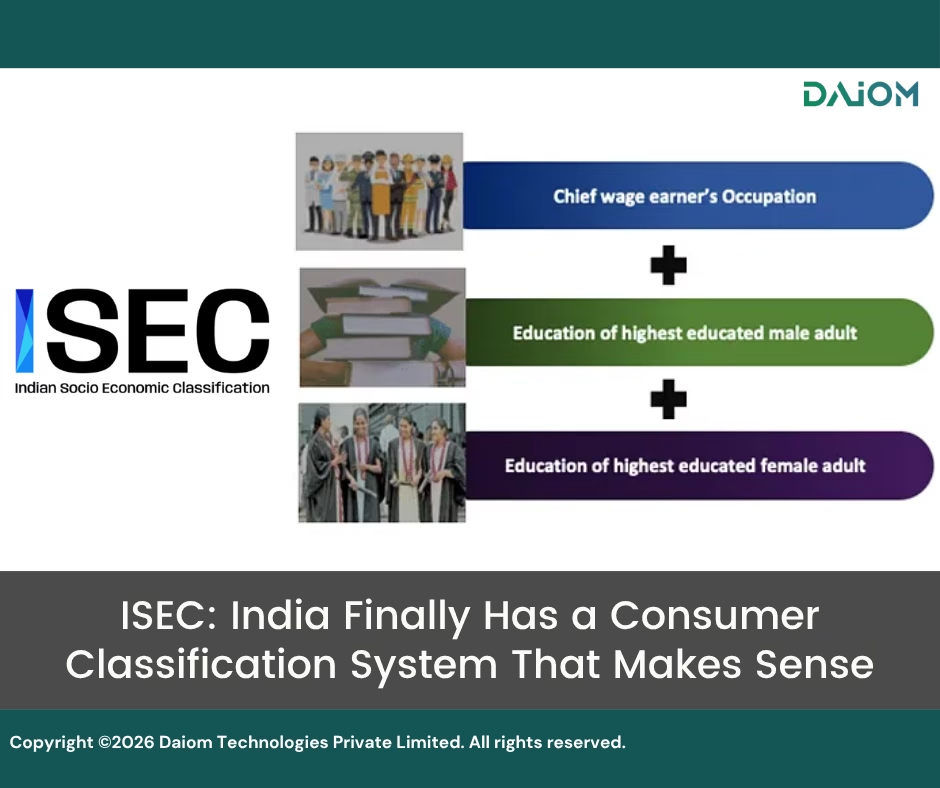
On February 21, 2024, MRSI launched the Indian Socio-Economic Classification (ISEC). Built on NCAER and NSSO datasets and validated through Item Response Theory, it’s a ground-up rethink, not a patch.
4.1 How ISEC Is Designed
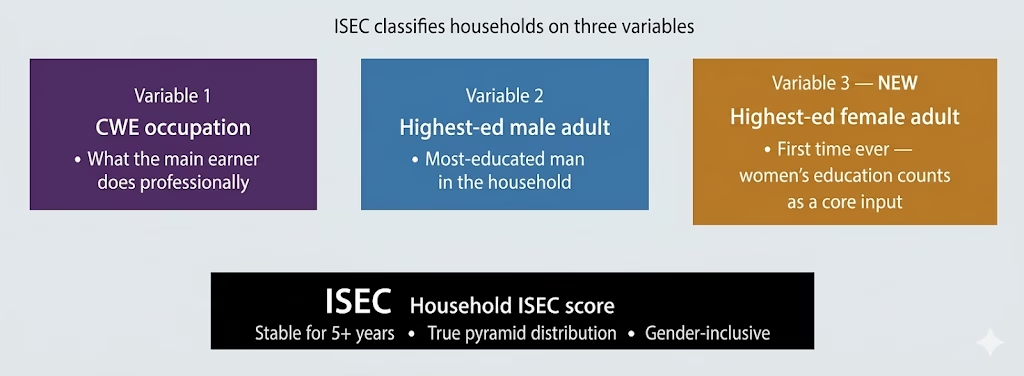
ISEC moves beyond ownership to focus on household characteristics. It uses three variables:
→ Occupation of the Chief Wage Earner
→ Education of the highest-educated male adult
→ Education of the highest-educated female adult
The third variable is a major shift. For the first time, a woman’s education directly influences classification. Research shows such households spend more on health, education, personal care, and lifestyle, allowing brands to identify them more precisely.
4.2 Why ISEC Is a Gamechanger for Brands
ISEC doesn’t just fix classification — it changes how brands make decisions.
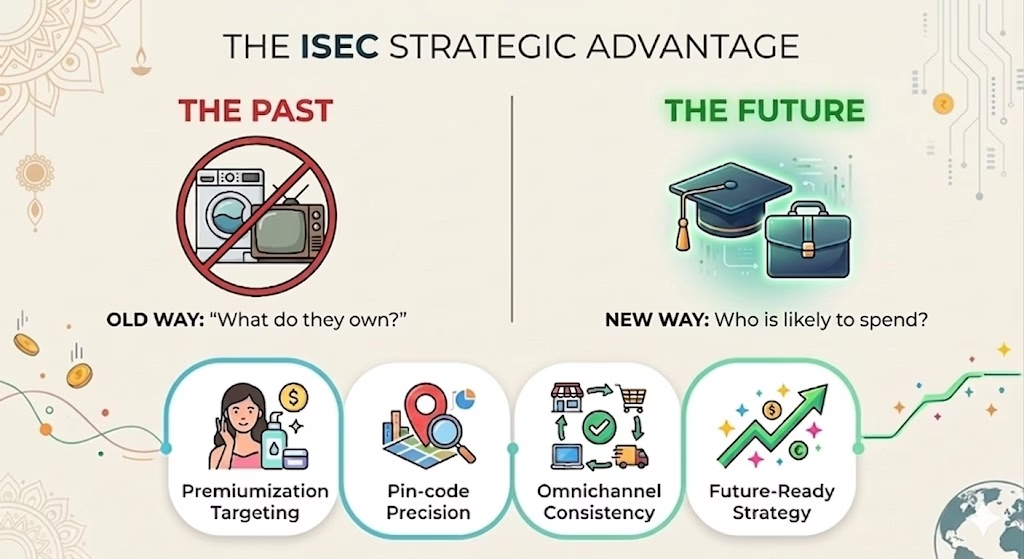
Under NCCS, marketers relied on ownership signals. But as ownership became universal, its value declined. ISEC shifts the focus to capability and intent signals — education and occupation — which better predict future consumption.
This creates four key advantages:
- Better Premium Targeting
Households with higher female education are more likely to spend on skincare, wellness, education, and nutrition. ISEC helps identify them early, even before income reflects it. - Smarter Geographic Expansion
Instead of guessing which Tier 2 or Tier 3 markets can absorb premium products, brands can map high-potential clusters at a pin-code level — improving expansion and demand planning. - Consistent Omnichannel Targeting
ISEC provides a stable identity across TV, digital, and retail, ensuring consistency in targeting and measurement. - Long-Term Stability
Unlike durables, education and occupation change slowly, making ISEC more reliable for strategy, cohort tracking, and lifecycle marketing.
In simple terms, ISEC shifts the focus from:
“Who owns what?” → “Who is likely to spend, upgrade, and aspire?”
4.3 How It Compares to NCCS
4.4 ISEC Tiers: A Simpler, More Accurate Pyramid
While NCCS had 12 tiers (A1 to E3), ISEC creates a cleaner, pyramid-shaped distribution, where higher tiers are smaller and lower tiers larger — better reflecting India’s affluence. No more 70% of urban India in the “elite” bucket.
It is also more stable. Education and occupation change slowly, allowing ISEC to hold its shape for years and making long-term research more reliable.
5. Who Uses ISEC and How
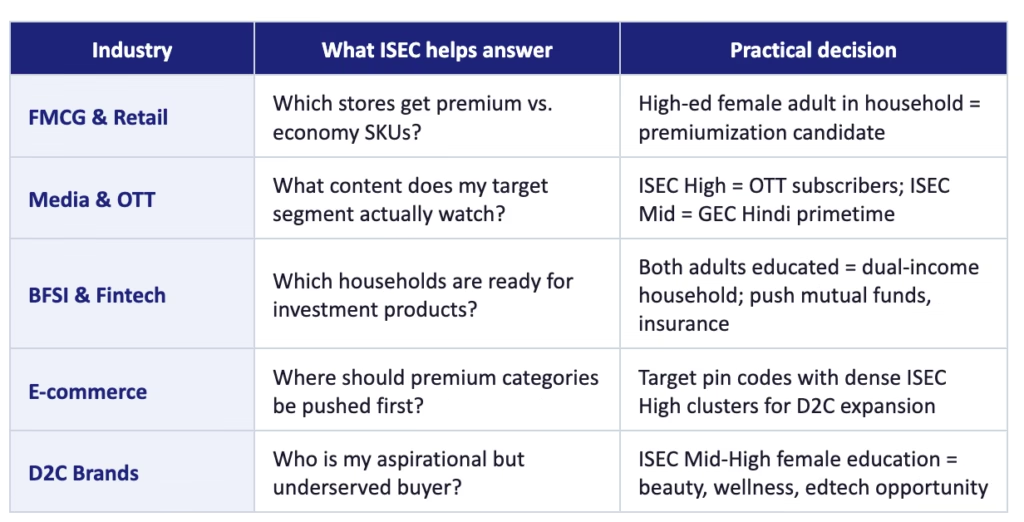
ISEC is already being adopted across industries, helping brands make sharper decisions across retail, media, and digital.
The ISEC framework is particularly powerful for omnichannel strategies — where you need consistent audience definitions across TV, digital, and in-store. Because ISEC is based on slow-changing social capital variables, the segment you identify today will still be valid when you run your next campaign.
6. Key Takeaway
As of April 2026, ISEC has strong backing from advertisers through ISA (ISA — Indian Society of Advertisers), while broadcasters and BARC India are still in evaluation mode. But with the TV Ratings Policy 2026 now mandating cross-platform measurement across TV, OTT, and Connected TV, full adoption is a matter of when, not if.
And that shift matters. NCCS was built for a different India, one where ownership of a fridge or a car signalled affluence. That reality has changed. ISEC moves the focus to education and occupation, indicators that are more stable, more predictive, and more honest about how households actually think, spend, and aspire.
For brands, this isn’t just a new classification framework, it’s a better way to understand who your customer really is.