
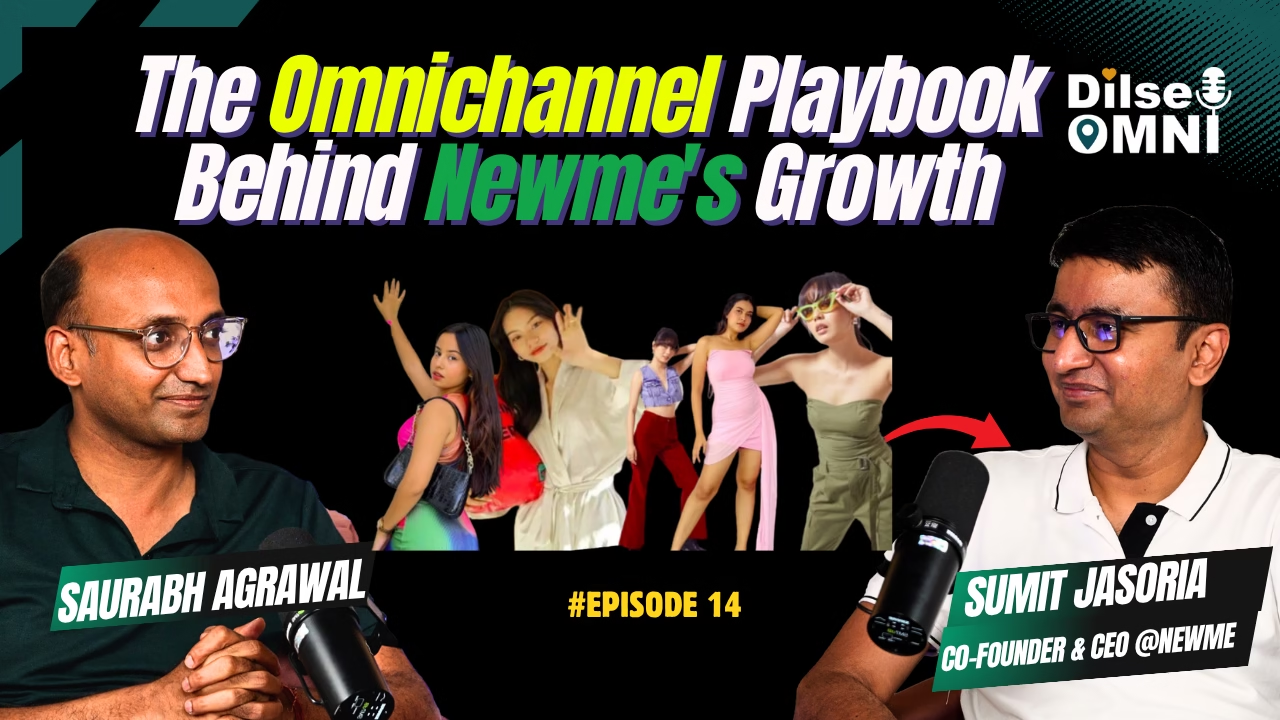
Most fashion brands start with a mood board. NEWME started with a data pipeline.
In a candid conversation on DilSe Omni, Sumit Jasoria, co-founder and CEO of NEWME, which is a brand that didn’t exist three years ago is now one of India’s fastest-growing Gen Z fashion labels, jumping from ₹3.4 crore in FY23 to ₹180 crore in FY25. A 52x revenue jump. In under three years.
But the story isn’t really about fashion. It’s about what happens when engineers who’ve never stepped inside a Fashion store decide to build one.
What was the market gap?
When China’s fashion apps were banned in India in 2020, they left behind a very specific consumer with nowhere to go, the Gen Z woman who wanted trend-first designs at accessible prices. Zara was too expensive. Zudio was affordable but slow. Myntra aggregated brands but had no identity of its own.
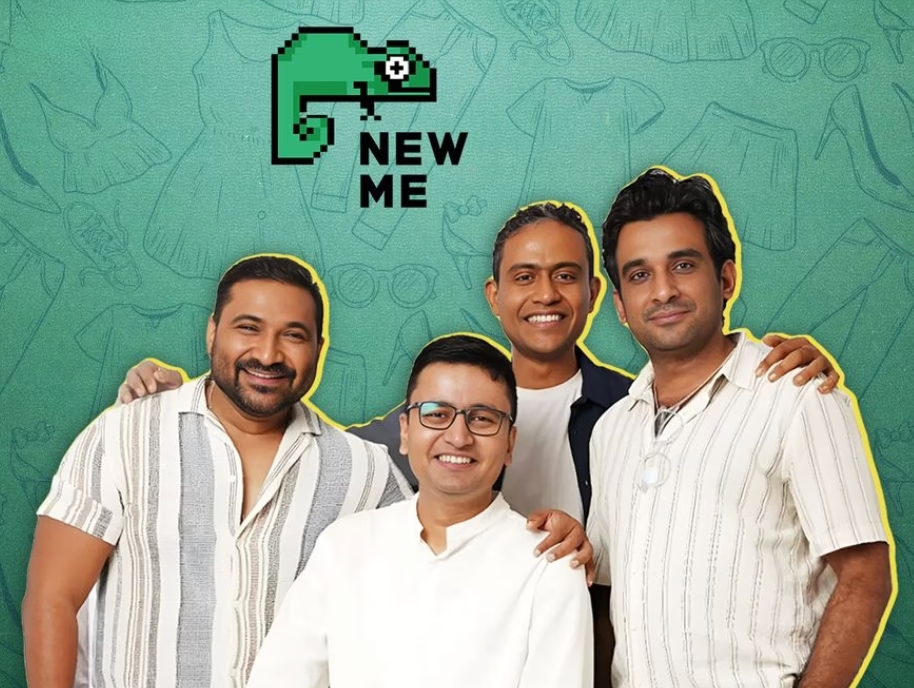
Sumit and his three co-founders saw this gap clearly. As he put it: “How do we bring trends faster than Zara, at one-third the price?”
That single question became the founding brief for NEWME, launched in June 2022, targeting fashion-forward, digitally native women between 18 and 30 who were completely underserved by the market.
Not a Fashion Brand. A Tech Company That Sells Fashion.
This is the line Sumit repeats, and it’s worth taking seriously.
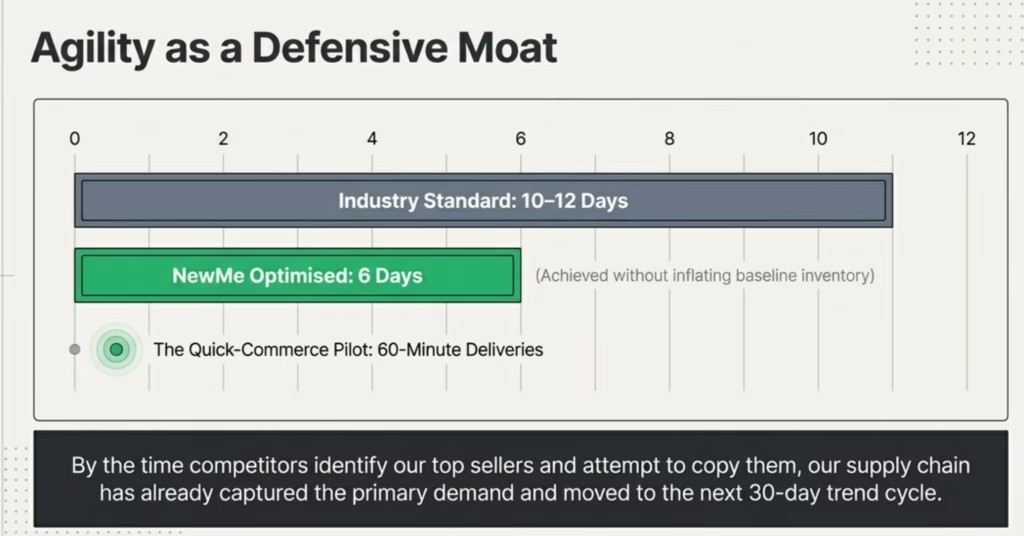
From day one, the company built its own proprietary trend-prediction engine that scrapes social media and analyses website behaviour to forecast what’s going to peak, before it peaks. Every Friday at noon, a new drop goes live. Within 48 hours, the data is already telling them which styles have life and which don’t.
Around 20-30% of styles never get produced at all. They exist as AI-generated imagery, go live to test demand, and disappear the following week if they don’t perform. Only the top 5% of styles drive nearly half the revenue, and that’s where inventory gets built fast.
The entire model runs on a 30-day rolling plan. Just a relentless, real-time cycle of spot, test, produce, sell, and move on.
How did Newme scale to offline stores?
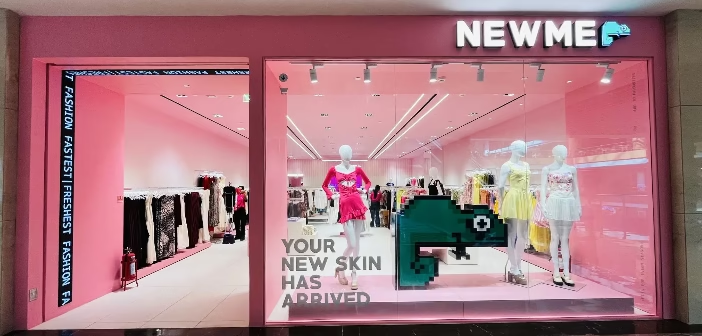
Most D2C brands treat offline as a last resort. NEWME opened its first store just 13 months after launching online.
The reasoning was simple and unconventional: if going offline was inevitable, why wait until the pressure of scale made mistakes expensive? Those first five stores were treated as a learning lab, each one refining the playbook for the next twenty.
Today, NEWME operates 22 stores across 12 cities, with a target of 50 fully company-owned stores by December 2026. No franchise partners. Every store on NEWME’s payroll. Because for Sumit, control over experience and data isn’t negotiable.
And offline is already punching above its weight. A customer who tries something on converts at 80%. The trial room, it turns out, is the most important real estate in the store for Newme.
The Omnichannel Engine
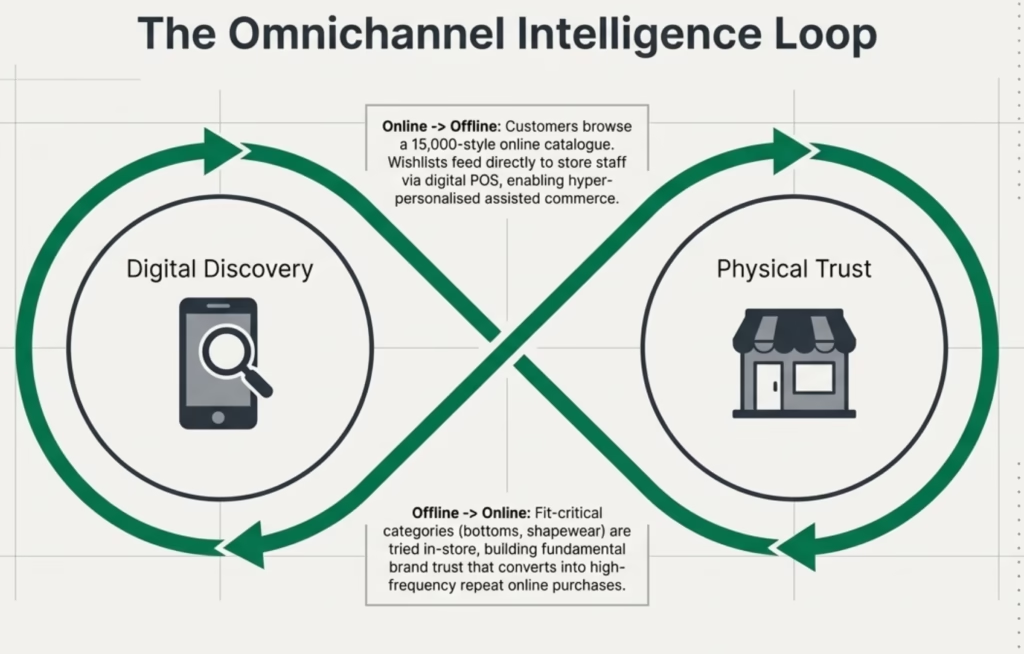
What makes NEWME different from a brand that has an app and some stores is the integration layer underneath.
The same inventory engine that powers the website also syncs with offline stores in real time. When a silhouette starts trending in Delhi, the store in Lajpat Nagar can be stocked before the week is out. Pin code-level demand mapping means NEWME doesn’t send a full size run to every store, only the sizes that actually sell in that area.
Then there’s NEWME Zip, their quick commerce bet launched in late 2025. Starting with 90-minute delivery in Delhi & Bengaluru across 1,500+ styles. Bengaluru already sees 15-20% of orders through Zip. The target is 50% penetration in both cities within a year, moving from dark stores entirely to store-level fulfilment as density increases.
One early experiment revealed something surprising: when Zip ran out of top sellers, orders dropped sharply. The insight was immediate, quick commerce in fashion isn’t about speed alone. The product still has to be right. Speed without the right inventory is meaningless.
The Store Experience Is a Distribution Strategy
Every NEWME store has an Instagram Corner, a physical space built inside the store for content creation. When a customer photographs herself in a NEWME outfit and posts it to her followers, she becomes the most trusted ad unit the brand will ever run.
Sumit is equally intentional about store staff. Every employee is on NEWME’s payroll, no third-party contracts. The difference in productivity between company-payroll staff and outsourced staff was 20-22%. In retail, that’s the difference between a thriving store and one that barely covers rent.
Staff are evaluated, they wear NEWME and they’re trained to be style consultants, not salespeople. And in a pilot initiative, NEWME has begun giving store staff ESOPs, making them the only fast fashion brand in India doing so at the floor level.
As Sumit put it simply: “The best brands are built behind the scenes with operational metrics.”
One Piece of Advice for Every Founder
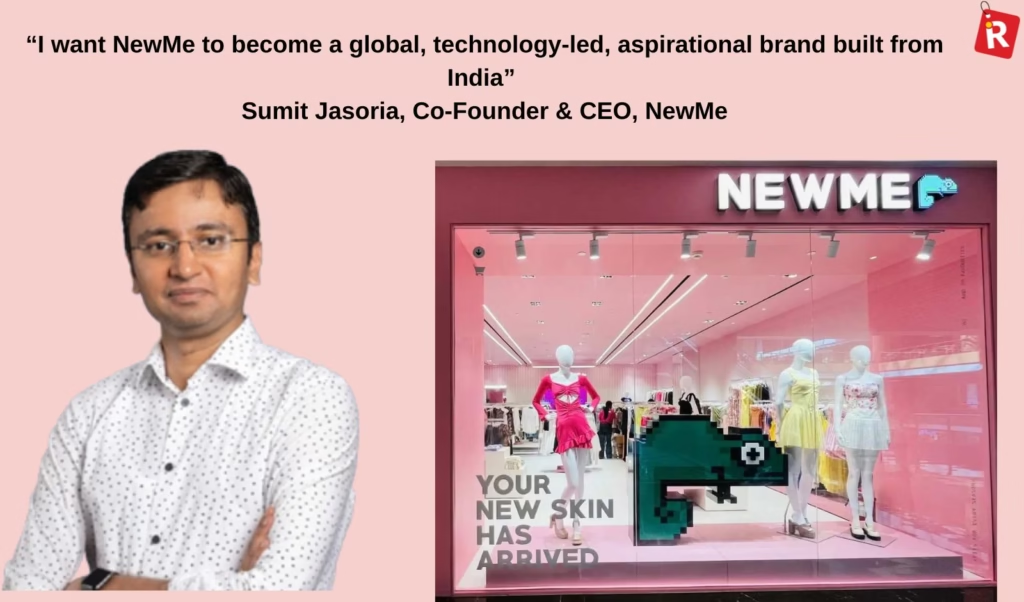
When asked what he’d tell D2C founders who are struggling, Sumit didn’t talk about marketing or funding. He talked about DNA.
“Get your DNA right from day one. Decide: are you building a distribution-led company or a brand-led company? And then stick to it, even when people call you mad. Especially when people call you mad.”
NEWME chose the brand first. They stayed off marketplaces even when it would have inflated their numbers. They built their own tech instead of buying off-the-shelf. They opened stores before anyone thought they were ready.
Three years in, they’re building something India’s fast fashion market has never quite seen, a data company dressed in fashion, moving faster than the trends it chases.