



India’s social commerce market is growing fast, from $5.37 billion in 2023 to an expected $25.69 billion by 2029. China shows us what’s possible at scale, already holding 40–50% of the global online retail market. They’ve turned content into commerce seamlessly, and India is heading in the same direction.
Fashion, beauty, and food are the biggest players when it comes to turning content into commerce.
Most brand content today misses the point, some posts look nice but don’t bring any sales, some reels go viral but reach the wrong people, and some ads try to sell too hard, which makes people lose trust in the brand. And while all of this is happening, CAC (Customer Acquisition Cost) keeps on increasing, platforms keep changing, and and the key question founders ask is –: “How much sales is driven by social?”
The real problem isn’t that the content doesn’t work. It’s that most brands still treat content and commerce as two separate worlds: one owned by the social team, the other by the performance team, and wonder why the customer journey feels so broken. Content to commerce is about making these one continuous story.
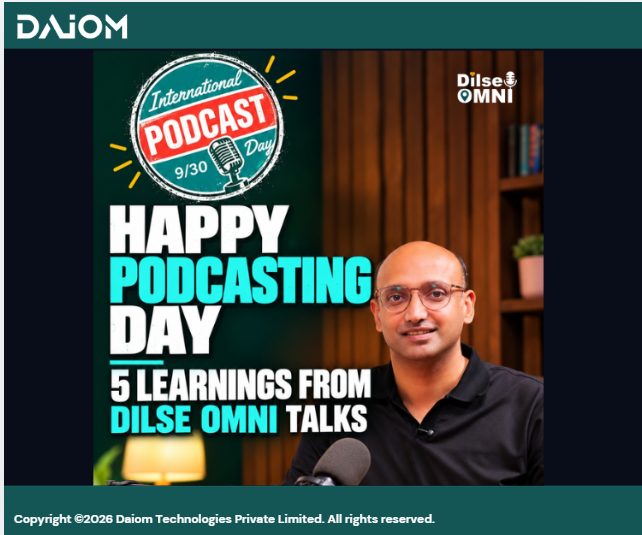
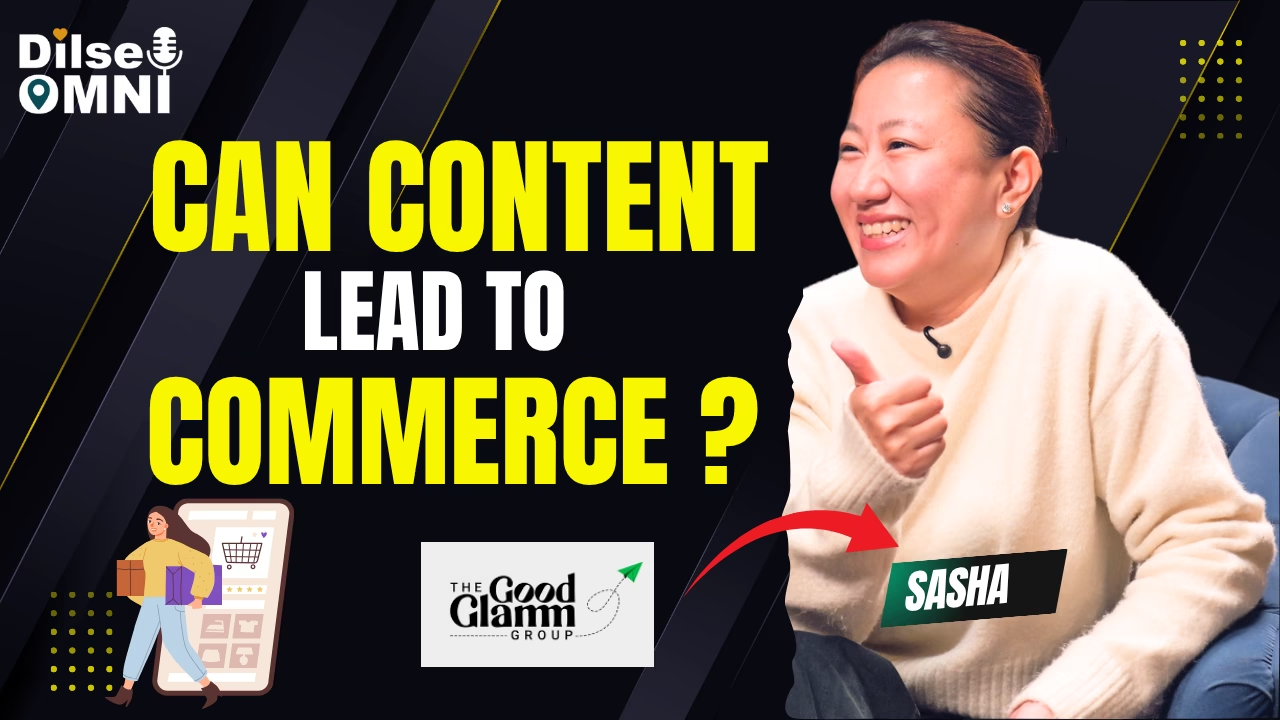
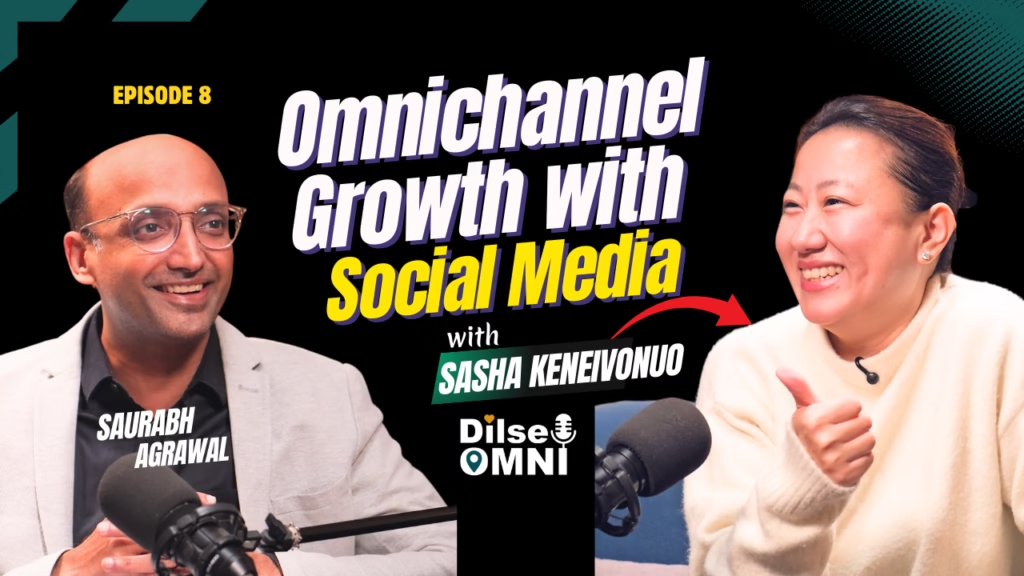
Recently, we invited Sasha Keneivonuo, ex-Lenskart and MyGlamm, on the Dilse Omni podcast, and in this blog, we break down how content truly drives commerce, with insights from our conversation with her.
1. What Does “Content to Commerce” Actually Mean?
One of the most interesting parts of the conversation is the shift of Content to Commerce across luxury, lifestyle, and beauty.
It’s a playbook where your content doesn’t stop at awareness. It’s built to tell a story, capture intent, and move people toward a real action like a purchase, a store visit, a lead, a trial.
For example, The Good Glamm basically cracked the code before, they took POPxo, which was already a content platform women trusted for beauty advice, and quietly connected it to MyGlamm, their commerce arm. The data flowing between the two told them exactly what their readers wanted to buy. So instead of guessing, they just sold it to them.

Giva Jewelry did something similar, instead of just showing products, they built a seasonal gifting narrative around “silver rakhi for men,” mobilised hundreds of creators around that one insight, and watched Google Trends spike during their campaign window.
In both cases, the content looked like storytelling and the engine underneath was a serious commerce play.

2. What’s Actually Broken Right Now
If you’re a CMO or a growth lead, you’re probably juggling more than ever, channels multiplying faster than your headcount, a founder who wants one viral campaign to do everything, and a performance marketing budget that’s working but at a cost that’s becoming hard to justify.
The role itself has quietly changed. It’s less about being the smartest marketer in the room and more about:
- Connecting brand storytelling with hard business outcomes
- Nurturing a team of specialists across social, growth, performance, CRM, and creators
- Staying adaptable as platforms, formats, and consumer behaviour shift every quarter
The CMO role as we knew it doesn’t exist anymore. It’s no longer a skillset role. It’s a mindset role.
3. Which are the Campaigns That Actually Work
Think of content-to-commerce growth campaigns as content with a built-in behaviour experiment. The formats that tend to work best aren’t complicated:
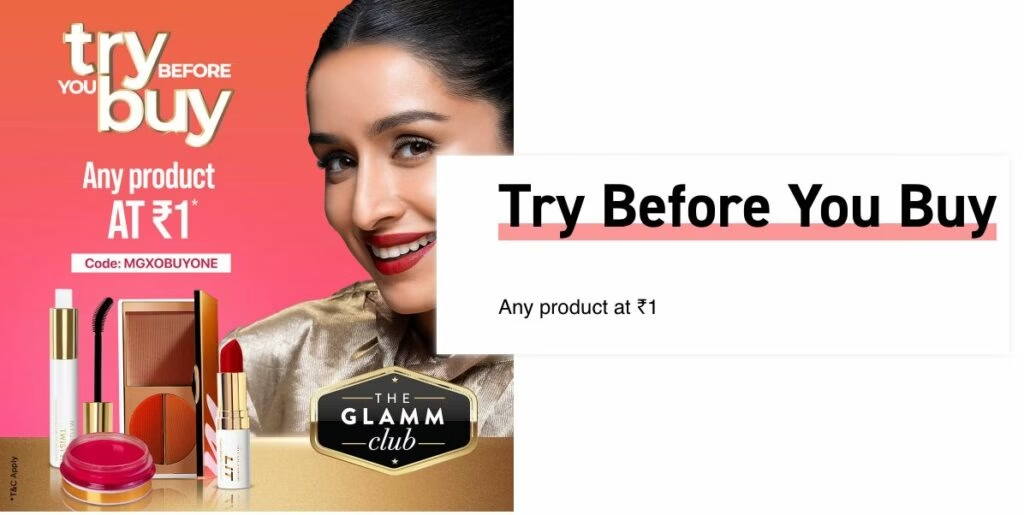
- Try & Buy — MyGlamm’s free lipstick for the cost of shipping is the textbook example. Over time they layered a skin quiz on top of it, turning a giveaway into a first-party data machine. The creative looked fun and beauty-forward; the mechanics underneath were pure performance.
- Gift with Purchase — If done right, this quietly raises average order value while giving customers more products to try and fall in love with.

- BOGO (the smart version) — The key is pairing different SKUs, not identical ones if you want to broaden usage, and not dilute perceived value.
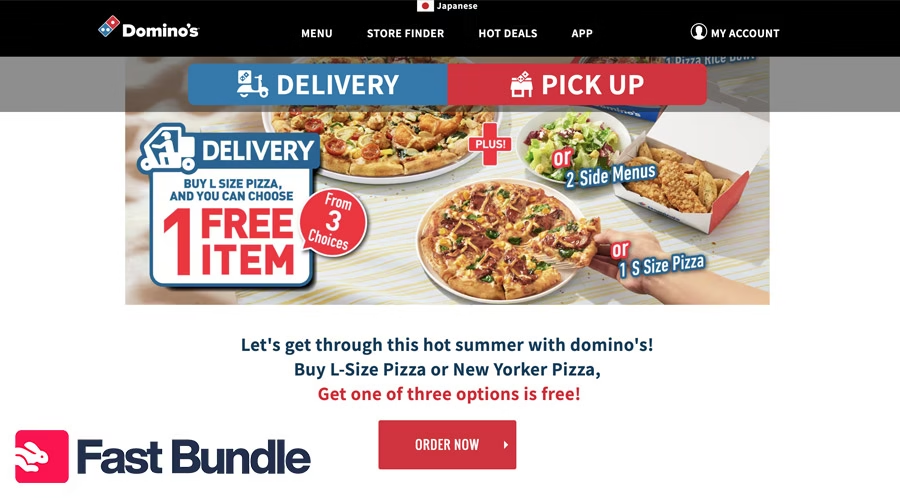
- Seasonal, insight-led campaigns — Giva Jewelry owning “silver rakhi for men” is a perfect example of a brand claiming a search moment through content, creators, and product working together.
In every case, the content is the wrapper and the commerce mechanic has to be crystal clear before you even brief the creative.
4. How to Make Content Drive Store Footfall?
Brands spend on beautiful content, post consistently, and still see flat store traffic. This is because driving someone online is very different from getting them to walk in. The offline playbook has its own rules and there are three that matter most.
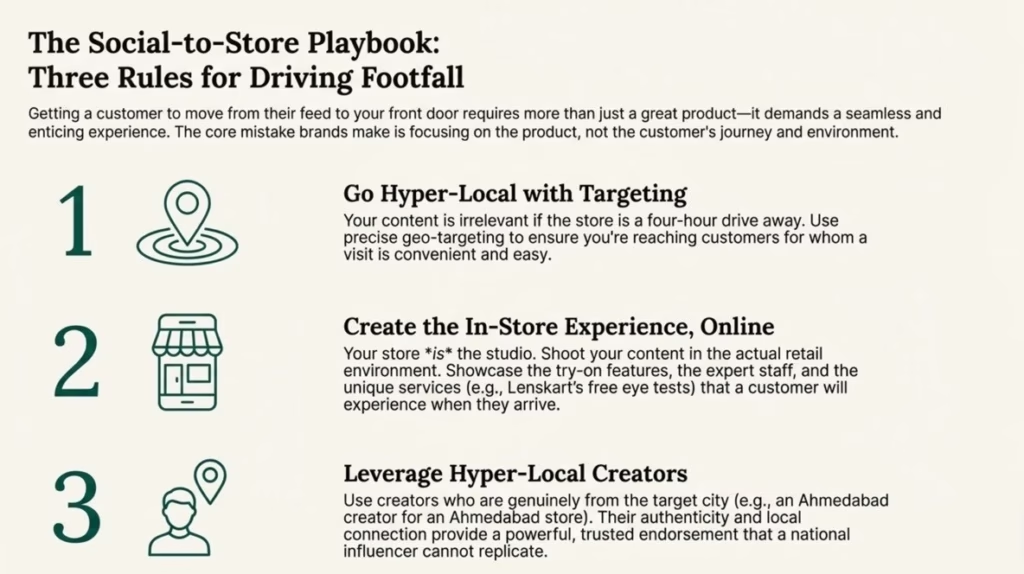
- Geo-target: If your store is in Ahmedabad, your content and ads need to be speaking to people who can actually show up. No one is driving four hours because of a reel they saw on instagram.
- In-store experience: Shoot content inside your stores. Let people see the try-on experience, the in-store stylist, the free eye test, the moment of delight that only happens when you’re physically there. Lenskart does this consistently and shows that the store isn’t the backdrop, it’s the hero.
- Use hyperlocal creators: An Ahmedabad store needs an Ahmedabad creator who speaks the same language and lives in the same city context. And some of the best content comes from store associates/staff themselves, people who understand both the product and how Instagram actually works.
Your content should feel like a trailer of what walking into that store will feel like. Not just an ad with an address at the end.
5. Are Influencers Still Worth It?
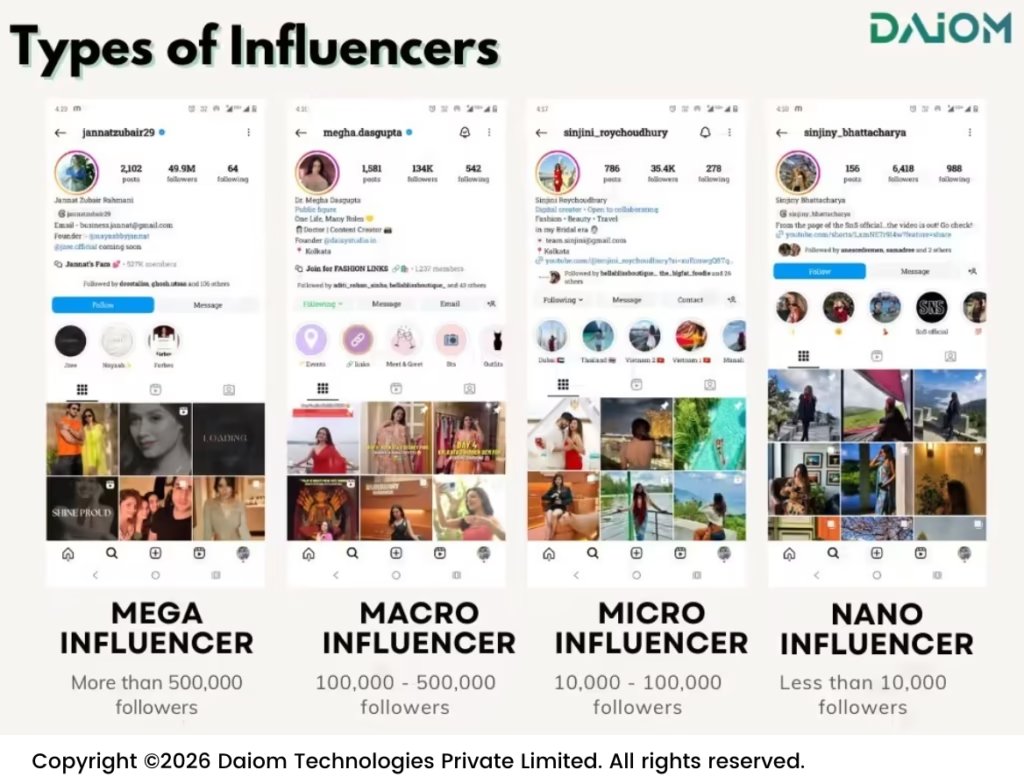
Before activating a large pool of internal creators or influencers, the one thing that needs to be non-negotiable is clarity on what success actually looks like for your brand. And alongside that, the category of influencer you choose matters just as much as the number of influencers you choose.
Otherwise, your brand voice fragments overnight.
Accept that one campaign cannot do it all
- You will need different creators and formats for different goals
- An influencer who is brilliant at conversions may only have 1,000 followers
- A mega‑influencer may be great for top‑of‑funnel buzz but terrible for ROAS
Many brands confuse visibility with impact. Likes, views, and reach are great for awareness, but they don’t always translate into real growth. That’s where the difference lies: vanity metrics tell you how many people saw your campaign, while business metrics tell you whether it actually moved the needle.
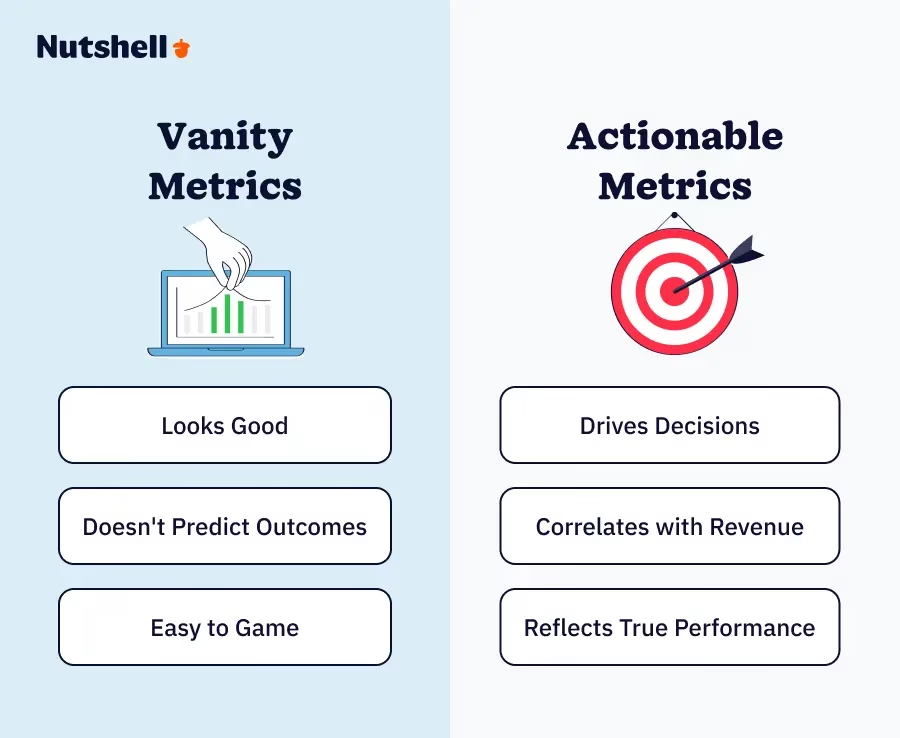
What actually matters is whether a creator’s audience matches your buyer, what role they’re playing in your funnel (awareness, conversion, or community?), and what success looks like for that specific campaign.
Some creators give you reach and social proof. Others — often much smaller ones — quietly drive significant revenue because they’re genuinely trusted within a niche. You can’t brief “do awareness, sales, reviews, and UGC” in one shot anymore.
The smarter move is to think in modules: one month is a big awareness push built around a core seasonal insight, the next is a tighter set of micro-creators with trackable codes and clear conversion goals.
The brands getting this right have dropped the follower-count obsession. That’s what’s letting them build content-to-commerce engines that actually hold up quarter after quarter.
6. How to Connect Social Media to Business Results?
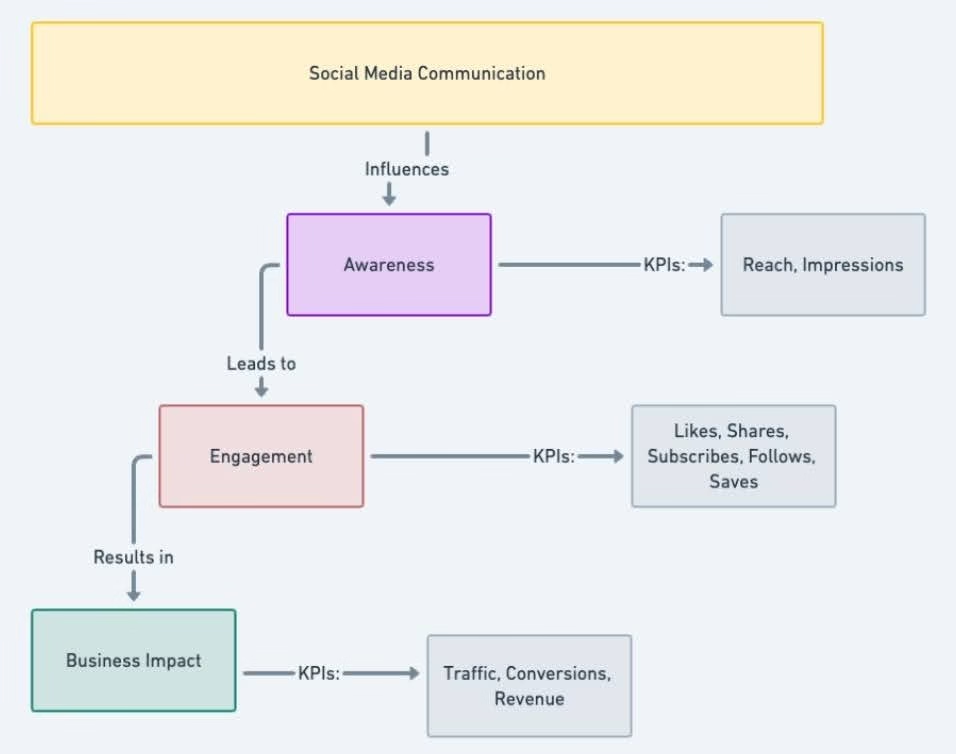
Founders don’t focus on how things look, they focus on revenue. If things are set up properly, it’s possible to clearly connect your efforts to sales.
- Awareness: reach, views, platform-level engagement
- Intent: traffic to product pages from social, session depth, add-to-cart, lead forms, sign-ups
- Commerce: revenue and conversion rate during the campaign window, footfall, in-store codes redeemed, walk-ins who mention the campaign
Run a focused two-week content-led campaign, track the social-to-site-to-conversion journey through it, and correlate your spikes with campaign phases. Layer qualitative proof on top such as comments, DMs, UGC, reviews in people’s own words.
7. Which brands and creators are actually doing it right?
Talking about content to commerce is easy, but building it is a different story. Here are the brands and creators in India who are quietly doing it better than most, and what the rest of us can learn from them.
Brands:
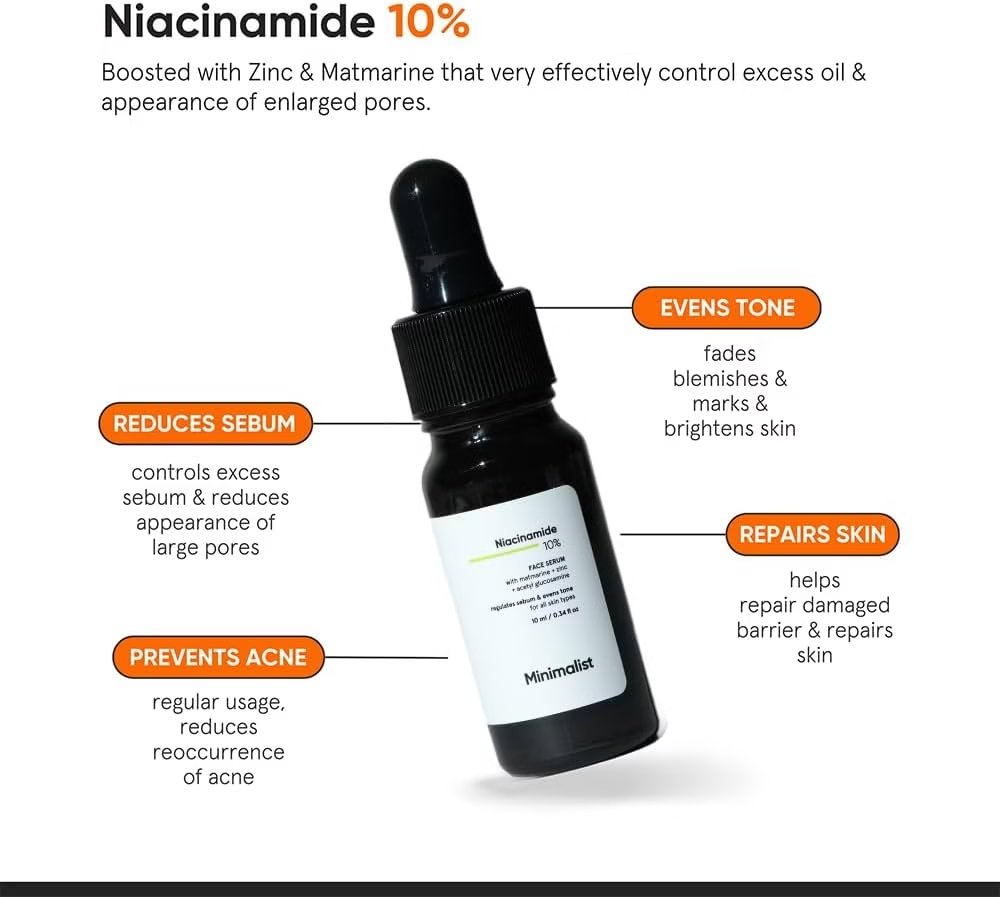
- Minimalist turned ingredient education into a purchase trigger. Instead of selling moisturiser, they sold niacinamide. Instead of a cleanser, they sold salicylic acid. The content explains, the product delivers, and the customer feels smart for buying it.
- Mamaearth built its entire early business on digital content and influencer trust, then used that foundation to walk into over a lakh offline retail touchpoints. The content created the demand, the distribution captured it.
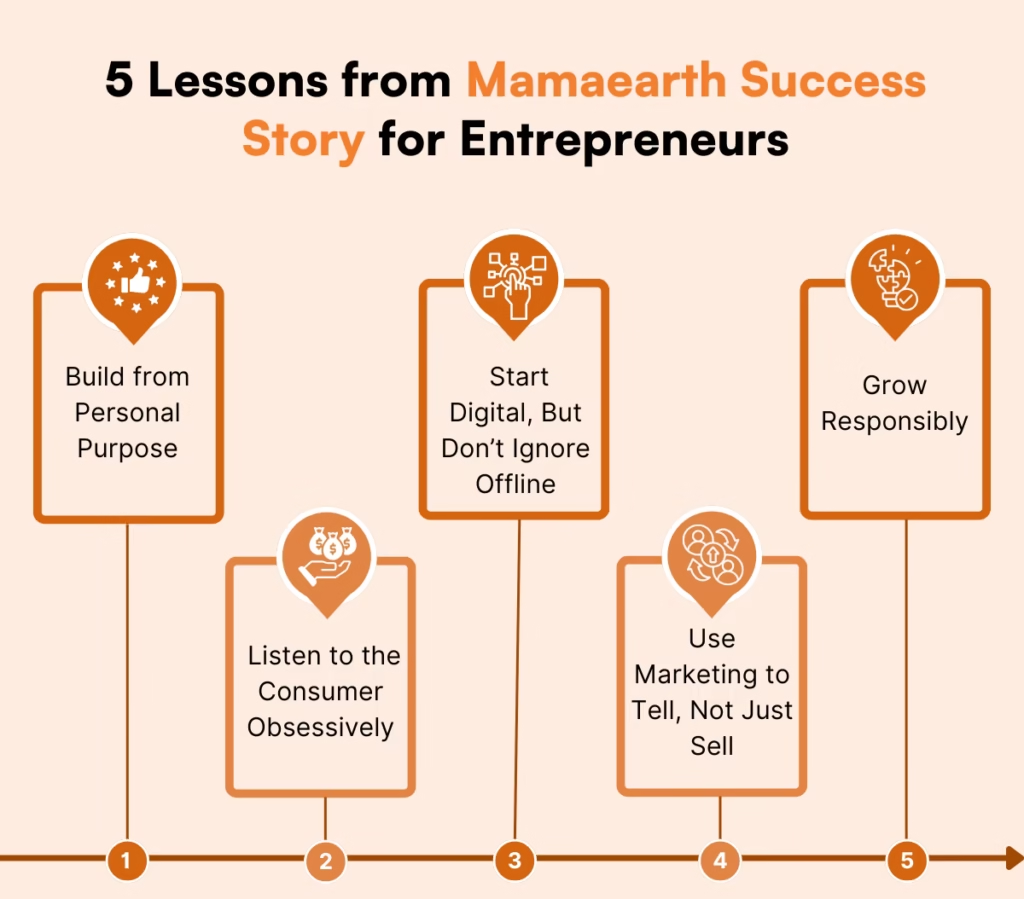
Source: Orangeowl
- Sugar Cosmetics spends almost entirely on digital marketing yet earns the majority of its revenue in physical stores. Every reel, every influencer collab, every shade reveal drives someone to a store to try it in person. Digital builds desire, but the store closes it.

- Wow Skin Science is a masterclass in using before-and-after content as a commerce engine. No complicated storytelling, just real results, repeated consistently across thousands of creators at every tier.

The pattern is consistent. The brands that last aren’t the fastest growers. They’re the ones building channels that complement each other instead of competing.
Creators Who Have Built Their Own Commerce Through Content
These are not influencers promoting someone else’s brand. These are people who used content as the engine to build and sell their own product, directly to their own audience.
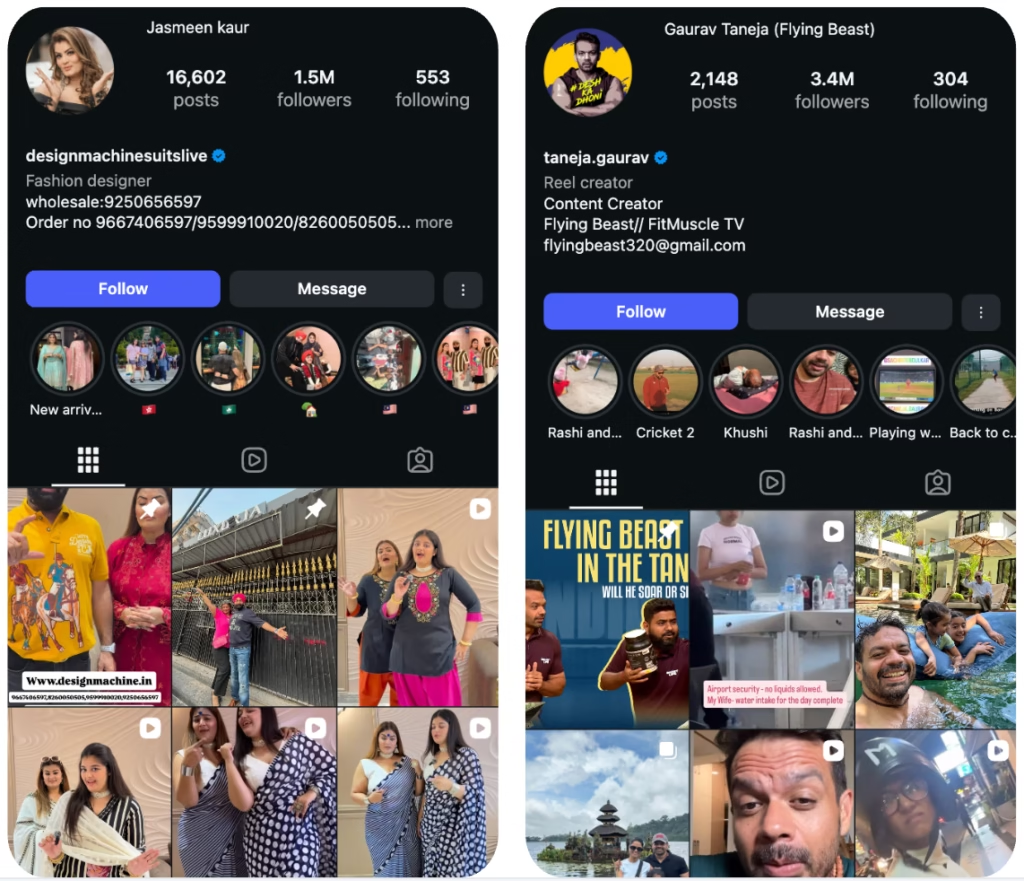
- Design Machine Suits turned Instagram into a live showroom. Every reel is essentially a product drop, fabric close-ups, drape details, styling on real bodies, and a direct call to order via DM or WhatsApp. There is no middleman, no marketplace listing, no waiting for a brand deal. The content is the store and the store is the content. Customers don’t browse a website, they scroll a feed and then message to buy.
- Gaurav Taneja (Flying Beast) built one of India’s most loyal audiences through fitness, family, and flying content, and then launched his own supplement brand Beardo and later RawFit directly into that trust. His content never feels like an ad because the audience has watched his life for years. By the time a product drops, the community already wants it. That’s what years of consistent content does, it removes the need to sell.
8. Conclusion
If you’re building your content-to-commerce engine from scratch, keep it simple for the first 90 days. Pick one hero objective such as new user trials, leads, or store visits. Choose one or two platforms where your customer actually spends time. Design content that tells a clear story and offers a low-friction next step. Bring in creators or staff who genuinely live close to your customer’s reality. Then measure the line from content to traffic to action relentlessly, and keep tightening the loop.
Once that base works, you can layer in complexity like more platforms, more formats, more experiments. But the core stays the same: content that earns attention, and then gently but firmly moves people toward commerce.
The brands that win won’t just be the loudest. They’ll be the ones who figured out how to make every piece of content do real work.