



Last month I did something I hadn’t done in a while, I actually looked at my own Amazon and Myntra order history.
And what I found was interesting.
About 70% of what I’d bought was for myself. The remaining 30%? My family. Different sizes, different preferences, different needs — all sitting under one account, one profile, one set of behavioural signals that an algorithm somewhere is trying to make sense of.
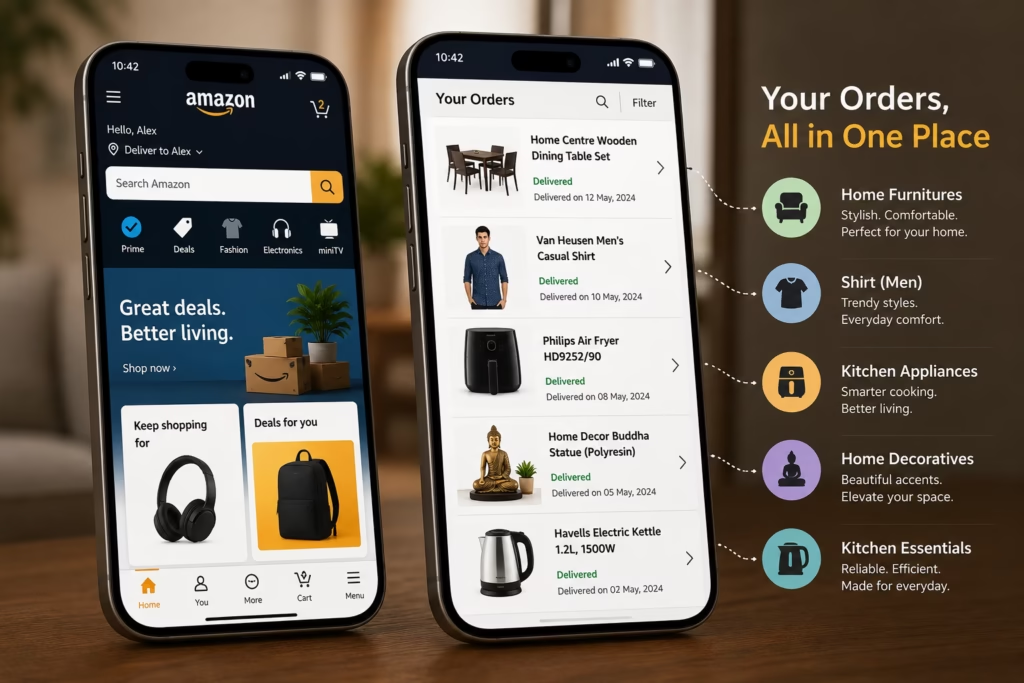
And this, I think, is one of the most peculiar and underappreciated truths about how India actually shops.
In most Western markets, one account means one buyer. But in India, that same account often represents an entire household. Which creates three dynamics that most brands are completely unprepared for:
- Group buying, where a single session involves decisions for multiple people with nothing in common except the same roof.
- Shared loyalty, where points, rewards, and membership benefits earned by one person are effectively used by the whole family, diluting the very personalisation loyalty programs are designed to create.
- One person spending for all, where the purchase behaviour of a single account tells you almost nothing about who actually needed, wanted, or used what was bought.
For any brand trying to build personalisation, retention, or loyalty on top of this data, the foundation is shakier than it looks.
And in today’s omnichannel world, shared accounts, family purchases, marketplace orders, gifting behaviour — this gap is getting wider, not smaller. Brands are increasingly marketing to one person while an entirely different person experiences the product.
Here’s what that means practically: when you personalise based on who bought, but not who used, you’re not really personalising at all. You’re just making assumptions feel more targeted.
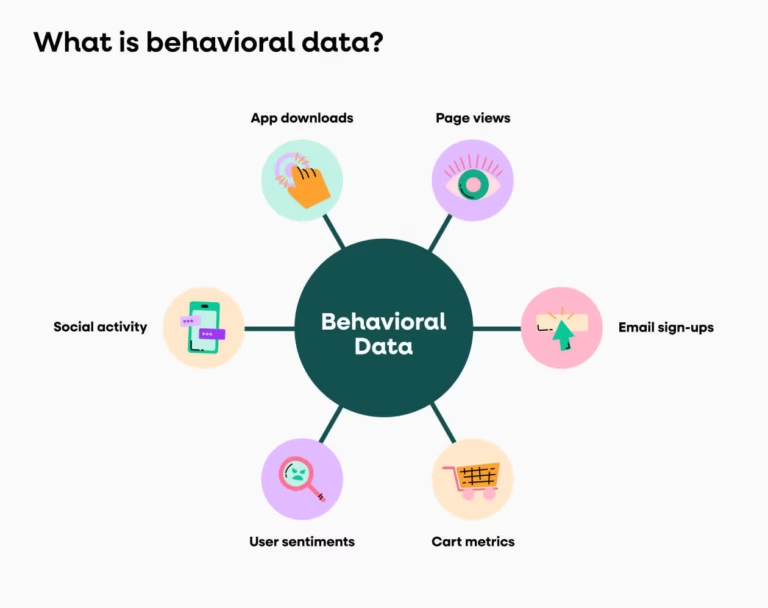
Demographic data tells you who paid. Behavioural data like what was searched, what was reviewed, what was returned, what was reordered… tells you who actually lived with the product.
That’s the data worth building on.
In this blog, we will see how we can build robust data capturing systems to develop an omnichannel marketing strategy in such cases?
1. Customer vs Consumer — Understanding the Difference
In most consumer categories in India, the customer and the consumer are actually the same person. Around 70% of everyday purchases, think clothing, food, personal care, or electronics, are made by the person who ends up using the product, and most brand strategies are built around exactly this assumption.
But the moment you step into certain categories, especially anything built around children, that assumption completely breaks down.
This dynamic plays out across several categories in India. In kids’ nutrition brands like Complan or Horlicks, in school bag brands like Wildcraft or Skybags, or in edtech platforms like BYJU’S.
Let’s simplify from first principles.
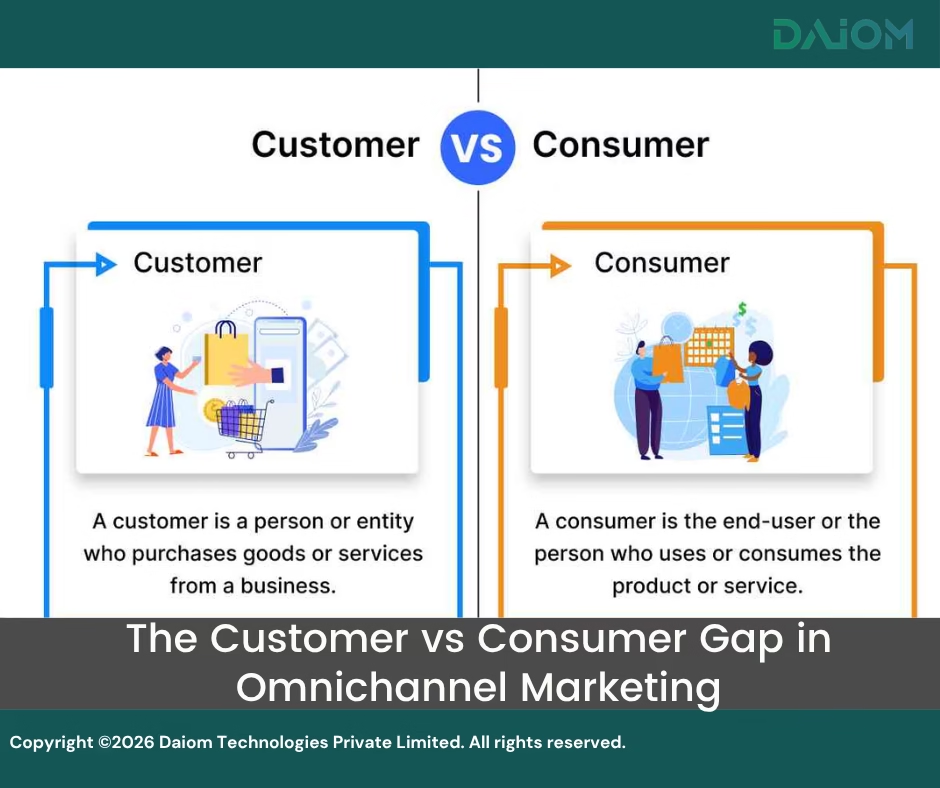
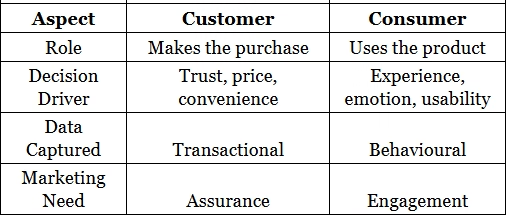
Customer → The person who pays.
Consumer → The person who uses.
Everyday Examples
Let’s take the example of Saurabh who has a son and they’re out shopping-
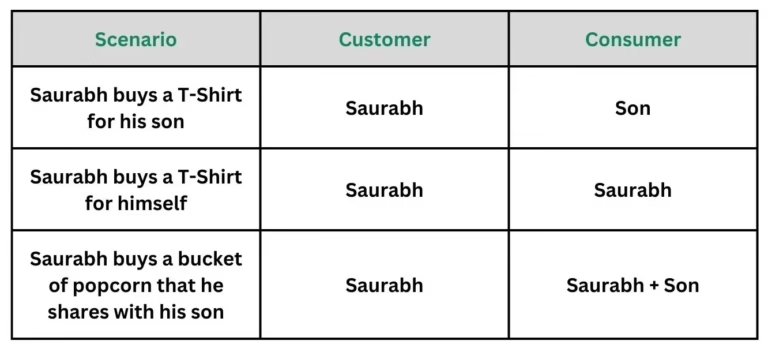
- A parent buys toys → Parent = Customer, Child = Consumer
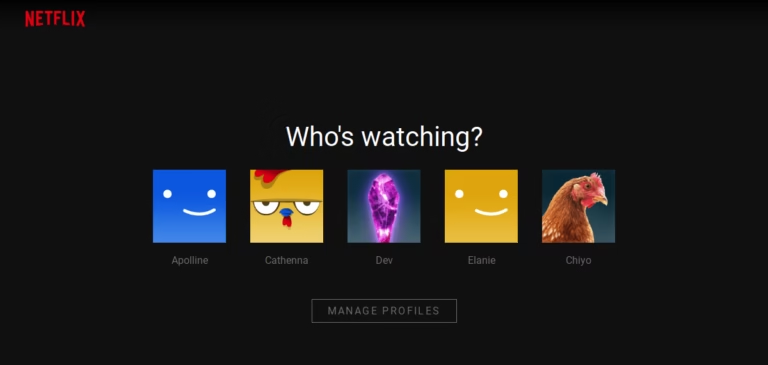
- One Netflix subscription used by a household → Account holder = Customer, Viewers = Consumers
Office manager buys chairs → Manager = Customer, Employees = Consumers
In industries like banking, customer and consumer often overlap.
But in retail, marketplaces, beauty, fashion, food delivery, OTT, and gifting, the distinction is constant.
2. The Core Problem in Modern Omnichannel Marketing
Omnichannel marketing is built on data.
But most marketing systems capture purchase data, not usage data.
This creates three major problems:
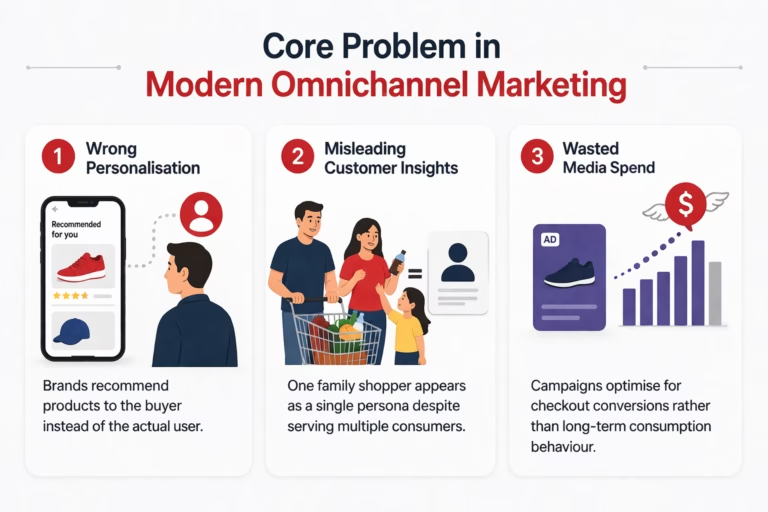
Problem 1: Wrong Personalisation
Brands recommend products to the buyer instead of the actual user.
Problem 2: Misleading Customer Insights
One family shopper appears as a single persona despite serving multiple consumers.
Problem 3: Wasted Media Spend
Campaigns optimise for checkout conversions rather than long-term consumption behaviour.
Large multi-brand retailers and marketplaces like Shoppers Stop, Myntra, Amazon, or Lifestyle, face this challenge daily because a single account represents multiple users.
Imagine a customer purchasing regularly for a family of five.
Traditional analytics sees one high-value customer making multiple purchases.
But what it’s actually missing is five different people in that household, each with their own preferences, needs, and buying triggers.
That’s the difference between tracking transactions and truly understanding your customer.
Understanding this distinction unlocks:
- Better recommendation engines
- Higher lifetime value (LTV)
- Improved cross-selling opportunities
- Stronger brand loyalty
The customer brings revenue once but the consumer determines whether revenue repeats.
3. A First-Principles Framework to Identify Both
Instead of starting with demographics, start with behavioural truth.
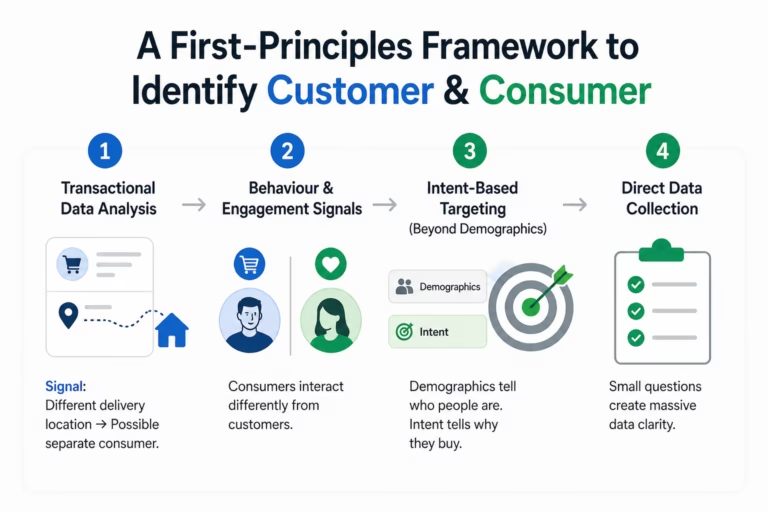
Step 1: Transactional Data Analysis
- Who placed the order?
- Billing vs shipping address differences
- Frequency of repeat purchases
- Gift indicators
Signal: Different delivery location → Possible separate consumer.
Step 2: Behaviour & Engagement Signals
Track usage patterns:
- Product page engagement
- Reviews written post purchase
- App browsing behaviour
- Social mentions and tagging
Consumers interact differently from customers.
Step 3: Intent-Based Targeting (Beyond Demographics)
Demographics tell who people are.
Intent tells why they buy.
Modern marketing must analyse:
- Searches
- Content consumption
- Shopping patterns
- Category associations
Example:
People buying reading glasses often explore progressive lenses later.
Intent reveals hidden consumers connected to each customer.
Step 4: Direct Data Collection
Simple but powerful methods:
- “Buying for yourself or someone else?” prompts
- Post-purchase surveys
- Profile creation during onboarding
Small questions create massive data clarity.
4. How are Brands Solving this Gap
The categories where this gap hurts the most are worth calling out specifically:
- High-ticket purchases — jewellery, electronics, furniture, appliances — where the person browsing is rarely the only decision-maker, and the person paying is often not the one who will use it. Personalisation built on the buyer’s history alone will almost always miss the mark here.
- Paid services — subscriptions, loyalty memberships, premium tiers — where one person signs up and the entire family benefits, making it nearly impossible to measure true individual engagement, predict churn accurately, or design retention journeys that actually resonate with the right person.
Until brands build the infrastructure to separate the buyer from the user, even within the same account, their personalisation will remain surface-level, their loyalty programs will keep rewarding the wrong behaviour, and their retention data will keep telling them a story that is only partially true.
The good news is that some brands are starting to wake up to this gap — and the solutions, while still early, are beginning to take shape.
4.1 Profiles: The Quiet Omnichannel Revolution
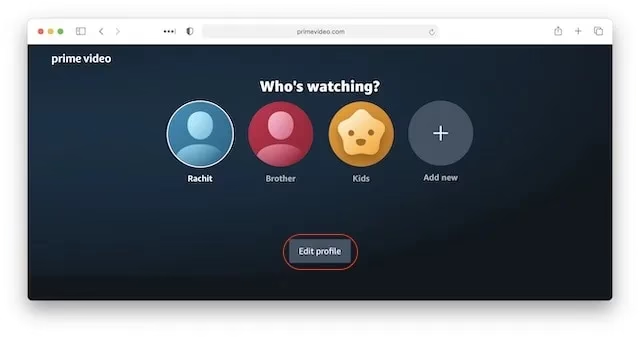
Many brands now allow multiple users within one account.
Streaming Platforms
Netflix and Prime Video introduced profiles to separate viewing behaviour under one subscription.
Result:
- Accurate recommendations
- Individual engagement tracking
- Better retention
4.2 Marketplaces & Commerce Platforms
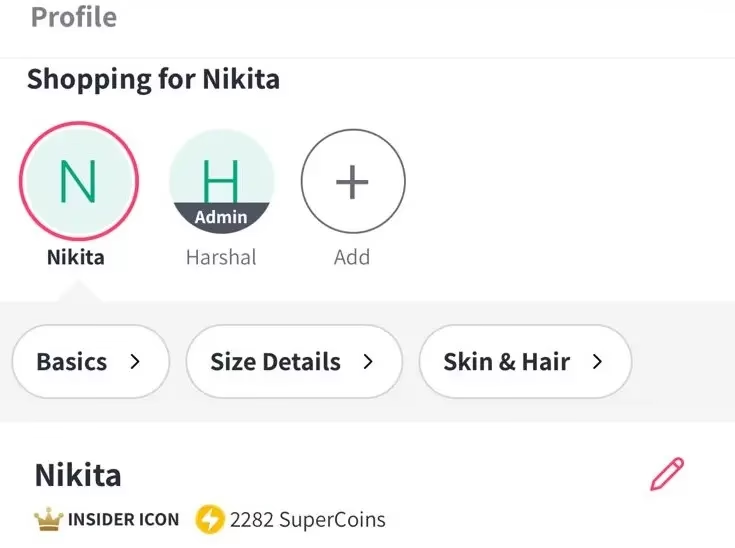
Myntra prompts users when buying for someone else, replicating an in-store sales interaction digitally.
Swiggy allows “Order for Someone Else,” capturing both customer and consumer data simultaneously.
Why Profiles Work
Profiles enable:
- Shared payment, separate preferences
- Personal browsing history
- Targeted promotions
- Accurate recommendation algorithms
What are the Marketing Benefits?
- Hyper-targeted campaigns
- Higher conversion rates
- Reduced ad spend waste
- Household-level intelligence
Profiles are not perfect, but they are a major step toward understanding real consumption behaviour.
4.3 Tuco Kids — Winning the Parent and the Child
Kids’ personal care is one of the most interesting examples of the customer-consumer split playing out in real time.
When Aishvarya Murali built Tuco Kids, she was very clear about something: the mother reads the label. She checks the ingredients, looks for certifications, and evaluates whether the formulation is safe for her child’s skin. She’s the customer. Her decision is logical and protective.

But the child, the consumer, doesn’t care about any of that. They care about whether the product smells nice, feels good on their skin, and is fun enough to actually want to use. If the child doesn’t like it, they won’t use it. And if they don’t use it, the mother won’t reorder.
So Tuco Kids had to build a brand that simultaneously gave parents scientific credibility and gave children a sensory experience they’d actually enjoy. Their content strategy reflects this, safety-led, ingredient-transparent messaging for parents, and playful, sensory-forward communication for kids.
That’s omnichannel done right. Different messages, different channels, same brand.
5. The reality of Customer vs Consumer in India
What makes India uniquely complex is the layer of shared resources that sits underneath all of this. In most Indian households, especially in Tier 2 and Tier 3 cities, a single earning member is purchasing for multiple consumers across different age groups and needs. The same budget covers a child’s shampoo, a teenager’s face wash, and a grandmother’s hair oil.
The customer is one person managing many consumers, which means your brand doesn’t just need to win one person’s trust. It needs to feel like the right choice for an entire household.
Metro India
- Individual buyers dominate
- Customer = Consumer more often
- Digital discovery drives purchases
Tier 2 & Tier 3 India
- Household purchasing is common
- One decision-maker buys for many users
- Retail + digital coexist strongly
A single omnichannel strategy cannot serve both realities.
Brands must adapt messaging based on purchase structure, not just geography.
6. Conclusion
Traditional marketing focused on the buyer.
Modern omnichannel growth demands understanding the entire usage ecosystem around that buyer.
The distinction between customer and consumer is not semantic, it is strategic.
Brands that recognize this unlock:
- deeper personalization
- stronger customer relationships
- higher lifetime value
- sustainable competitive advantage
Because growth today doesn’t come from selling more products.
It comes from understanding who experiences your brand after the purchase is made.