



Two years ago, using AI at work still felt like a bit of an experiment. You’d try something, mention it to a colleague, maybe feel a little clever about it. Now it’s just part of the day — for pretty much everyone, in pretty much every field. The novelty wore off, and it quietly became the way things get done.
At DAiOM, our own path through it has been a bit of a journey. For a long time, ChatGPT was the default. Then Perplexity pulled a lot of us away, mostly for research. And lately, most of the team has settled on Claude for the bulk of what we do — not because it’s perfect, but because it’s great at some things and not others. Honestly, none of us are loyal to one assistant anymore.
A little while ago I came across Sensor Tower’s State of AI Report 2026, and ended up reading it for the better part of two hours. What stood out wasn’t any single number — it was how much of it simply confirmed what we’ve been seeing firsthand, using these tools every day.
I’d shared a quick take on five of these on LinkedIn earlier this week. Here, I’ve pulled out the 10 signals that stuck with me the most — and what I think each one means for brands.
1. ChatGPT Became the Fastest App Ever to 1 Billion Users
ChatGPT crossed 1 billion monthly active users in May 2026 — three years after launch.
For context, it got there faster than TikTok, YouTube, Instagram, WhatsApp, and Facebook. None of the apps we think of as huge reached that milestone this quickly.
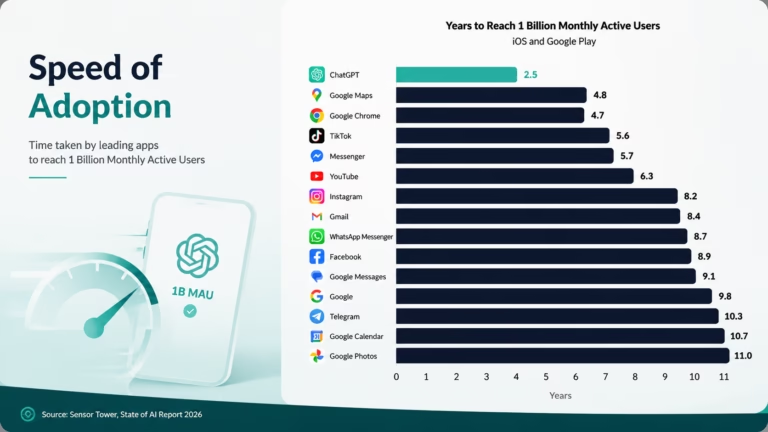
A billion people opening an AI app regularly means we’re well past the early-adopter phase — this is mainstream behaviour now. And when something scales this fast, the brands that take it seriously early usually build a real lead.
If I were sitting on the fence about AI, this is the number that would get me off it. Your customers are already here, so it’s worth treating AI as a genuine discovery channel today rather than a next-year project.
2. ChatGPT Slipped Below 50% Market Share
Here’s the part that’s easy to miss. Even while ChatGPT crossed a billion users, its share of the market actually fell.
ChatGPT’s true audience share dropped below 50% for the first time in March 2026, settling at 46% by May. Google Gemini reached 28% and Claude 10%.
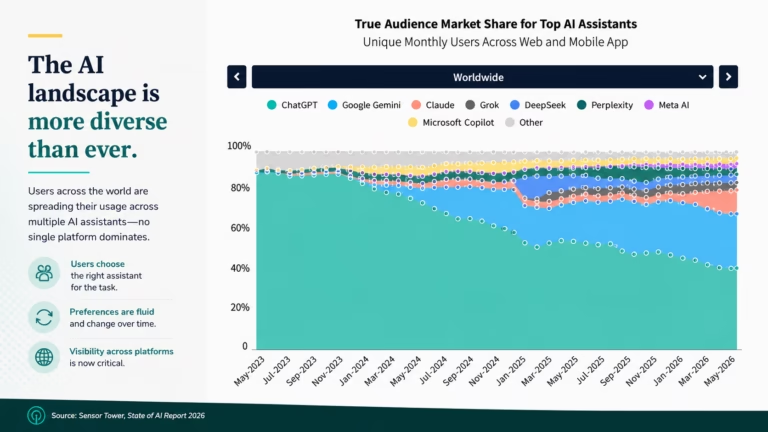
Two things are driving this. People aren’t loyal to one assistant — they pick different tools for different jobs. And they react fast to news; when OpenAI signed its Department of War agreement, ChatGPT uninstalls spiked while Claude downloads rose at the same time.
The practical takeaway is to stop building your visibility around a single platform. If your plan quietly assumes everyone lives inside ChatGPT, you’re already missing close to half the market. I’d want my brand showing up across ChatGPT, Gemini, and Claude.
3. AI Usage Grew 100× in Three Years
Market share is fragmenting, but overall usage is going the other way — it keeps compounding.
Generative AI app sessions grew more than 100× since H1 2023, and are on track to reach nearly 1 trillion sessions in H1 2026.
Time spent is climbing just as fast. It’s projected to more than double year-over-year to 36 billion hours — which works out to over four hours for every person on the planet.
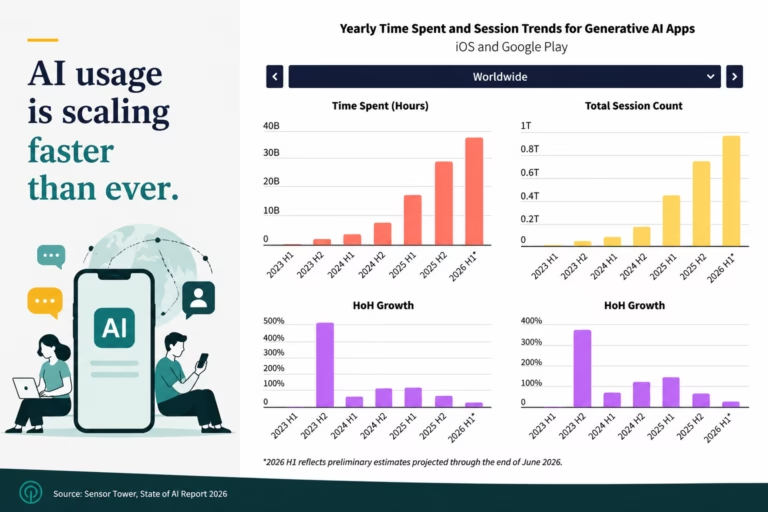
This looks less like a passing trend and more like a permanent shift in where attention lives. If your brand has no footprint inside these experiences, you’re simply absent from a place your customers now visit every day — and that’s the gap worth closing.
4. People Now Research Products Inside AI
This is the shift I’d pay the most attention to as a marketer — it’s the one the whole intro was really pointing at.
Shopping websites are now getting millions of visits referred from GenAI, and the categories leading it are the ones that involve real research before buying.
Computers & Consumer Electronics saw GenAI’s share of visits rise nearly fourfold, from 0.2% to 0.8%. Home & Garden and Sports & Outdoors weren’t far behind.
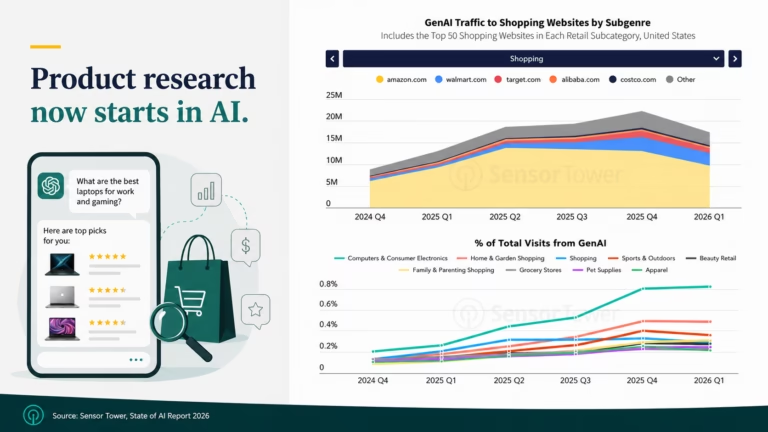
People are asking AI to compare products and shortlist options before they ever reach a retailer’s site. A big part of the decision is now happening inside the chat, out of view.
For considered categories — electronics, furniture, appliances — this is increasingly where buying starts. Which means being discoverable in AI search and recommendations isn’t a nice-to-have anymore; it’s where the funnel now begins.
5. Amazon Blocked AI. Walmart Embraced It
Two retail giants made opposite bets here, and the results are worth studying.
Amazon largely blocked ChatGPT’s crawlers from reading its catalog. Walmart and Target went the other way and partnered with AI platforms.
The gap that opened up is telling — Walmart and Target pushed their GenAI referral traffic above 1.5%, while Amazon stayed around 0.5%.
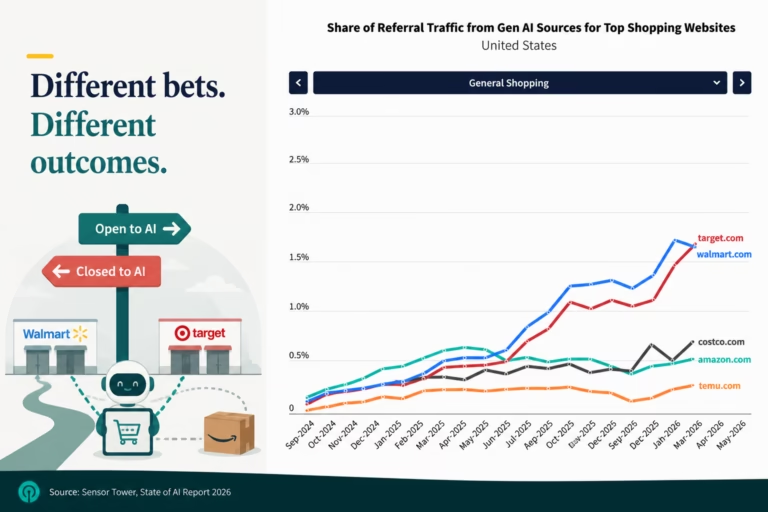
When you make your products hard for AI to read, you don’t control how you’re represented — you mostly just don’t show up. Walmart and Target became the options AI recommends; Amazon largely didn’t.
The version of this question worth asking about your own brand is simple: can AI actually find and recommend my products right now? If the answer is no, that’s the first thing I’d fix.
6. Citations Don’t Always Drive Traffic
Being mentioned by AI and getting clicks from AI aren’t the same thing. This one caught me off guard.
Looking at May 2026 data, Computers & Electronics brands get the highest share of AI citations (~14–15%) — people research them heavily before buying. But Home & Garden drives more actual AI traffic (~11–12%), even with fewer citations.
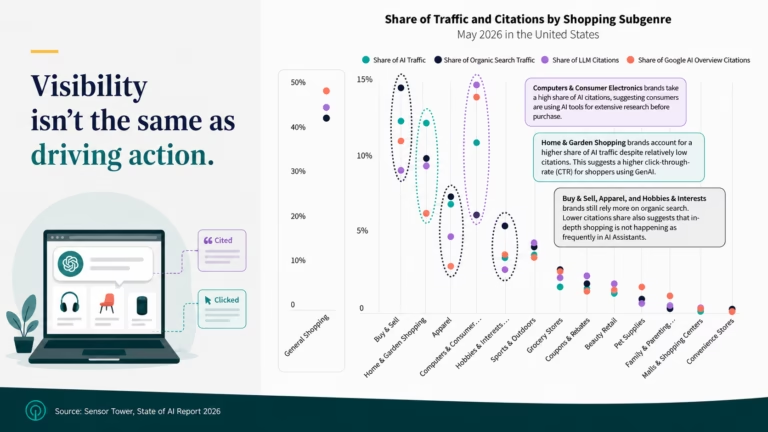
So visibility and action turn out to be two different metrics. Some categories get talked about often but clicked on rarely; others quietly turn AI mentions into visits.
The lesson I’d take is to look at how your specific category behaves inside AI, not just how often you’re named. Being cited feels good, but conversions are what actually matter.
7. AI-Assisted Shoppers Convert 2× Better
This is where getting AI right actually pays off.
Amazon shoppers using its assistant, Rufus, convert at 40%+ — nearly double the ~20% rate of shoppers who don’t use it. They also spend more time before buying, around 40 minutes versus 15, and that gap widens further during the holiday season.
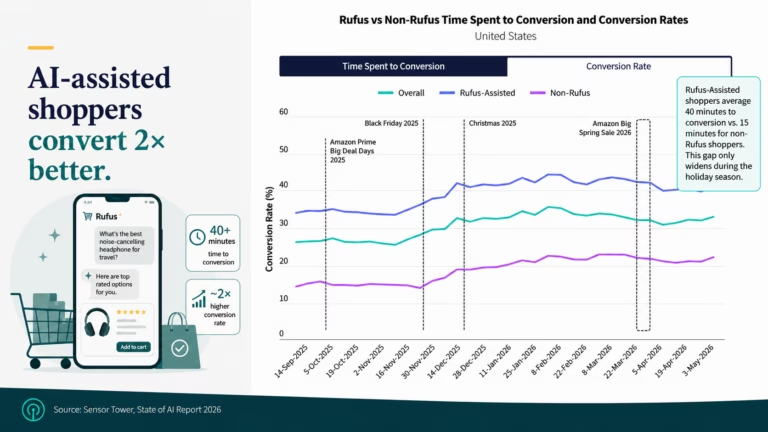
AI isn’t just influencing the journey here — it’s improving the outcome. Shoppers using AI end up more engaged, more confident, and more likely to actually complete the purchase.
That’s a strong case for investing in clear, structured, honest product content so AI can recommend you well. Being visible inside AI doesn’t just bring traffic; it brings buyers who are already further along in their decision.
8. ChatGPT Ads Grew 7× in Three Months
A new advertising channel opened up this year, and it scaled quickly.
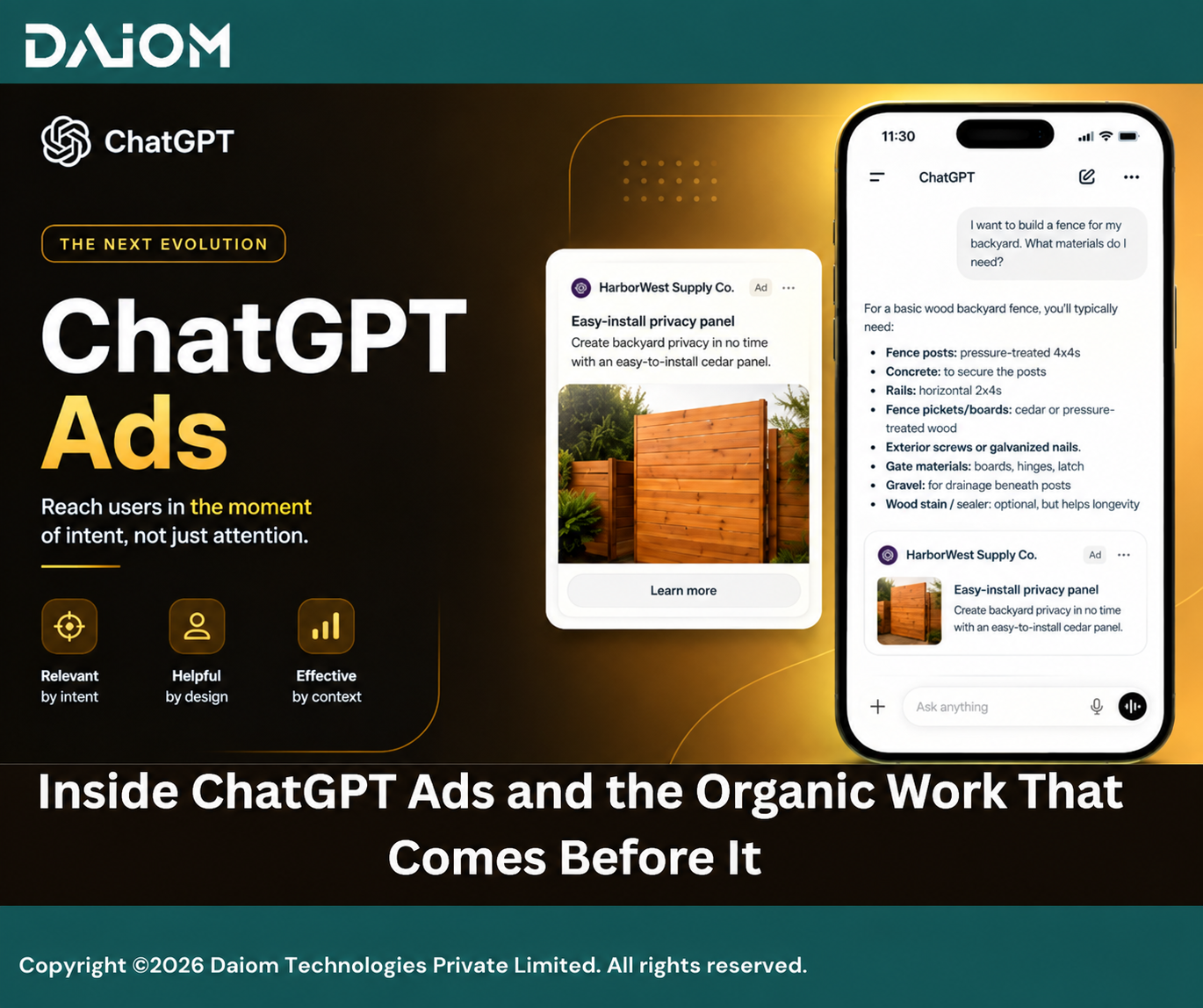
ChatGPT started testing ads in February 2026. By late May, both ad inventory and the share of users seeing ads had grown roughly 7×, with more than 15% of users seeing an ad on a given day.
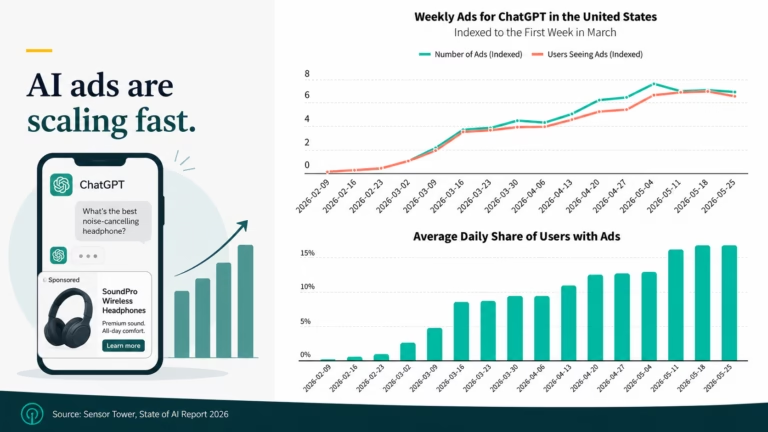
AI assistants are turning into a media channel, and these ads land right inside high-intent conversations — the moment someone is actively deciding something. That’s rare inventory.
I’d keep a close eye on this one. The brands that learn AI advertising early could get the kind of head start that early advertisers got on Google Search and Meta a decade ago.
9. Searches With “AI” Drove 651% More Downloads
“AI” has quietly turned into a keyword that drives demand on its own.
App downloads coming from searches that contained “AI” grew sharply across categories between Q1 2024 and Q1 2026 — up 651% in Health & Wellness, 536% in Financial Services, and more than doubling in Business & Productivity Software and Jobs & Education.
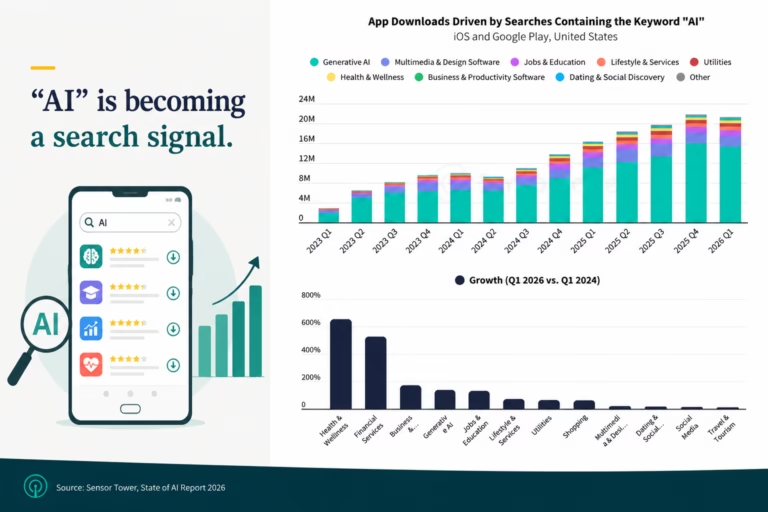
People increasingly link “AI” with value, personalisation, and something modern. It’s become a signal of relevance, and it’s shaping what they search for.
So if AI genuinely makes your product better, I’d say so clearly — in your listings, your product names, your marketing. The one caveat: make sure the value behind the word is real. The tag only helps when the substance backs it up.
10. Claude’s Revenue Per User Jumped 7×
The last signal is about willingness to pay, and it’s rising faster than I expected.
Claude’s average revenue per user went from under $0.50 in September 2025 to $2.76 by May 2026 — roughly a 7× jump — as it focused on research, coding, and professional work. Premium adoption climbed to around 13%.
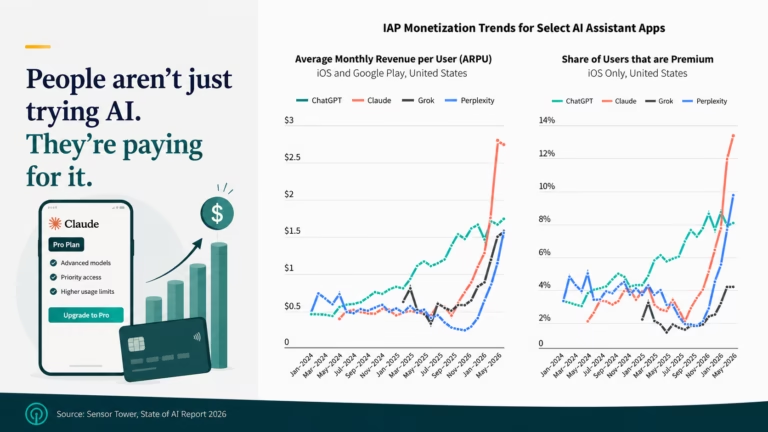
Consumers are clearly shifting from experimenting with AI to paying for it regularly. There’s real appetite now for AI that’s genuinely useful and specialised.
The read for any product brand is encouraging: build something actually worth paying for, make the difference clear, and charge for it with confidence. The willingness is there — it just goes to tools that earn it.
11. Conclusion
If I step back from all ten of these, the picture is pretty clear: AI has quietly become a place where people discover, compare, decide, and increasingly, pay. That’s not a small shift — it’s the early plumbing of how buying will work.
And honestly, it maps almost exactly onto what I’ve watched happen inside our own team these last two years. We didn’t set out to run our work through AI — we just kept reaching for it, and one day realised we’d stopped opening the old tools. Consumers are on that same curve, just a step or two behind. The brands that notice it early, and make themselves easy to find and trust inside these tools, are the ones I’d bet on.
The one thing I keep reminding myself: this is all still moving. The field of AI has been changing rapidly, and these things keep evolving — which is exactly what makes it such a fascinating play to watch unfold. I don’t think any of us have it fully figured out yet, and that’s what makes it worth paying close attention to right now.