

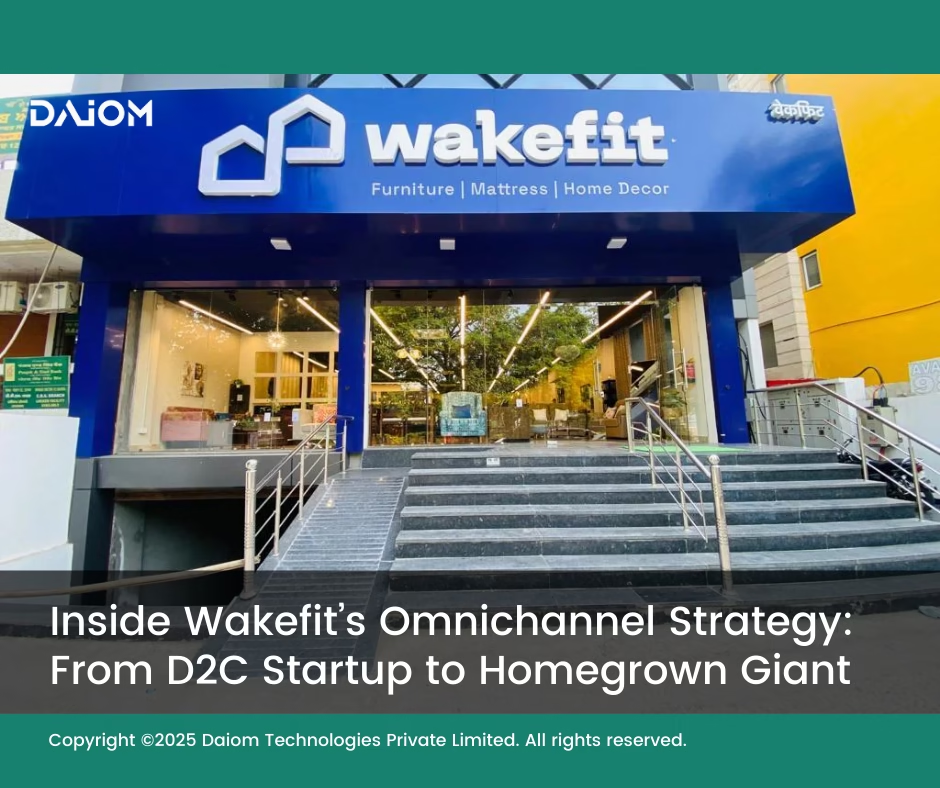
Getting good sleep is very important for your health. It helps you stay strong, think clearly, feel fresh, and even look better. But many people in India struggle to sleep well.
In fact, studies show that Indians are among the most sleep-deprived in the world. That’s why Wakefit was started, to help people sleep better by making good-quality mattresses and sleep products that are both comfortable and affordable.
Among the rising stars in India’s D2C ecosystem, Wakefit has emerged as a benchmark in omnichannel growth, transforming the way Indians shop for home and sleep solutions.
Founded in 2016 by Ankit Garg and Chaitanya Ramalingegowda, Wakefit began as a sleep-focused brand with a simple promise: better quality at better prices, delivered directly to your home.
What started with just memory foam mattresses quickly expanded into a full-stack home solutions company—offering beds, sofas, workstations, wardrobes, bookshelves, and more.
In a country where furniture buying was traditionally an offline, touch-and-feel experience, Wakefit disrupted the status quotient. Their D2C-first approach focused on cutting out middlemen, optimising the supply chain, and building deep digital relationships with customers. In FY25, Wakefit gained over ₹971 crore in revenue, which is proof of how strong their digital & physical flywheel has become.
Over the years, the brand has scaled to:
- 2M+ customers across India
- 100+ offline experience centers in major cities
- A strong e-commerce platform and mobile app
- And a fast-growing presence on platforms like Amazon, Flipkart, and YouTube
Core Pillars of Wakefit’s Omnichannel Strategy
Wakefit’s omnichannel success attributes to a few key principles that guide every customer interaction ranging from first click to final delivery:

- Direct-to-Customer (D2C) Foundation: Wakefit started with a D2C model and continues to own the end-to-end customer journey—from discovery to delivery.
- Unified Digital & Physical Presence: Their strategy includes an engaging online experience backed by physical stores in key cities.
- Content-Driven Trust Building: Wakefit runs blogs, YouTube content, and community-driven events to build long-term relationships.
In building this blog, I’ve drawn from industry insights, first-hand buying experiences, and Wakefit’s own product and marketing innovations. Read on to see how Wakefit has quietly built one of India’s smartest omnichannel businesses.
Our focus is on creating products that are useful and experiences that are memorable. We listen deeply to customer feedback and use data to keep improving.
Chaitanya Ramalingegowda, Co-founder, Wakefit
Table of Contents:
1. History of Wakefit
It started in 2016 when Chaitanya Ramalingegowda and Ankit Garg saw a major gap in India’s sleep industry. Ankit, a former R&D engineer at a German foaming company, realized that most people were buying mattresses without really understanding what they were made of—or if they were even good for their sleep.
That insight sparked the idea behind Wakefit: make high-quality, affordable sleep products and sell them directly to customers.
The brand began as a pure online D2C player, disrupting the traditional mattress industry, which was dominated by middlemen, markups, and inconsistent quality. Their promise was simple: better sleep at better prices—delivered straight to your doorstep.

The journey from a startup to one of India’s most loved home and sleep brands is remarkable. Here are the highlights:
- 2016: Wakefit is founded in Bengaluru with just ₹6 lakh investment from the founders.
- 2017–2019: Focuses on memory foam mattresses, sells directly through its website and marketplaces like Amazon and Flipkart.
- 2019: Raises ₹65 crore from Sequoia Capital, boosting manufacturing and logistics.
- 2020: Launches a wider range of products—beds, pillows, comforters, and more—expanding from sleep to the broader home solutions market.
- 2021: Raises ₹185 crore in a Series B round led by Verlinvest.
- 2022: Adds furniture like study tables, sofas, and wardrobes, with a focus on functionality and affordability.
- 2023: Launches 22+ offline experience centers across major Indian cities.
- 2024: Files IPO draft papers, planning to raise over ₹600 crore.
Today, Wakefit serves over 2 million customers, has more than 900 crore revenue run rate, and continues to scale both online and offline.
Their strong focus on product innovation, customer experience, and affordability has made them a household name—turning what used to be a boring purchase (mattress shopping) into something smart and satisfying.
Disclaimer: We have not worked with Wakefit, but analyzed their publicly available filings and industry data.
2. How Wakefit Became an Omnichannel Pioneer?
Wakefit used a customer-first omnichannel strategy to clearly communicate its value and solve real customer problems. Here are the key omnichannel techniques that helped them connect with the right audience and drive strong results:
2.1 Try Before You Buy Strategy: 100-Day Free Trial
A simple policy like “try before you buy” can convert hesitation into trust and drive sales — especially in categories where offline trials are common. So, to build trust and reduce hesitation among first-time buyers, Wakefit introduced a 100-day free trial on their mattresses. Customers could sleep on the product for over three months and return it if they weren’t satisfied.

This policy reassured users that their money was safe, especially for a high-involvement product like a mattress, which is hard to judge online. It also aligned with Wakefit’s customer-first approach, prioritizing comfort, not just sales.
It worked because customers felt more confident purchasing online without trying the product in-store. This reduced cart abandonment and increased conversions. It also built strong word-of-mouth as users shared their risk-free experience.
2.2 From Online-Only to Offline Experience Centers
Wakefit started as an online-only (D2C) brand. But as they grew, they realized some customers still prefer to see and feel products before buying. So, they opened experience centers in different cities.

By the time they launched physical stores, their brand was already well-known online. This helped drive foot traffic to their stores. Customers could now choose how they wanted to shop—online or offline.
Read more – How To Scale Up Your Store Sales By Increasing Footfall?
They kept their strong online presence, but added offline stores to give a seamless shopping experience. This is called an omnichannel approach, being present wherever your customers are. As a result:
- Wakefit saw a steady rise in offline sales by 2021.
- Their revenue grew to nearly ₹500 crore by 2022.
- The online + offline combo helped build trust and expand reach.
Wakefit didn’t replace online with offline—they blended both. That’s the power of omnichannel marketing.
2.3 Content Marketing
Wakefit used fun and relatable content to connect with its audience. One of their most popular ideas was the “Sleep Internship” campaign in 2019.
They invited people to get paid for sleeping on Wakefit mattresses. It was fun, new, and matched the brand’s goal: to promote better sleep. It also gave people a chance to try the product and talk about it online.

- The campaign went viral on social media.
- It brought in 1.7 million visits to their website in just a few months.
- It helped build trust and made the brand more visible.
After this campaign, Wakefit’s revenue jumped from ₹81 crore in 2019 to ₹200 crore in 2020–21—a growth of over 50%.
If your content is fun, useful, or relatable, people will engage. Wakefit didn’t just sell mattresses—they started a conversation about sleep. That’s what made the campaign work.
2.4 Precision Targeting with Social Media Ads
Even with a small budget, showing personalized ads to the right audience can give great results and Wakefit used Facebook and Instagram ads to reach the right people with the right message. Instead of showing the same ad to everyone, they used data to segment their audience — like age, lifestyle, income, and interests.
For example, they showed orthopedic mattress ads to young working professionals with back pain, and highlighted benefits like better sleep and posture.

They also included easy payment options in these ads to appeal to cost-conscious customers. This smart targeting helped them get more sales without wasting money. Their ads performed well — with every ₹1 spent on ads, they earned ₹2 back.
By the end of 2021, these campaigns helped Wakefit cross ₹400 crore in revenue.
2.5 Optimized Website & Product Discovery
Wakefit understood that people often hesitate to buy big items like mattresses online. So, they made sure their website felt just like visiting a physical store.

The website has detailed product videos, 360° views, and clear comparisons between products. This helps users see every angle and choose what suits them best.
They also added real customer reviews to build trust. Plus, users can explore EMI options easily and get help through WhatsApp chat.
Wakefit’s blog answers common questions about sleep and furniture. This gives buyers the confidence to make the right choice.

All of this makes the shopping experience simple, helpful, and smooth. It feels like having a store assistant online—without the pressure.
2.6 Live Shopping Experience
Wakefit introduced live video shopping to make online buying feel like an in-store experience.

Instead of just browsing pictures, customers can book a video call with a product expert. During the call, they get a live demo of the product, see the materials up close, and ask real-time questions—just like talking to a store staff in person.
This builds trust, clears doubts instantly, and helps users make faster decisions.
For a category like furniture or mattresses—where touch and feel matter—this kind of live interaction makes a big difference. It reduces return rates and increases customer satisfaction.
Live shopping is Wakefit’s way of saying: “We’re here to help, just like in a real store.
3. Unique Features Driving Purchases in this Sector
Home furnishing purchases are not always impulse-driven; they’re often tied to life milestones. These unique triggers show that the home furnishing market is closely connected to life events and lifestyle shifts, making timing and personalization crucial in marketing and sales strategies:
- Marriages – Families tend to invest in new furniture and furnishings as part of setting up a new household.
- New Homes – When people buy or move into a new house, furnishing becomes a top priority.
- Lifestyle Upgrades – Rising incomes and premium aspirations also push customers to replace old products with smarter, more stylish ones.
4. Wakefit’s Growth Funnel (As per DRHP)
A key part of understanding Wakefit’s strategy lies in its Growth Flywheel—a self-reinforcing cycle that drives both scale and profitability in this sector.
Also Read: The Growth Flywheel: How Leading Brands Create Self-Sustaining Success?

Key Learnings from Growth Flywheel –
- Wakefit started with 1 or 2 categories but today it has expanded to newer categories like sleep, decor, living etc., which drives repeat purchases.
- Acquire customers online via search, social, and marketplaces (Amazon, Flipkart).
- Bring customers into physical “Company-Owned” stores for touch, feel, and bundled selling.
- Drive up average order value and brand recall through experience centers and post-sale support.
5. The Power of Wakefit’s Digital Presence
Wakefit is a very strong example of an online to offline omnichannel brand. Wakefit’s success in the online furniture and sleep solutions space is closely tied to its strong digital presence and it has nailed it through its content and app. Their website acts as the central hub for both transactions and customer education, making mattress shopping easy, informative, and trustworthy.
One of Wakefit’s standout strategies is their focus on customer convenience and transparency. This has helped them build trust in a category where online purchases were previously uncommon.
- Try & Buy Model – 100 Nights Trial: Wakefit’s “100 Nights Risk-Free Trial” is a game-changer. Customers can try the mattress at home for up to 100 nights and return it if they’re not satisfied. This removes the usual hesitation of buying a mattress online and has been one of their strongest acquisition strategies.
- Content-First Website & Blog: Wakefit uses content to educate users. Their blogs, sleep tips, buying guides, and product comparison pages help visitors make informed decisions. This also boosts their SEO presence organically.
- User Reviews & Social Proof: With thousands of verified reviews and ratings on the product pages, Wakefit builds credibility and trust right where users need it—on the buying page.
- WhatsApp & Chat Support: Their website is integrated with support options like WhatsApp chat, allowing potential customers to ask questions and get instant responses.
- Social Media & Video Content: Wakefit’s YouTube channel and Instagram are filled with relatable, humorous, and informative content—from product explainers to behind-the-scenes glimpses—building a community, not just a customer base.
Wakefit’s approach shows how building a digital-first brand with customer education and transparency at the core can drive both trust and conversion—especially in high-involvement categories like furniture and mattresses.
6. Wakefit: India’s “Mini-IKEA”?
Wakefit aims to be the “IKEA of India” but with smaller, city-centric stores and a full product spectrum.
- Covers sleep (mattresses, beds), living (sofas, tables, storage), and home decor.
- Expanding into general trade—local dealers and distributors, not just COCO stores.
- Modular, affordable designs are core—no super-large format warehouses, but accessible touchpoints.

7. Wakefit’s Edge? A Brand-by-Brand Omnichannel Comparison
When we look at the home furnishing landscape, brands can broadly be divided into two types based on how they’ve approached omnichannel:
- Traditional Companies Going Omnichannel: These are veteran players who built their reputation in the offline market and are now expanding into digital channels. Brands like Sleepwell and Duroflex are good examples.
- Digital-First (D2C) Companies Expanding Offline: On the other side are modern, digital-first brands such as Urban Ladder, Wakefit, Wooden Street, and Pepperfry. These companies started online, scaled rapidly through e-commerce, and later moved into offline formats like experience centers and stores to strengthen their presence and build consumer trust.
Together, these two groups show how omnichannel is reshaping the industry.

Wakefit’s biggest strength is its tech-led omnichannel model—mixing smart designs, direct sales, and online-offline ease to beat rivals.
8. Conclusion
Wakefit has reimagined the home and furniture category using a blend of tech, storytelling, and customer obsession.
Their omnichannel approach ensures that whether you browse online, visit a store, or engage via WhatsApp, the experience is always smart, smooth, and personalised.
And they prove that you don’t need celebrity endorsements or deep discounts to build loyalty. You just need to be useful, consistent, and honest.
If you’re a business looking to create a similar impact through omnichannel strategies, we’d love to help. Reach out to us at saurabh@daiom.in
For more informative content and blog, follow and stay tuned to DAiOM.
Subscribe to our NEWSLETTER!