

The logistics industry is going through a massive transformation, especially in how fast deliveries happen.
Earlier, people were used to waiting 10–20 days for orders, but with companies like Amazon introducing one-day delivery, expectations have completely changed.
Today, with the rise of quick commerce, speed has become a key part of customer experience. Traditionally, deliveries have relied on land, sea, and air transport.
However, drones, once mainly used in defense and warfare, are now emerging as a new-age solution, gradually entering the logistics space to make deliveries even faster and more efficient.
Drones are already making a meaningful impact across several sectors today. While drones have long been associated with defense, their role today is rapidly expanding beyond it into everyday commercial applications.
- In India, before the 2018 policy came into effect, drone usage was largely limited to government-led activities like soil inspection, water testing, and power line surveillance.
- In infrastructure, drones support mapping, surveying, and real-time site inspections, making large-scale projects more efficient.
- In healthcare, they are enabling the delivery of essential medicines and vaccines to remote and hard-to-reach areas.
- Currently, in logistics, drones are emerging as a powerful solution for last-mile delivery, helping businesses move goods faster, reduce delivery time, and reach areas that are otherwise difficult to access.
Among all these applications, logistics is emerging as a major growth area, especially for solving last-mile delivery challenges with greater speed and efficiency.
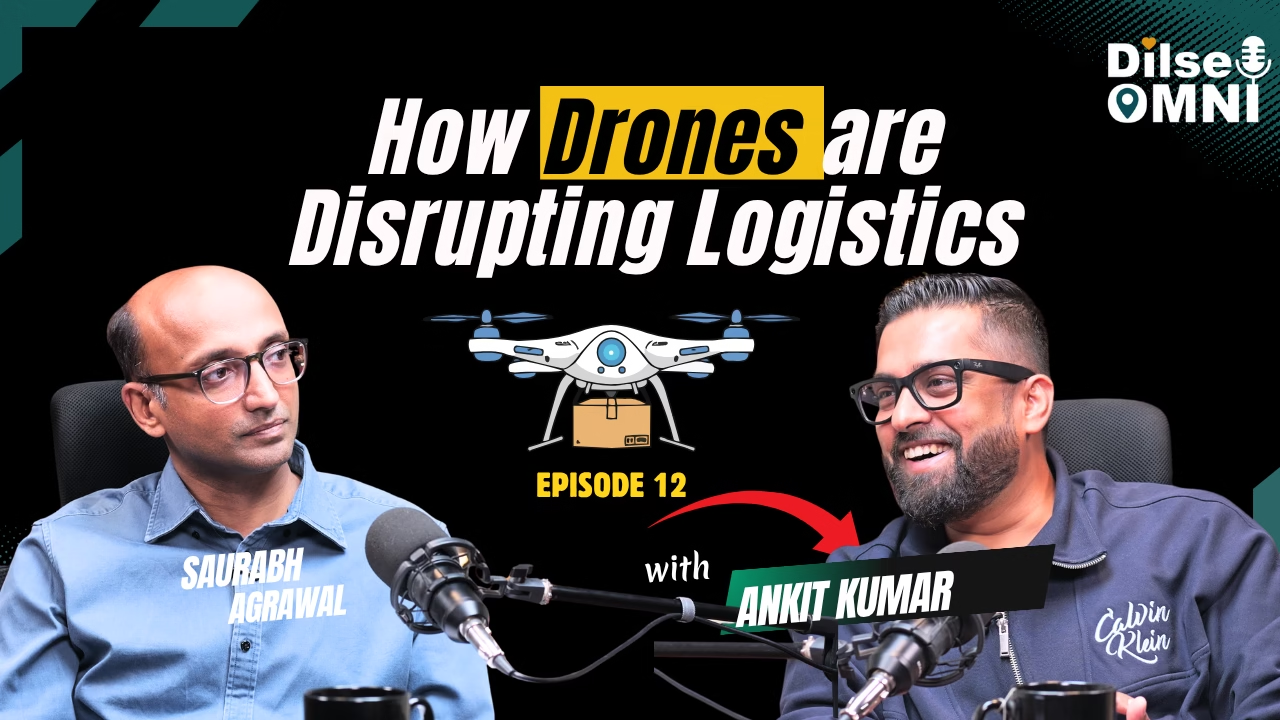
Recently, we also sat down with Ankit, founder of Skye Air Mobility, who has been actively working in this space, to understand how drone-led logistics is shaping the future of deliveries in India.

What Are The Advantages Of Drone Delivery?
Drones are transforming logistics by making deliveries faster, smarter, and more efficient. As customer expectations shift toward instant fulfillment, drone delivery is emerging as a powerful solution across industries.
Here’s an overview of the key advantages:
- Speed & Efficiency: Drones operate in a straight line, bypassing road congestion and traditional route limitations. This “vertical advantage” allows them to reduce delivery times by up to 80%, turning deliveries that once took 24–48 hours into just 20–30 minutes. This is especially valuable for quick commerce, where speed directly impacts customer satisfaction.
- Economic Benefits: While setting up drone infrastructure requires initial investment, the long-term cost advantages are significant. Drones reduce dependency on delivery personnel, cut fuel and vehicle maintenance costs, and don’t require extensive road infrastructure—making them ideal for both urban and remote areas. Over time, this leads to a much lower cost per delivery.
- Safety & Humanitarian Impact: Drones play a critical role in high-impact scenarios. They can quickly deliver essential supplies like medicines, vaccines, and even blood to remote or disaster-affected regions where traditional transport may be slow or risky. Additionally, shifting small deliveries to drones reduces the number of vehicles on roads, indirectly lowering traffic congestion and accident risks.
- Environmental Sustainability: Most delivery drones are powered by electricity, resulting in zero tailpipe emissions. For lightweight packages, they consume significantly less energy compared to traditional delivery vehicles. By reducing reliance on fuel-based transport and easing road congestion, drones contribute to a cleaner and more sustainable logistics ecosystem.
How Does a Drone Delivery Actually Work?
As Ankit describes, the process is surprisingly simple from a consumer’s perspective when it comes to drone delivery process: Here’s how it goes:
- Step 1: Skye Air installs a Sky Pod — a ground infrastructure unit roughly the size of a phone booth or mailbox — inside a residential township or housing complex. Each Sky Pod serves a 500-meter radius.
- Step 2: Shipments arrive at one of Skye Air’s seven hubs in Gurugram, each covering specific pin codes. A drone picks up packages at the hub and flies to the nearest Sky Pod in the delivery area.
- Step 3: The drone drops the package into the Sky Pod. A Skywalker (their term for a last-meter delivery person) retrieves the package and delivers it to the customer’s doorstep.
For tech parks, where delivery riders are typically not allowed inside buildings, Skye Air is going a step further. They’ve introduced autonomous rovers that take packages from the Sky Pod and deliver them directly to the customer’s floor inside the building.
Three machines working in sync — the drone, the Sky Pod, and the rover — creating what Ankit calls a physical AI infrastructure for humanless last mile delivery.
What Drones Can Do?
Drones are proving to be highly effective in specific areas of logistics, especially where speed and accessibility matter most.
Their capabilities are expanding rapidly, making them a strong complement to traditional delivery systems.
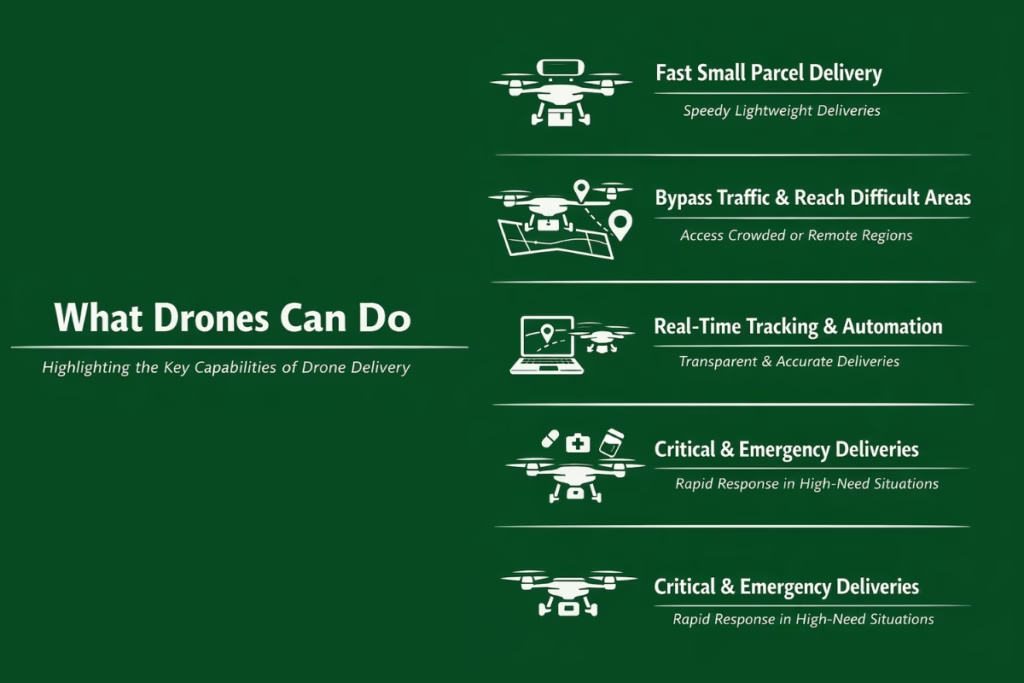
- Fast Small Parcel Delivery: Drones are ideal for delivering lightweight items such as medicines, food, and small electronics. They can complete deliveries in minutes instead of hours by flying directly to the destination, making them perfect for urgent and last-mile use cases.
- Bypass Traffic & Reach Difficult Areas: Since drones operate in the air, they completely avoid road congestion. This makes them extremely useful in crowded urban areas as well as remote or hard-to-reach regions where road infrastructure is limited.
- Real-Time Tracking & Automation: Drones are integrated with advanced logistics systems, allowing real-time tracking of packages. This ensures better transparency, accuracy, and customer experience, as users can monitor their delivery from dispatch to arrival.
- Critical & Emergency Deliveries: In healthcare and disaster scenarios, drones can quickly transport essential supplies like blood, vaccines, or medicines. They reduce response time significantly and can operate in areas that may be unsafe for human access.
What Drones Cannot Do?
While drones offer many advantages, they also come with practical limitations that restrict their use in large-scale logistics.
Understanding these constraints is key to seeing where they fit best.
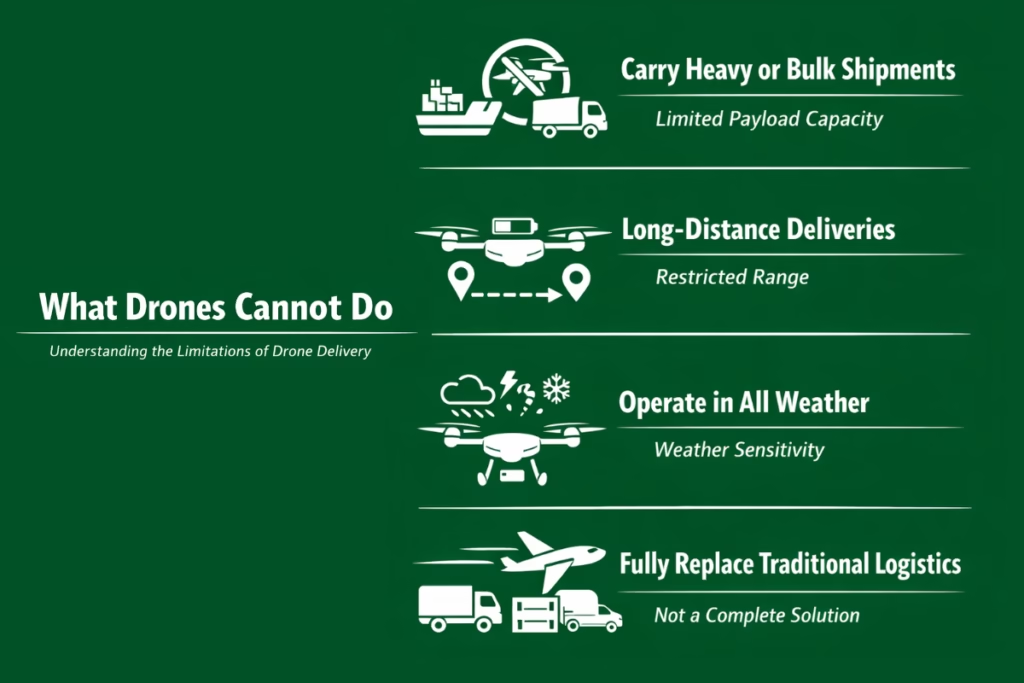
- Carry Heavy or Bulk Shipments: Drones have strict payload limits, which means they cannot transport large, heavy, or bulk goods. Traditional logistics methods like trucks and cargo planes are still necessary for high-volume deliveries.
- Long-Distance Deliveries: Due to battery limitations, drones can only travel a certain distance in one trip. This restricts their use to short-range or hub-based deliveries rather than cross-city or intercity logistics.
- Operate in All Weather Conditions: Drones are sensitive to environmental factors such as strong winds, heavy rain, or storms. In such conditions, flights may be delayed or cancelled to ensure safety and prevent damage.
- Fully Replace Traditional Logistics: Drones are not a standalone solution for the entire supply chain. They work best as a complementary layer, especially for last-mile delivery, while traditional systems continue to handle large-scale transportation.
Myths About Drones
With many myths surrounding drones, Ankit addressed and clarified some of the most common myths around this topic:
1. Security: Vandalism and Theft
One of the first questions people ask is: “Can someone just knock it down with a stone or steal it?”
Altitude as a Shield: Most commercial delivery drones cruise at an altitude of 120 meters (approx. 400 feet). At this height, a drone is nearly invisible and silent to people on the ground. It is well beyond the reach of a thrown object.
Controlled Landing Zones: To prevent theft, professional delivery networks do not land drones in random backyards or unsecured streets. They utilize proprietary pods or restricted hubs. The drone only descends in a “geofenced” safe zone, ensuring the cargo is never accessible to unauthorized bystanders.
2. Connectivity: “What if the Internet Fails?”
Reliable communication is the backbone of drone autonomy.
Redundant Links: Modern systems use a dual-protocol approach. If the primary 4G/5G cellular link drops, the drone automatically switches to a secondary Radio Frequency (RF) link.
Satellite Fallback: In extreme environments, such as high-altitude mountain ranges, drones are increasingly equipped with satellite communication as a third-tier backup to ensure they never lose contact with the Command Center.
3. Nature: Bird Strikes and Migration
Interaction with wildlife is a real variable, but it is managed through data.
Biological Mapping: Industry leaders now study local bird migration and “flocking” patterns. By mapping out the specific times (usually dawn and dusk) and altitudes where birds are most active, companies design flight corridors that bypass these high-risk zones.
Deterrence: Some drones use specific acoustic frequencies or visual markers to safely discourage birds from approaching the flight path.
4. Traffic: Avoiding Mid-Air Collisions
As the skies get busier, “Sense and Avoid” technology becomes critical.
Onboard Intelligence: Drones are equipped with LiDAR and proximity sensors. If an unauthorized object (like a hobbyist drone) enters its path, the delivery drone is programmed to “Hold and Hover.”
Autonomous Diversion: If an obstacle doesn’t clear within a set timeframe (e.g., 120 seconds), the drone’s AI calculates an alternate route or diverted landing site to maintain safety.
Learn More:
Conclusion
While trucks, ships, and air cargo will continue to handle bulk and long-distance movement, drones will power the “last mile” with precision and speed.
Drones are not here to replace logistics—they are here to redefine it. As delivery expectations shift from days to minutes, drone technology is emerging as a critical layer in the logistics ecosystem, especially for last-mile delivery.
By combining speed, efficiency, and accessibility, drones are helping businesses solve some of the most complex challenges in urban congestion and remote connectivity.
However, their true impact lies in working alongside traditional systems, not against them. This hybrid model—where ground, air, and autonomous systems work together—is what will shape the future of logistics.
As innovations continue and infrastructure evolves, drone-led logistics will move from being an emerging trend to a core part of how goods are delivered—faster, smarter, and closer to the customer than ever before.