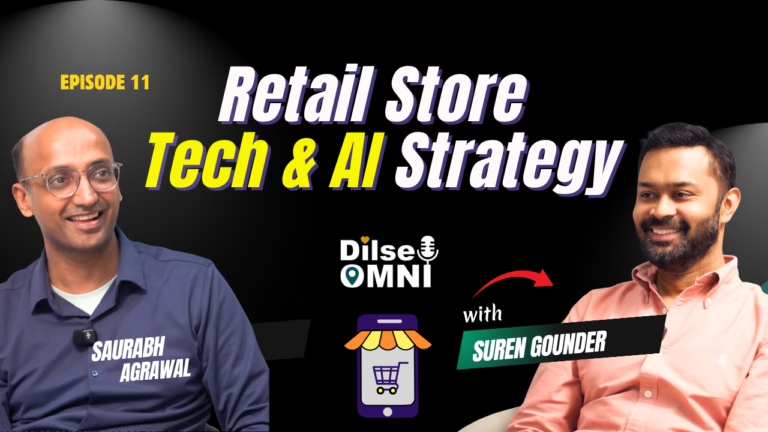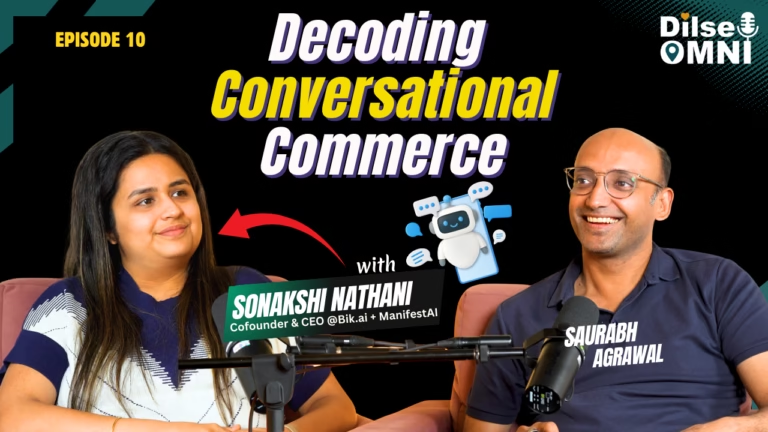

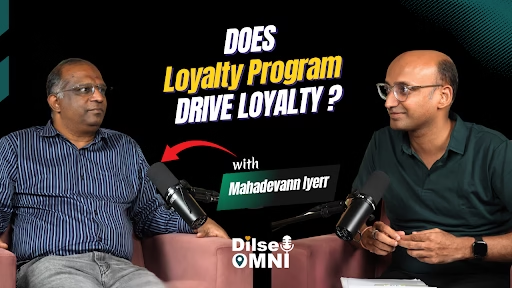
In our latest episode, Saurabh sits down with Mahadevann Iyerr, a loyalty and retention expert whose experience spans global giants like Tesco and Landmark Group. Together, they break down what truly drives loyalty, why most programs fail, and how brands can design experiences that actually matter.

Ever wondered if loyalty programs actually create loyal customers, or if they’re just fancy discount machines? That’s exactly the question Saurabh and Maha sat down to unpack in the latest episode of DilSe Omni Talks, featuring Mahadevann Iyerr, the man behind loyalty programs for Tesco,and Landmark Group.

And let me tell you, Maha’s answer might surprise you.

Why Loyalty ≠ Loyalty Programs?

Let’s start with the big one: loyalty and loyalty programs are not the same thing.

Maha put it beautifully with a simple analogy: think of your brand as a seed. If you have a great product, smooth shopping experience, and strong customer connection, that seed is planted in fertile soil with a skilled farmer tending to it. That’s your core loyalty.

A loyalty program? It’s fertilizer. It can amplify what’s already good, help you grow faster, and make your brand stickier. But if your seed is weak, if your product or experience isn’t strong to begin with, no amount of points, perks, or rewards will save you.​

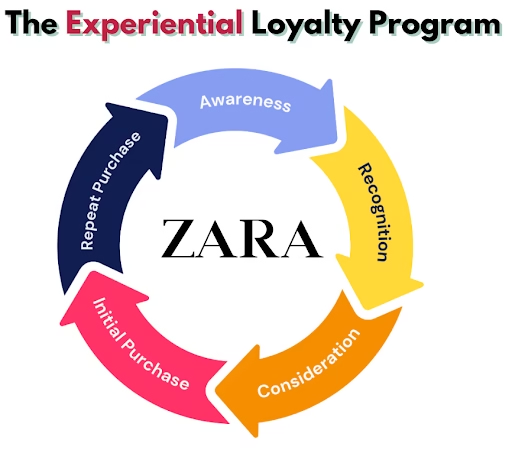
Case in point: Zara never had a loyalty program for years. Why? Their core proposition (fast fashion, new styles every 15 days) was so strong, they didn’t need one. Same with Walmart’s “everyday low prices” and IndiGo’s on-time flights and great value. Their loyalty came from experience, not rewards.​

But then the market shifted. Air India merged with Vistara and inherited Club Vistara (now Club Maharaja), one of India’s best airline loyalty programs. IndiGo saw corporate travelers, who book based on miles, start shifting. So last year, they launched IndiGo Blu. Not because they suddenly loved loyalty programs, but because competitive pressure changed the game.​

Don't launch a loyalty program to create loyalty. Launch it to amplify loyalty you've already earned.

The Biggest Mistakes Brands Make

Maha has seen it all, from Tesco’s legendary Clubcard (which took them from 15% to 30% UK market share) to newer programs struggling to find their footing. Here are the top mistakes he’s witnessed:

  1. Treating Loyalty as Separate from the Business

Too many brands build loyalty programs as standalone projects, separate teams, separate budgets, separate P&Ls. The result? Programs that feel disconnected, transactional, and irrelevant.

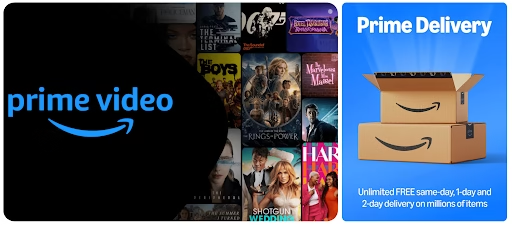
Amazon Prime is the counter-example. It wasn’t designed as a “loyalty program.” It was designed as a business accelerator, free delivery and Prime Video were hero benefits that drove the core business forward. They looked at it through a business ROI lens, not a loyalty program ROI lens.​

Compare that to Flipkart Black, which launched with confusing T&Cs (“earn up to 100 points per order, max 800 per month”). It felt like the CFO wrote the fine print, not someone thinking about customer experience. The program struggled to communicate clear value.​

Loyalty should be baked into your business model, not bolted on. Every team, marketing, product, ops, customer service, should understand how loyalty drives growth.

  1. Customers Don’t Understand “What Am I Getting?”

This is the fatal flaw. Customers sign up, but they have no clue what the program actually does for them.

Maha’s personal example? He had an HDFC Infinia card for six years and didn’t know it came with unlimited golf lessons and access to premium golf courses. A friend casually mentioned it at a meetup and now, Maha plays golf every week, redeemed over 1 lakh points for an iPad, and the card went from “replaceable” to “irreplaceable”.​

The problem: Great benefits buried in the fine print = wasted opportunity.

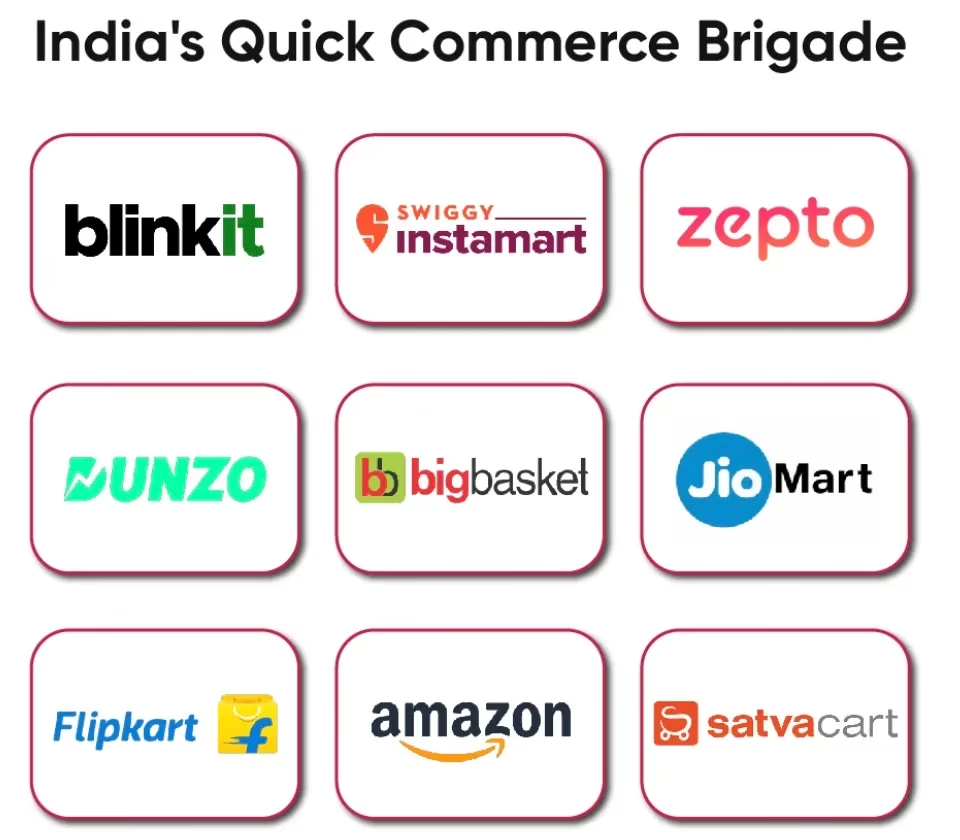
Another example: Quick commerce loyalty programs (Zepto Pass, Swiggy One, Zomato Gold). They’re priced at ₹10 – ₹199, loaded with conditions, and so undifferentiated that customers don’t feel any value. Too many T&Cs, too little clarity.​

How to fix it? Lead with 1-2 hero benefits. Make them crystal clear, emotionally resonant, and easy to access. Bury the rest in subtext.

Why Execution and Communication Matter More Than Design

Here’s something most brands miss: a beautifully designed loyalty program is useless if customers don’t know about it or can’t use it easily.

Maha explains that if you can have the best rewards structure, the smartest tiers, and a slick tech stack, but if your communication sucks, your program will fail.​

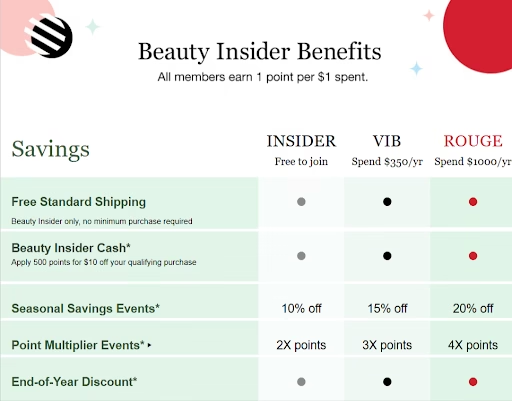
Example: Sephora Beauty Insider doesn’t just give you points. When you get a makeover in-store, they record a video of the exact products used, send it to you, and let you reorder with one click. It’s experience-led, omnichannel, and memorable. That’s not just design, that’s execution.​

Another one: Lifestyle (Landmark Group) had priority checkout lanes during sale season for their “Edge” tier members. Customers standing in long queues would see others breezing through and ask, “Why am I not an Edge member?” That’s an emotional connection in action.​

Design gets you started. Execution and communication determine whether customers actually care.

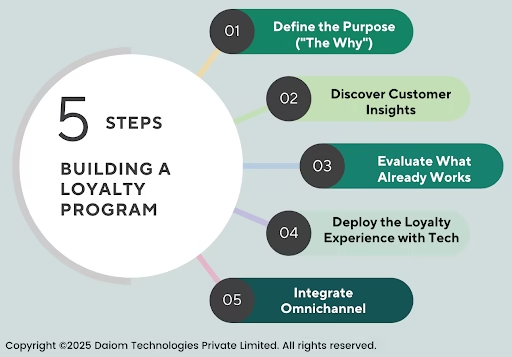
The 5-Step Framework to Build a Loyalty Program That Works

Maha walked us through his proven playbook for launching loyalty programs. Here’s the breakdown:

Step 1: Define the “Why” (Business Context & Objectives)

Before you design anything, answer: Why does your business exist? What are you trying to achieve?

  • Are you a grocery chain with high frequency, low margins?
  • A furniture brand where customers buy once a year?
  • A coffee shop where people visit daily?

Your industry, customer persona, and business goals shape everything. Don’t jump to “I want a loyalty program.” Start with “I want to grow repeat purchases by 20%” or “I want to protect my base from competitors”.​

Step 2: Discovery (Customer Insights & Data Analysis)

This is where most brands skip ahead and make costly mistakes. Before designing rewards, you need to deeply understand who your valuable customers are and what drives their behavior.

Maha emphasizes looking at:

  • Store visits: Who’s coming back multiple times, even if they’re not buying every time?
  • Purchase frequency: How often do they buy, and what triggers a repeat purchase?
  • Valuable customer profiles: It’s not always your highest spenders. Sometimes your most valuable customers are those who buy regularly, refer friends, or engage with your brand on social media.

Competitor analysis is also crucial. 

Talk to your customers. Maha mentions how critical it is to pick up the phone and ask people why they returned, or why they didn’t. That insight is gold.

Step 3: Evaluate (What already works)

This is where you dig into:

  • Quantitative data: Who are your most valuable customers? How often do they buy? What’s their lifetime value?
  • Qualitative insights: Visit stores, talk to customers, understand why they keep coming back.
  • Competitor analysis: What’s working elsewhere?

Maha’s golden question to CEOs: “Tell me who your top 20 customers are.” Most can’t answer. But those top customers are often spending 20x more than average, and understanding why is worth its weight in gold.​

Step 4: Design & Deploy (Tech, Training, Rollout)

Now you bring it to life:

  • Tech stack: Whether it’s Shopify plugins for D2C brands or enterprise CRM for retail chains, make it seamless across online, offline, and marketplaces.
  • Training: Store staff need to understand and communicate the program. If they don’t, it’s dead on arrival.
  • Metrics: Set up dashboards to track engagement, redemptions, churn, and LTV.​

For small D2C brands, tools like Nectar can get you live in 2 hours. For enterprise brands, expect 4-6 weeks of tech integration.

Step 5: Integration & Execution (Omnichannel)

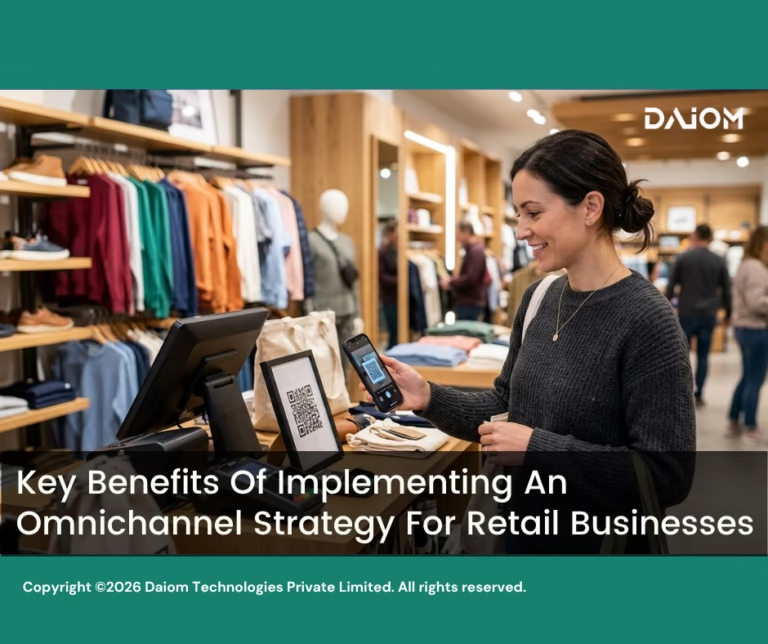
Once your loyalty program is designed, execution and integration is everything. Saurabh & Maha talk about how omnichannel integration is key, your loyalty program should work seamlessly online, in-store, on marketplaces, and even on quick commerce platforms.

Start with your own channels (website, app, stores), then move to marketplaces once everything’s running smoothly.

This is where the real work happens. Loyalty isn’t a “set it and forget it” project, it’s muscle memory.

Maha’s advice: Loyalty takes 2 years minimum to show real ROI. If you’re expecting results in 3 months, you’re running a promo campaign, not building loyalty.​

Final Thoughts: Loyalty is About Relationships, Not Transactions

In this podcast, Saurabh and Maha talk about how loyalty programs don’t create loyalty. Experience creates loyalty. Programs amplify it.

If your product is weak, your service is poor, or your brand has no emotional connection, no amount of points will save you. But if you’ve built something great and you layer on a well-executed, clearly communicated loyalty program? That’s when magic happens.

Maha summed it up perfectly: “Retention isn’t about discounts. It’s about belonging.”

So whether you’re launching your first program or fixing a broken one, remember:

  • Start with your core business, not the program.
  • Make benefits simple and clear.
  • Execute flawlessly, communication and experience matter more than design.
  • And most importantly, be patient. Loyalty compounds over time.

Want to know more? Check out the full episode of DilSe Omni Talks with Mahadevann Iyerr and Saurabh Agrawal. It’s packed with real examples, honest mistakes, and actionable frameworks you can use today.

Feel free to reach out to us for mapping out your customer retention strategies.

Section Title

Careers in Omni-Channel Growth: The New Frontier for Marketers

Omni-channel marketing careers blend marketing, analytics, and technology to drive growth across online and offline customer journeys...

App Strategy for Omnichannel Brands

DilSe Omni Podcast explores when brands should build apps, key app KPIs, and how apps drive retention, revenue and repeat purchases in D2C...

Driving Retention with Individualization and Unified Customer Data

Inspired by DilSe Omni podcast insights, this blog explores how personalization and individualization power customer retention and loyalty...

3 ways to improve your Conversion Rate

Why do customers almost buy but don’t? Non-buyer surveys uncover drop-off reasons, helping brands boost conversions beyond NPS...

DAiOM x afaqs!: Highlights from the Customer First Summit

The afaqs! Customer First Summit 2025 brought CX, AI and data leaders together to rethink customer-first strategies that deliver real impact...

DilSe Omni Talks E4: Unlock Limitless Customer Lifetime Value

Saurabh and Anand uncovered how real customer listening drives better retention, shaped by Anand’s journey from Burrp to CleverTap...

Is Agentic AI Really Disrupting Marketing as Well?

A fresh take on AI marketing from the Agentic Marketing 2025 Seminar, featuring insights from Google, Gartner, Netcore, and industry leaders...

How to Build a Loyalty Program That Actually Works

Why do loyalty programs fail? DilSe Omni Talks reveals a 5-step framework that actually drives customer loyalty...

Episode 3: Does a Loyalty Program Really Drive Loyalty?

DilSe Omni Talks explores real loyalty with expert Mahadevann Iyerr and the big mistakes brands make in loyalty programs...

Leave a Reply

Your email address will not be published. Required fields are marked *

This field is required.

This field is required.

Please fill out the form to submit your enquiries