

The personal care industry is evolving rapidly, but one category that has long been overlooked is kids’ personal care.
The skincare market itself is already worth over $115 billion and is projected to reach nearly $194 billion by 2032, showing how strongly consumers are investing in skin health and self-care.
At the same time, rising awareness around ingredient safety, sensitive skin, and preventive care is pushing brands to create more specialized products, especially for younger consumers.
Parents today are more conscious than ever about what goes on their child’s skin, driving demand for safer and age-appropriate formulations.
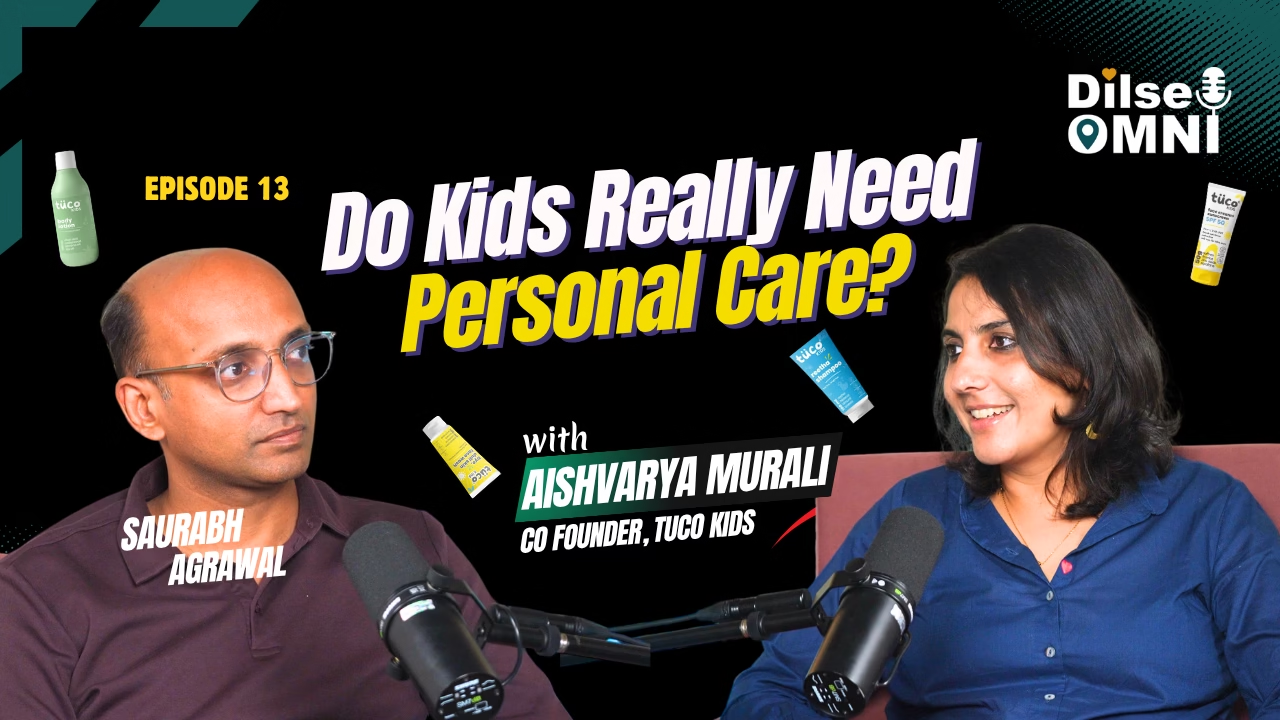
Recently, Aishvarya Murali, founder of Tuco Kids, joined our podcast DilSe Omni for a thoughtful conversation about building products specially designed for children.
Our discussion went beyond entrepreneurship as she explored parenting, product design, and why children need care designed uniquely for them.
This blog will walk you through some of the key learnings from the conversation in the podcast
I didn't launch Tuco Kids because 'organic' was a trend. I launched it because I saw a missing middle—a gap where children had outgrown baby products but their skin wasn't yet ready for the harshness of adult care.
Aishvarya Murali, Founder, Tuco Kids
Building India’s Missing Kids’ Personal Care Category
India’s beauty and personal care market is large and fast growing, yet one important segment remained largely ignored — children between the ages of 3 and 13. While baby care products are widely available and adult personal care dominates shelves, kids were often expected to use “family products” designed for completely different skin and hair needs.
Aishvarya Murali recognized this gap early.
Indian supermarkets never truly had a dedicated kids’ aisle for personal care. Parents worried about sun damage, rashes, dandruff, and skin sensitivity in children, but lacked products specifically built for them.
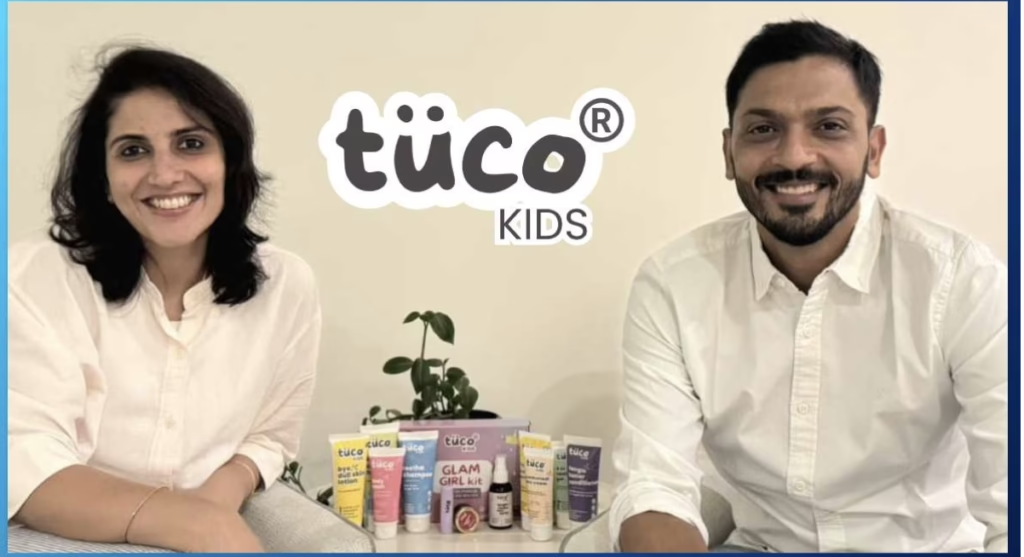
Tuco Kids was created to solve this exact problem, building a category rather than just launching another brand. The idea was simple but powerful: children deserve personal care designed for their age, lifestyle, and developing skin.
By focusing on safety, efficacy, and trust, Tuco Kids began addressing an unmet need among modern parents who increasingly understand that kids are not just smaller adults, their care requirements are fundamentally different.
Why Do Kids Need Their Own Personal Care?
Many people believe skincare begins only in adulthood. But, as Aishvarya said, kids need personal care just as much as adults do.In fact, children’s skin is nearly 20–30% thinner than adult skin, which makes it more sensitive and vulnerable to irritation, dryness, and environmental damage.
The skin barrier is still developing during childhood, meaning it loses moisture faster and reacts more strongly to harsh ingredients. Other than this, here are some other key factors that play a role in determining:
- Environmental skin damage: Children today spend significant time outdoors — playing, commuting to school, or participating in activities — leading to daily exposure to sunlight, dust, sweat, and urban pollution. According to dermatology studies, pollution particles can weaken the skin barrier early, increasing risks of dryness, allergies, and long-term skin sensitivity.
- Puberty: An important factor is early hormonal changes. Dermatologists observe that signs of pre-teen skin concerns such as oil imbalance, body odour, and mild acne are now appearing earlier than before due to lifestyle and environmental changes.
- Adult Skincare is Not Mild: Adult skincare products are designed for mature skin concerns like aging, pigmentation, or strong cleansing needs. These formulations often contain active ingredients, fragrances, or chemicals that may be too strong for children’s delicate skin.
This growing awareness is creating the need for a dedicated kids’ personal care category — products that are gentle, safe, age-appropriate, and designed specifically for young, growing skin rather than adapted from adult or baby care products.
Designing Personal Care for Kids
Kids’ personal care is fundamentally a high-trust category. Unlike fashion or gadgets, parents do not experiment easily when it comes to products used on their children’s skin.
Tuco Kids focuses on children aged 3–13, offering natural, safe-to-use products built around real problems parents observe daily — dull skin, dandruff, sun exposure, dryness, and scalp issues.
Instead of positioning products as beauty solutions, the brand follows a problem-solution approach. Parents often discover Tuco through functional “entry products” such as sunscreen, dull skin lotions, or treatment gels. Over time, maintenance products help build habit formation, repeat usage, and long-term trust.
What differentiates Tuco Kids is its combination of modern formulation science with familiar traditional ingredients like turmeric, mint, and plant-based extracts — ingredients parents already trust from home remedies.
Beyond products, the brand reflects Aishvarya’s long-standing commitment to sustainability. Using 100% recycled plastic packaging and certified safe, vegan formulations, Tuco integrates responsible consumption with child-focused innovation — reinforcing its larger mission of building India’s first truly dedicated kids’ personal care ecosystem.
Who is the Customer Vs Consumer?
One of the most important business learnings shared in the conversation was understanding a simple but powerful idea: the customer and the consumer are not the same person — especially in kids’ categories.
In this market, the customer is usually the parent, most often the mother, who purchases the product. Parents make decisions carefully because they are responsible for their child’s health and safety.
They evaluate products based on trust, ingredients, safety standards, brand credibility, and whether the product feels reliable for long-term use. Their buying decision is logical and responsibility-driven.
However, the consumer is the child, the one who actually uses the product every day. Children do not think about ingredients or certifications. Their decision is emotional and experience-led.
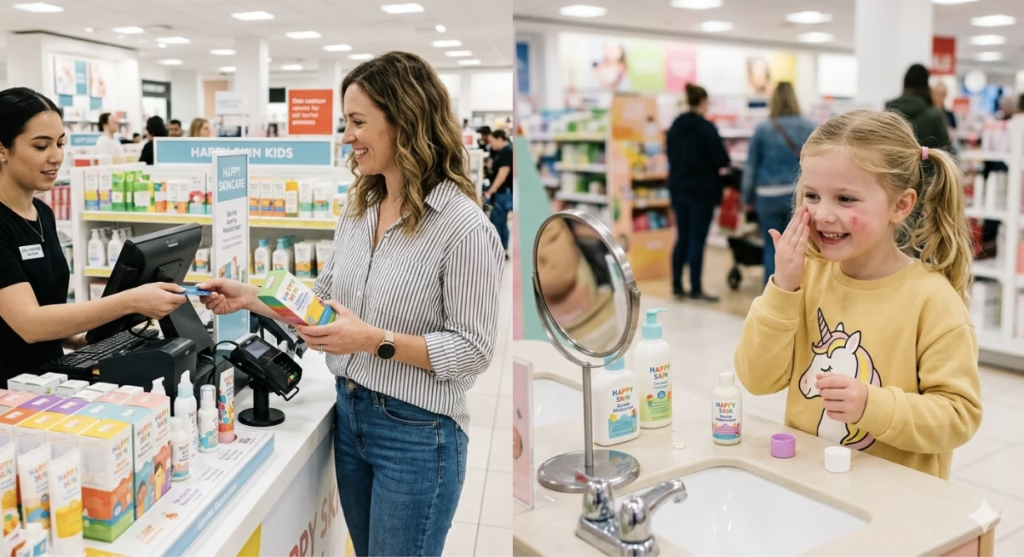
They care about how the product feels, how it smells, whether it is fun to use, and if the overall experience is enjoyable. If a child dislikes the texture, fragrance, or usage experience, they simply refuse to use it.
This creates a critical business reality. A brand may successfully convince parents to purchase the product once, but repeat purchases depend entirely on the child’s acceptance. If the child stops using the product, consumption stops — and without usage, retention disappears.
That is why successful kids’ brands need to win the parent’s trust and win the child’s love at the same time. Growth happens only when brands balance both audiences — the rational buyer and the emotional user.
A brand may convince a parent to buy a product once, but repeat purchases depend entirely on the child’s love. If the child dislikes the experience, consumption stops, and retention disappears. You have to win the parent's trust and the child's heart at the same time.
Conclusion
Tuco Kids’s ambition goes beyond skincare. The brand is working toward building what India has historically lacked, a dedicated kids’ aisle.
Just as food brands began creating healthier alternatives for children, personal care is now entering a similar evolution. Parents are no longer satisfied with one-size-fits-all solutions. They want safety, transparency, sustainability, and age-appropriate care.
By combining trusted ingredients, science-backed formulations, and responsible packaging, Tuco is redefining how children engage with personal care from an early age.
In doing so, Aishvarya Murali is not only building a D2C brand, she is helping shape a new consumer category in India, one that places children’s wellbeing, trust, and long-term habits at the center of innovation.