

India is the world’s third largest retail market and over 90% of purchases still happen inside physical stores. Yet most conversations about retail tech completely ignore offline. The focus is always on e-commerce: online funnels, digital ads, app UX. But the real action, the real transactions, have always been happening offline. That gap is exactly what Suren, founder of Tango Eye, set out to fix.
Many omnichannel brands have successfully scaled their store networks, and Suren has been at the heart of building that playbook, quietly becoming the secret sauce behind how brands hyperscale from 10 stores to 500. He came from Wall Street, moved back to India in 2017, and noticed something that most people were missing, visual AI was exploding, but nobody was applying it to physical retail. With approx 15 million offline retail outlets in India alone, he saw a massive underserved problem and went after it.
What exactly is Tango Eye?
The simplest way to describe Tango Eye is that it’s Google Analytics for your physical store. It plugs into your existing CCTV cameras, no new hardware needed, and runs an intelligence layer on top that tells you what’s actually happening inside your store.
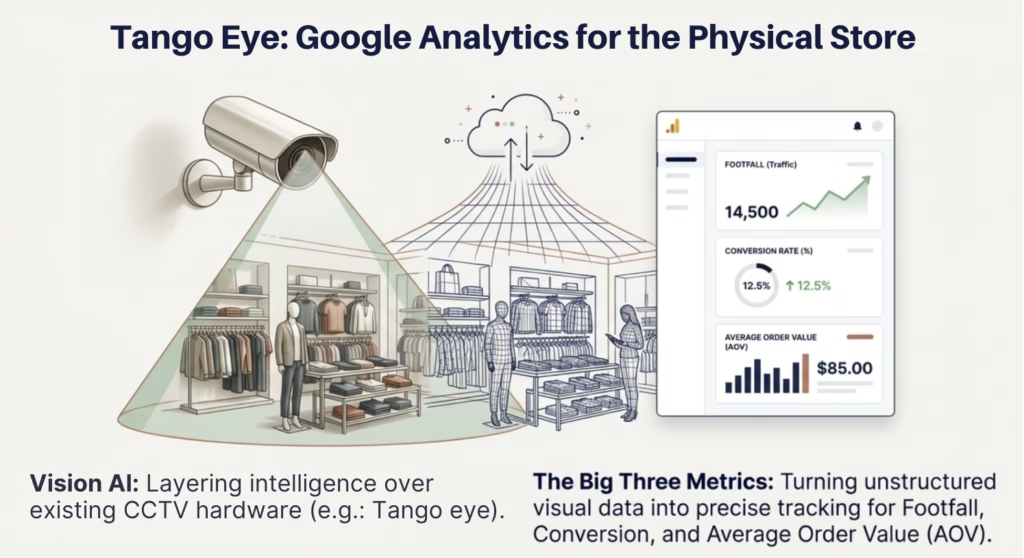
Stores consistently under-report their own footfall. Why? Because when the security guard is counting, they’re working backwards from the conversion number they already achieved. So the count always conveniently matches. You’re not optimizing for potential, you’re just justifying outcomes.
Tango Eye’s system strips that all away and gives you real numbers. And then it goes further.
Tango Eye currently operates across 10,000+ stores, 50–60 brands, and multiple countries including India, Singapore, and the UAE.
What Does the Offline Conversion Funnel Really Look Like?
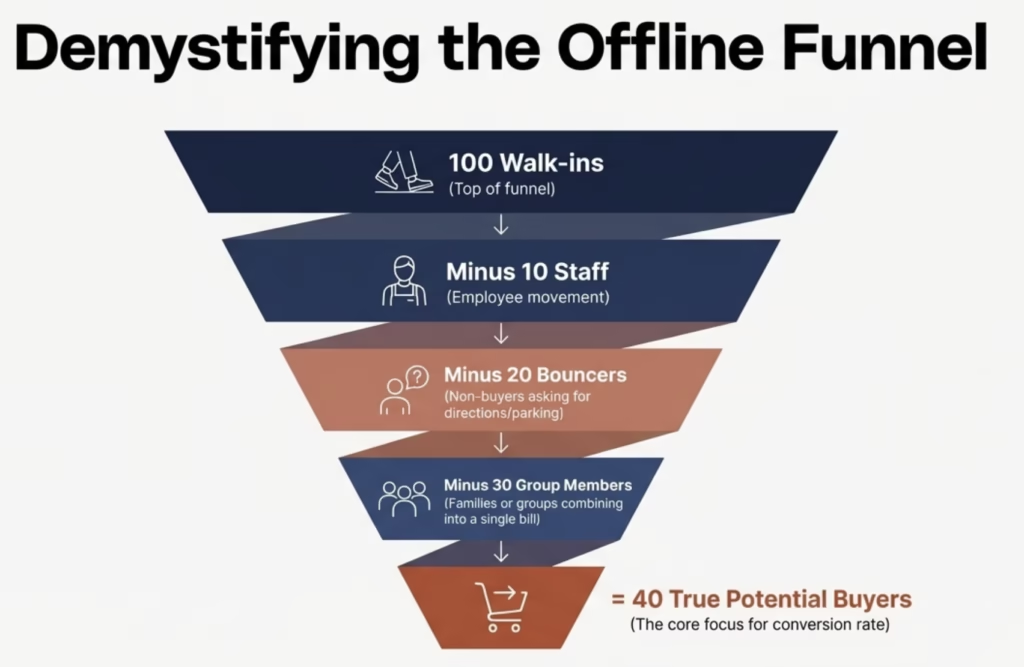
Think of footfall like website visits. Out of 100 people who walk in:
- 10 are staff, remove them.
- 20 are “bouncers”, people asking where the restroom is, not potential buyers.
- You’re left with 70. But families walk in together and share one bill, so your true individual potential buyers might be closer to 40.
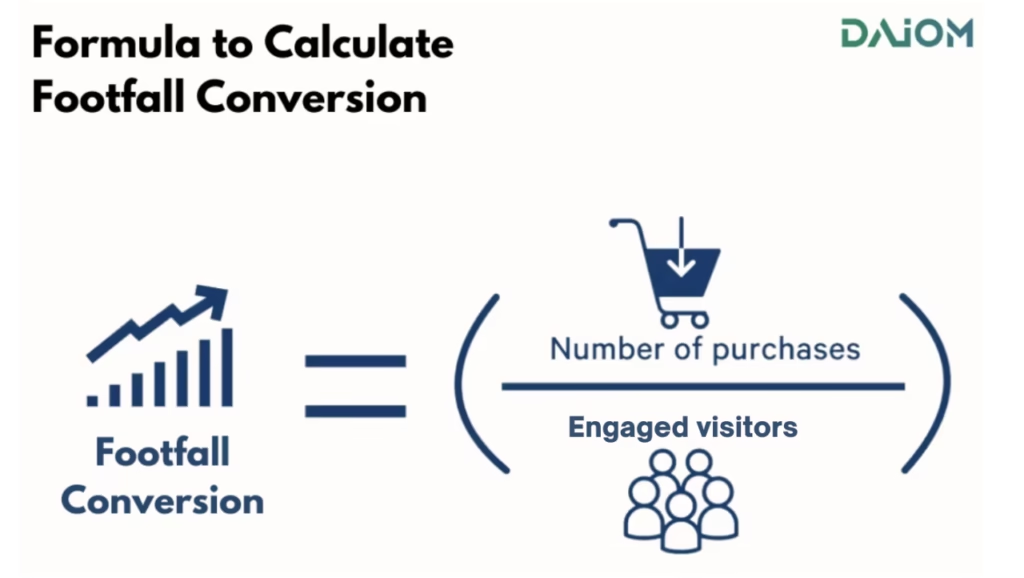
Now you have 40 genuine prospects. What happens to them inside the store, which aisle they visit, how long they spend, whether a staff member approaches them, that’s your conversion funnel. And that’s where Tango Eye lives.
One brand Suren mentioned tracks it even deeper. A Gen Z fast fashion brand, measures store-to-trial-room conversion first, then trial-room-to-purchase. If people are trying stuff but not buying, that’s a product problem. If they’re not even making it to the trial room, that’s a store experience problem. Very different fixes for very different issues.
Why Do Most Brands Get Store Operations Completely Wrong?
When we talk about tech in an offline store, it breaks down into two clear sets —
- Operational Tech that powers the business behind the scenes, and
- Customer Tech that shapes the experience on the floor.
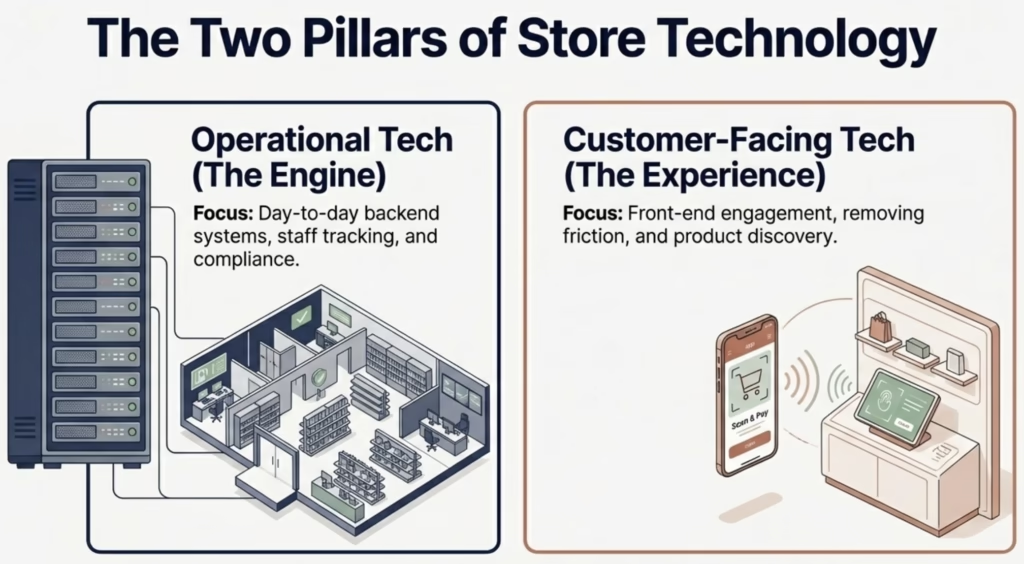
Before the fancy customer-facing tech, there’s a whole layer of basic operational tech that most people underestimate. Suren breaks it into the basics every modern retailer should have: POS (billing), CRM, inventory management, CCTV…and then the more impactful modern tools that most brands still haven’t fully leveraged.
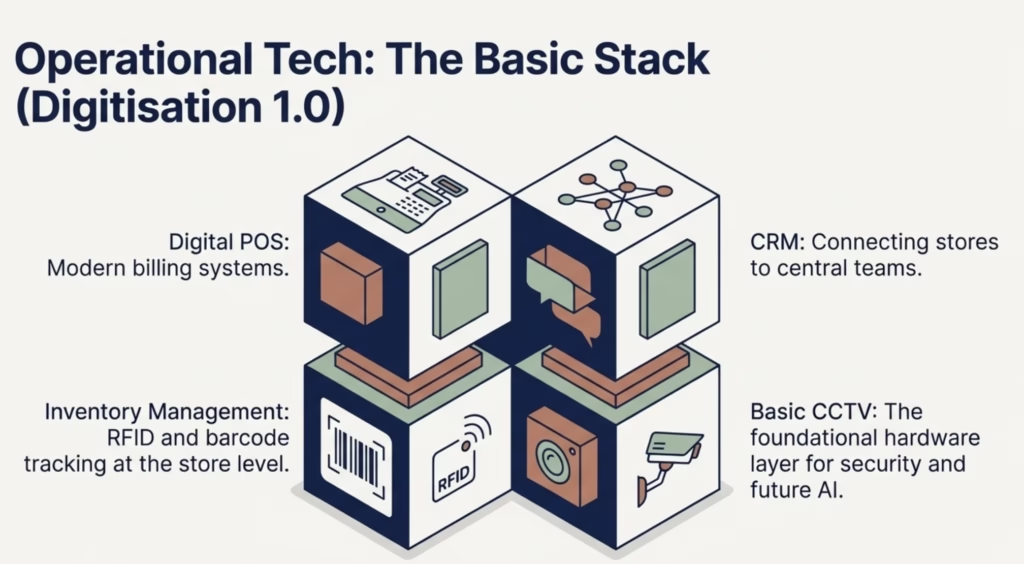
- Staff attendance and monitoring: Saurabh mentions that one brand had a conversion problem in the evenings. After they tracked the data, they got to know that the last two hours were covered by one person, during the highest footfall window on weekends. That’s a scheduling problem.
- Process checklists. Hundreds of daily tasks like from store opening procedures to cash management to pricing cards being displayed correctly. When brands are small, founders handle this personally. As they scale, consistency disappears unless it’s systematized.
- Footfall + demographics. One brand was trying to scale its kids’ collection. Some stores sold it well, others didn’t. Was it a merchandising problem or a traffic problem? By overlaying kids’ demographic data on footfall, they identified which stores actually had families walking in, and doubled down on kids’ inventory there.
What Customer-Facing Tech Is Actually Worth Investing In?
This is where it gets interesting for shoppers.
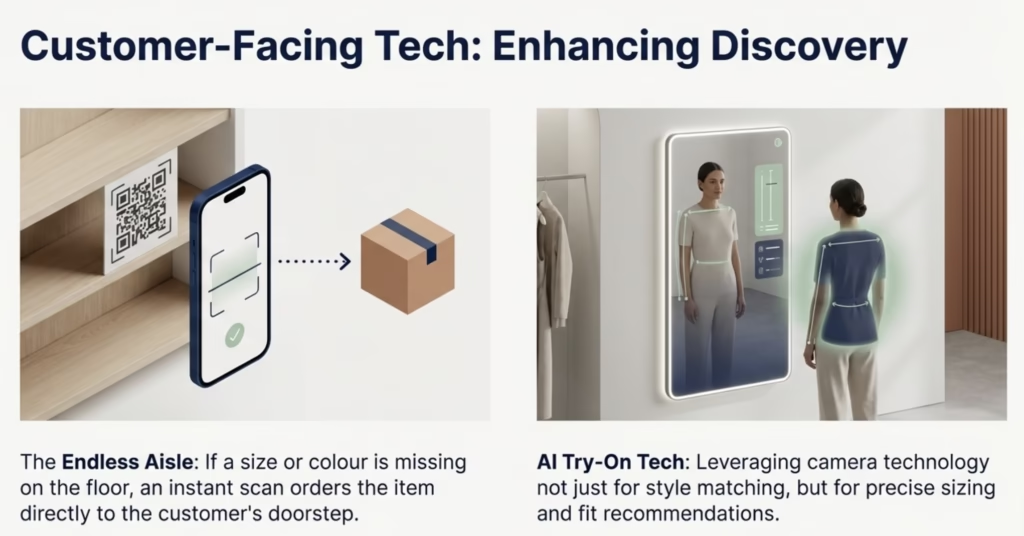
Virtual try-on is evolving fast. Lens and eyewear brands have been doing it for years. And now, The Pant Project built something that not only shows you how a product looks but helps you figure out sizing and fit.
Endless aisle: a QR code or a screen in-store that lets you browse the full catalogue, not just what’s physically on the shelf. Decathlon does this well. If your size or color isn’t available, scan it, order it, get it delivered. You don’t lose the sale or the customer.
Appointment booking works brilliantly for high-touch categories such as Jewelry, eyewear, wedding wear. If you’re going in to pick a lehenga or a sherwani for your wedding, you want a specialist. You want the store manager to know you’re coming. Appointment systems make that happen and signal high-intent customers in advance.
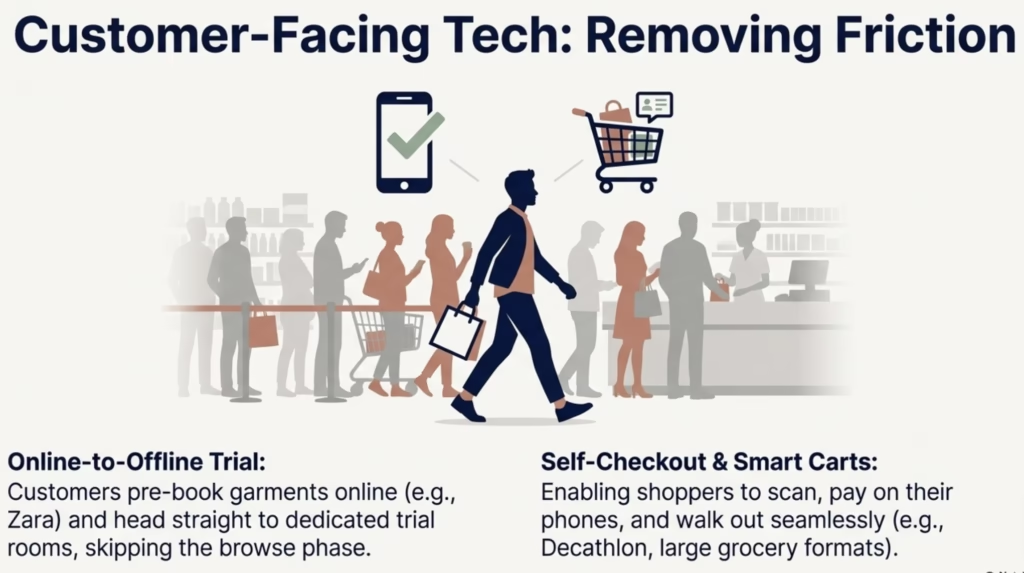
Self-checkout is growing, especially in large format retail. Decathlon, Uniqlo, they’ve redesigned the staff role entirely. Staff aren’t there to guide you through the store anymore. They’re there to solve problems when something goes wrong. One person can manage multiple checkout points. Efficient for the brand, faster for the customer.
Is Voice Data the Most Underrated Goldmine in Retail?
Brands are now using voice data from in-store conversations to understand why customers didn’t buy. The global voice AI for the retail market is projected to grow from USD 1.8 billion in 2024 to USD 16.1 billion by 2034, at a CAGR of 24.5%.
- Did the customer mention a color wasn’t available?
- Did a staff interaction go sideways?
- Was there a fit issue that kept coming up across multiple stores?
All of this is now extractable and actionable. You can retarget a customer who couldn’t find what they wanted. You can train staff on conversations that almost converted but didn’t. It’s a window into real customer intent.
What's the Biggest Mistake Brands Make with All This Tech?
Suren shared that brands spend months comparing, piloting, and trying tech. Then they compile it all into a presentation that nobody acts on.
The brands getting the most out of operational and store tech are the ones treating the data as a daily operational input, not a quarterly report.
Where Is AI Taking Store Tech Next?
We’re moving from AI as a data collector to AI as a decision-maker.
- How many staff should this store have on Saturday evening?
- What products should go in the front aisle for the next two weeks?
- Where should the new collection launch first, based on customer demographics by location?
These decisions are now being assisted by AI, and the gap between brands that use this well and those that don’t is going to widen fast.
One thing which is clear from this episode of Dilse Omni Talks is: the offline store isn’t dying but it’s getting smarter. And the brands that treat their physical stores with the same analytical rigor they apply to their websites will have a serious edge.
Watch the Full Episode Now on Dilse Omni Talks