

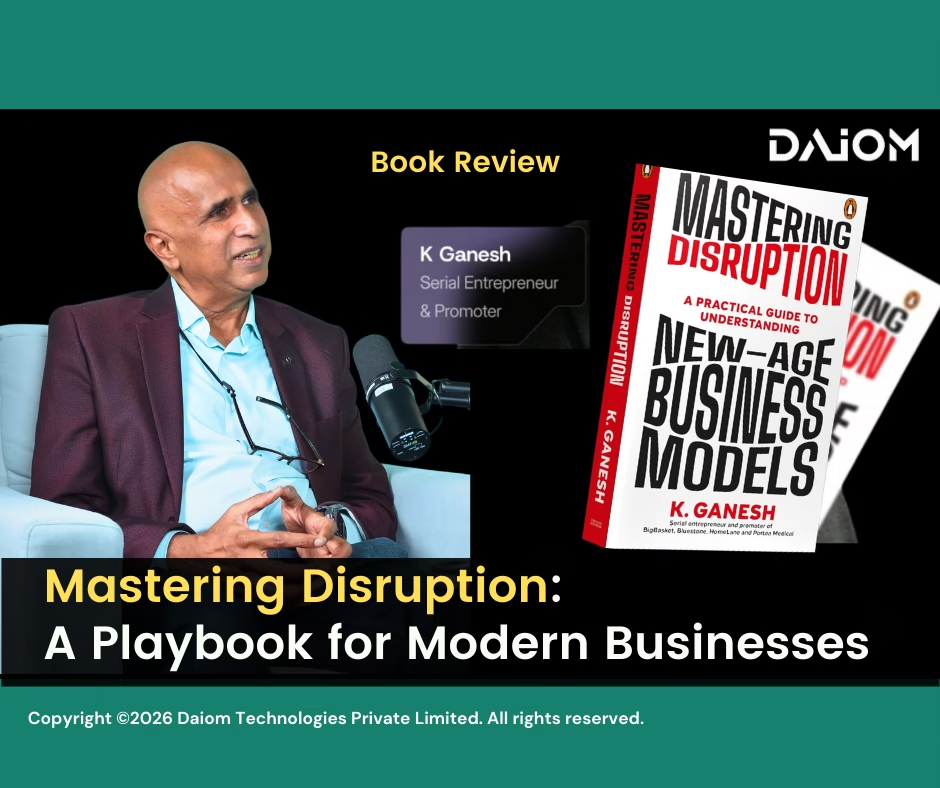
If you’ve followed the Indian startup ecosystem closely, you must have heard about K Ganesh.
Ganesh (Ganesh Krishnan) is one of India’s most prolific serial entrepreneurs. Over the past two decades, he has founded or co-founded multiple companies including TutorVista, Bluestone, and BigBasket, each of which scaled into household names.

I always knew him as a serial entrepreneur who had an uncanny ability to spot trends early, build businesses fast, and exit at the right time. Someone who seemed to understand how businesses really work, not just how they look on pitch decks. So when I found out he had written a book called Mastering Disruption, I knew I had to read it.
I picked it up, and ended up finishing it in two days.
This blog is my personal reflection on the book, why it connected so strongly with my own work in digital and strategy, and why I think it’s a must-read for anyone trying to build or grow a modern business today.
How I Landed on the Book?
I first met Ganesh during one of my teaching stints at ISB Mohali, where he was on campus to teach a course on building software businesses. The classroom was packed. But what stood out wasn’t just the crowd, it was how practical his thinking was.

No buzzwords. No fancy theories. Just sharp examples, clear thinking, and an honest view of what works and what doesn’t.
I had already seen some of his podcasts and admired his sharp take on entrepreneurship and business building. When I came across his book, “ Mastering Disruption”, I ordered a physical copy and completed it within 2 days. With highlighted passages, screenshots saved, and notes.
About the Author: K. Ganesh
On paper, Ganesh is a serial entrepreneur. In reality, he feels more like a venture gardener.
Through his entrepreneurial platform GrowthStory, he and his wife Meena Ganesh have incubated and supported ventures such as Portea Medical and HomeLane. His track record reflects the ability of: repeatedly spotting opportunities, scaling businesses, and timing exits.
Over the years, he has:
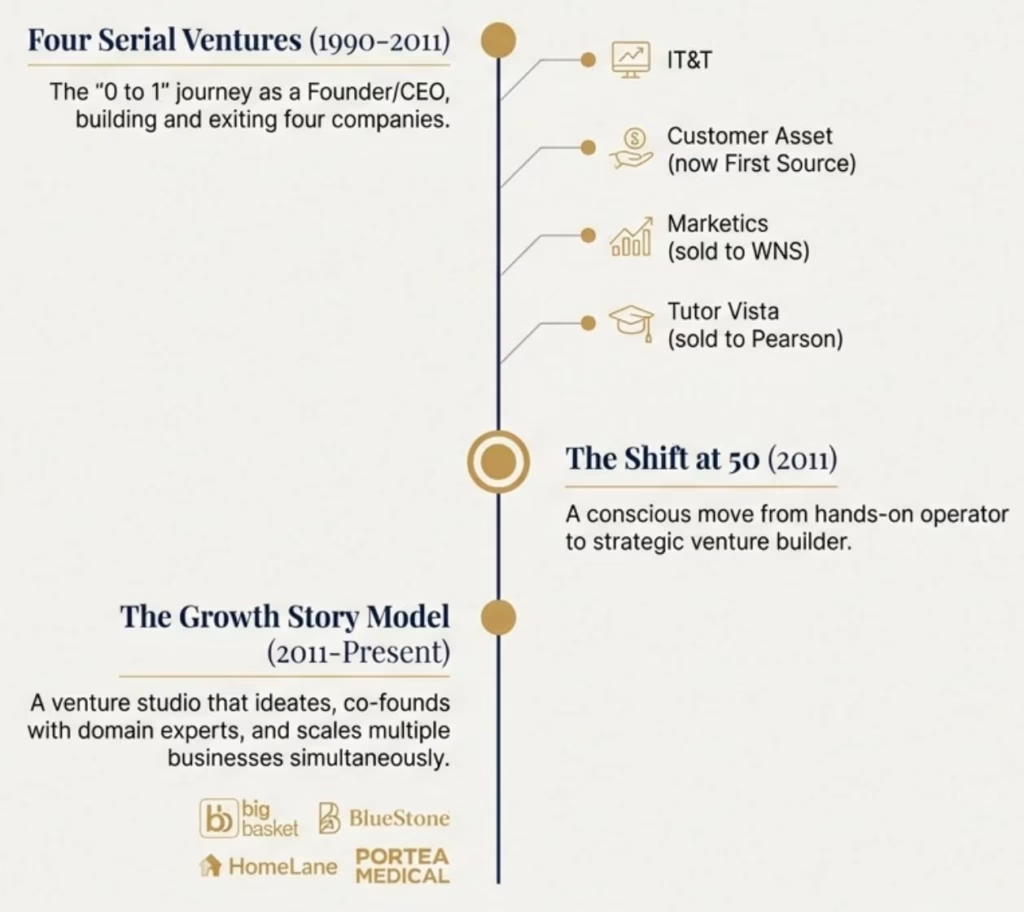
- Built and exited companies like IT&T, CustomerAsset (now Firstsource), Marketics (sold to WNS), and TutorVista (sold to Pearson)
- Helped build brands like BigBasket, Bluestone, Portea Medical, HomeLane, and FreshMenu through GrowthStory
- Played a hands-on role somewhere between a founder and an investor, especially in the messy early stages
What I really appreciate is that he openly talks about experiments that failed, pilots that didn’t work, and ideas that never took off. That honesty shows up strongly in the book too.
Why Does This Book Stand Out?
I went in expecting a typical strategy book, some frameworks, a few case studies, and familiar startup stories. What I got instead felt more like a structured course on how modern businesses are actually built and scaled.
A few things stood out immediately:
Disruption isn’t treated like a buzzword. Ganesh breaks it down into real business models: linear businesses, product-led growth, platforms, marketplaces, and explains how each one works economically.
The language is simple, but the thinking is deep. You don’t need an MBA to follow it, but even if you teach this stuff (like I do), you’ll find yourself pausing and re-reading lines.
It sits right between theory and execution. Exactly how Ganesh speaks in real life.
If you’ve ever looked at companies like BigBasket, Uber, or Dropbox and wondered, “There has to be a method behind this”, this book lays that method out clearly.
What are the different Business Models?
One section that really sharpened my thinking was around business models.
Ganesh explains the difference between:
- Pipeline (linear) businesses, where value flows step by step
- Platform businesses, where the company enables two sides to interact
- Product-led models, where the product itself drives adoption and growth
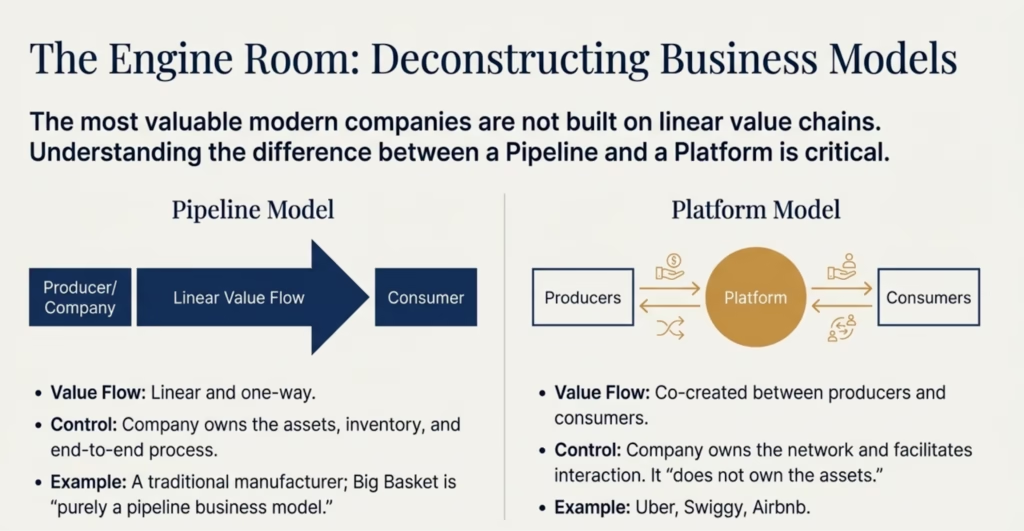
What made this powerful was how practical it felt.
Pipeline models give you control. Platform models give you scale. Some industries, like healthcare, need tighter control. Others, like mobility or food delivery, thrive on platforms. And then there are hybrids—like Amazon—which combine both.
Since reading this, I’ve found myself automatically using this lens when looking at startups or client businesses. It makes strategy conversations sharper almost instantly.
What I Liked Most?
If I had to pick one chapter that truly stayed with me, it’s the one on metrics and KPIs.
Here, Ganesh dives into the importance of metrics and why every disruptive business must obsess over data and KPIs.
We live in a world full of vanity metrics, follower counts, and inflated top-line numbers. Ganesh cuts straight through that noise and asks a simple question: What should you actually measure if you want to build a real, scalable business?
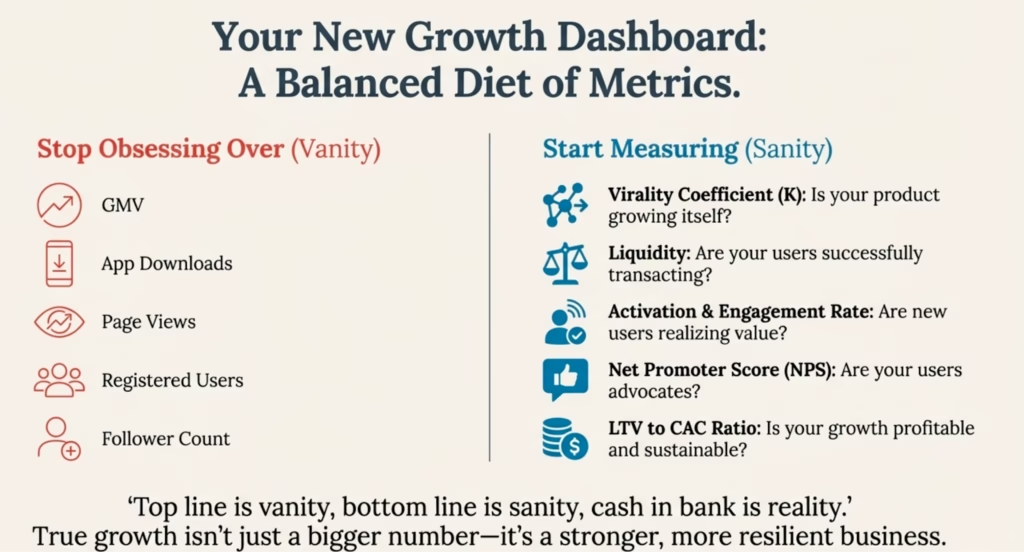
Two ideas really stood out:
- First, his insistence on metrics that reflect real health, not optics, unit economics, retention, repeat usage.
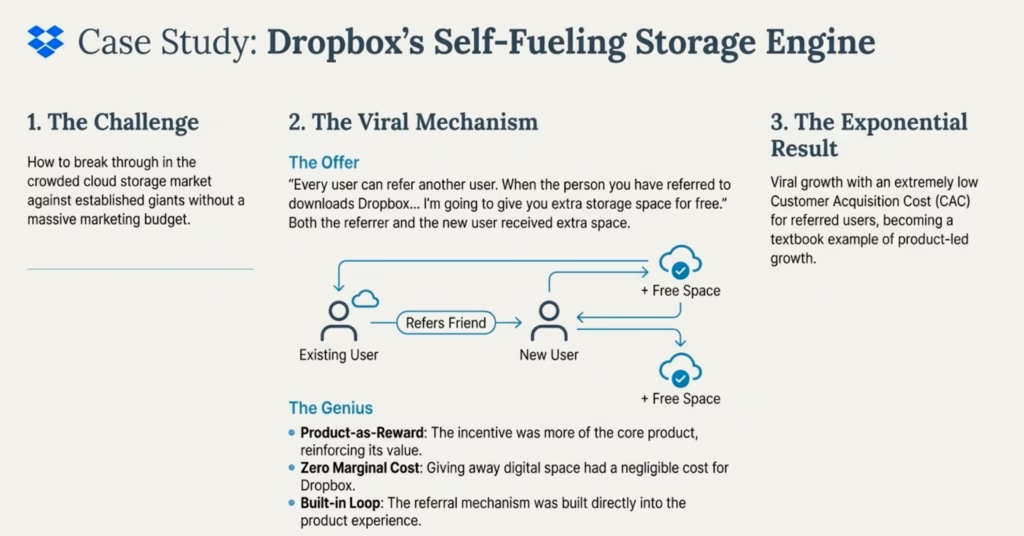
- Second, the idea of the Virality Quotient. The Dropbox example: where each user brought in more than two additional users…explains its explosive growth far better than any “growth hack” story.
This chapter alone is worth the price of the book, especially if you work in growth, analytics, or marketing.
My Biggest Learnings
This wasn’t just an interesting read. It actually changed how I approach my work.
Two things I am already taking forward:
- Understanding Business Models Better
Whether consulting for startups or teaching students, I now consciously use business model thinking: pipeline, platform, product-led, in almost every strategy conversation. It sharpens the conversation around strategy.
- Implementing KPI Frameworks
I’ve also become far more disciplined about KPIs. Big numbers don’t excite me anymore unless they’re backed by retention, cohorts, and a clear path to profitability. These are not generic vanity numbers but actionable metrics that define success or failure.
Having met Ganesh in person and then seeing the same clarity reflected on paper made the experience even stronger.
Who Should Read This Book?
Honestly? Almost anyone serious about business.
But especially:
- Founders trying to figure out how to scale
- Corporate leaders navigating digital or omnichannel change
- Students who want to understand how modern businesses actually work
- Marketers and growth professionals who care about real metrics, not vanity
The writing is simple, the examples are familiar, and many are Indian, which makes it even more relatable.
Final Verdict
On my personal scale, Mastering Disruption is a solid 10/10.
I rarely finish business books this quickly. And I almost never go back to my highlights again and again. This book made me do both.
If I had to sum it up in one simple line, it would be this:
Mastering Disruption shows that behind every “overnight success” is a clear business model and an obsession with the right data.
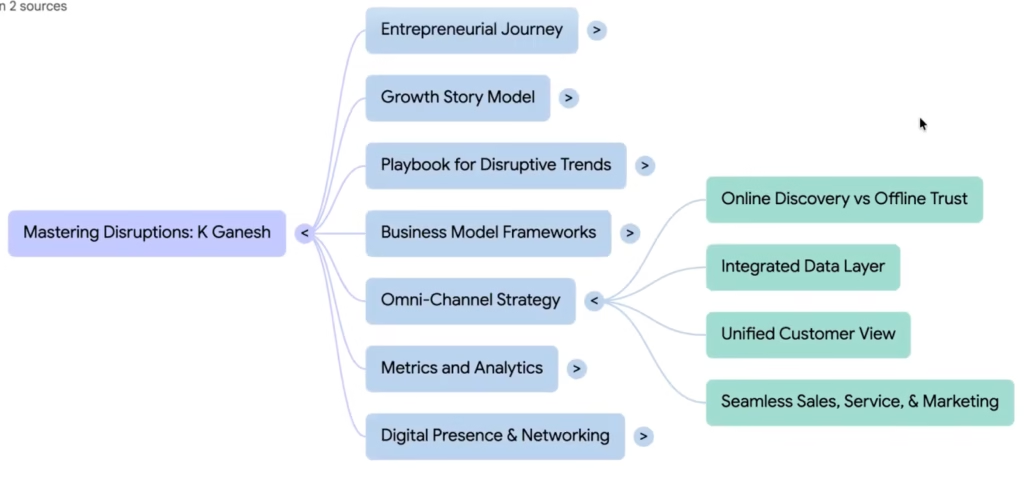
What made the experience even more special for me was that I later had the chance to invite Ganesh to our Dilse Omni podcast. We had a wide-ranging conversation about omnichannel, modern businesses, scaling models, and how founders should really think about growth today.
For me, the book strengthened something I strongly believe in: structured thinking matters even more in an unstructured world.
For you, it might spark a new startup idea. It might help you rethink your company’s growth levers. Or it might simply push you to take your business metrics more seriously.
Either way, it’s absolutely worth the read.
If you’d like to discuss how we can help enhance and optimize your Omnichannel and growth marketing strategies, we’d be happy to set up a consultation call. Feel free to reach out to us at alibha@daiom.in
For more informative content and blog, follow and stay tuned to DAiOM.
Subscribe to our NEWSLETTER!