

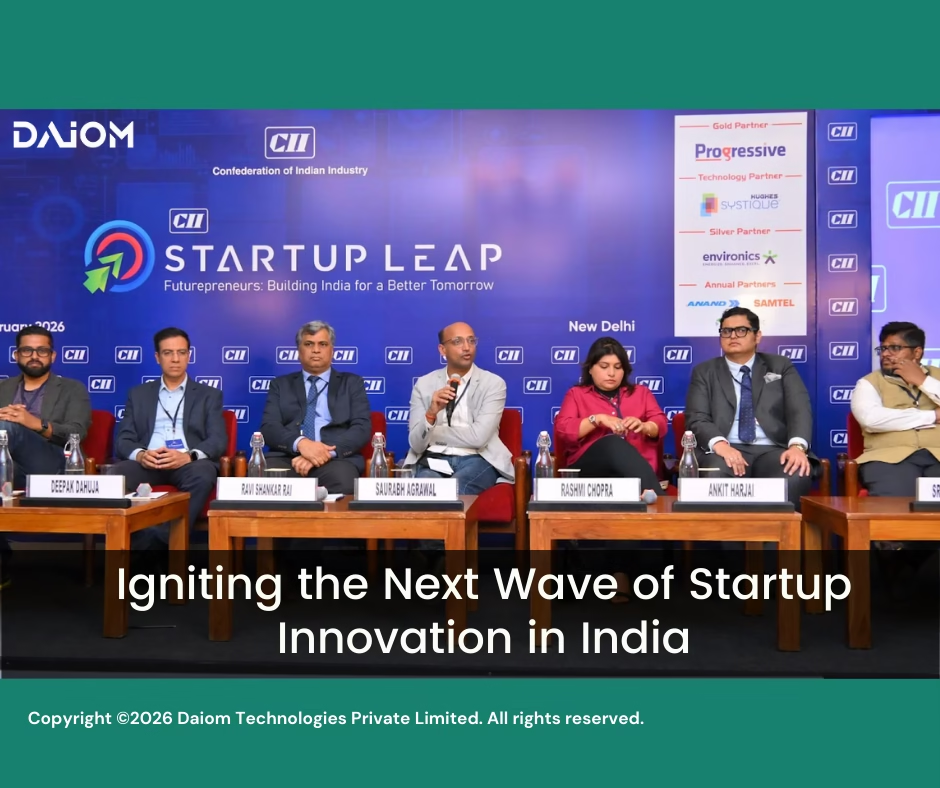
India’s startup story has never just been about ideas but it’s about resilience, reinvention, and the ability to execute when things get tough.
India reached over 200,000 recognized startups by December 2025, marking a 31% year-on-year growth.
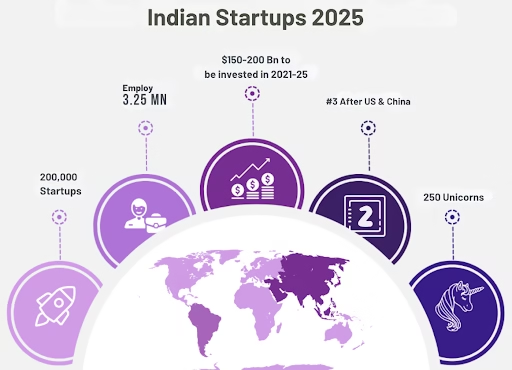
From the early e-commerce and fintech wave to today’s deep tech, drones, and AI-led industries, we’re clearly entering a new chapter.
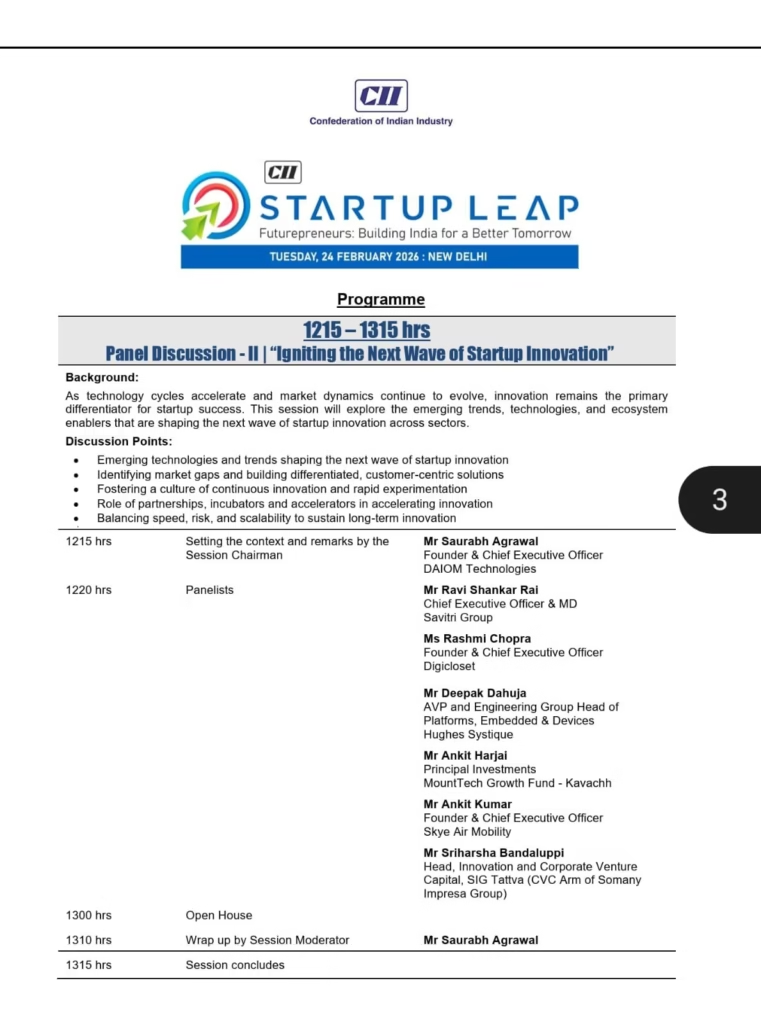
And that shift was very visible at CII (Confederation of Indian Industry) Startup Leap 2026.
The Confederation of Indian Industry (CII) works to foster an environment that supports India’s development by bringing together industry, government, and civil society through structured advisory and consultative platforms.
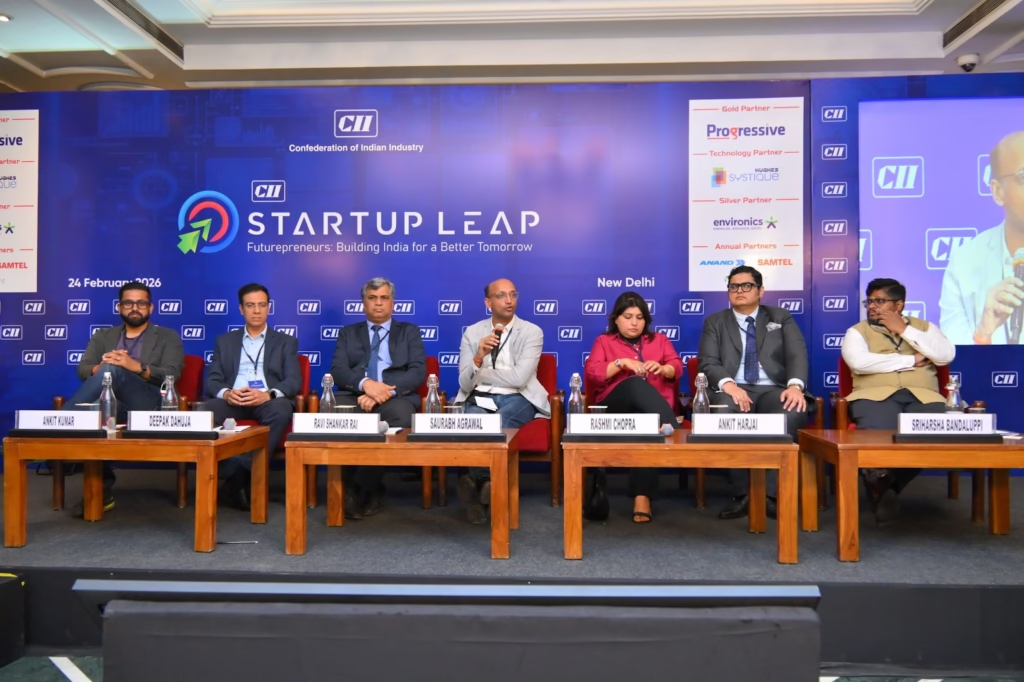
Held at the India Habitat Centre in Delhi, the event brought together founders, investors, and corporate leaders to talk about one big theme:
What does the next wave of Indian innovation really look like?
What was the discussion about?
I had the opportunity to moderate a panel featuring leaders across defense, fashion, logistics, deep tech, and venture capital.
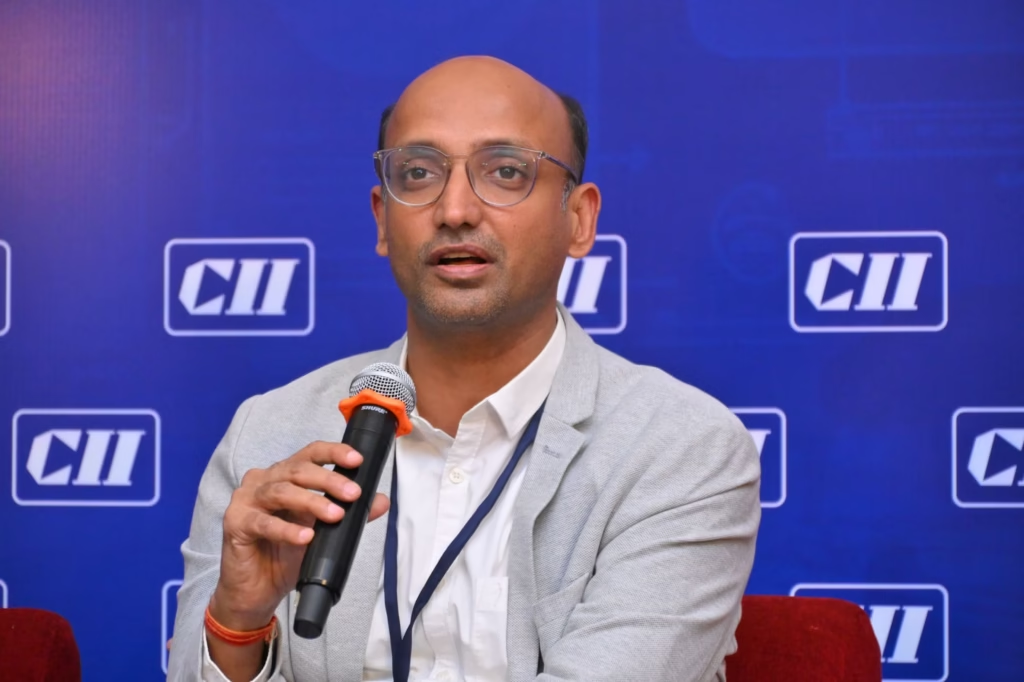
Here are a few reflections from the conversation:
- D2C Is Growing Up
The earlier focus was speed and visibility but now the conversation is about unit economics, supply chains, and sustainable profitability.
Founders are asking: “How do we build businesses that last?”
- Drones Are Moving From Vision to Reality
Drone-enabled delivery models are starting to reshape healthcare, agriculture, and infrastructure and Logistics innovation is no longer theoretical.
The ecosystem, especially regulation..is finally catching up to ambition.
- Deep Tech Requires Collaboration
Whether it’s chip design, AI manufacturing, or next-gen engineering, deep tech can’t scale in isolation. It needs startups, corporates, academia, and policy alignment working together.
- Defense and Aviation
The rise of startups in defense and aviation sectors require long-term commitment, regulatory alignment, patience, and extreme precision to build meaningful impact.
- The transformation of traditional industries
This is where innovation is less about disruption and more about generating employment, solving real operational problems, and creating sustainable value.
Corporate VC arms and innovation teams are now partnering with startups, not competing with them as It’s less about disruption and more about modernization.
A Question That Sparked Honest Answers
At the end, I asked each speaker:
“What’s one mistake founders must avoid?”
Some answers that stayed with me:
- Build 𝗿𝗲𝘀𝗶𝗹𝗶𝗲𝗻𝗰𝗲 because cycles will test you.
- Solve 𝗰𝘂𝘀𝘁𝗼𝗺𝗲𝗿 𝗽𝗿𝗼𝗯𝗹𝗲𝗺𝘀, not just exciting tech problems.
- Raise 𝗰𝗮𝗽𝗶𝘁𝗮𝗹 𝗮𝘁 𝘁𝗵𝗲 𝗿𝗶𝗴𝗵𝘁 𝘁𝗶𝗺𝗲, neither too early nor too late.
- Do not build in isolation; partner with academia, corporates, and VCs.
- Choose 𝗺𝗲𝗻𝘁𝗼𝗿𝘀 and early team members very wisely.
- Do not chase valuation; focus on 𝗰𝗿𝗲𝗮𝘁𝗶𝗻𝗴 𝗿𝗲𝗮𝗹 𝘃𝗮𝗹𝘂𝗲.
The Key Takeaways?
If I had to summarize the energy in the room, it felt like we are shifting from “move fast and break things” to “build right and scale responsibly.” Startups are thinking like real businesses, corporations are thinking like innovators, and investors are showing up as long-term partners. That’s a strong and healthy place for any ecosystem to be.
I’m grateful to CII and Deepak Sidha for organizing such a thoughtful forum and for the opportunity to moderate a discussion that reinforced an important idea:
The future isn’t being built in silos, it’s being built in synergy.
Hosting the event at the India Habitat Centre made it even more special. It’s one of Delhi’s most iconic spaces for business and intellectual exchange, and yes, even a backdrop for some memorable films. It felt like the perfect setting for a conversation about India’s next wave of innovation.
For more insights and updates on the latest trends, follow DAiOM!
Subscribe to our Newsletter!