

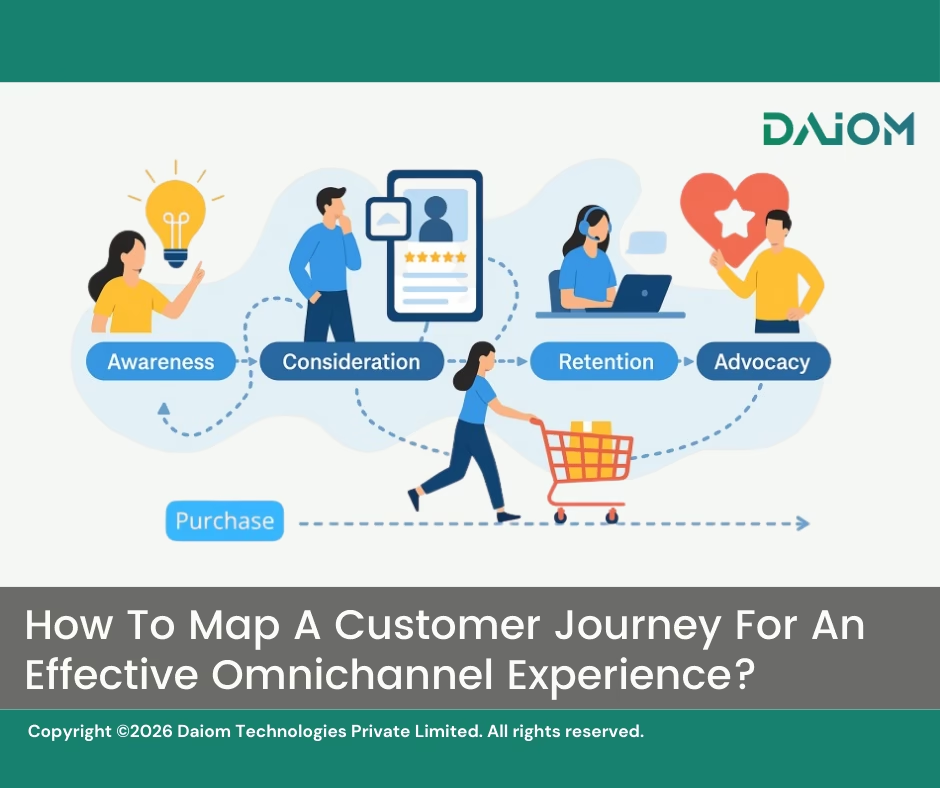
Today, marketers are working with a full-funnel approach, and customer touchpoints have increased significantly. The key decision is which touchpoints to influence and at what stage.
To make this decision effectively, strong customer data mapping becomes critical. In some parts of the journey, we get first-party data, while in others, we rely on aggregated data.
Understanding this difference is very important.
This is where customer journey mapping plays a key role in driving omnichannel growth. If you want to influence the customer, you first need to understand their journey clearly.
Also read: Importance of 1st Party Data and Organic Ways to Build it
At the same time, different customers may follow different paths before making a decision. There is no single fixed journey.
That is why continuously tracking, analysing, and refining these journeys becomes important to stay relevant and drive better outcomes.
This blog aims to help brands understand how to map and simplify these complex omnichannel journeys, so every customer interaction becomes more connected, and impactful.
“Customers don’t compare you to your competitors anymore. They compare you to the best experience they’ve ever had.”
Shep Hyken
Table of Contents
1. ZMOT and Touchpoint Mapping Across Customer Personas
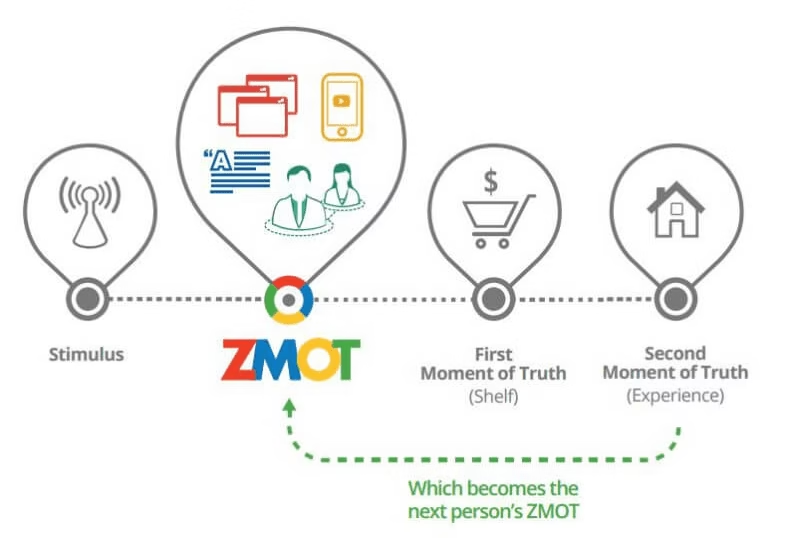
Today, a customer’s journey doesn’t start in your store, it starts online. This is where the Zero Moment of Truth (ZMOT) comes in.
It refers to the moment when a customer researches a product before making a decision. It is that critical stage where customers actively research, compare, and form opinions about a product or brand before making a decision. This is the moment where influence actually happens.
“There are 900+ million internet users, and 93% of buyers now research online, 67% trust reviews over ads, and 77% prefer brands with both online and offline presence.”
Today, ZMOT does not happen on just one channel. It can happen through Google search, social media content, reviews, influencer videos, or even peer recommendations.
This makes it essential for brands to identify and be present at the right touchpoints during this phase.
At the same time, it is important to understand that different customer personas behave differently. Each persona may discover, evaluate, and decide through completely different journeys.
For example, one customer might rely heavily on Instagram and influencer content, while another may depend more on reviews and comparison websites.
Because of this, mapping all touchpoints across different customer personas becomes critical. Brands need to identify where each persona is spending time, what influences their decisions, and which channels play a key role at each stage of the journey.
When you combine ZMOT thinking with detailed touchpoint mapping, it allows brands to influence customers more effectively, create more relevant experiences, and ultimately drive better omnichannel growth.
2. Why Every Brand Needs Customer Journey Mapping?
Customer journey mapping is a way to truly understand how customers experience a brand at every step.
Today, customers interact with a brand through multiple touchpoints and that’s where customer journey mapping becomes key.
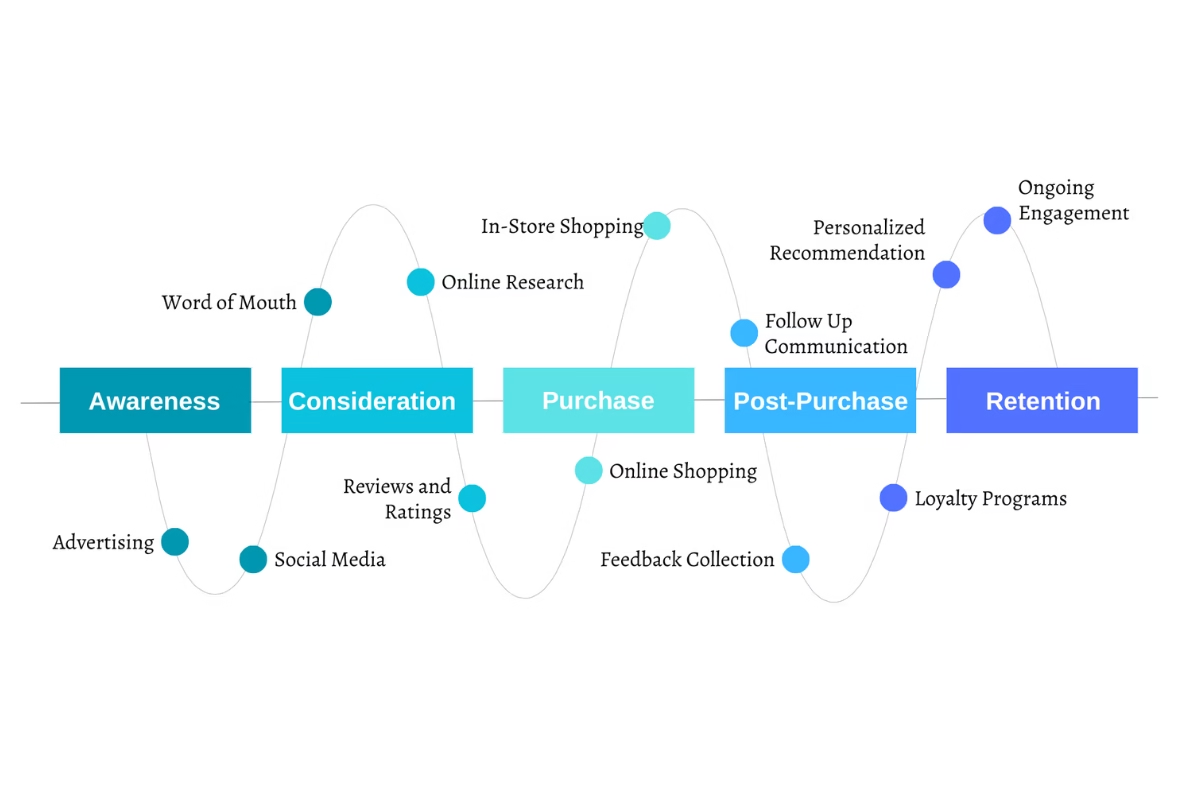
They might discover you on social media, explore your website, compare options through review and ratings, and then finally make a purchase, sometimes online and sometimes in-store.
Because of this, their expectations have also evolved. They expect a smooth, connected, and personalized experience across every channel, no matter the size of the business.
This is why customer journey mapping has become essential for both large enterprises and growing SMEs.
It helps a brand step into their customer’s shoes and see a brand the way they do, what works, what confuses them, and where they drop off.
One of the biggest advantages of mapping the journey is personalization.
When a brand clearly understands how different customers interact with their brand, you can personalise communication, recommendations, and experiences to match their needs at every touchpoint.
Beyond personalization, customer journey mapping brings structure and clarity to your entire customer experience strategy. It helps you:
- Improve the onboarding process by identifying friction points early
- Compare the experience you intend to deliver with what customers actually receive
- Understand how different buyer personas behave across the funnel
- Create a more logical, seamless flow from discovery to conversion
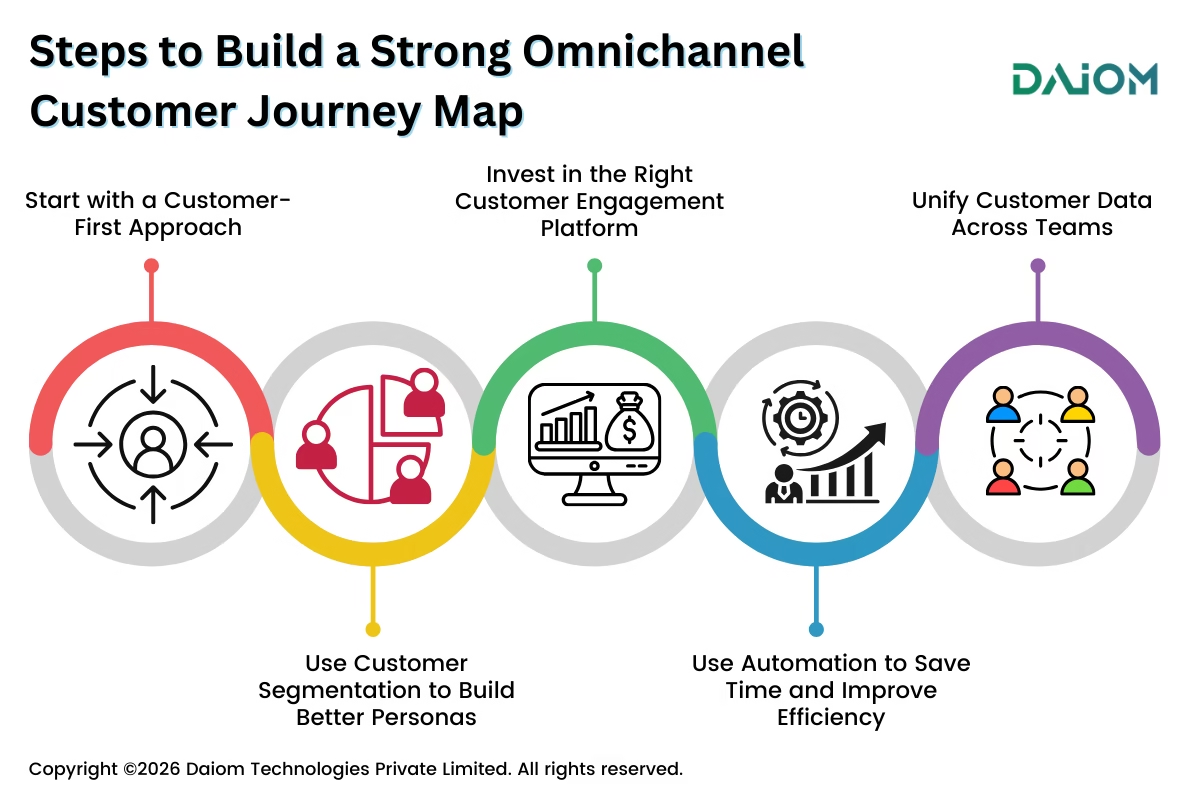
3. How to Build an Effective Omnichannel Customer Journey Map?
To meet today’s customer expectations, brands need to create seamless omnichannel journeys that feel consistent and connected across both online and offline touchpoints.
Read more – Bridging Online and Offline: The Omnichannel Approach
Here are some practical ways to create and manage a customer journey map that truly reflects how customers interact with your brand, services, and products.
3.1. Start with a Customer-First Approach
When creating a customer journey map, focus on how customers actually behave, not how you expect them to behave. Avoid building an ideal or perfect version of the journey.
Consider key questions like:
- Where do customers first discover your brand?
- What questions do they have?
- What problems might they face?
- Which channels do they move to next?
Understanding their real actions, thoughts, and challenges will help you build a journey map that works in real life.
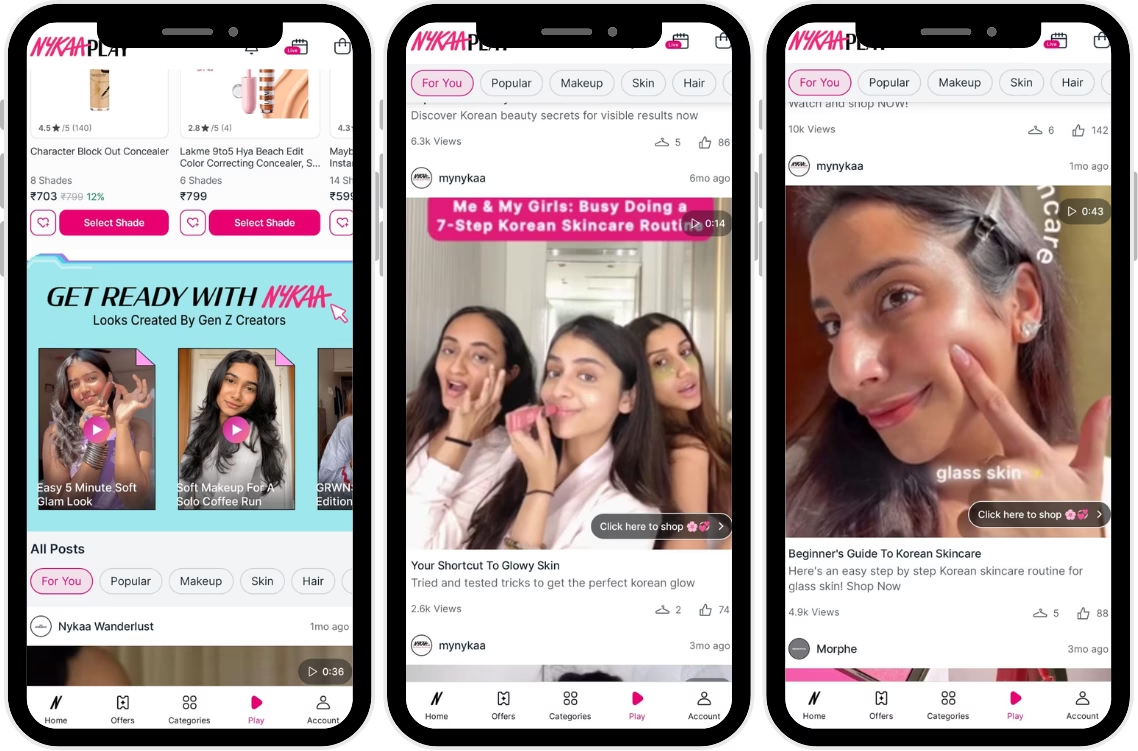
Example: Nykaa understands that many customers first discover products through Instagram or influencer content. They then move to the app or website to read reviews and watch tutorials before purchasing.
By mapping this real behavior, Nykaa ensures that detailed product pages, reviews, and video content are easily accessible across channels like app, website and stores.
3.2. Use Customer Segmentation to Build Better Personas
Not all customers are the same, so your journey maps should not be the same either.
Customer segmentation helps you group customers based on their behavior, preferences, and needs. This allows you to create journey maps that are relevant to each group.
Read more – Cohort Vs. Segment: Are Brands Using These Terms Correctly?
When you understand what drives each segment, you can guide them better towards the desired action, whether it is a purchase, sign-up, or engagement.
3.3. Invest in the Right Customer Engagement Platform
Using multiple martech tools that do not connect with each other can create confusion and inefficiencies.
Instead, invest in a customer engagement platform that brings everything together in one place. This includes customer data, campaign performance, and journey insights.
With all data in one system, it becomes easier to segment customers, test different strategies, and improve the overall journey based on real results.
Example: Reliance Retail integrates data across its online platforms like JioMart and offline stores. This allows them to track customer purchases, preferences, and engagement in one place, helping them deliver a more connected experience across channels.
3.4. Use Automation to Save Time and Improve Efficiency
Managing every step of the customer journey manually can be complex and time-consuming.
This is where marketing automation helps. You can automate actions like sending messages, follow-ups, and recommendations based on customer behavior.
Automation not only saves time but also ensures that customers receive timely and consistent communication across all channels.
Example: Zomato uses automation to send real-time notifications, order updates, personalized offers, and re-engagement messages based on user activity.
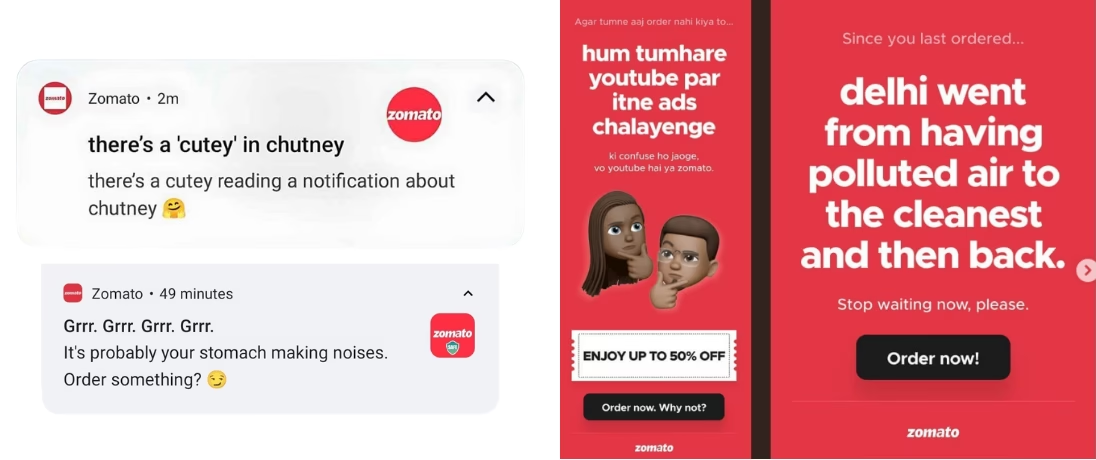
This keeps customers informed and engaged without manual effort.
3.5. Unify Customer Data Across Teams
In many companies, different teams manage their own data separately. While this may be convenient, it creates gaps in the overall customer experience.
To deliver a smooth omnichannel experience, teams need to work together and share data. Marketing, sales, and support teams should collaborate and use the same customer insights.
When data is unified, teams can clearly identify customer pain points and improve the journey together. This also helps create more accurate journey maps, especially since customer journeys today are not linear.
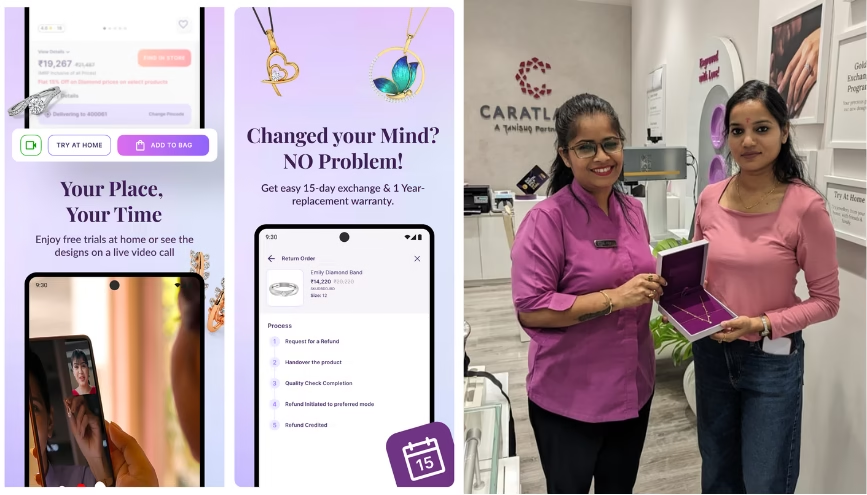
Example: Caratlane ensures that customer data from in-store purchases, app activity, and loyalty programs is connected.
So if a customer browses products online and later visits a store, the staff can assist them better with relevant recommendations.
“Your most unhappy customers are your greatest source of learning.”
Bill Gates
4. How Can You Use Data and Tools to Track the Customer Journey?
To truly understand your customer journey, you need the right tools and data.
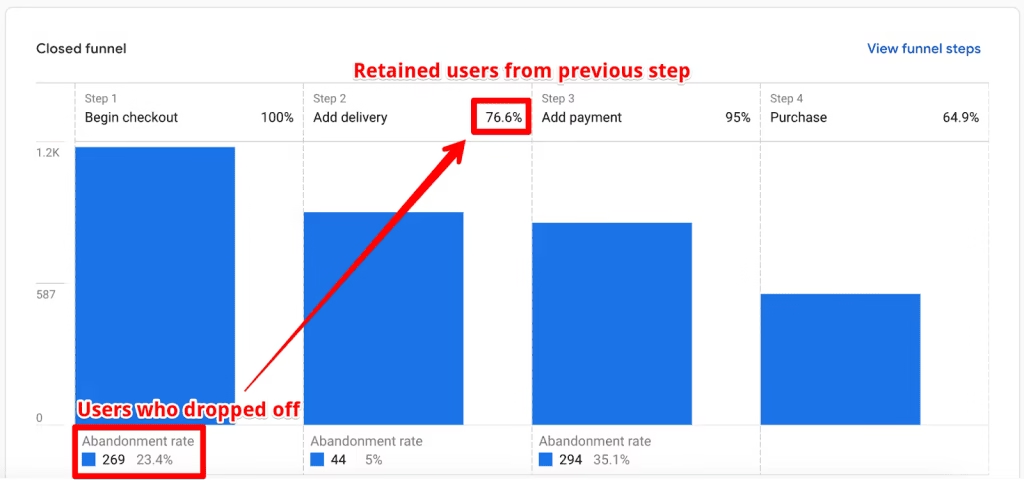
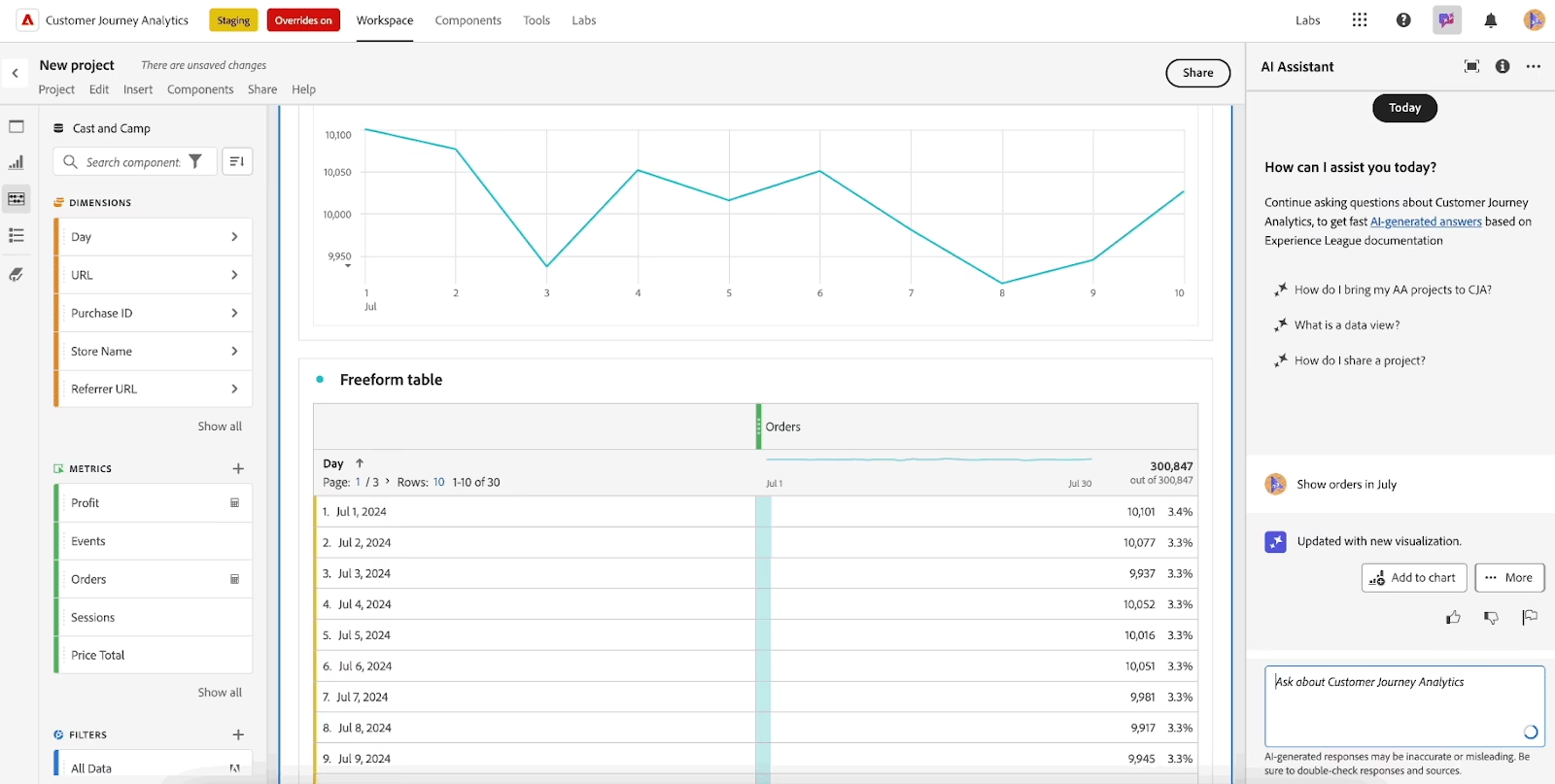
Platforms like Google Analytics and Adobe Analytics help track how users interact with your website and app, where they come from, what they click, and where they drop off.
Google Analytics: Helps track how users find your website or app, which pages they visit, how long they stay, and what actions they take.
It highlights traffic sources, user behavior, and drop-off points, helping you understand what’s working and where you need to improve the customer journey.
Adobe Analytics: Provides deeper insights into customer behavior across multiple channels, including web, app, and offline interactions.
It helps analyze complex journeys, measure campaign performance, and understand attribution, enabling brands to make data-driven decisions and deliver more personalized, consistent experiences across touchpoints.
On the other hand, attribution tools go a step further by showing which channels actually contribute to conversions.
Read more: Mastering Marketing Attribution: A Guide to Optimizing Your Campaigns
But digital data alone is not enough.
Businesses also need to consider offline interactions like store visits, footfall, and in-store behavior. Combining this with first-party data (like purchase history and customer preferences) gives a complete view of the customer journey.
When all this data comes together, brands can make better decisions, improve experiences, and drive higher conversions.
5. Conclusion
When you’re dealing with multiple buyer personas and different journeys, mapping everything manually can quickly become time-consuming. And even after building those maps, the real challenge is delivering a personalized experience across all channels.
That’s where the right technology makes all the difference.
At DAiOM, we help businesses simplify this entire process. By combining smart automation with a clear understanding of omnichannel customer behavior, brands can deliver more relevant, seamless experiences, without the complexity.
If you’d like to discuss how we can help optimize your Omnichannel Marketing strategies, feel free to reach out to us at alibha@daiom.in
For more insights and updates on the latest trends, follow DAiOM!
Subscribe to our Newsletter!