

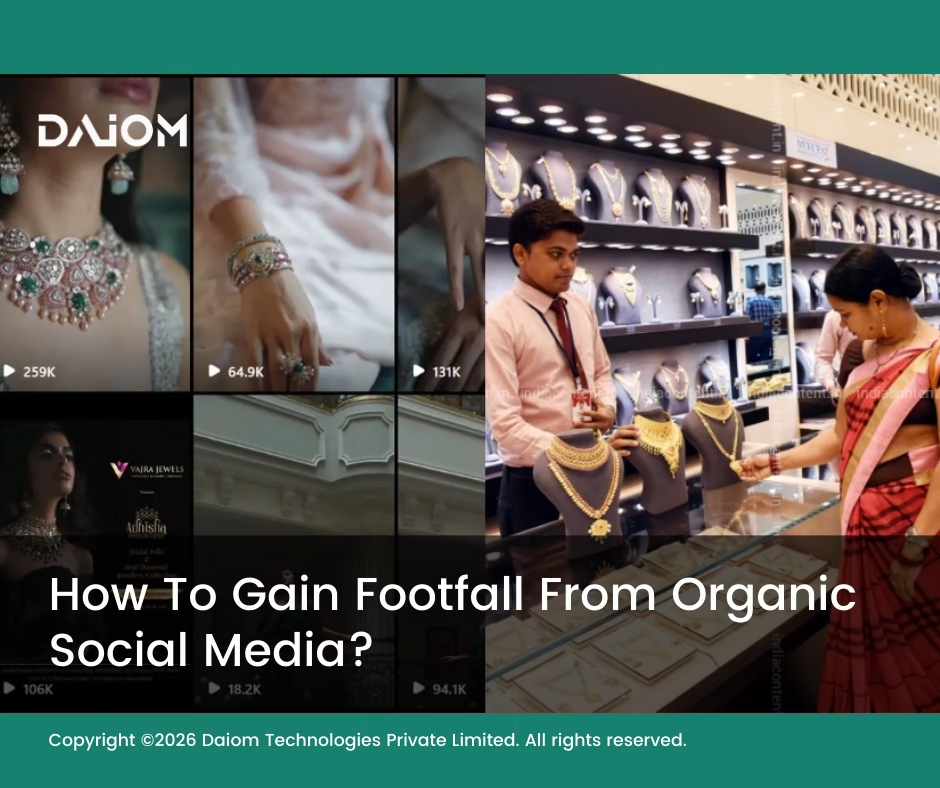
Omnichannel is something almost every brand is doing today. A large part of the marketing budget now goes into social media, and a major share of that spend is concentrated on platforms like Meta and TikTok.
Meta’s platforms (Facebook and Instagram) hold the largest share with around 42 % of total social media ad spend, followed by TikTok at roughly 18 %, and YouTube at about 15 %
While many online-first brands focus on online-to-online conversions, most brands today also operate offline stores.
This makes one question critical: how do you turn online attention into offline store footfall?
This is where many brands struggle.
Consumers today spend nearly 2.5 hours a day on social media, constantly discovering products and brands.
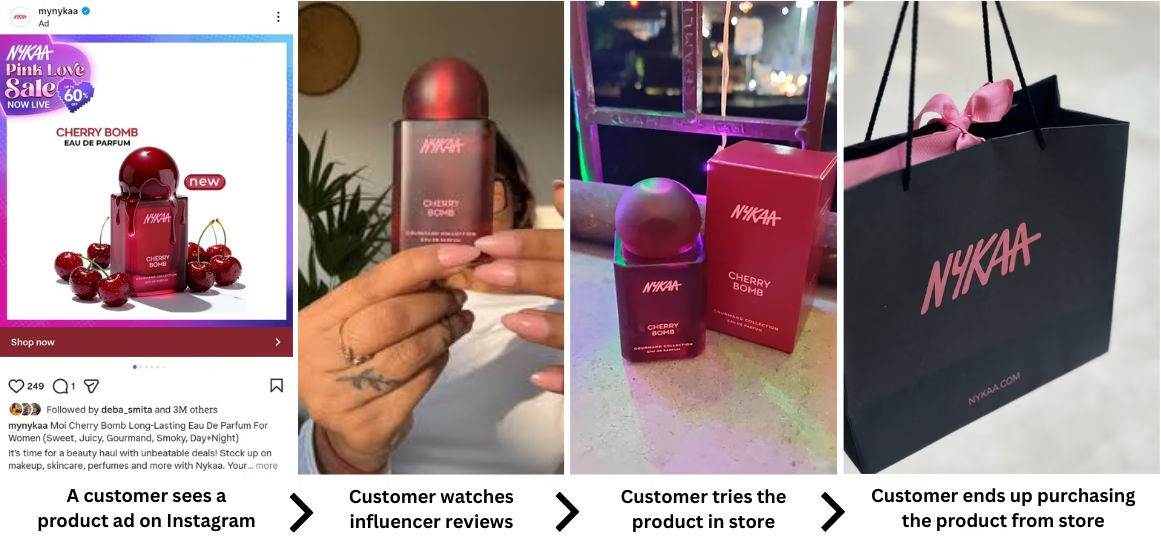
The real challenge is turning online attention into store visits.
In this blog, we explore how to influence these high-intent, highly engaged users to move from watching and scrolling on social platforms to actually visiting your physical store.
Also Read – Bridging Online and Offline: The Omnichannel Approach
Table of Contents
1. Why is it important for customers to go to the store?
For omnichannel brands, driving online traffic is relatively easy with paid ads and social media campaigns. However, getting customers to walk into a physical store is much harder.
Store visits are influenced by multiple factors such as marketing communication, local visibility, offers, convenience, and the overall in-store experience.
Unlike online traffic, offline footfall has a direct impact on revenue, average order value, and long-term customer relationships.
Customers who visit stores can experience products firsthand, get personalised assistance, and build stronger trust with the brand. This often leads to higher conversion rates and better customer loyalty.
Also Read – 3 ways to improve your Conversion Rate
This is why driving store traffic is not just a marketing goal, but a core business priority for omnichannel brands looking to grow sustainably across both digital and physical channels.
This is exactly where the recent Dilse Omni Podcast episode with Sasha Keneivonuo adds valuable perspective.
In this podcast, Sasha Keneivonuo outlines a simple three-step framework to optimise store traffic from social media.
2. What categories is this strategy applicable to?
The “social to store” approach is not limited to one specific industry. It applies to any category where customers benefit from physical interaction, consultation, or trust-building before making a purchase.
This includes categories such as edtech, jewellery, eyewear, and sleep solutions, where customers often prefer in-person demos, trials, fittings, or expert guidance.
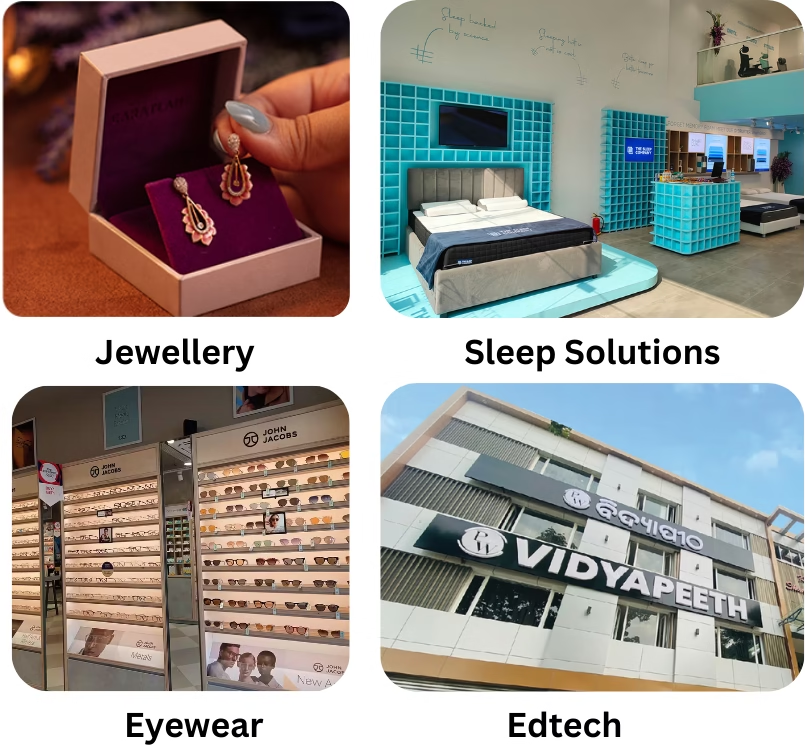
However, the same principles can be extended to other retail and service-led categories that operate across online and offline touchpoints.
If your brand has physical locations and your customers need reassurance, experience, or consultation before buying, this strategy can help convert online discovery into real-world store visits.
3. 3 Steps to Optimise Store Traffic From Social Media
Driving traffic to a website is relatively easy, but converting social media attention into real store visits requires a more thoughtful and intentional strategy.
Here are the points to optimize store traffic from social media:
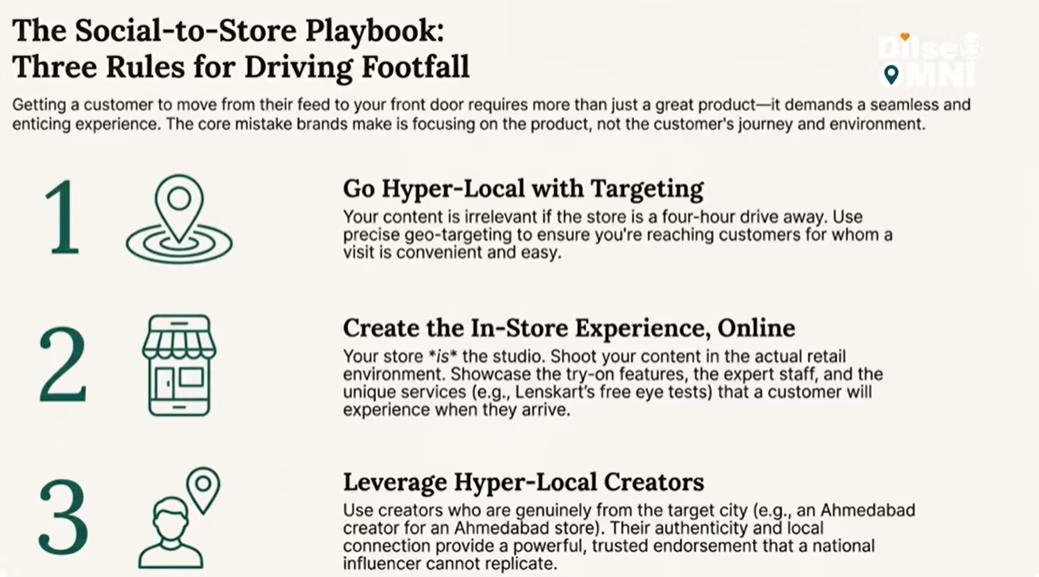
3.1 Go Hyper-Local With Geo Targeting
The most important north star for any social-to-store strategy is the customer.
Every brand wants people to walk into their store. But, that only happens when they respect one basic reality and that is convenience.
Even the best social media content will not convert into footfall if the store is physically too far away from the person seeing it. No one is going to watch a great reel and then drive four hours just to check out a store.
This is why geo-targeting is a must for offline-focused social media campaigns.
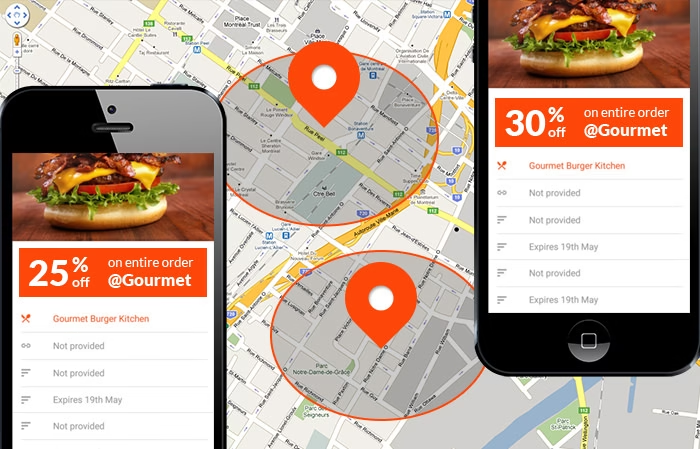
Brands must ensure their content reaches people who are located within a realistic distance from the store.
When ads, reels, and location-based content are shown to nearby audiences, brands remove friction from the journey. The store feels accessible, the visit feels easy, and the chance of walk-ins increases.
If the store is close by and the message reaches the right people, social media becomes a practical driver of footfall, not just a visibility channel.
Also read – Make It Easy to Find You: 5 Ways to Turn Search Into Footfall
3.2. Create the In-Store Experience, Online
If the objective is to drive customers into physical stores, the content must reflect the experience customers will have once they walk in.
This means social media content should not be limited to studio shoots or product-only visuals.
The store itself needs to become the brand’s primary content environment.
Customers should be able to see what the in-store experience feels like. Brand should answer these questions:
- What does space look like?
- What kind of service can customers expect?
- Is there a comfortable try-on experience?
- Are trained experts available at the store to answer questions and guide decisions?
When it comes to high-consideration purchases, reassurance plays a critical role. Small details make a big difference. Brands need to highlight added value available at the store, such as:
- Free consultations: In-store experts help customers make informed decisions with personalised guidance.
- Product trials: Customers can try products in person to assess fit, comfort, and quality before buying.
- Servicing: In-store servicing helps maintain products and builds long-term customer trust.
- Cleaning: Complimentary cleaning adds convenience and keeps products in good condition.
- Expert support: Trained staff provide reliable answers and confidence during high-consideration purchases.
For example, brands like Lenskart have successfully positioned their stores as useful destinations by promoting services such as free eye tests and basic eye care, making the store visit feel purposeful rather than purely transactional.

These reduce hesitation and give customers a clear reason to visit.
While studio visuals may make products look premium, they do little to help customers imagine the actual store environment. Customers are more likely to visit when they can visualise the experience at a nearby store and feel comfortable walking in.
A good example is The Souled Store, which regularly showcases real store exteriors and interiors on social media, helping customers visualise the in-store experience before visiting.
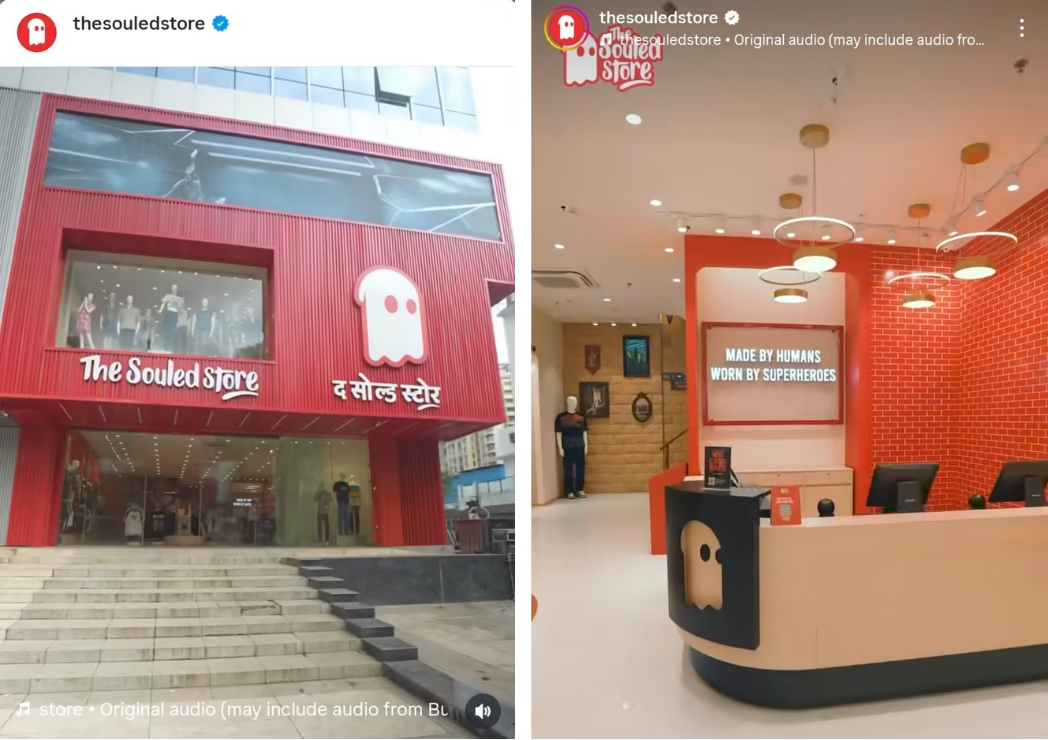
Brands need to place the customer at the centre of content creation, rather than focusing only on the message they want to communicate or how the product looks on camera. The focus needs to move towards showing the environment customers are being invited into.
3.3. Leverage Hyper-Local Creators
To drive footfall into a specific store, brands need to work with creators who are actually based in that city or neighbourhood.
If the goal is to bring customers to a store in Kolkata, the content must come from someone who understands Kolkata, speaks the local language, and reflects the culture of that location.
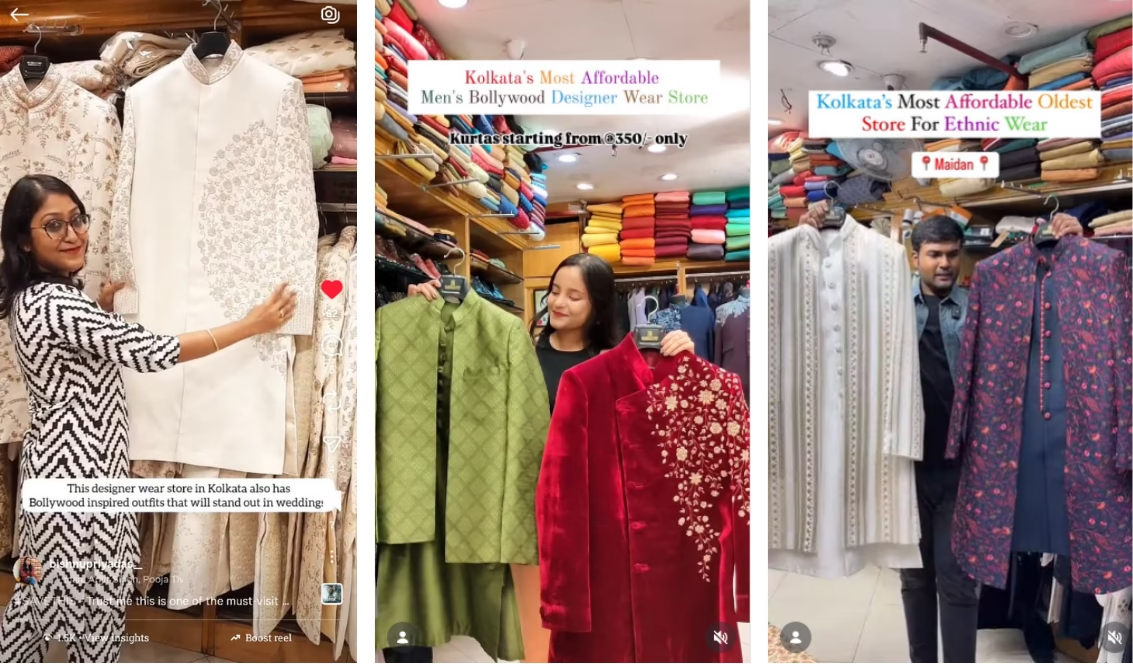
Using creators from other cities and dubbing content may look efficient, but it often feels disconnected and inauthentic. The local touch and familiarity get lost, which weakens the motivation to step into a physical store.
For brands with a large store network, there is also hidden creator potential within the store teams themselves.
Many store employees are already comfortable with social media and can bring real energy and credibility to content. When employees share the store environment, daily interactions, and customer experience, the content feels more genuine and relatable.
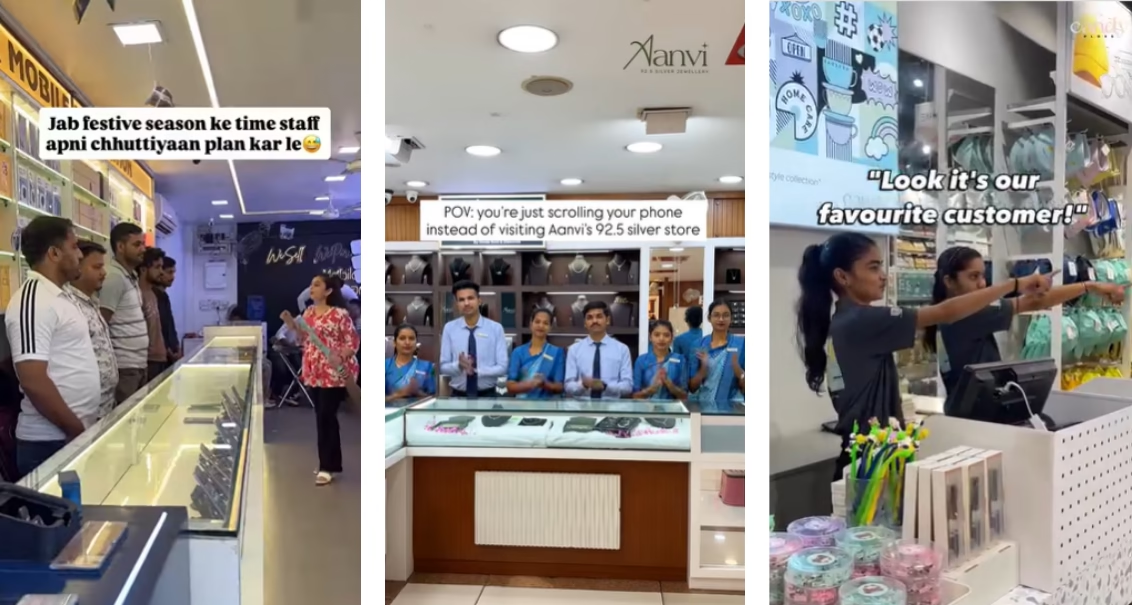
However, this approach works best when brands have strong brand foundations and clear content guidelines in place. Without clarity on brand voice, values, and tone, content created at scale can become inconsistent.
Brands need to invest in brand clarity first, and then empower local creators and employees to bring the in-store experience to life online.
4. Conclusion
Social media can no longer be treated as a channel for visibility alone. For brands with physical stores, its real value lies in its ability to influence offline behaviour and drive real-world action.
Footfall does not happen by accident. It is the result of deliberate choices: reaching the right local audiences, showcasing the real in-store experience, and using creators who reflect the local context and culture.
When brands stop optimising only for clicks and start designing content around how customers discover, evaluate, and experience the store, social media becomes a practical growth lever. The brands that win will be those that treat social media not as a digital showcase, but as a bridge that consistently brings customers from screens to store floors.
Watch the full podcast to hear more about the journey!
If you’re exploring ways to boost repeat purchases and increase customer visits, we’d love to chat. Let’s set up a consultation call. Feel free to reach out to us at aditi@daiom.in
For more informative content and blog, follow and stay tuned to DAiOM.
Subscribe to our NEWSLETTER!