


Social media today remains at the centre of almost every brand’s marketing strategy, with businesses allocating nearly 30–40% of their digital marketing budgets toward social platforms.
Consumers now spend an average of 2.5 hours daily on social media, making platforms like Instagram, YouTube, and LinkedIn critical spaces for discovery, engagement, and brand interaction.
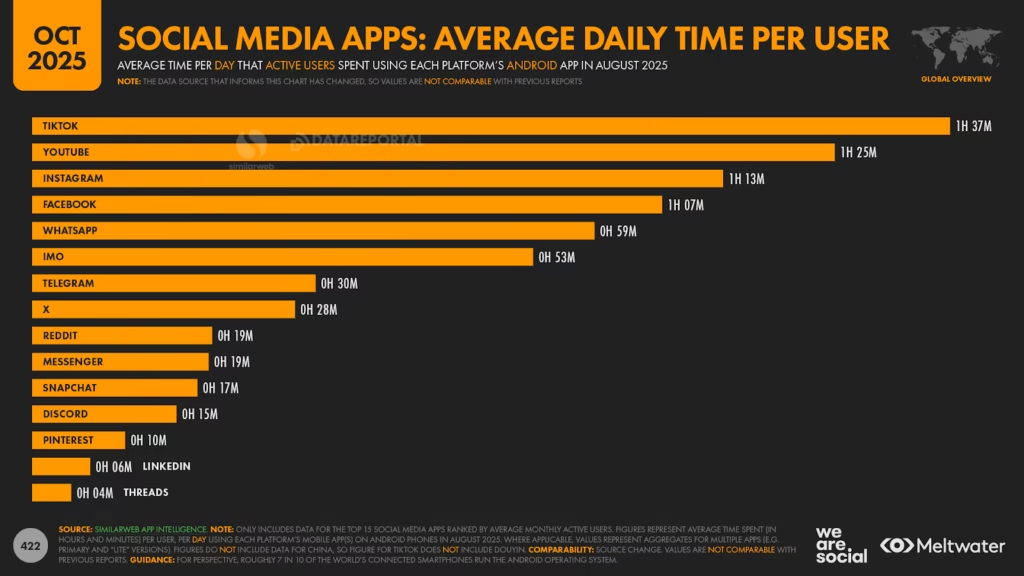
Marketing teams consistently invest time in creating content, collaborating with creators, running campaigns, and building online communities.
However, despite this growing investment and attention, one challenge continues to surface inside organisations — how do you clearly explain social media’s real business impact to management?
For many founders and business leaders, social media often feels difficult to measure.
While marketing teams talk about storytelling, engagement, or brand building, leadership teams are primarily focused on one thing that is business outcomes.
And most importantly, they want to understand how social media contributes to revenue.
This gap between marketing activity and business understanding is where many social media teams struggle.
In this blog, we explore a practical framework to help marketing teams clearly communicate social media performance to management, connecting content efforts directly to business growth.
Business leaders are not very interested in storytelling or brand narrative. What they are deeply interested in are the numbers.
Sasha Keneivonuo, Marketing Consultant
Table of Contents
1. Why Communicating Social Media Impact Is Challenging Today?
When communicating social media performance to management, it is important to understand how business leaders evaluate marketing efforts.
Most leadership teams are not primarily focused on storytelling or brand narratives. Their attention is directed toward measurable outcomes and business impact.
Business leaders are not very interested in storytelling or the brand narrative; what they are deeply interested in are the numbers.
This is why the most effective approach is to clearly connect marketing activity with results by drawing a direct and measurable line between social media efforts and business revenue.
2. Understanding The Social Media to Revenue Framework
The simplest way to communicate impact is to draw a clear connection between social media efforts and business revenue. Instead of presenting disconnected metrics, teams should highlight a logical journey, showing how social media activity gradually leads to measurable business outcomes.
This is exactly where the recent Dilse Omni Podcast episode with Sasha Keneivonuo adds valuable perspective.
In this podcast, Sasha Keneivonuo outlines a simple three-step Awareness – Intent – Conversion framework to optimise store traffic from social media.
This Awareness – Intent – Conversion framework makes it easier for management to see how social media actually contributes to business growth.
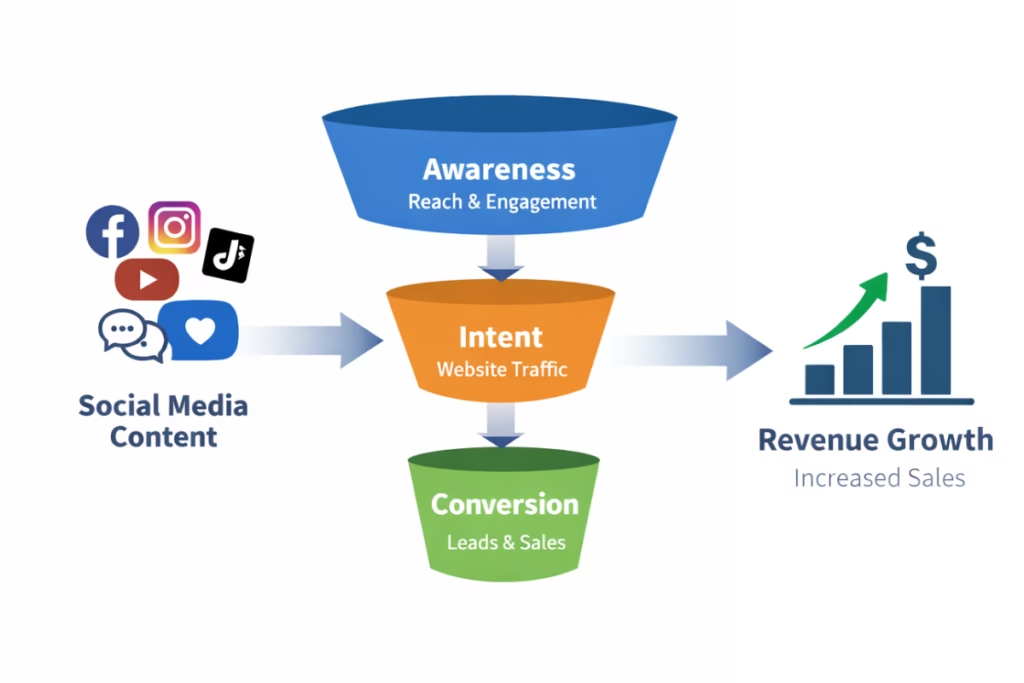
It explains how a customer first discovers a brand online, engages with its content, builds interest and trust over time, and eventually moves toward making a purchase.
Instead of viewing marketing efforts as separate activities, it connects each step to show how awareness gradually turns into real business results.
2.1 Awareness Helps in Creating Visibility
Every customer journey begins with awareness. This is the stage where people discover a brand for the first time. Social media platforms play a crucial role here by helping brands reach new audiences through reels, videos, creator collaborations, and organic content.
At this stage, key metrics include reach, impressions, follower growth, video views, and overall audience expansion.

Also Read: How Social Media Actually Drives Omnichannel Growth?
These indicators help measure how effectively a brand is increasing its visibility and attracting new potential customers.
For example, a user scrolling through Instagram may come across a reel showcasing a store launch in their city. Even if they do not take immediate action, the brand has successfully entered the customer’s consideration set, creating the first point of connection.
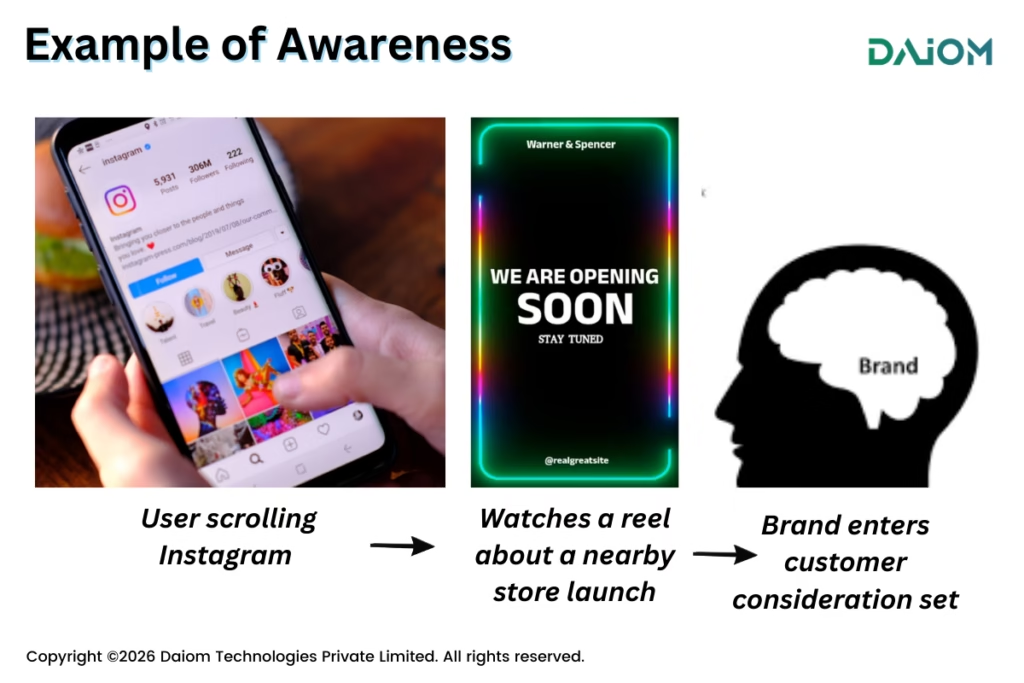
However, awareness alone does not drive business results. Simply being seen is not enough, this visibility must gradually encourage customers to take the next step toward engagement and action.
2.2 Intent Measures Customer Interest
The next step is intent. Intent indicates whether awareness is translating into genuine customer interest. One of the strongest signals of intent today is traffic generated from social media platforms.
For example:
- Instagram driving users to a website
- YouTube directing viewers to product pages
- Influencer campaigns generating landing page visits
- Social posts leading users to store locators
When customers move from scrolling to clicking, it signals curiosity and consideration.
For example, a user watches a product reel on Instagram and clicks on the website or store link to explore the product further, indicating genuine interest and showing that awareness has moved into intent.
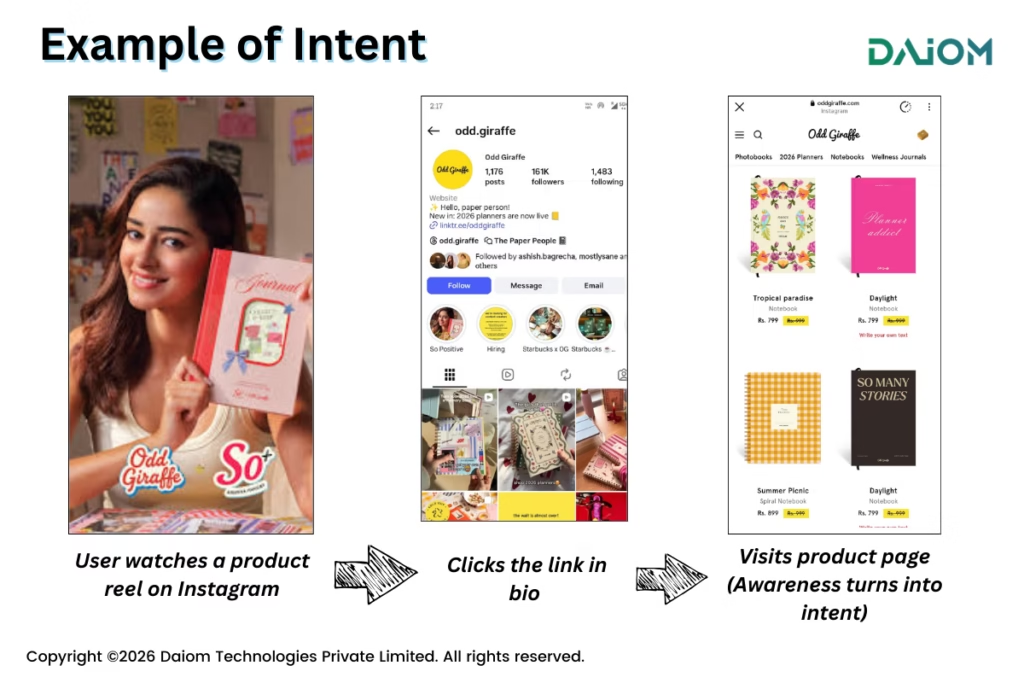
Social media-driven website traffic becomes a strong bridge between marketing activity and business outcomes.
It answers an important management question: “Are people taking action after seeing our content?”
2.3 Conversion Links to Business Outcomes
The final step is conversion. Once traffic increases, teams must analyse what happens next:
- Did website sales increase?
- Did store visits grow?
- Did inquiries or bookings rise?
- Did campaign-period revenue improve?
Mapping conversions during campaign timelines helps establish correlation between social media activity and sales performance.
A common real-world example can be observed when brands appear on platforms like Shark Tank.
During viral visibility periods, brands often experience immediate spikes in traffic and revenue.
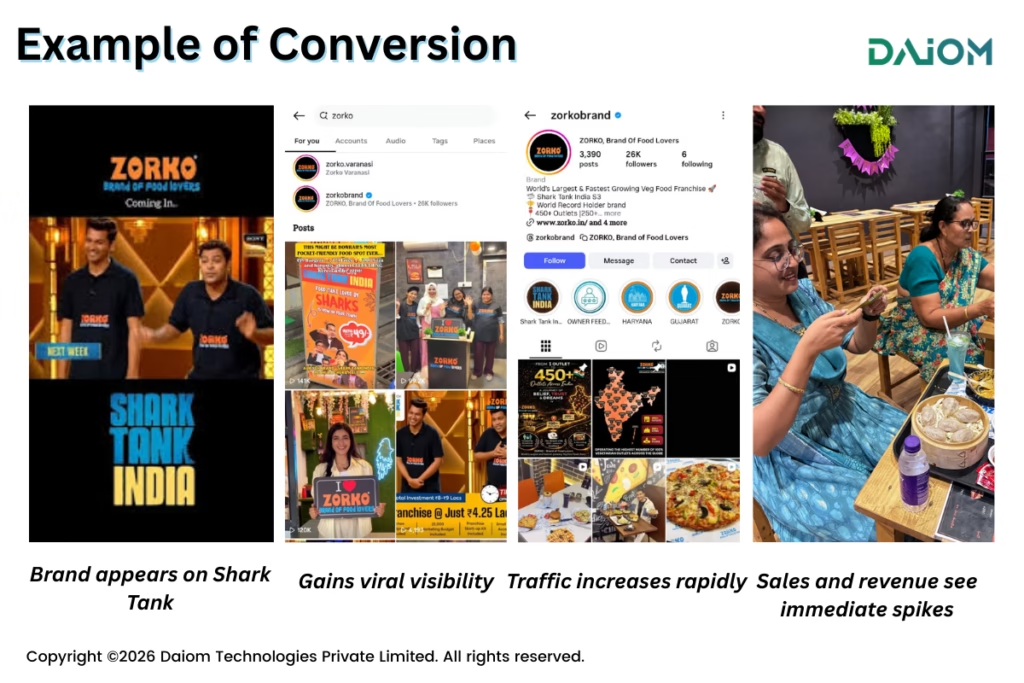
This demonstrates an important concept: Time correlation between visibility and business results matters.
3. Quantitative Metrics: Showing the Numbers That Matter
To effectively communicate with management, social media reporting must prioritise measurable outcomes. A structured quantitative flow typically looks like this:
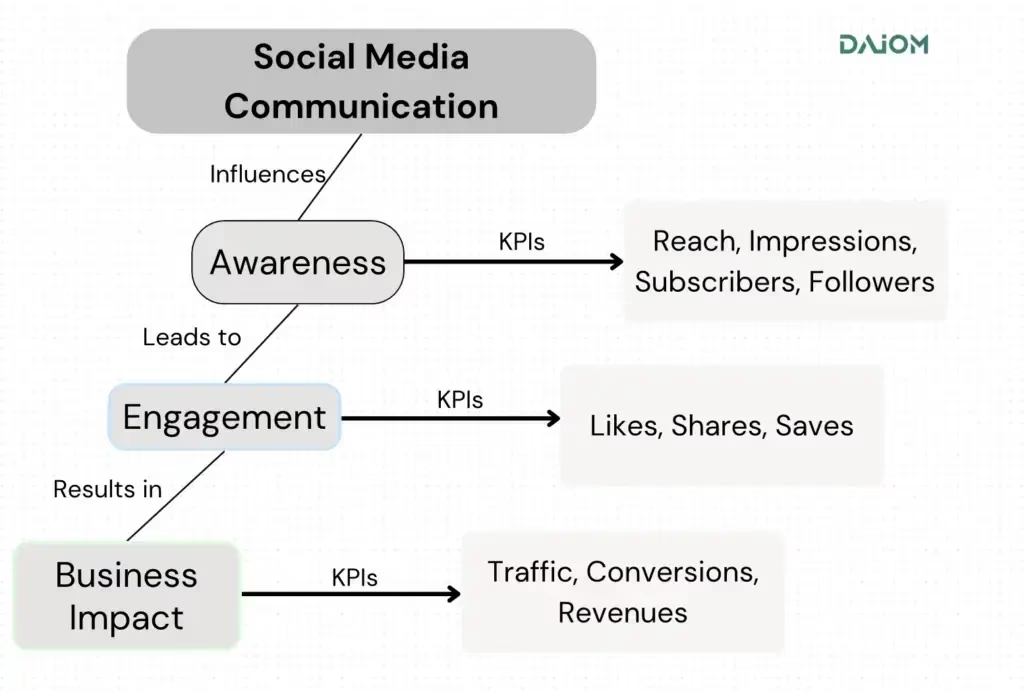
Reach → Engagement → Traffic → Conversion
Each stage represents customer progression.
3.1 Reach and Engagement
At the top of the funnel, brands measure:
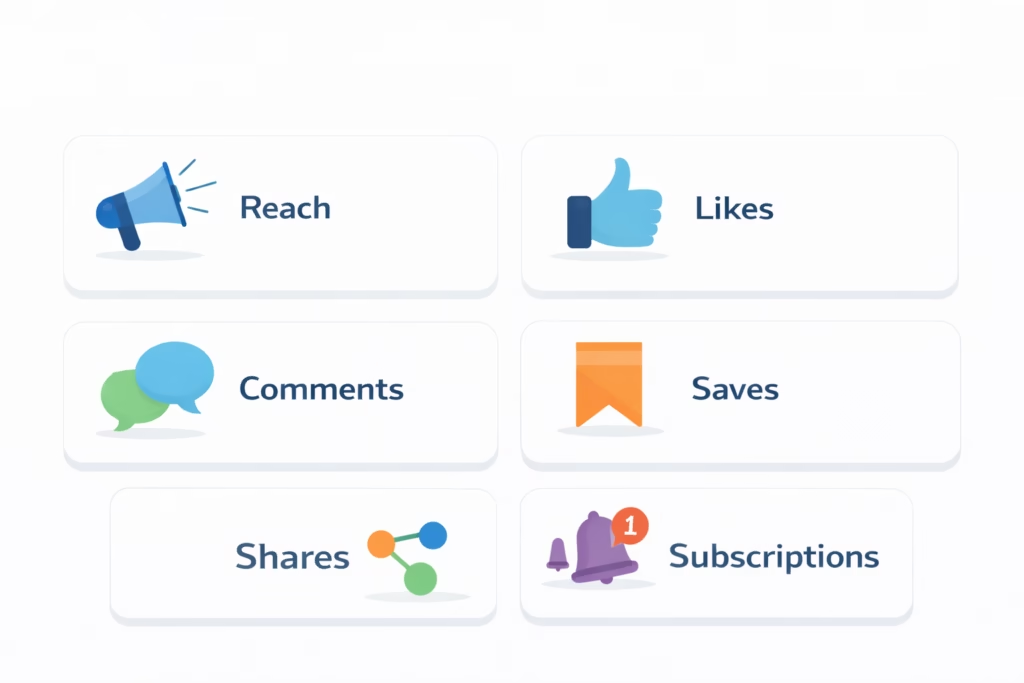
- Reach – The total number of unique people who saw your content.
- Likes – Indicates immediate audience appreciation or positive response to the content.
- Shares – Shows that users found the content valuable enough to distribute within their own network.
- Comments – Reflects active engagement and conversations generated by the content.
- Saves – Signals that users want to revisit the content later, indicating high relevance or usefulness.
- Subscriptions – Represents long-term interest, where users choose to follow or stay connected with the brand.
These indicators show audience interaction and interest levels.Engagement validates whether content resonates with customers rather than simply appearing on their feeds.
3.2 Traffic Quality
The next layer focuses on traffic quality. Not all traffic delivers equal value. Teams must compare:
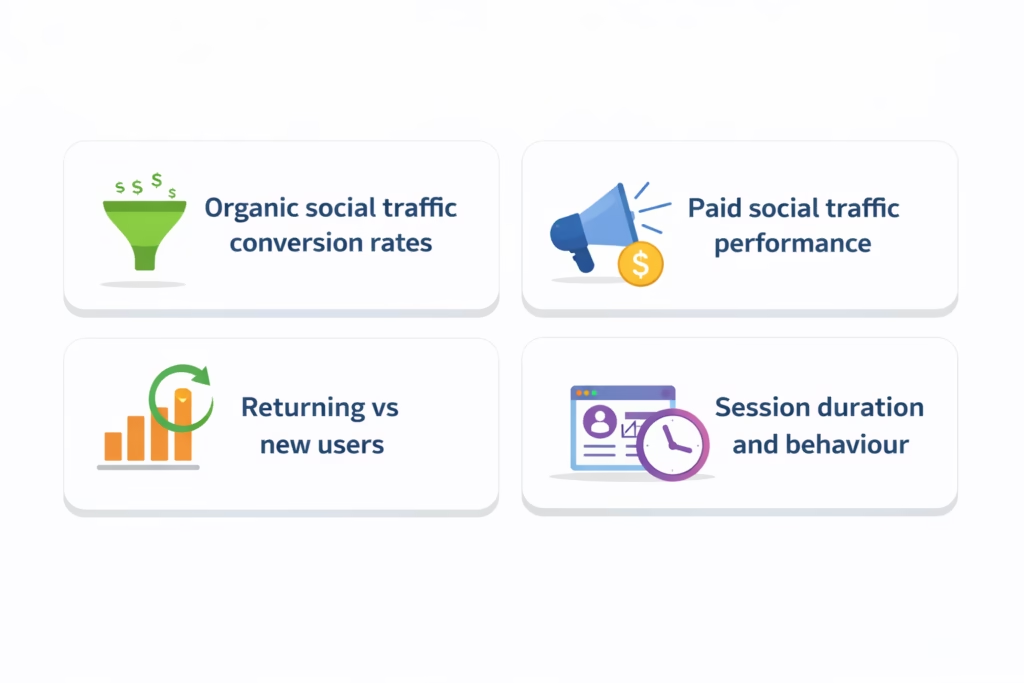
- Organic social traffic conversion rates – Measures how effectively unpaid social media visitors complete desired actions like purchases or sign-ups.
- Paid social traffic performance – Evaluates how well paid campaigns drive quality traffic, conversions, and business outcomes.
- Returning vs new users – Shows whether visitors are discovering the brand for the first time or coming back due to continued interest.
- Session duration and behaviour – Indicates how much time users spend on the website and how deeply they interact with content or products.
This helps management understand whether social media attracts meaningful audiences rather than passive viewers.
3.3 Conversion Performance
Finally, teams evaluate outcomes such as:
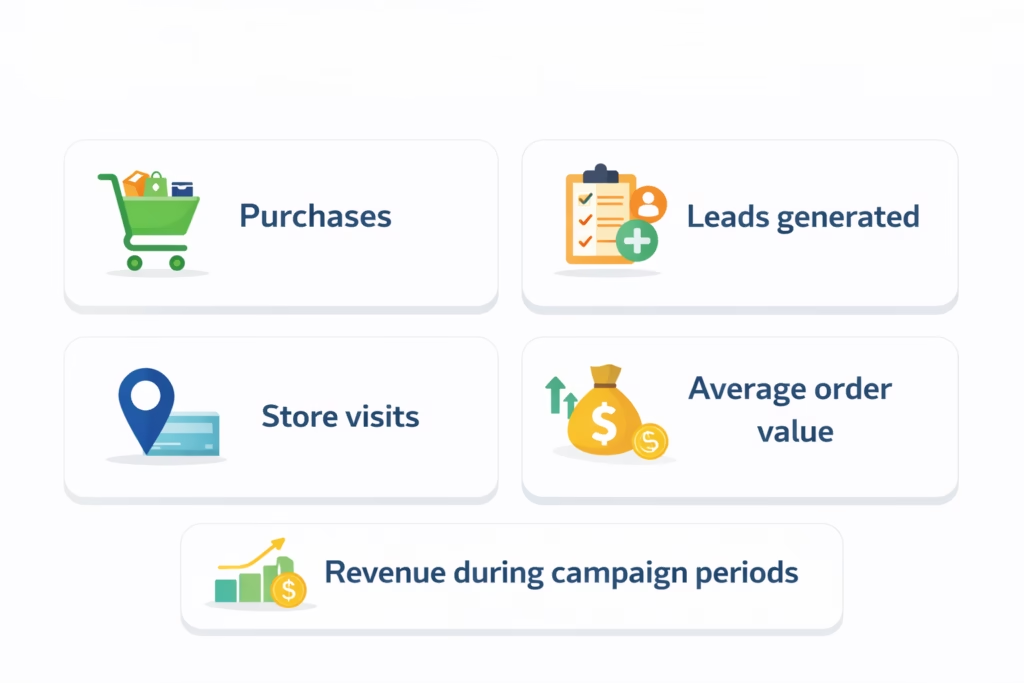
- Purchases – Represents the number of completed transactions driven by marketing and social media efforts.
- Leads generated – Measures how many potential customers shared their details or showed buying interest.
- Store visits – Tracks how online engagement translates into physical footfall at retail locations.
- Average order value – Indicates the average amount customers spend per transaction.
- Revenue during campaign periods – Shows the direct sales impact observed while specific marketing campaigns were active.
When presented together, these metrics create a measurable pathway from content to commerce. This approach shifts social media perception from experimentation to accountability.
4. Qualitative Metrics: Bringing Customer Voice to Leadership
While numbers are critical, data alone does not tell the complete story.
An equally powerful element of social media reporting is qualitative insight.
Business leaders often become distanced from direct customer conversations due to operational responsibilities. Social media provides a unique opportunity to reconnect leadership with customer sentiment.
Marketing teams can showcase:
- Customer comments – Reflect real-time reactions, opinions, and engagement from audiences interacting with brand content.
- Reviews and feedback – Provide direct customer sentiment about products, services, and overall brand experience.
- Direct messages – Indicate private customer inquiries, purchase intent, or support conversations initiated through social platforms.
- User-generated content – Shows how customers voluntarily create and share content featuring the brand.
- Reshares and testimonials – Demonstrate trust and advocacy when customers recommend or promote the brand within their own networks.
These conversations highlight how customers actually experience the brand. Positive feedback reinforces brand trust, while criticism provides actionable learning opportunities.
Presenting real customer voices during management discussions brings the focus back to the most important stakeholder, the customer.
A balanced report therefore includes both:
- Quantitative performance (numbers)
- Qualitative understanding (customer conversations)
Together, they create a complete picture of impact.
5. Why Focusing on One Metric Is Important?
One of the biggest mistakes organisations make is attempting to optimise for too many goals simultaneously.
Teams often try to achieve Awareness growth, Engagement improvement, Sales increase, Community building, Lead generation—all at the same time.
This scattered focus leads to limited progress across all areas. Effective communication with management begins by defining a single priority metric aligned with business objectives.
For example:
- Driving festive season sales
- Increasing store visits
- Building brand awareness in a new city
- Improving engagement before a launch
When leadership and marketing teams align around one objective, execution becomes clearer.
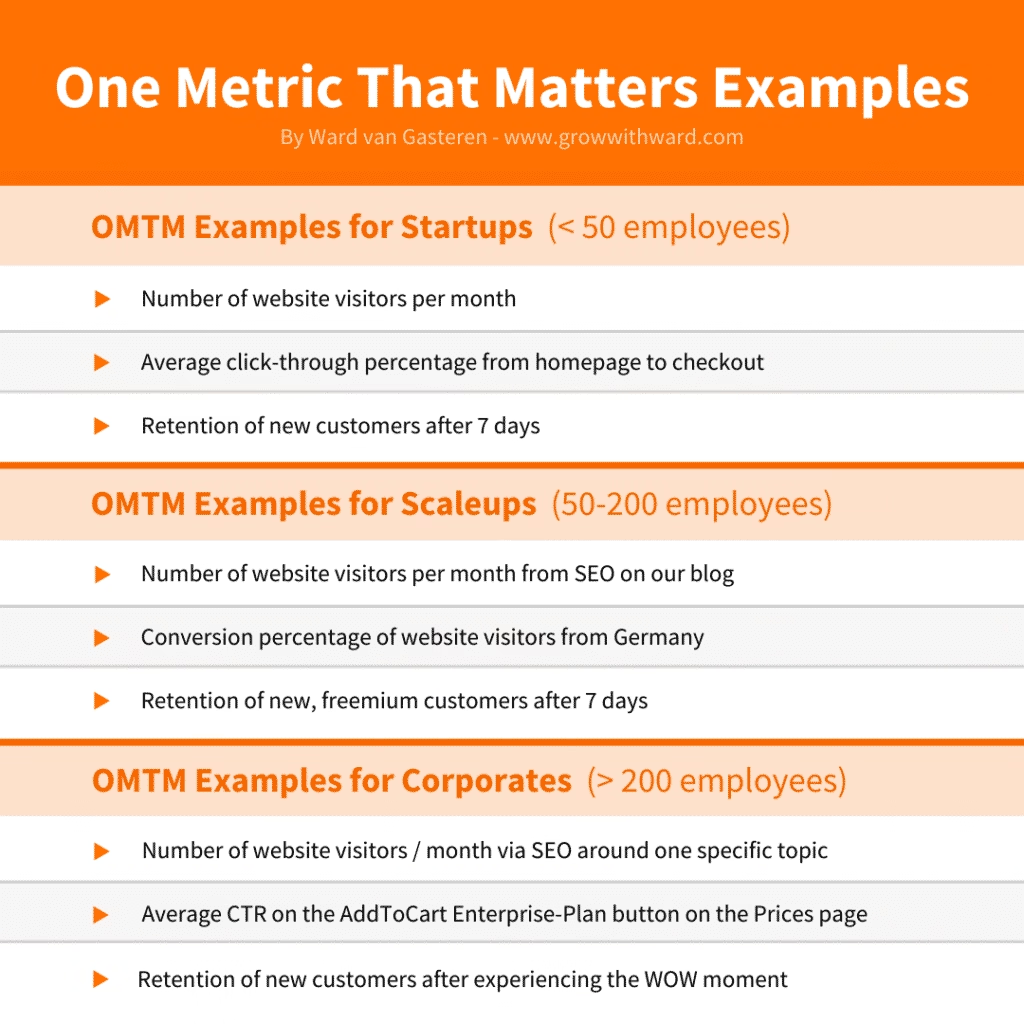
As the principle goes: Where focus goes, energy flows.
Clear priorities help teams measure success accurately and avoid chasing multiple disconnected metrics.
6. The Rise of Creator-Led Leadership
Another major shift shaping modern marketing is the evolution of leadership roles.
Today, successful founders, CMOs, and marketing leaders increasingly act as creators themselves.
Also read: How is the Role of CMO Changing?
For example, Alex Schultz, CMO of Meta, who personally experiments with content and analytics to understand what works.
In his book Click Here, he shares how data-driven storytelling can guide decisions, optimize campaigns, and build long-term brand trust, showing that modern marketing is both creative and measurable.

Social media cannot be fully understood without hands-on participation. Leaders who actively create content gain direct insight into:
- Audience behaviour
- Platform algorithms
- Content formats that work
- Engagement dynamics
- Community expectations
Hands-on creation builds practical understanding that cannot be replaced by reports alone.
Interestingly, brands with limited budgets often excel in social media precisely because they cannot rely solely on paid advertising.
Without large media spends, founders and teams become creators themselves — building authenticity and stronger audience connections.
This creator mindset enables leadership teams to better evaluate performance, guide content strategy, and support marketing teams effectively.
In today’s landscape, social media leadership is no longer purely strategic, it is participative.
The modern CMO is no longer just the “best marketer in the room.” They are the best leaders of marketers—someone who guides their team, makes smart decisions, and focuses on long-term growth rather than just busywork.
7. Conclusion
Social media impact becomes difficult to communicate only when it is presented in isolation from business outcomes.
Management teams are not looking for content stories alone. They want clarity on how marketing efforts influence growth.
By drawing a clear line from awareness to intent to conversion, marketing teams can translate social media performance into measurable business value.
If you’re exploring ways to measure and communicate marketing impact more effectively, we’d love to connect. Let’s start a conversation on building measurable social media strategies for your business.
For more insights and updates on the latest trends, follow DAiOM!
Subscribe to our Newsletter!