

Today, many brands are thinking about launching an app. But the key concerns they usually have are three things: first, there are already over 5 million apps on the Play Store.
Secondly, the cost of managing an app is very high. And thirdly, the big question—will it cannibalize the website or other channels, and will it actually add incremental value?
While these are valid questions, the real focus should be on how to do it successfully.
In the recent DilSe Omni Podcast, our CEO Saurabh Agrawal sat with Abhijeet Singh, Co-founder of Appbrew, to discuss the App Strategy for Omni Channel Growth. They discuss how apps fit into an omnichannel strategy, the right KPIs to measure app success, and why not every brand needs an app on day one.
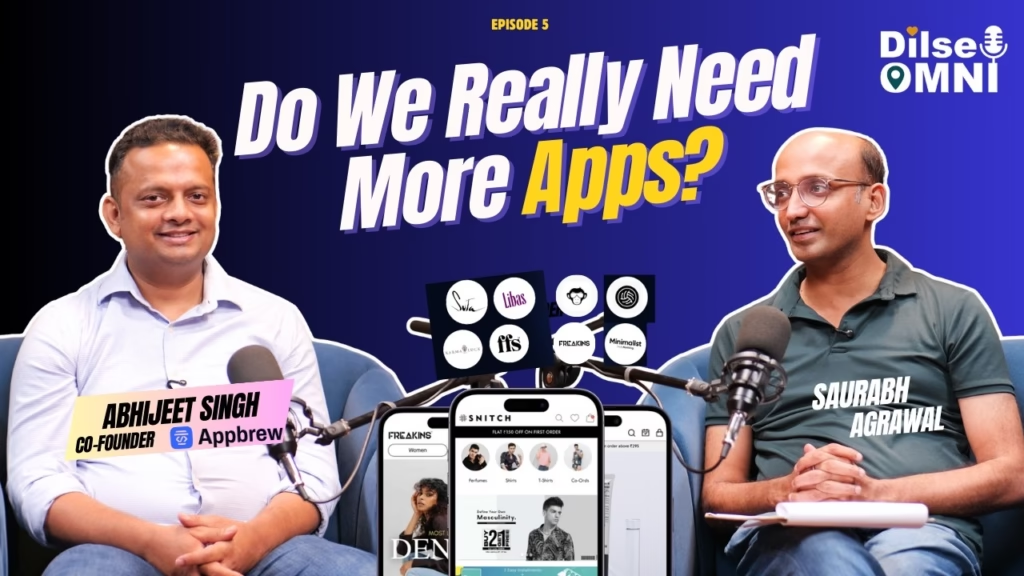
If you’re a D2C or omnichannel brand evaluating whether an app makes sense, this episode offers practical guidance.
Let us discuss more in this blog.

Table of Contents:
1. 5 Things to Think About Before Launching an App
Most brands don’t need an app from day one. But once customers start buying again and again, and your D2C business is stable, a well-built app can become a most profitable and high-intent channel.
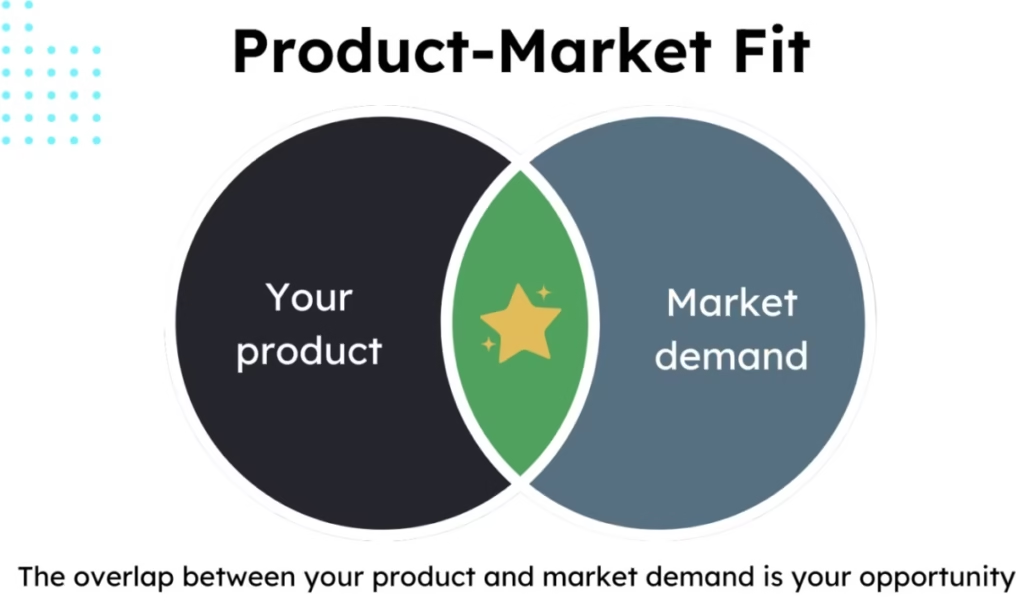
Early-stage brands should first focus on finding products, market fit and building steady sales through their website or marketplaces.
When repeat purchases grow and you want a deeper customer relationship, an app becomes a growth lever & not just a vanity project. Here are the things to consider when launching an app:
- Frequency of Interaction: Does your customer need to come back once a week or once a month? High-frequency categories (Fashion, Grocery, Beauty) are prime candidates.
- The “Discovery vs. Retention” Split: Are you still struggling to find new customers (Web is better), or are you struggling to keep the ones you have (App is better)?
- Data Control: Do you want to own your user data and behavioral events? An app tracks ~150 events per month compared to just ~15 on a website.
- Zero-Paid Reach: Consider your reliance on Meta/Google. If you want to reach customers for “free” via push notifications rather than paying for retargeting ads, you need an app.
- Tech Readiness: Do you have the infrastructure to manage a third channel? An app isn’t a “set and forget” tool; it requires a content and notification strategy.
2. Why and What You Should Consider an App For?
In the podcast, Abhijeet Singh and Saurabh dive deep into the strategic “why” behind app development. They stress that an app shouldn’t just replicate your website. Instead, it should serve specific, high-value functions that the mobile web cannot handle well due to browser limitations and high friction.
Here’s a breakdown of the core reasons to consider an app:
2.1. Conversion Rate Optimization
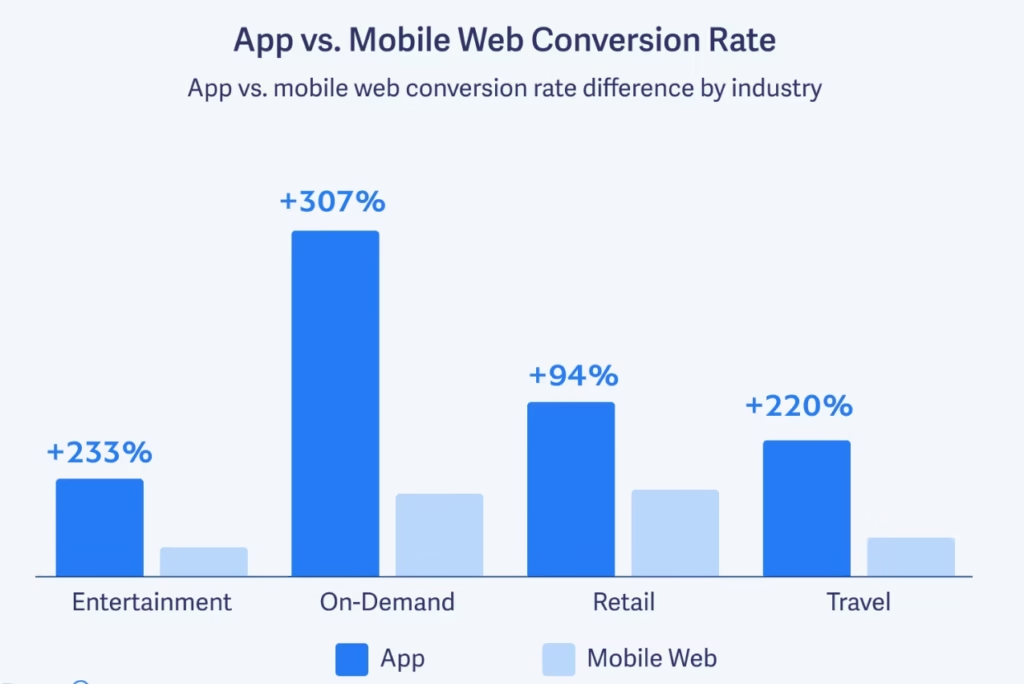
Apps often achieve 3x higher conversion rates than mobile websites. This is because they make the checkout process smooth and effortless.
Features like saved addresses, biometric logins, and one-tap payments remove common hurdles, letting customers complete purchases quickly without switching screens or re-entering information.
The mobile web is great for discovery. But when it comes to conversion, repeat purchases, and retention, apps consistently deliver far higher value. This is exactly why high-frequency and omnichannel brands see apps as a growth lever, not just another channel.
2.2. Personalized “Nudges”
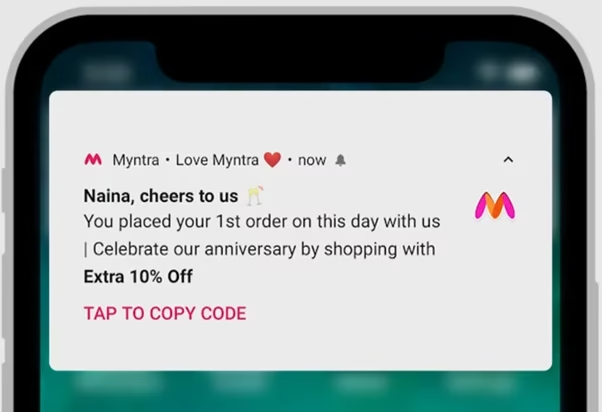
Apps allow for push notifications that are timely and personalized. Unlike emails that get buried or SMS that can feel spammy, these nudges drive immediate engagement and repeat sessions.
For example, Myntra excels at this by sending coupons and offers to already existing customers. These nudges create a sense of urgency and relevance that keeps the brand top-of-mind, directly contributing to their high app-driven sales.
2.3. Community & Loyalty Layer
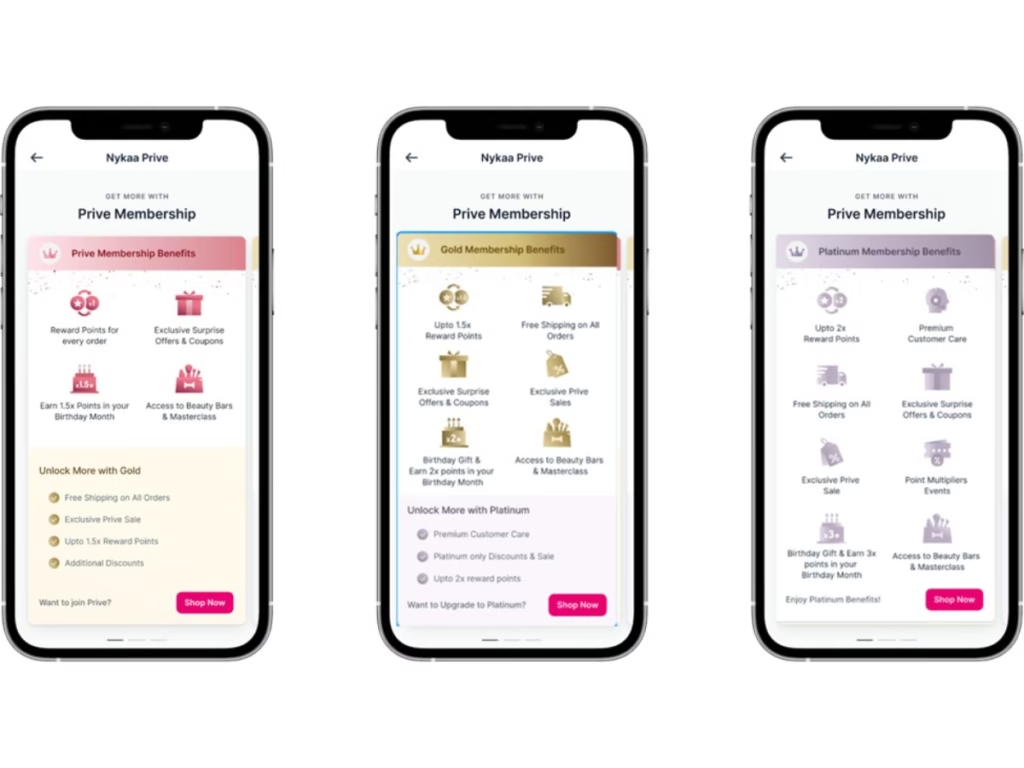
An app can become a VIP space for your customers. Hosting exclusive launches, early access sales, or loyalty programs encourages loyalty and makes your app more than just a product catalog. It becomes a place customers want to return to.
3. Who Should Not Consider an App?
Not every brand benefits from an app.
If purchases are rare, you haven’t found product-market fit, or your customers rarely return, the cost and effort of maintaining an app can outweigh the value.
Here are the reasons when brands should not consider an app:
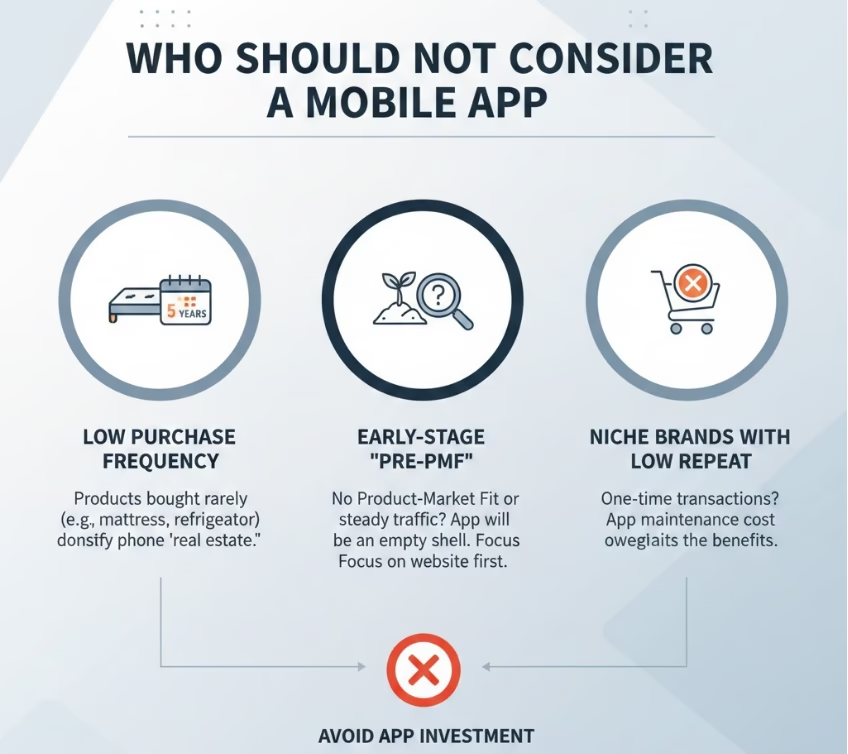
- Low Purchase Frequency: If you sell a product that people buy once every 5 years (like a mattress or a high-end refrigerator), the “real estate” on a user’s phone is too expensive for them to keep your app.
- Early-Stage “Pre-PMF”: If you haven’t found Product-Market Fit (PMF) or don’t have a steady flow of organic traffic yet, an app will just be an empty shell. Focus on your website first.
- Niche Brands with Low Repeat: If your business model relies entirely on “one-and-done” transactions with no path to a second or third purchase, the cost of app maintenance will outweigh the benefits.
4. How Did Snitch Double Its App Contribution in Just 15 Days?
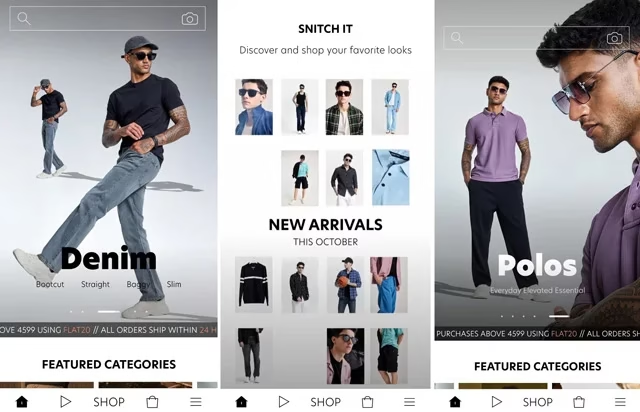
Snitch is one of India’s fastest-growing men’s fashion brands, now with 100+ stores and a strong omnichannel strategy blending offline expansion with a very aggressive app-first play.
On the podcast, Abhijeet shared how a quick app audit for Snitch led to 10–15 clear improvements, a LinkedIn pitch to the CMO, and a new app going live within 45 days.
The impact was powerful:
- App contribution to D2C sales doubled within 15 days of launch.
- Conversion rate on the app, already higher than web, jumped another ~33%.
- Eventually, the app became the main D2C channel, with industry-best ROAS and a large share of brand revenue flowing through it.
All this was before their Shark Tank India wave, so when the TV-driven demand hit, a strong app was already in place to capture that interest and convert it into loyal shoppers.
5. Where Apps Work Best
Personal care, beauty, fashion, and jewellery are high-frequency categories where apps perform especially well, making customer retention critical.
5.1 Minimalist is a perfect example. Minimalist is a science-first skincare brand built on transparency and performance, with a curated product range and a strong DTC presence.

Interestingly, when Appbrew connected with them, they already had an app that wasn’t really working, contributing only 2–3% of sales. What changed?
- The team simplified the app experience and focused heavily on storytelling at the product-detail page (PDP) level, even adopting Shopify meta objects to narrate ingredients and routines the right way.
- Minimalist’s tech and marketing teams didn’t treat the app in isolation, they tuned website schema and content as well, so web and app worked in sync.
Within just a month or two of relaunch:
- The app started driving around 50% of D2C sales.
- Conversion rates jumped to ~2.5x vs web.
- AOV improved by roughly 15%.
For a brand with ~50 SKUs at the time, this clearly shows that you don’t need thousands of products to justify an app, but you do need clarity, content, and conviction.
5.2 Lenskart: Visual confidence and assisted buying
For Lenskart, buying eyewear is all about confidence and low friction, which is exactly where the app earns its keep.
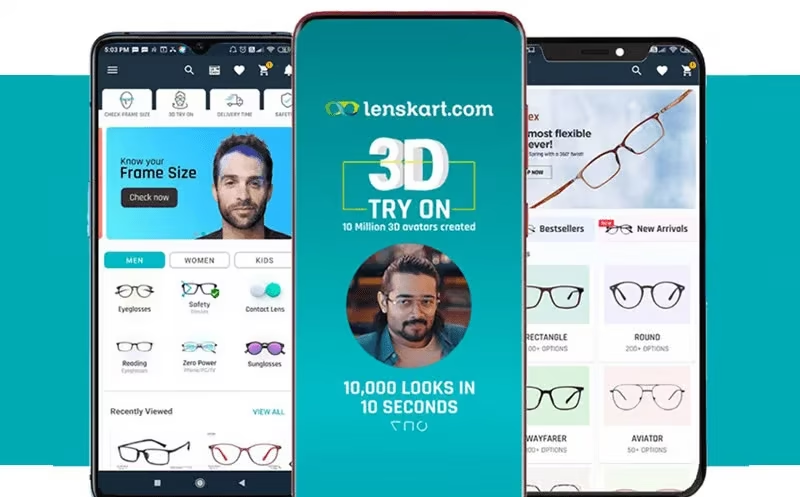
- The app’s 3D try-on and facial mapping significantly reduce returns and increase conversions because users can “try before they buy” and see fit/style instantly.
- Personalized, lightning-fast in-app search and recommendations have driven an increase in conversion in some experiments, showing how better discovery directly impacts revenue.
5.3 GIVA: Trust, visuals, and repeat purchase
In jewellery, trust, visualisation, and repeat behavior matter more than SKU count, and GIVA’s app strategy leans heavily into these.
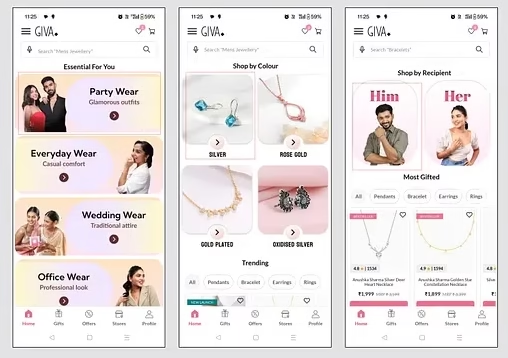
- The app uses rich product storytelling, reviews, and trust badges to overcome the trust gap in online jewellery, which improves conversion on high-consideration carts.
- Push-led journeys and dynamic product messaging in-app have helped GIVA increase its conversion from cart abandonment flows and increase repeat purchase rates, turning the app into a repeat-sales engine rather than just a first-purchase channel.
5.4 Decathlon: Engagement, loyalty, and omnichannel
For Decathlon, the app is the glue between large-format stores and digital, driving both higher engagement and better conversion.
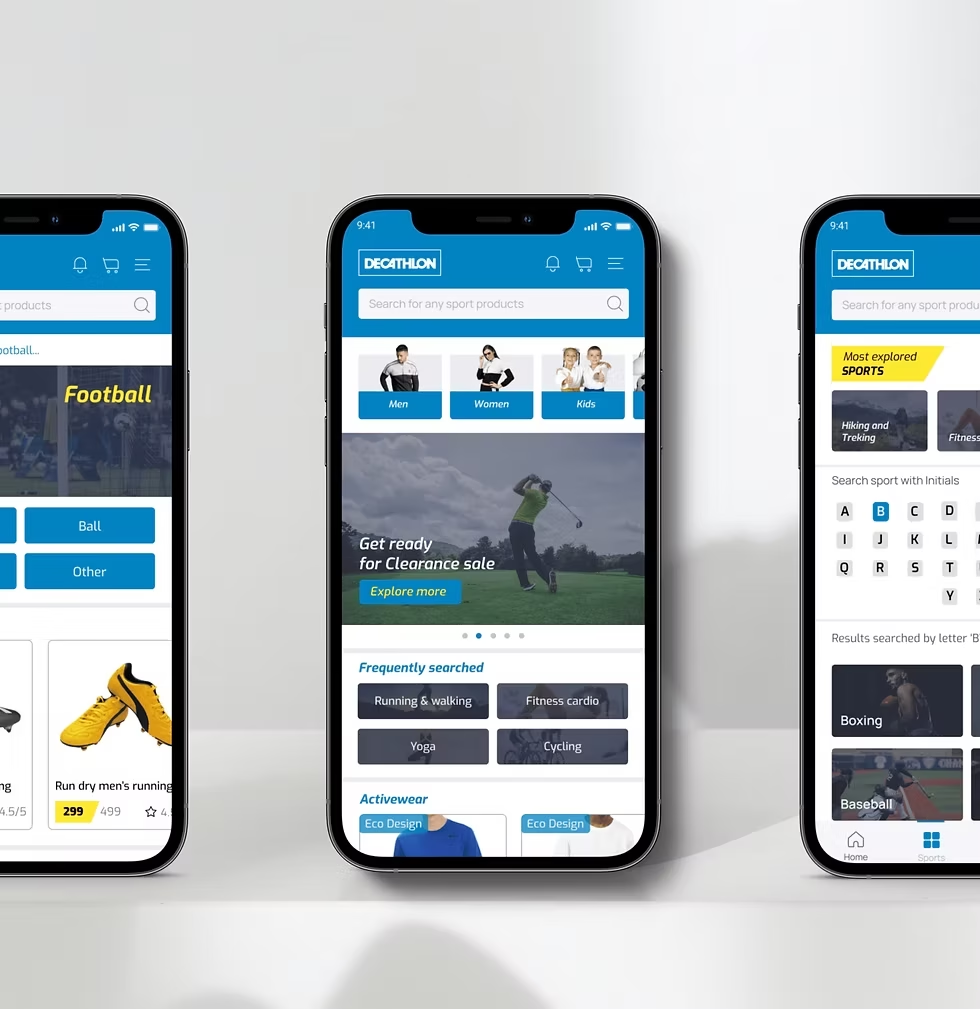
- The Decathlon app offers personalized recommendations and a streamlined interface.
- Deep integration with loyalty programs and omnichannel features (click-and-collect, store linkage) means more identified customers and more trackable, repeat purchases across channels, amplifying lifetime value.
- Technology-led improvements such as faster checkouts and in-app assisted purchases have increased store efficiency, making the app critical to both online revenue and offline productivity.
Read more – Metric of the Week – Purchase Frequency
What do these brands prove?
Across Minimalist, Lenskart, GIVA, and Decathlon, the app is not just “another channel” but a high-intent surface where smart UX and content move the needle on core metrics.
You do not need thousands of SKUs; you need a clear value proposition, strong PDP storytelling, and tight integration with web and offline so journeys feel continuous. It can drive a disproportionate share of D2C sales, 2–3x better conversion vs web, and healthier AOV and repeat rates, exactly as Minimalist’s relaunch demonstrates.
6. Why Apps Are the Fastest Way to Know Your Customers
One of the most insightful parts of the podcast is Abhijeet’s explanation of “identified users.”
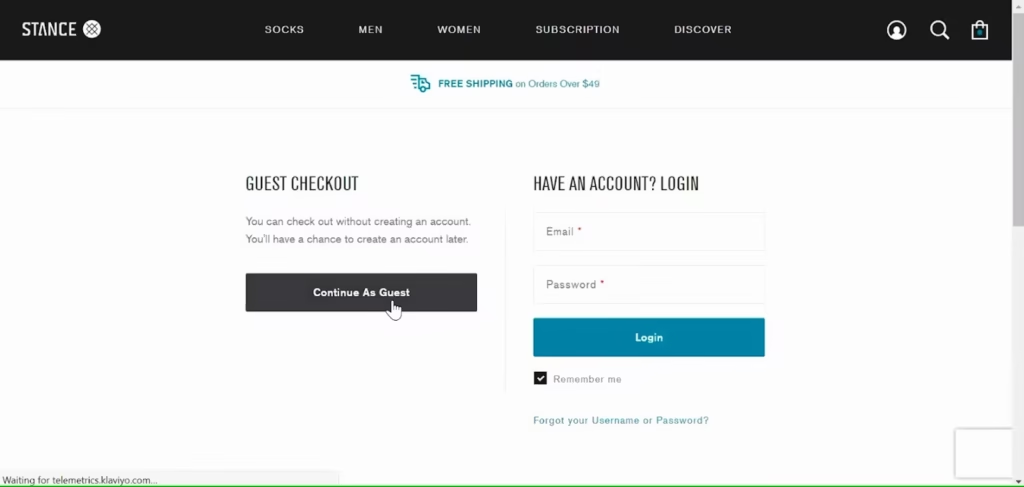
On web:
- Suppose your website converts at 2%.
- Of those buyers, maybe 60% actually log in, while 40% check out as guests.
- That means you truly identify only around 1.2% of total visitors (he rounds the idea to about 1–1.4%), and you have limited behavioral data on the rest.
On the app:
- Median data shows about 30% of app users log in.
- These logged-in users send a staggering number of signals, around 150 events per active user per month, compared to 15–20 on the web.
That difference is huge. It means:
- Far richer behavioral data (browsing, wishlist, repeat visits, push interactions, etc.).
- More precise personalization and segmentation.
- A much higher ability to retarget and retain without being at the mercy of third-party platforms.
7. Conclusion
An app doesn’t create value by default. It creates value when it is built with intent, to improve conversions, drive repeat purchases, deepen customer relationships, and reduce dependency on paid channels.
As discussed throughout this blog, successful brands don’t launch apps because it’s trendy, they launch them because it clearly solves a retention or experience problem.
If you’re a D2C or omnichannel brand, the real question isn’t “Should we build an app?” It’s “What incremental value will this app deliver that our website can’t?”
To go deeper into this thinking, hear it directly from the experts. Watch the full DilSe Omni Podcast featuring Saurabh Agrawal and Abhijeet Singh to understand the right app strategy, KPIs to track, and real-world lessons from brands that got it right.
Watch the full podcast here and decide if an app truly fits your growth journey.