

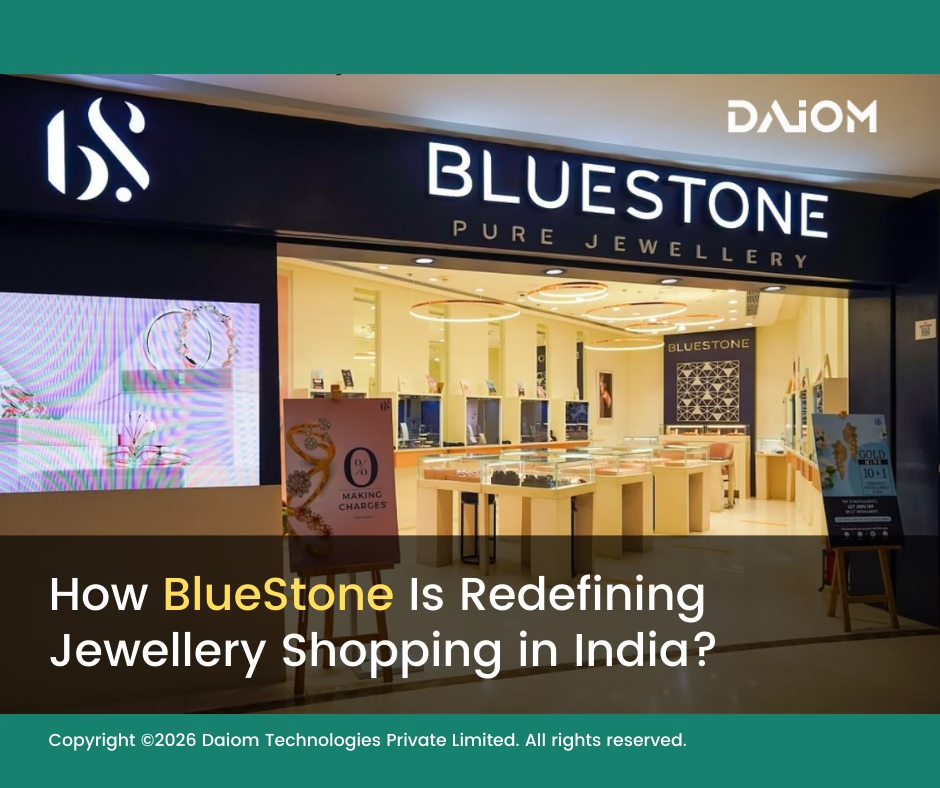
Buying jewellery in India has always been about trust, yet the experience itself often feels uncomfortable and high-pressure.
That’s where BlueStone genuinely stands out.
BlueStone has recently entered the public markets with its IPO, marking a significant milestone in its journey. What makes the story even more interesting is how the brand evolved into one of India’s strongest omnichannel jewellery businesses, seamlessly combining online discovery with offline retail experiences.
The idea traces back to the venture studio GrowthStory, co-founded by serial entrepreneur K. Ganesh. Early on, the team believed that large e-commerce giants like Amazon and Flipkart might hesitate to enter certain complex sectors, especially grocery retail and jewellery. These categories required deep supply chains, trust, and strong offline presence.
That led to the creation of two ventures, one in grocery and the other in jewellery, which eventually became BlueStone.
Today, BlueStone has over 325 stores across 130+ cities in India, building one of the fastest-growing omnichannel jewellery networks in the country and proving that combining digital convenience with physical trust can create a powerful retail model.
Learn more about its omnichannel journey in this blog.
Jewellery buying in India needed a complete reset — not small fixes.
K Ganesh
Table of Contents:
1. How Is the Indian Jewellery Market Evolving?
According to insights from Redseer Research, India’s jewellery market is expected to grow significantly over the next few years. The market size, which was around INR 4,740 billion in 2019, is projected to reach INR 11,000–12,000 billion by 2029, reflecting strong long-term demand.
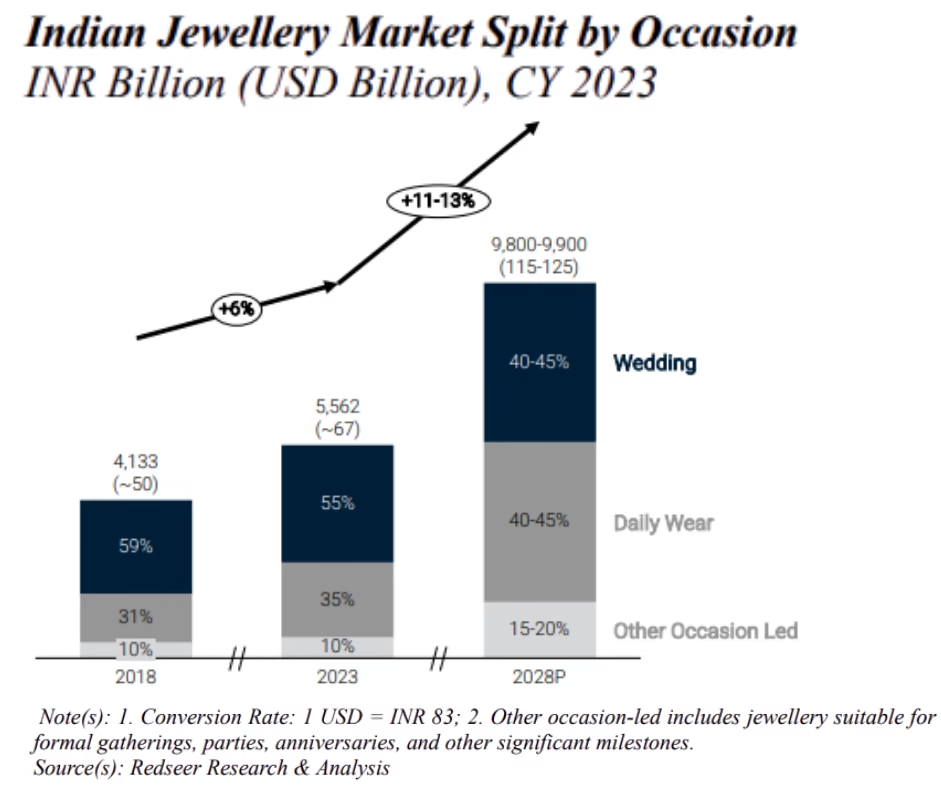
While wedding jewellery continues to remain the largest segment, accounting for around 40–45% of the market, there is a clear rise in daily wear jewellery, which is also expected to hold 40–45% share by 2029. This shift shows how jewellery is no longer seen only as a purchase for big life events like weddings, but increasingly as part of everyday fashion and personal expression.
At the same time, jewellery bought for other occasions, such as parties, anniversaries, and celebrations, is also gradually expanding, indicating that consumers are diversifying how and when they buy jewellery.
2. Journey of BlueStone
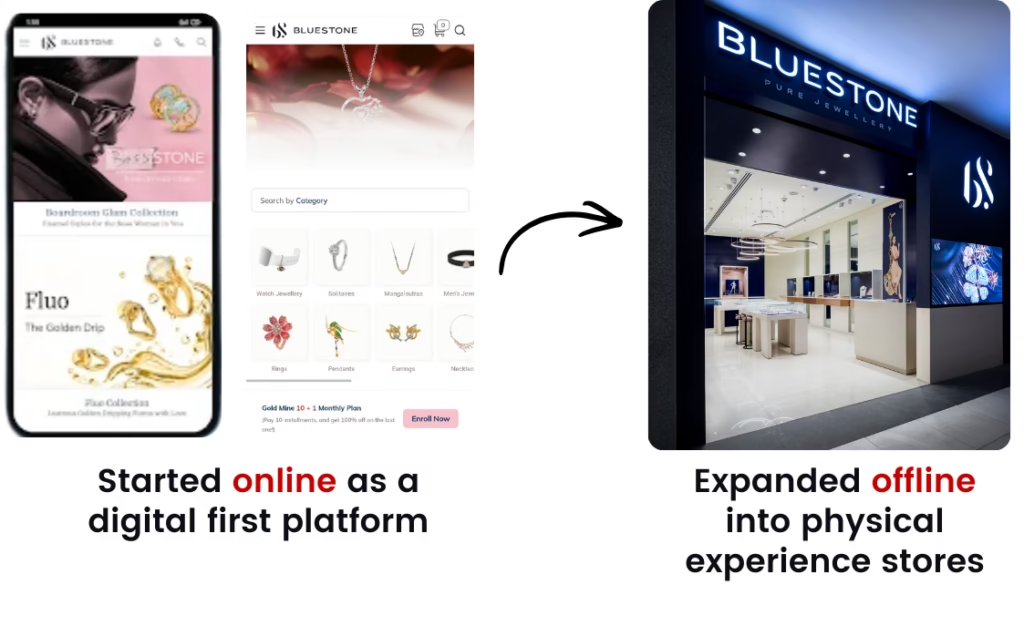
Instead of becoming a traditional jeweller that later added digital channels, Bluestone was built as a digital-first company from the beginning. Technology was used to simplify product discovery, ensure transparent pricing, and help customers make confident purchase decisions.
As the brand scaled, BlueStone realised that jewellery is still a high-involvement purchase. This led to the expansion of physical experience stores, designed to complement online discovery rather than replace it. These stores allowed customers to see, try, and validate their choices, bridging the gap between digital confidence and physical reassurance.
Read more – Bridging Online and Offline: The Omnichannel Approach
Over the years, BlueStone has steadily expanded its footprint across India while building a loyal customer base both in India and internationally.
Today, the brand offers 8,000+ jewellery designs, created by an award-winning design team and supported by in-house manufacturing that ensures consistency, quality, and control.
A major milestone in the company’s journey came in August 2025, when BlueStone achieved an important moment with its Initial Public Offering (IPO).
The company raised approximately ₹1,540 crore and aims to double its store network to nearly 600 locations by 2027, further strengthening its omnichannel presence across India.
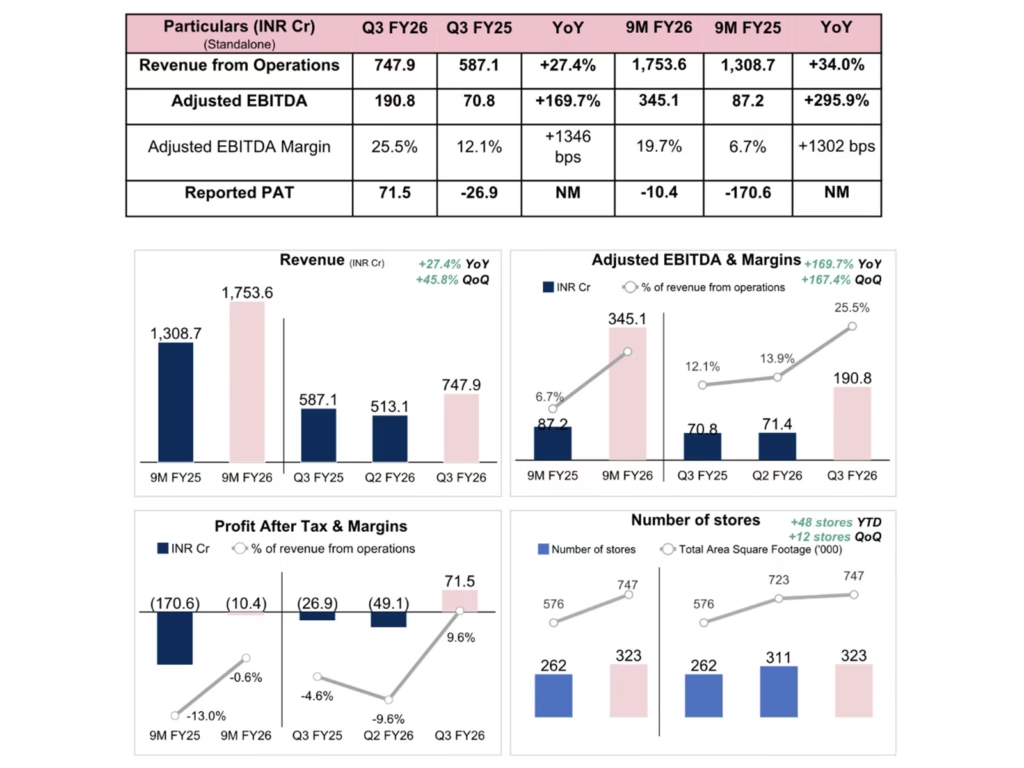
Other than this, BlueStone also continues to show strong financial momentum. The company reported revenue of ₹1,753.6 crore, reflecting a 34% year-on-year growth compared to the same period last year.
In Q3 FY26, BlueStone reported a Profit After Tax (PAT) of ₹71.5 crore, marking a significant turnaround from the loss recorded in the corresponding quarter of the previous year.
3. How BlueStone Became an Omnichannel Growth Pioneer
Bluestone became an omnichannel pioneer by seamlessly connecting online and offline experiences, turning every touchpoint into a growth opportunity.
3.1. Seamless Omnichannel Strategy for a Cohesive Customer Experience
Bluestone integrates online and offline touchpoints, allowing customers to browse online, seek in-store assistance, and complete purchases either online or in-person. Their strategy ensures “One brand, Many touchpoints – Discover anywhere, Buy anywhere.”
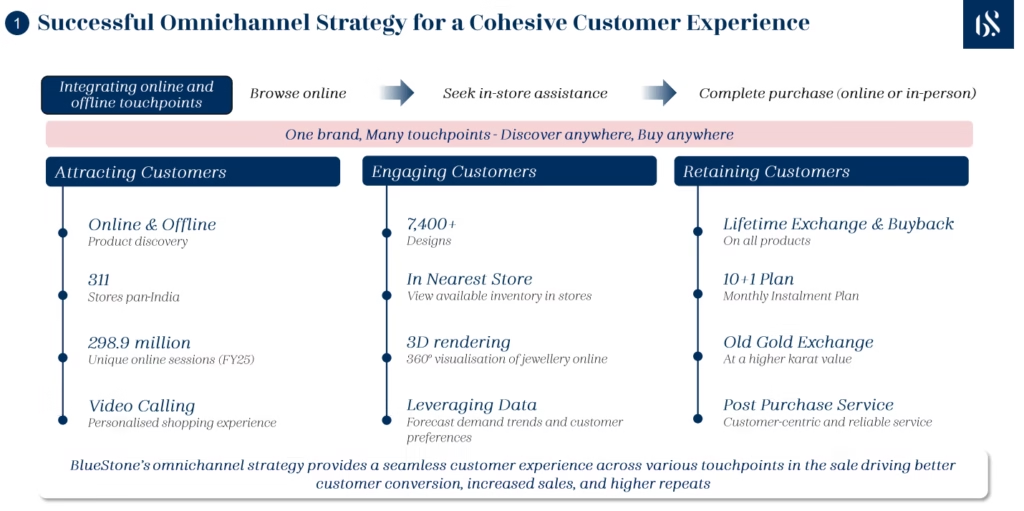
- Attracting Customers: Pan-India presence with 328 stores, 298.9 million unique online sessions, and personalized video calling for product discovery.
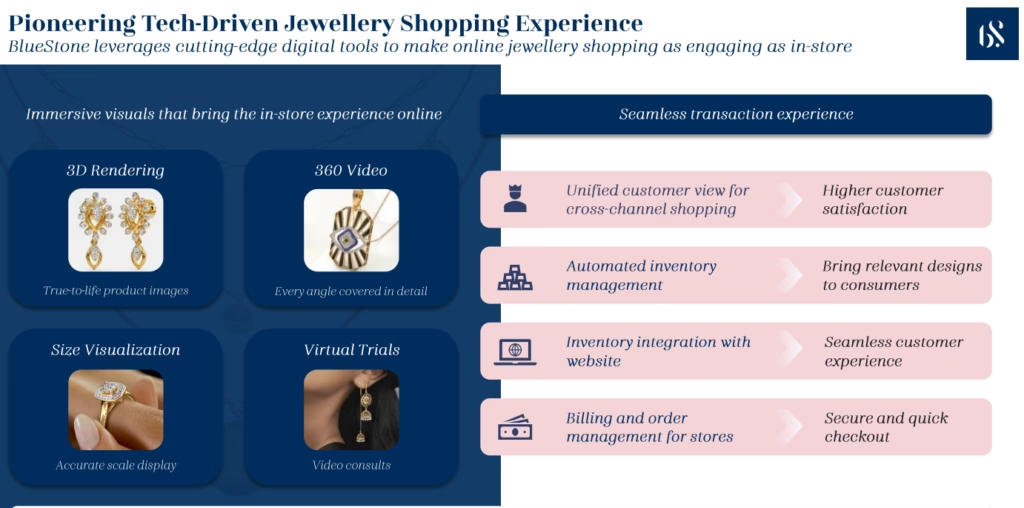
- Engaging Customers: Over 7,400 designs are showcased online with 3D visualizations, store inventory visibility, and data-driven insights to forecast preferences.
- Retaining Customers: Lifetime exchange, buyback programs, monthly installment plans, old gold exchange options, and strong post-purchase service build loyalty.
3.2. Omnichannel as a Catalyst for Sales Growth
Bluestone leverages offline stores to boost online sales. Physical stores help build trust, offering the tactile experience that encourages online purchases.
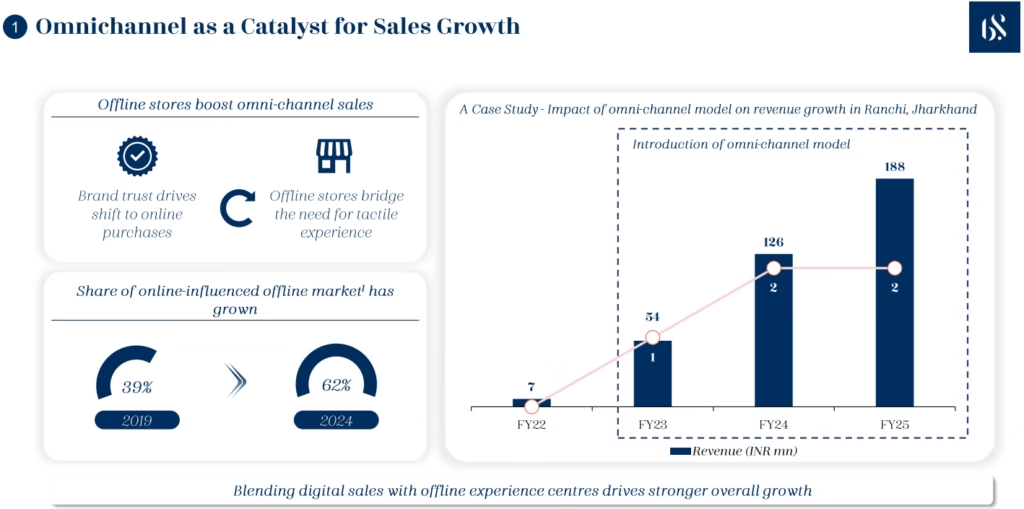
- Share of online-influenced offline market grew from 39% in 2019 to 62% in 2024.
- A case study in Ranchi showed revenue growing from INR 7 mn in FY22 to INR 188 mn in FY25 after introducing an omnichannel model.
Blending digital sales with offline experience centers strengthens overall growth.
3.3. Product & Design at the Core
Bluestone focuses on youth-centric, contemporary jewelry designs, driving repeat purchases and higher lifetime value.

- Offers affordable designs starting at ₹5,000 and lightweight pieces suitable for everyday wear.
- Their website and app allow customers to browse and purchase conveniently anytime.
- Compared to traditional jewelers, Bluestone provides greater variety, affordability, and trend alignment, breaking away from the conventional wedding-centric, over-the-counter buying model.
3.4. Infrastructure & Offline Stores Driving Growth
Bluestone controls design-to-store operations with in-house manufacturing and vertical integration:
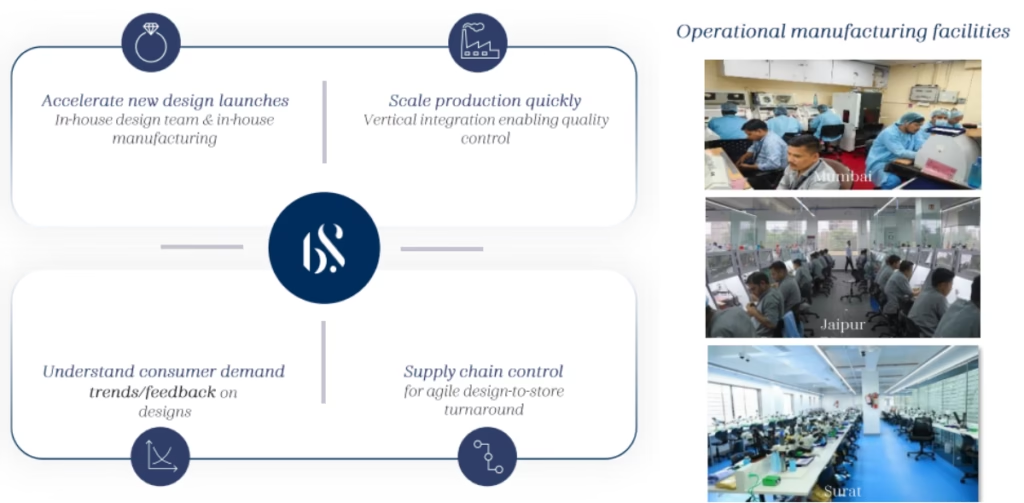
- Accelerates new design launches and scales production efficiently.
- Real-time understanding of consumer trends guides supply chain and production decisions.
- Offline stores provide standardized, high-visibility touchpoints offering touch-and-feel benefits for online-influenced purchases.
- Pan-India footprint: 328 stores, 12,600 PIN codes serviced, ensuring brand visibility, trust, and consistent customer experience.
3.5 Customer Recall & Trust-Building
Nearly 44% of BlueStone’s revenue comes from repeat customers, which is rare in jewellery.
According to K. Ganesh in our Dilse Omni Podcast, these factors aid in creating high recall value by combining unique jewellery designs with detailed product descriptions and high-quality visual content (images and videos).
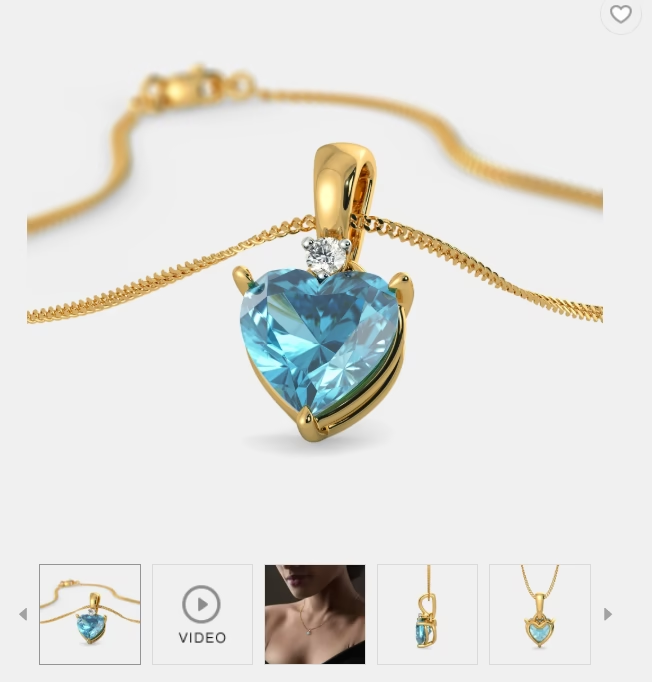
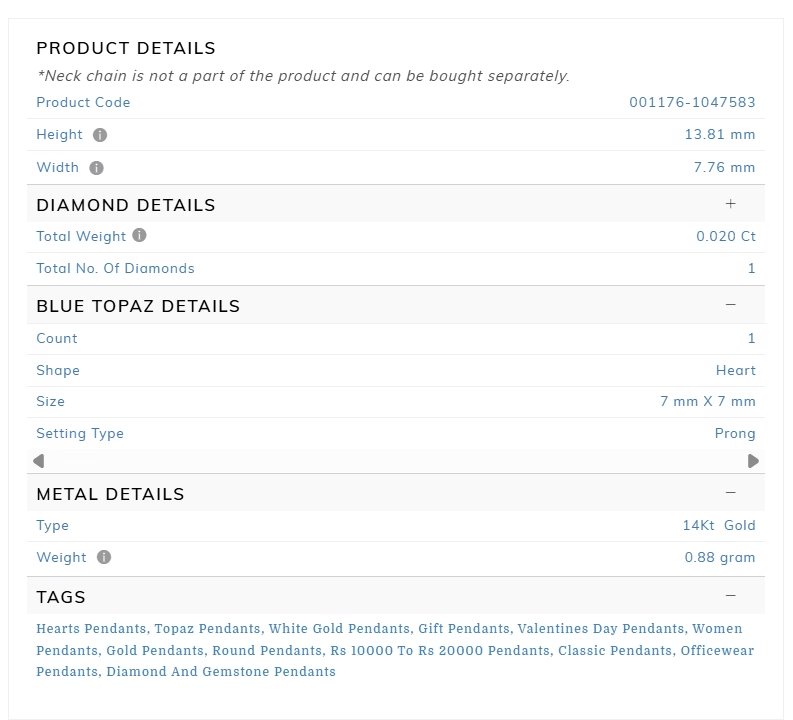
This creates an environment of trust and transparency, which Ganesh identifies as the primary disruptor in the traditional jewellery market.
3.6 Try At Home Services
On the virtue of solving the ‘Touch-and-Feel’ barrier, BlueStone allowed customers to inspect the gold purity, diamond sparkle, and craftsmanship firsthand before committing to a purchase with their Try-at-Home services.
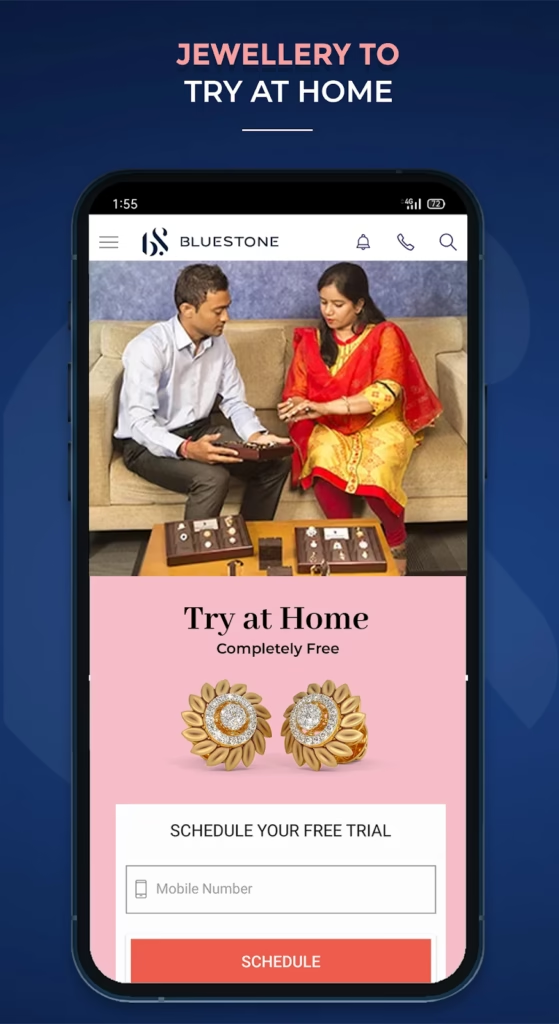
The service isn’t just a delivery; it’s a personalized consultation. A trained jewellery expert visits the customer with a curated selection of designs. This human interaction mimics the traditional “family jeweler” relationship but with the transparency of a modern brand.
In our podcast, K.Ganesh suggests that this physical touchpoint dramatically boosts the Average Order Value. Once a customer sees the quality in person, their confidence in the brand grows, leading to higher spending and a repeat purchase rate of nearly 44%.
Read more – Driving Store Sales: An Analytical Approach to Boost Conversion!
4. How is BlueStone Building A Brand Through Marketing Edge?
BlueStone’s brand-building strategy is centered on a “High Recall, Low Spend” philosophy. The brand reimagines jewellery marketing by focusing on well-executed, targeted activities rather than traditional massive ad spends.
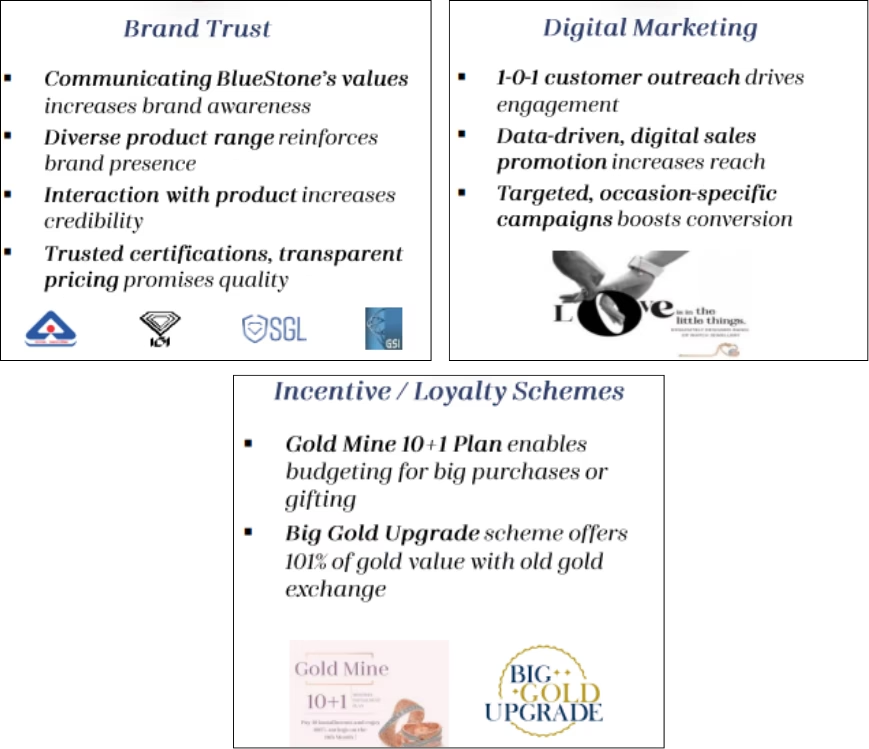
BlueStone leverages its strong gross margins to redefine how a jewellery brand is built in the digital era through three core pillars:
- Brand Trust: The brand builds credibility by communicating its core values and offering a diverse product range. Trust is solidified through trusted certifications (such as SGL, GSI, and BIS Hallmark) and transparent pricing, ensuring quality for high-ticket purchases.
- Digital Marketing: BlueStone uses a 1-to-1 customer outreach model to drive engagement. Their strategy is highly data-driven, utilizing targeted, occasion-specific campaigns that increase reach and boost conversion rates by reaching the right customer at the right time.
- Incentive & Loyalty Schemes: To drive retention and assist in budgeting for large purchases, BlueStone offers structured plans:
- Gold Mine 10+1 Plan: Designed to help customers budget for big purchases or gifting.
- Big Gold Upgrade: An old gold exchange scheme that offers an additional 1% of gold value to the customer.
5. How BlueStone Uses Technology to Grow?
Bluestone’s in-house tech stack ensures efficiency across designing, manufacturing, merchandising, and retailing:
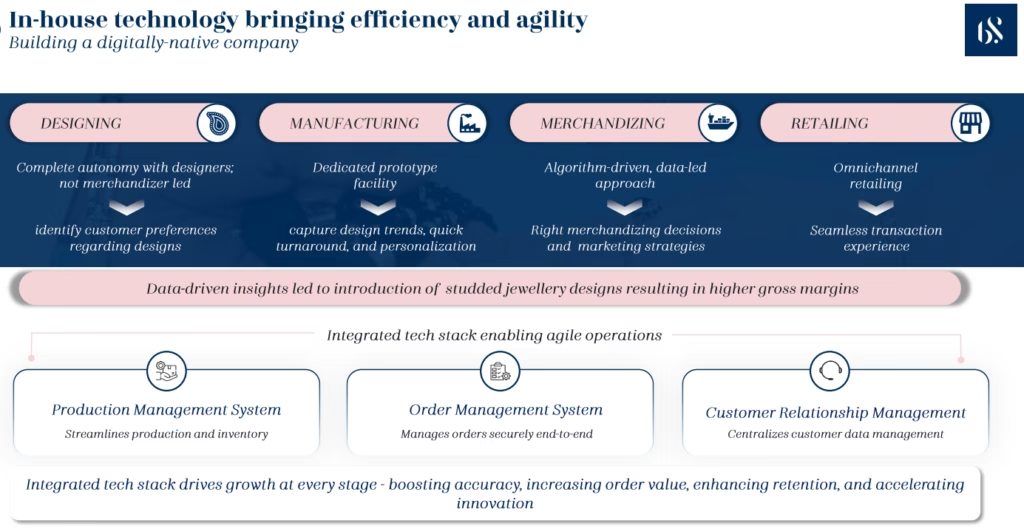
- Designers have autonomy, enabling better identification of customer preferences.
- Dedicated prototype facilities ensure quick turnaround and personalized manufacturing.
- Data-driven merchandising improves inventory and marketing decisions.
- Integrated systems like Production Management, Order Management, and CRM optimize accuracy, increase order value, enhance retention, and support innovation.
6. Conclusion
BlueStone’s success proves that traditional retail can be modernized through trust and technology. By unifying data, prioritizing contemporary design, and mastering the omnichannel journey, they have turned a high-pressure category into a seamless experience.
As BlueStone enters its IPO phase, one thing is clear: They’ve already changed the rules of jewellery retail.
If you’re building or scaling a brand in a trust-heavy category, there’s a lot to learn from BlueStone’s journey.
If you’d like to discuss how we can help optimize your Omnichannel Marketing strategies, feel free to reach out to us at alibha@daiom.in
For more such deep-dives and insights, follow and stay tuned to DAiOM.
Subscribe to our NEWSLETTER!