

Everywhere we look this week, our feeds are full of Black Friday deals.
So I thought, why not share a very personal experience from 2008, when I first visited the US and experienced Black Friday first-hand… and ended up spending $4,800 on things I mostly didn’t need.
We are a nation of consumers, and Black Friday is our holiday.
Rebecca Bloom
Table of Contents:
1. A Personal Story: My First Black Friday in the US (2008)
Back in 2008, I visited the US during Thanksgiving week.
This was when online shopping wasn’t big at all, so the real deals were found only in physical stores.
On Thanksgiving Thursday night, I couldn’t sleep. Everyone around me kept talking about “Black Friday deals,” and I wanted to see it myself. So at 12 AM, I went to Circuit City, one of the biggest electronics stores back then.
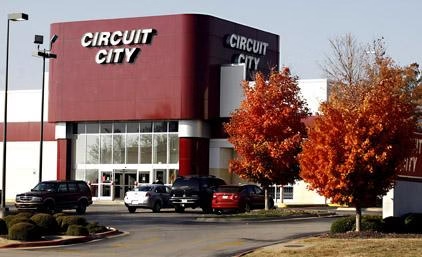
A massive 300-meter line was waiting outside. It took nearly 2 hours to enter.
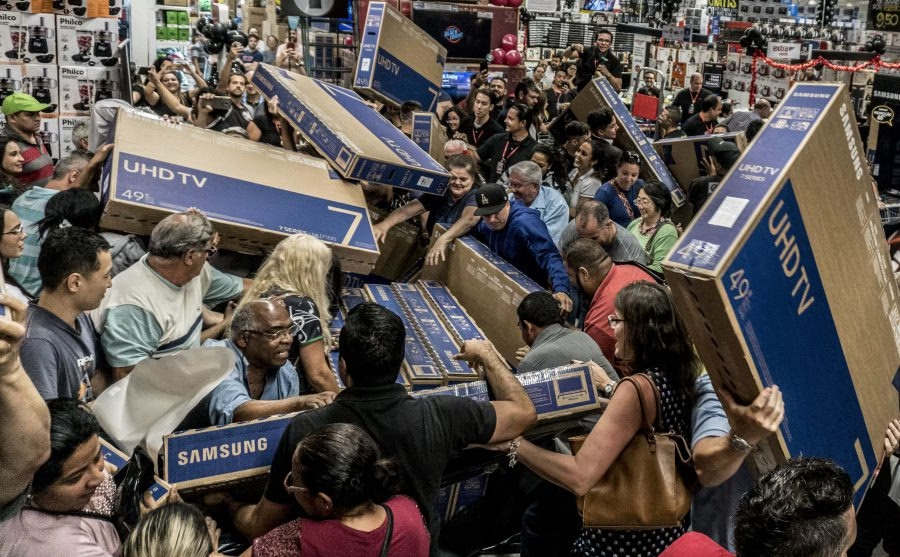
Inside, it was madness as people rushed, carts overflowing, discounts everywhere.
I also got carried away. I spent $4,800, yes, four thousand eight hundred dollars..buying gadgets, games, accessories, and things I never planned for.
I proudly reached my hotel, called my wife, and expected appreciation. Instead, I got a well-deserved scolding.
After thinking calmly, I realised I barely needed $300–$400 worth of what I bought.
So the next day, I went back to return most items. The return line? Even longer. Another 2.5 hours wasted.
That day, I understood the psychology of Black Friday better than any textbook could explain.
2. What is Black Friday?
Every November, our digital world gets taken over by Black Friday promotions.
Even though Black Friday started in the US, India has adopted it too, but many people still don’t know what it really means.
This year, Black Friday falls on 28th November.
And before we get into what it is and why it matters, let me share a small story about how I personally got trapped in the shopping excitement many years ago.
3. Relation between Black Friday & Cyber Monday
Thanksgiving is one of the biggest holidays in the United States, celebrated on the fourth Thursday of November, when families come together to share a meal and express gratitude.
The very next day is Black Friday, a tradition where retailers offer massive discounts to kickstart the holiday shopping season. It’s called “Black” Friday because, in traditional accounting, companies operating at a loss were said to be “in the red,” and this day often pushed them “into the black,” meaning into profit. Over the years, Black Friday became the most important shopping day in the US.
Soon after came Cyber Monday, a day focused on online deals. This originated because, many years ago, people had faster internet at their offices than at home, so online shopping peaked on Monday when they returned to work.
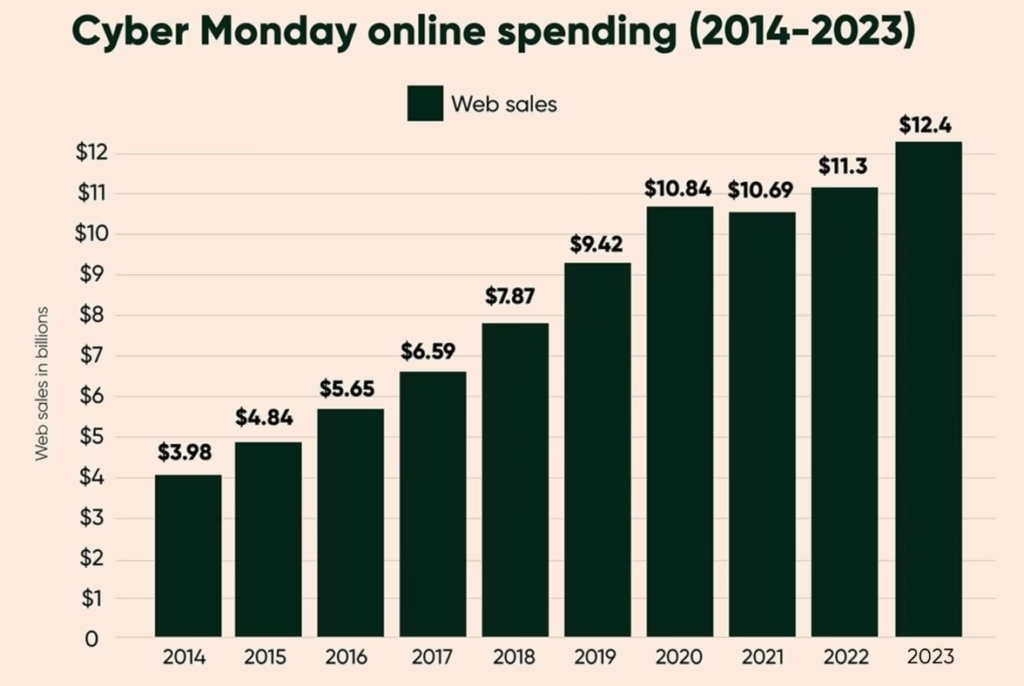
Today, Black Friday and Cyber Monday have merged into one extended global shopping event known as BFCM (Black Friday Cyber Monday), spanning both offline and online retail with deals running for days or even weeks.
When Exactly Is Black Friday?
Black Friday is always on the last Friday of November.
Here are the dates:
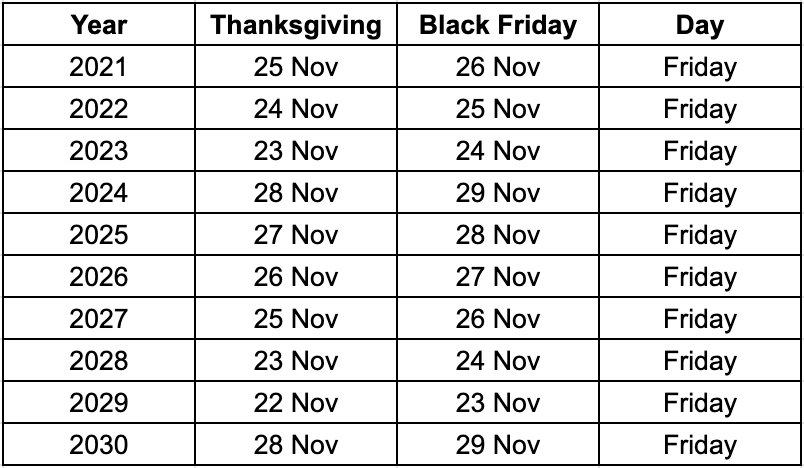
This helps brands plan ahead and understand when the sales cycle peaks each year.
Although it’s called “Black Friday”, the sale now starts:
- 1 week earlier,
- Brands run 10–20 days of promotions,
- And the peak days are usually Wednesday, Thursday, and Friday.
So what used to be a 24-hour sale has now become a multi-week shopping festival.
4. The Problem: How We Get Caught in the “Deal Trap”
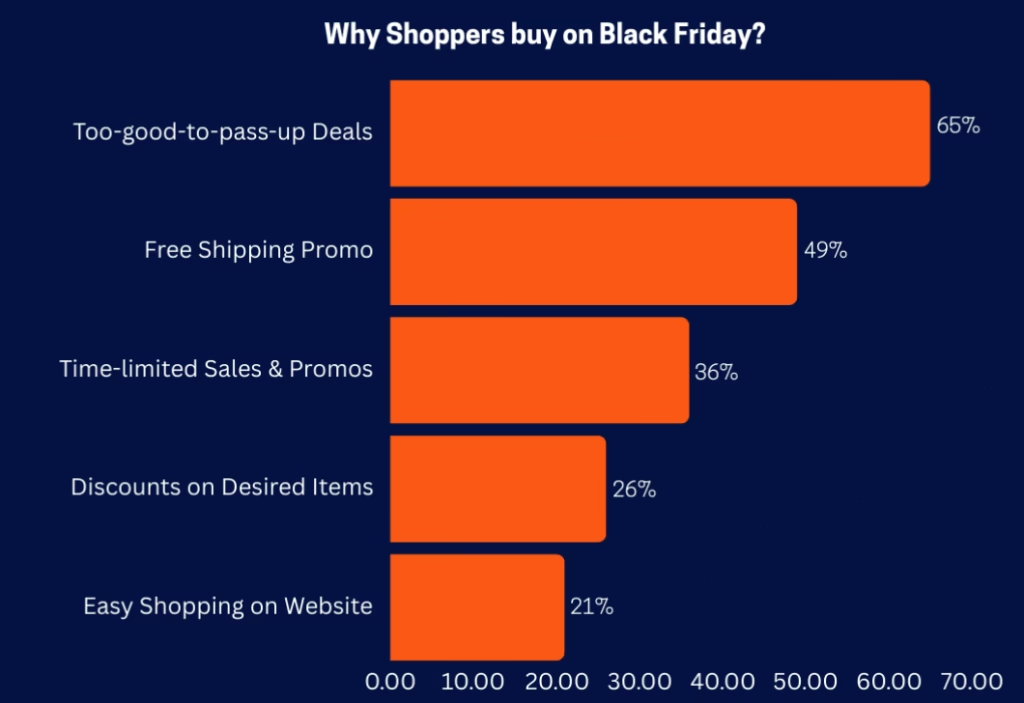
Black Friday works because it plays on our psychology:
- Fear of missing out
- Big discounts that look too good to ignore
- Limited time → high urgency
- Everyone buying → we also feel like buying
My $4,800 shopping in 2008 is a perfect example of how excitement can overpower logic.
From Store Queues to Online Checkout:
Earlier, Black Friday meant overnight queues.
Today, it means:
- App notifications
- Midnight drops
- Flash sales
- Website crashes
- “Sold Out” in 60 seconds
For me, Black Friday today is less about TVs and gadgets and more about AI tools, software subscriptions, and SaaS discounts.
This is where the real value lies for professionals, founders, and digital teams.
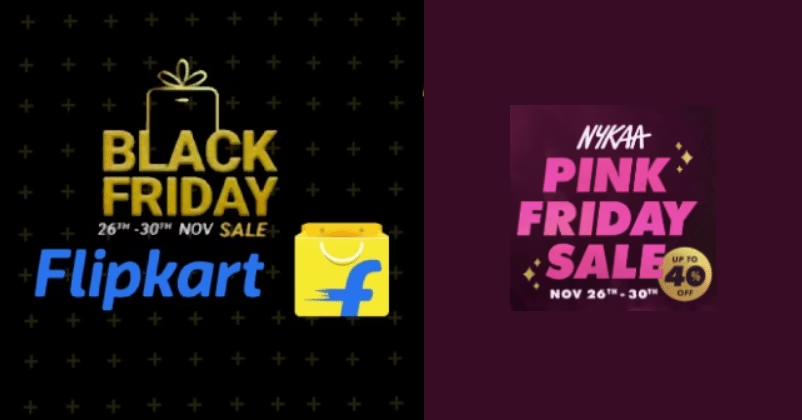
5. India’s Version of Black Friday
In India, Black Friday exists, yes. But our real shopping festival is different.
India’s peak sale period is Dussehra → Diwali
That’s when:
- Families buy appliances
- People upgrade phones
- Amazon/Flipkart run the biggest sales
- Malls and stores are packed
- Festive gifting drives massive buying
By the end of November, most Indian consumers have already spent their budgets.
So Indian Black Friday is growing, but the cultural weight is still much lighter than in the US.
6. What Brands Can Learn From This
If you are a brand running Black Friday deals, focus on:
Offering real value.
Don’t:
- Show fake discounts
- Inflate MRPs
- Use misleading sale banners
Do:
- Provide genuine savings
- Add bundles or freebies
- Offer early access to loyal customers
- Give extended warranties or bonuses
- Run transparent pricing
Customers today are smarter than ever.
They buy where they feel respected, not manipulated.
The best deal on Black Friday is knowing when to walk away.
7. Conclusion
Black Friday has evolved from 300-meter queues at Circuit City in 2008 to digital flash sales across the world.
For India, the biggest sales still happen during Dussehra–Diwali, but Black Friday is becoming a strong online event, especially for software and AI tool deals.
If you’re a brand participating this year, make sure you give extra value. That’s what customers truly remember.
Which Black Friday or Cyber Monday deals did YOU like this year?
Share the brands or tools you enjoyed, I would love to check them out!
If you’d like to discuss how we can help optimize your Omnichannel Marketing strategies, we’d be happy to set up a consultation call. Feel free to reach out to us at alibha@daiom.in.
For more informative content and blog, follow and stay tuned to DAiOM!
Subscribe to our NEWSLETTER!