

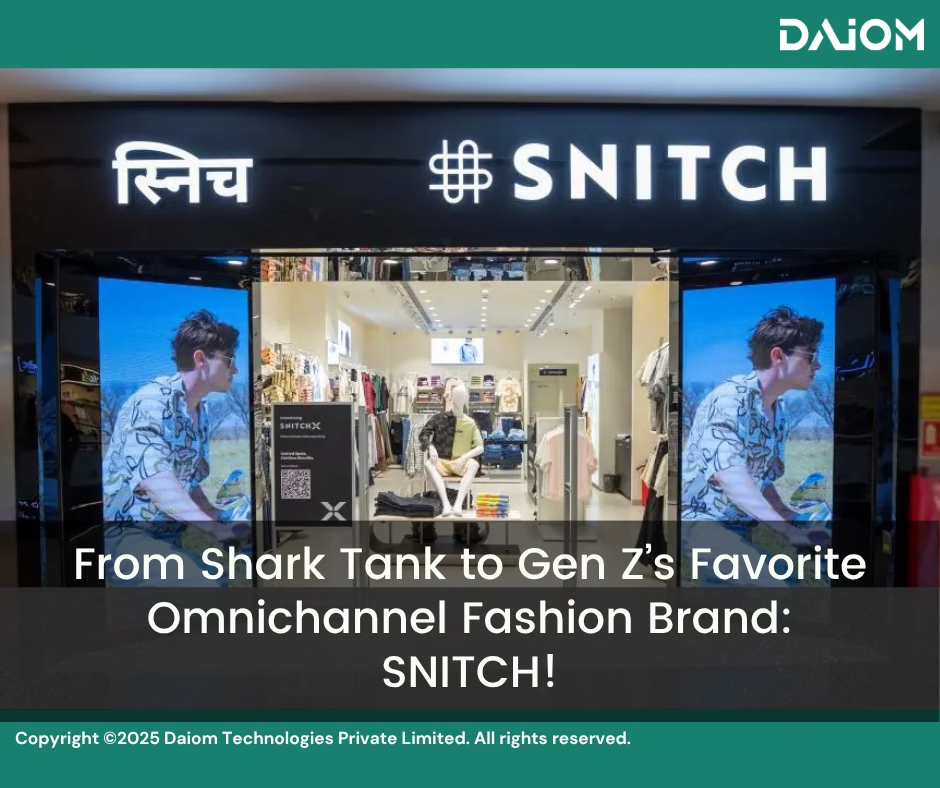
SNITCH, founded by Siddharth Dungarwal, has built a strong omnichannel brand by combining fast fashion with seamless online and offline experiences. Catering to Gen Z’s demand for speed, style, and relevance, SNITCH has grown to 100+ stores, powered by AI-driven personalization, daily trend drops, and community-led marketing that makes trendy, affordable fashion accessible everywhere.
Under the leadership of Siddharth Dungarwal, the brand continues to scale rapidly through smart social media use, AI-driven personalization, and strong omnichannel innovation. With a diverse product range and a sharp focus on trends, SNITCH delivers fast, stylish, and affordable fashion that Gen Z loves—redefining India’s retail experience. Learn more in this blog.
Table of Contents
- Introduction
- Story of SNITCH
- What Does Google Trends Reveal About Snitch?
- Why Does SNITCH Follow an App-First Strategy?
- What Does SNITCH’s Product Range Cover?
- How SNITCH Leverages Social Media?
- What Are the Core Elements That Make SNITCH Work So Well?
- How SNITCH Became an Omnichannel Fashion Pioneer?
- What Customers Love About SNITCH?
- Conclusion
1. Introduction
At DAiOM, we continuously study brands that are scaling successfully to understand what truly drives modern growth. One such brand we have always admired is SNITCH — a fast-fashion brand that has built momentum through sharp execution and strong omnichannel thinking.
Their impressive growth and market strategy are further validated by the backing of marquee investors like Fireside Ventures, who share our appreciation for disruptive, category-leading businesses.
Fashion in India has evolved rapidly over the last decade and the online fashion market is expected to grow at a CAGR of over 20%, driven by Gen Z and millennial consumers who demand speed, variety, and convenience.
However, building a fashion brand that can keep up with trends while managing inventory, supply chains, and customer expectations is no easy task. When Siddharth Dungarwal launched SNITCH, it faced a key challenge of how to deliver fast fashion in a market dominated by global giants and traditional players.
Today, SNITCH has emerged as a leading omnichannel brand, blending digital agility with offline expansion. With a rapidly growing store network and strong digital presence, the brand has scaled significantly, crossing ₹500 crore in revenue.
A big part of this growth story lies in its offline expansion. From being a purely digital-first brand, SNITCH has built a massive network of 111 stores (as of March 2026), proving that D2C is no longer just about online, it’s about meeting customers wherever they are.
The brand has strategically spread its footprint across India’s major hubs and growing cities:
- Bengaluru: The stronghold of the brand, featuring a significant presence with its milestone 111th store recently opening in Indiranagar.
- Delhi-NCR: Robust coverage across the capital in locations like Lajpat Nagar, Kamla Nagar, Janakpuri, Moti Nagar, and Gurgaon.
- Mumbai: Expanding rapidly with key outlets in areas like Khar West (Linking Road) and Borivali.
- Tier 1 & 2 Presence: A wide-reaching network including Hyderabad (Sarath City Capital Mall, Kondapur), Pune (Amanora Mall), Ahmedabad, Chennai, and Indore.
- Pan-India Reach: SNITCH has also successfully penetrated cities like Lucknow, Kanpur, Surat, Vadodara, Bhopal, Guwahati, Patna, and Raipur, ensuring a truly national omnichannel experience.
At the same time, SNITCH has positioned itself firmly for Gen Z, offering trend-first styles, accessible pricing, and quick turnaround. From product drops to communication, everything speaks the language of a generation that values speed, style, and relevance.
Find how SNITCH built its omnichannel edge, read the full blog to explore strategies, insights, and lessons behind its rapid growth.
“Our Snitch 2.0 app, launched five months ago, has surpassed two million downloads and now accounts for nearly 70% of our online revenue.”
Siddharth Dungarwal, Founder (SNITCH)
2. Story of SNITCH
SNITCH’s journey is a great omnichannel example of how a brand can grow fast by understanding the market and moving quickly.
The story of Snitch is a lesson in how a pandemic-born brand scaled from survival mode to becoming a powerful omnichannel player.
Why Is It Called SNITCH?
The name SNITCH was a deliberate and strategic choice by founder Siddharth Dungarwal, aimed at turning a traditionally negative word into a bold brand identity.
While “snitch” usually carries an unfavorable meaning, the idea was to give it a fresh, edgy twist that resonates with Gen Z culture.
Instead of “telling on someone,” SNITCH represents snitching on trends, spotting global fashion styles early and bringing them quickly to Indian consumers. Over time, the name evolved into a cultural expression, with customers casually saying they are “Snitching” when shopping for the latest looks, perfectly reflecting the brand’s fast-fashion DNA.
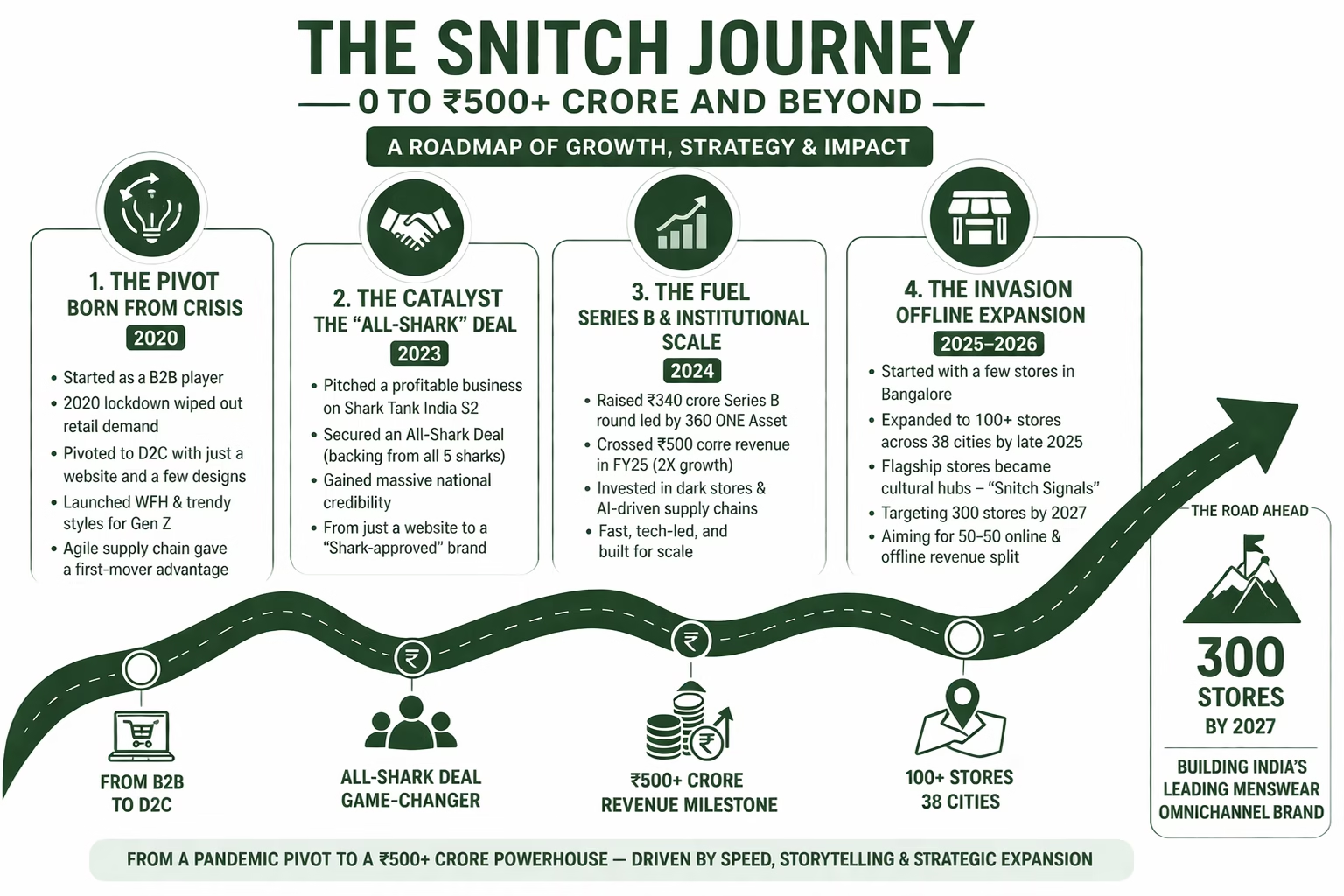
The journey from a small startup to a fast-growing omnichannel brand has been impressive. Some key milestones include:
2.1 From Crisis to Comeback (2020)
Snitch didn’t start as a D2C success story. It was originally a B2B supplier, quietly operating behind the scenes. But when the 2020 lockdown wiped out retail demand overnight, the brand was forced to rethink everything.
Instead of slowing down, founder Siddharth Dungarwal made a decisive pivot to a direct-to-consumer model. With just a website and a few trend-driven designs, Snitch leaned into speed and relevance.
While traditional brands struggled with excess inventory, Snitch thrived by quickly launching work-from-home styles and fast-fashion drops—perfectly timed for a digitally active Gen Z audience.
2.2 The Breakthrough Moment (2023) - Shark Tank
The real inflection point came with Shark Tank India Season 2. When SNITCH walked into Shark Tank India (Season 2), it was already a growing brand, but still finding its scale. The pitch wasn’t just about raising ₹1.5 crore and what made the moment different was the founder’s clarity.
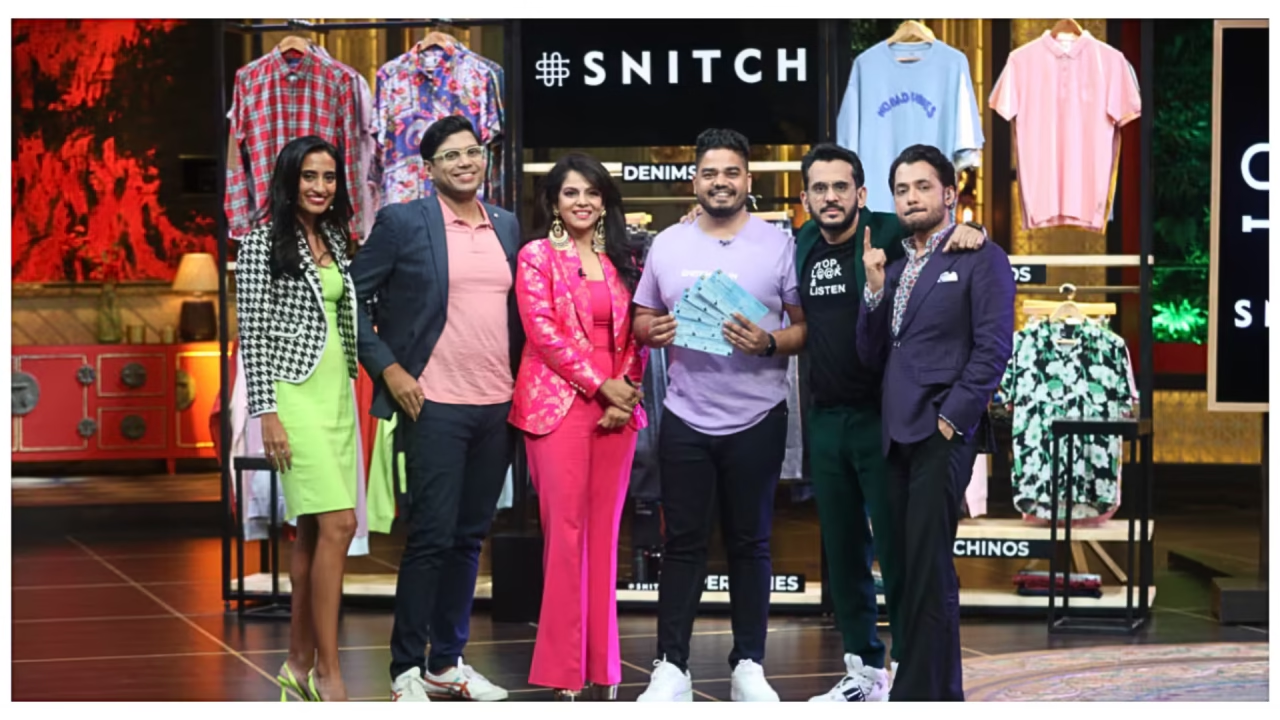
The founder, Siddharth Dungarwal, didn’t want just one investor. He wanted the combined experience, perspective, and network of the entire panel. His confidence paid off, resulting in a rare All-Shark Deal.
The Sharks involved were:
- Aman Gupta (Co-founder of boAt)
- Peyush Bansal (Founder of Lenskart)
- Namita Thapar (Executive Director of Emcure Pharmaceuticals)
- Vineeta Singh (Co-founder of SUGAR Cosmetics)
- Anupam Mittal (Founder of Shaadi.com)
Each of the five Sharks invested for a 1% equity stake each (totaling 5%), valuing SNITCH at ₹100 crore.
And, the real impact began after the show aired.
The real impact began after the show aired. Almost overnight, SNITCH transitioned from a known D2C label to a household name, fueled by a relentless focus on its niche as a dedicated men’s fashion brand.
While the visibility brought the audience, the strategic mentorship from the Sharks provided the direction needed to carve out a dominant space in a crowded market. This clear strategy led to massive growth. In less than two years, revenue jumped from ₹120 crore to over ₹400 crore. At the same time, the brand’s valuation grew from its ₹100 crore Shark Tank deal to nearly ₹2,500 crore.
To sustain this momentum, SNITCH evolved into a data-driven, omnichannel powerhouse:
- Physical Presence: Moving beyond the screen, the brand opened 50+ physical stores to build a seamless shopping experience.
- Hyper-Fast Fashion: Staying relevant to Gen Z by launching 30–35 new styles every single day.
- Tech-Led Precision: Utilizing deep data analytics to back every design and inventory decision, ensuring a lightning-fast turnaround from “trend discovery” to “closet-ready” apparel.
2.3 Scaling with Strategy (2024)
Post-Shark Tank, Snitch entered a new phase of aggressive growth. The brand raised a ₹340 crore Series B round led by 360 ONE Asset, marking its transition from startup to scale-up.
By FY25, it crossed ₹500 crore in revenue, doubling year-on-year. This growth wasn’t accidental. Snitch invested heavily in backend capabilities, including AI-led demand forecasting and dark store logistics, ensuring that trends spotted online could be delivered to customers within days.
2.4 The 100+ Store Moment (2025–2026)
Recognizing that Indian retail still thrives on tactile experiences, Snitch expanded rapidly into offline retail. What began as a few experimental stores soon turned into a nationwide presence—100+ stores across 38 cities by late 2025.
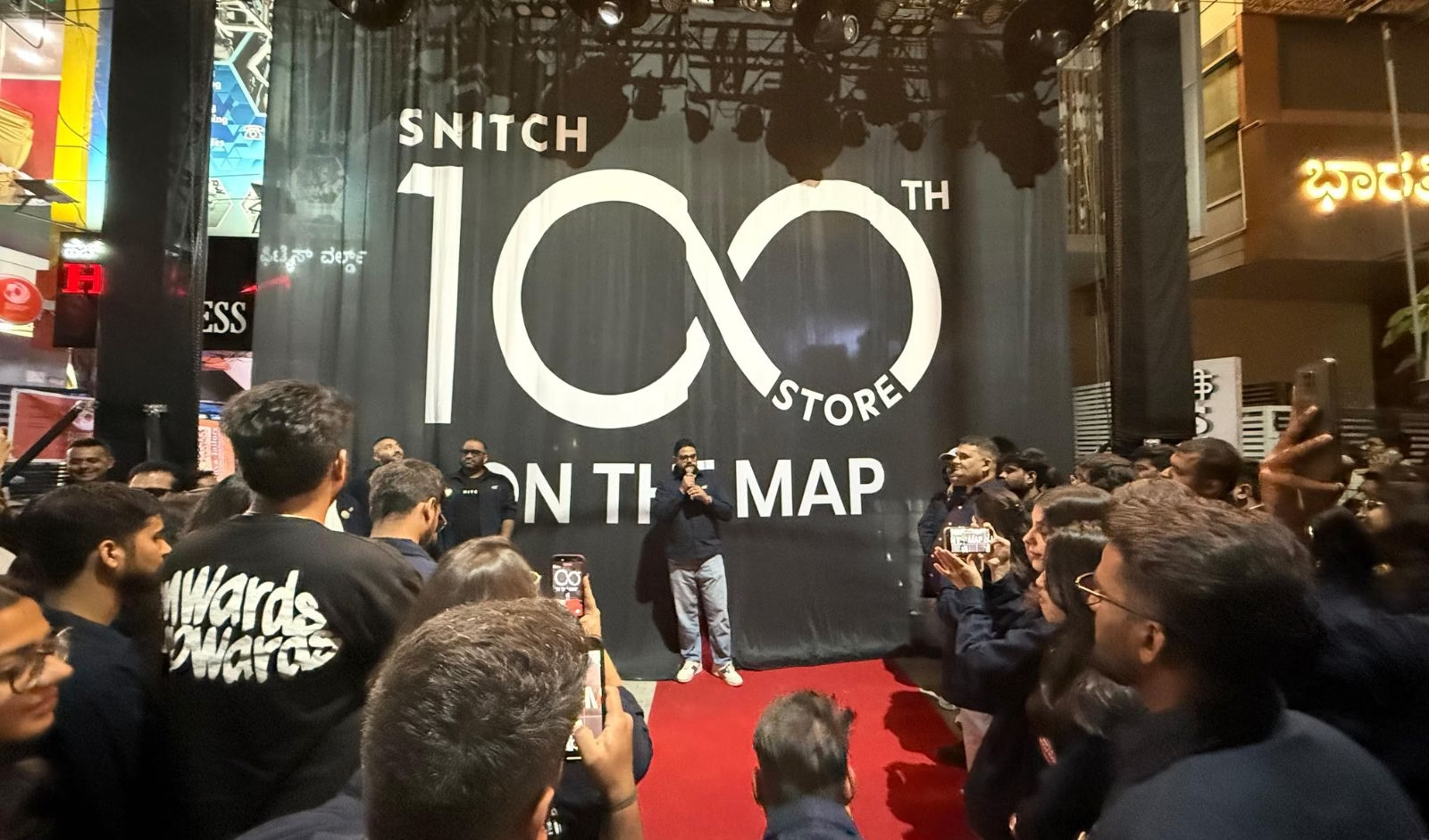
Flagship outlets, especially in high-footfall areas, evolved into brand hubs—popularly referred to as “Snitch Signals” by their growing community.
With an ambitious target of 300 stores by 2027, Snitch is now building toward a balanced omnichannel model, aiming for an even split between online and offline revenue.
From a crisis-driven pivot to a ₹500+ crore powerhouse, Snitch’s journey is a clear example of how speed, storytelling, and strategic expansion can redefine a brand’s trajectory.
3. What Does Google Trends Reveal About SNITCH?
After SNITCH appeared on Shark Tank India, there was a clear spike in Google search trends, more people were actively looking for the brand, exploring its products, and trying to understand what it offered.
For nearly two years, search interest in Snitch remained relatively low and stable, indicating early-stage brand awareness. But around early 2023, there’s a sudden and steep spike, marking a breakthrough moment where the brand moved from niche visibility to mainstream curiosity.
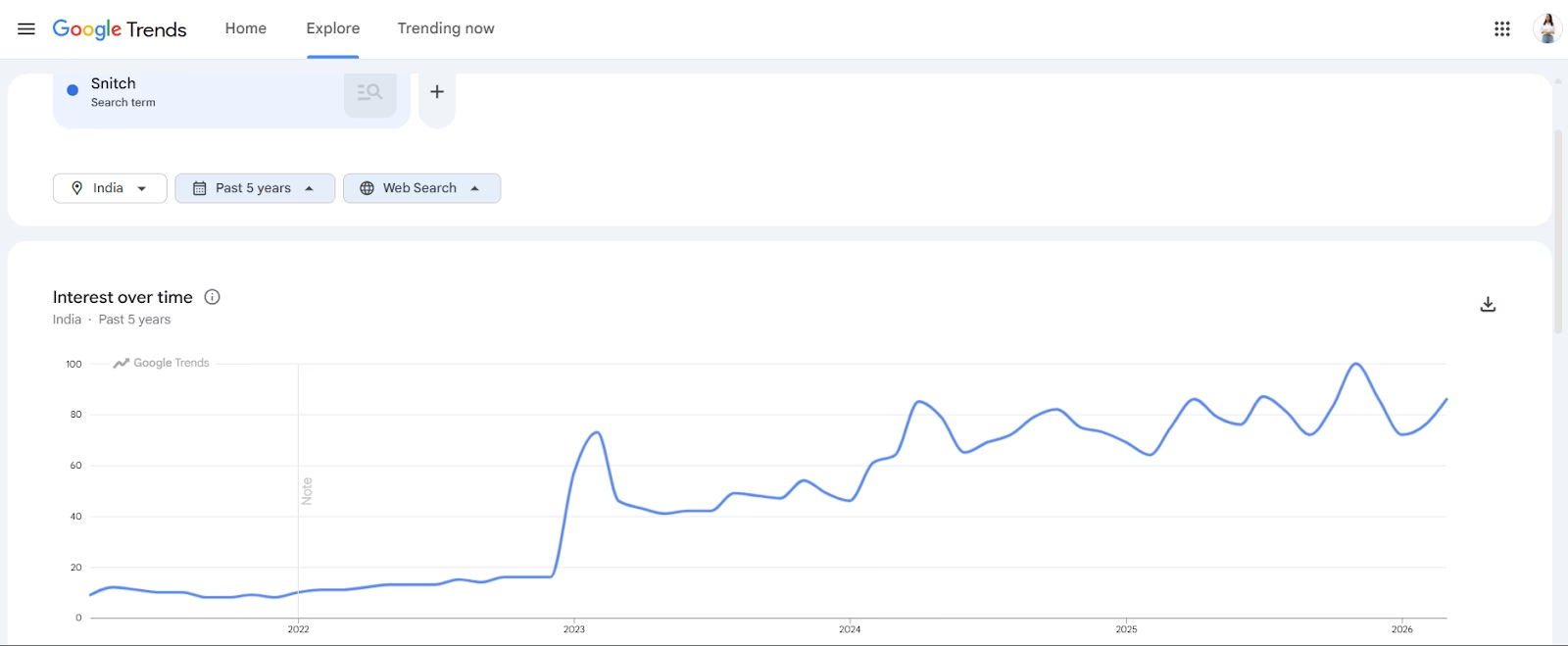
Post this surge, the trend doesn’t drop back to earlier levels. Instead, it stabilizes at a much higher baseline and continues to grow with periodic spikes. This is critical—it shows that Snitch didn’t just go “viral”; it sustained attention.
Each peak likely aligns with key brand moments (campaigns, product drops, or major visibility events), while the rising baseline reflects increasing brand recall and repeat searches.
4. Why Does SNITCH Follow an App-First Strategy?
At SNITCH, mobile is the starting point of the entire customer journey.
The brand treats its app as the primary platform, and even its website is designed like an app-style mobile experience, fast, intuitive, and optimized for smartphone users who dominate fashion discovery today.
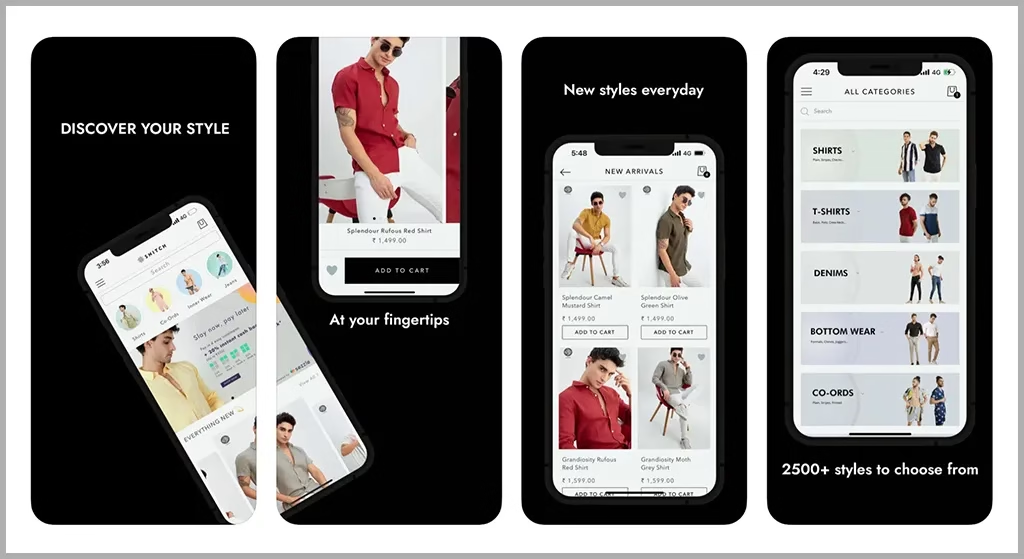
By prioritizing mobile, SNITCH captures real-time customer signals such as browsing behavior, product preferences, and purchase patterns.
These insights help the brand deliver sharper personalization, plan inventory more efficiently, respond quickly to fashion trends, and drive stronger repeat purchase cycles. Mobile is not just a sales channel for SNITCH, it is the central growth engine powering customer engagement, retention, and omnichannel expansion.
5. What Does SNITCH’s Product Range Cover?
SNITCH’s product range is designed to cover every need—from daily wear to special occasions, making it a complete wardrobe solution for men.
- Shirts: SNITCH offers a strong variety of shirts, including casual, printed, and semi-formal options. These are designed to work across different occasions—whether it’s office wear, casual outings, or social events. The variety in patterns, fits, and fabrics gives customers multiple choices without overwhelming them.
- T-shirts: The t-shirt range focuses on comfort and trend. From basic solids to graphic and statement pieces, SNITCH ensures there is something for everyone. These are easy to style and form the foundation of everyday fashion, especially for younger customers.
- Bottomwear: SNITCH covers essential bottomwear like jeans, trousers, and other versatile options that can be paired with different tops. The focus is on fit, comfort, and easy styling, so customers can mix and match without difficulty.
- Co-ords: Co-ord sets are designed for convenience and style. Instead of figuring out combinations, customers can pick a ready-made matching set that looks put together. This is especially popular among those who want a quick, fashionable look with minimal effort.
- Occasion wear: For special occasions, SNITCH offers more refined and elevated styles. These outfits are suitable for parties, events, or celebrations, helping customers dress appropriately while still staying aligned with current trends.
6. How SNITCH Leverages Social Media?
SNITCH has built its brand strongly through a digital-first approach, especially by using social media, influencers, and community-driven content. This strategy has helped the brand grow rapidly and reach a valuation of over ₹2,500 crore.
By focusing on Gen Z and offering fast, trendy menswear, SNITCH has created a highly engaged audience, with over 1 million followers on Instagram. Also, they have built a strong presence on platforms like Instagram, Facebook and LinkedIn, allowing it to connect with both consumers and a broader business audience.
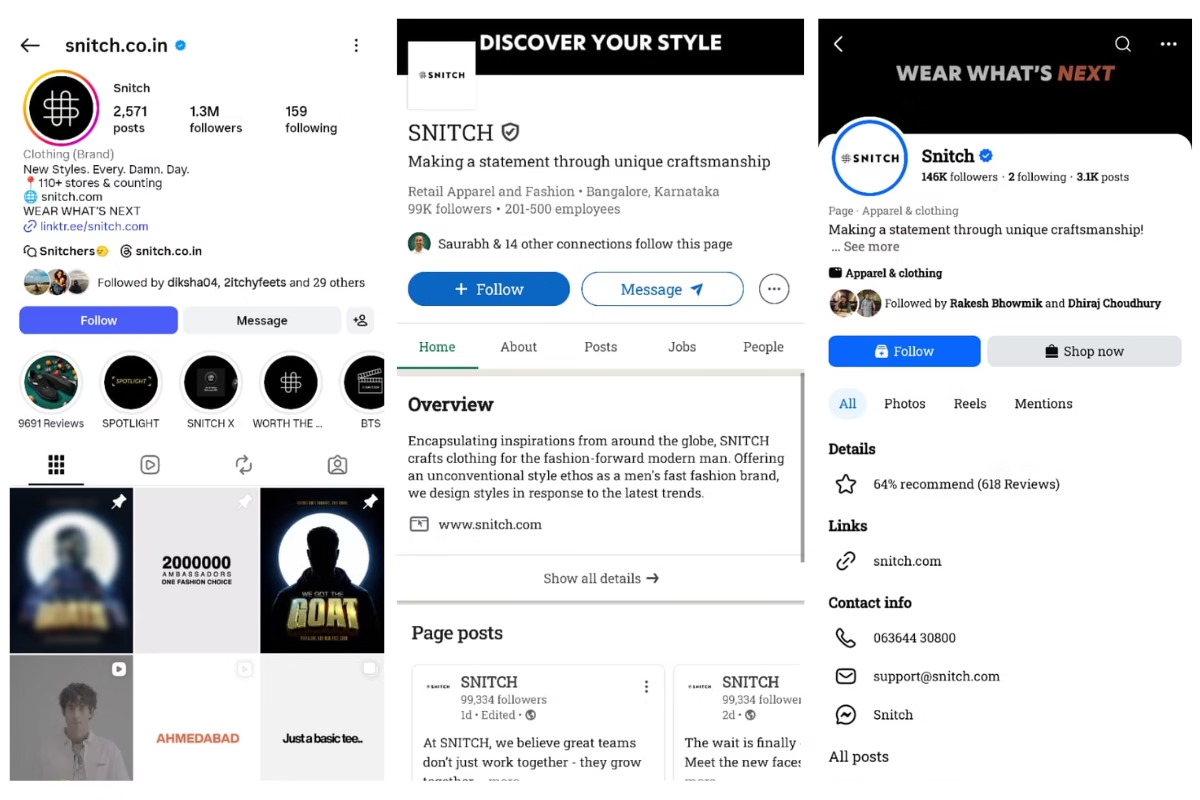
This multi-platform approach helps the brand stay visible, relevant, and engaged across different types of users. Instead of relying only on advertisements, SNITCH focuses on creating engaging content. This includes reels, founder-led content, and relatable fashion posts that connect with the audience.
The Importance of Founder-Led Branding
Snitch has successfully moved from selling "the shirt" to selling "the story of the person who made the shirt."
In the early days, Snitch focused on what most fashion startups do, product, pricing, and speed. But, the real differentiator became the founder’s story. Through LinkedIn, Siddharth doesn’t just post updates, he documents the journey.
From operational challenges to growth milestones, this transparency builds credibility and positions the brand as something more than a seller, it becomes a builder’s story people want to root for.
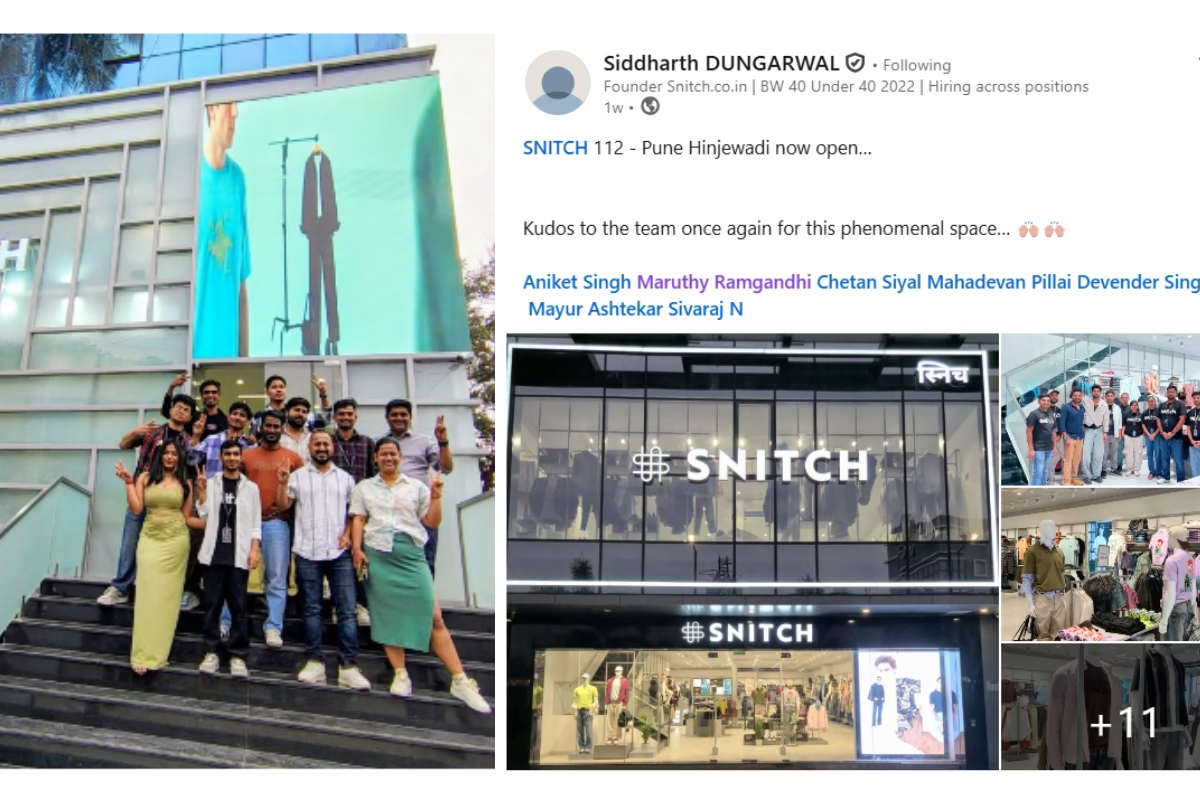
This extends seamlessly to Instagram, where video content plays a key role. Instead of just showcasing collections, the founder appears in Reels and behind-the-scenes moments, talking about launches, sharing glimpses of the workspace, and explaining decisions.
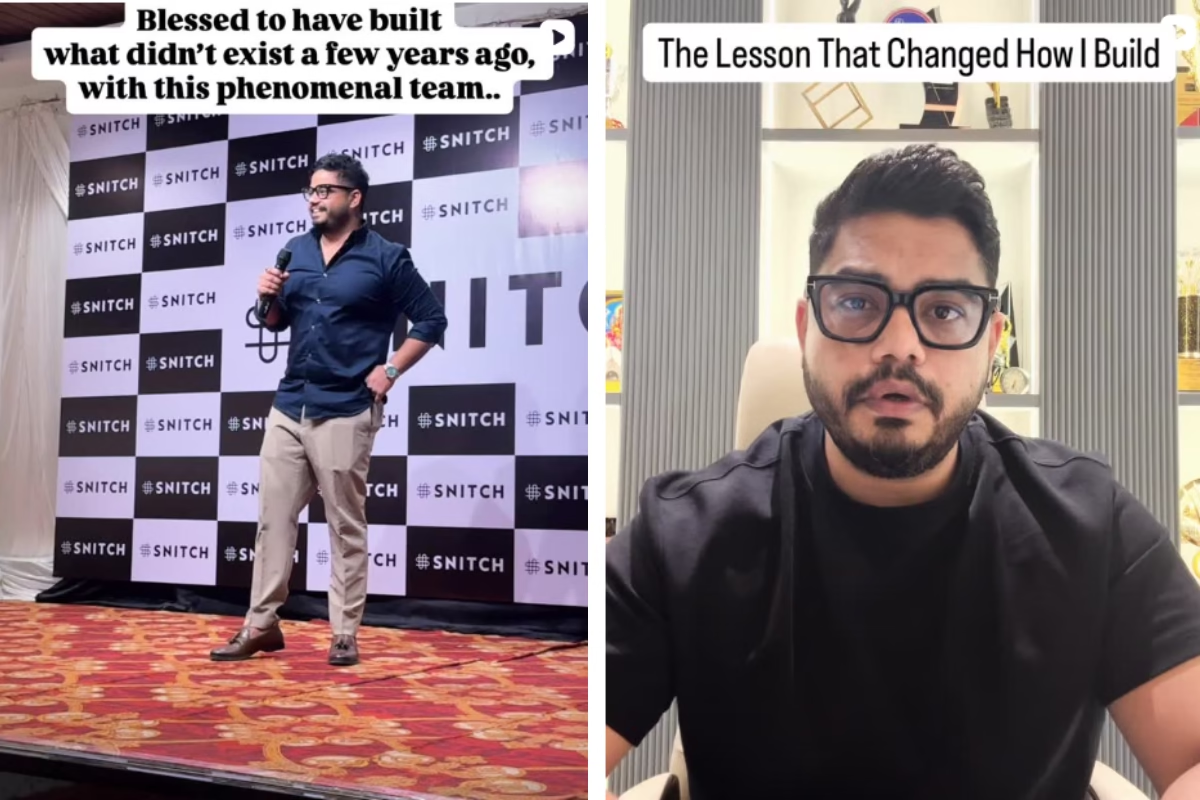
This changes the communication from “brand talking to customer” to “person talking to person,” making every interaction feel more authentic and less transactional.
A visible founder creates accountability, there’s a real person behind the brand. It builds community, people follow stories, not logos. Other than that, the brand’s social media success comes from a few simple but powerful strategies:
6.1 Snitch Squad
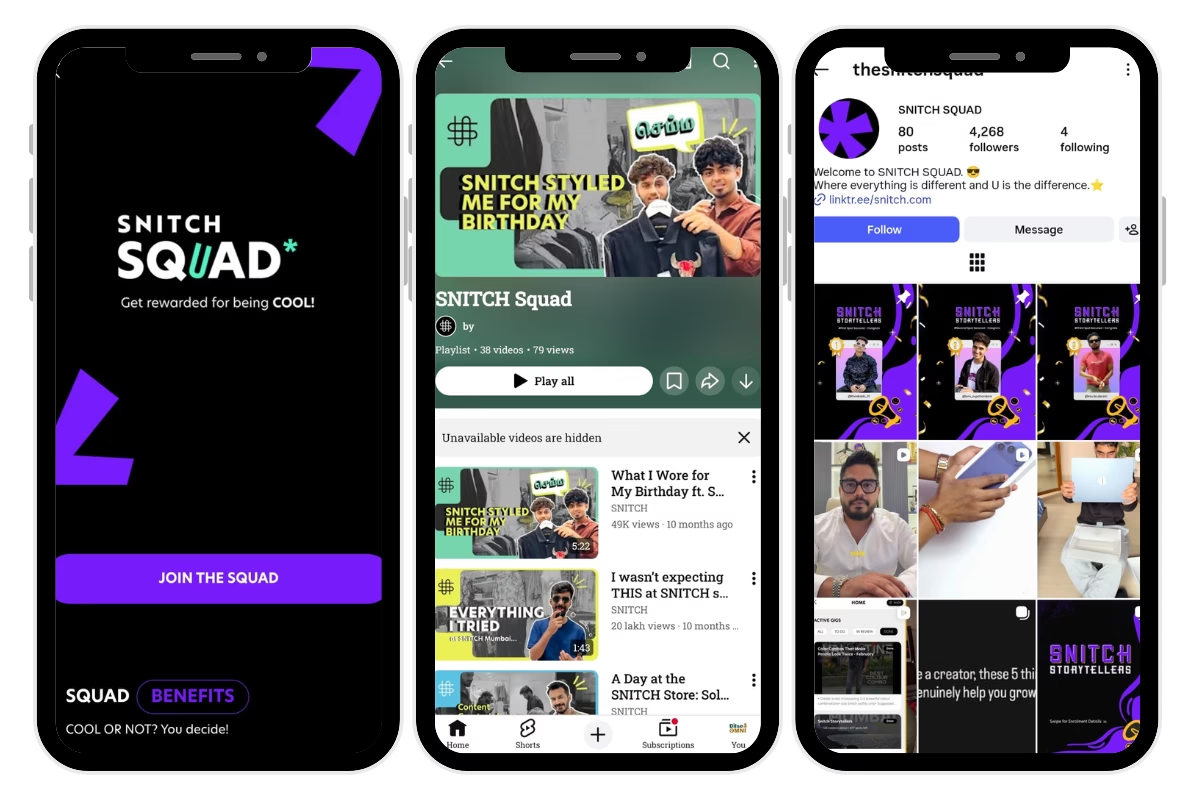
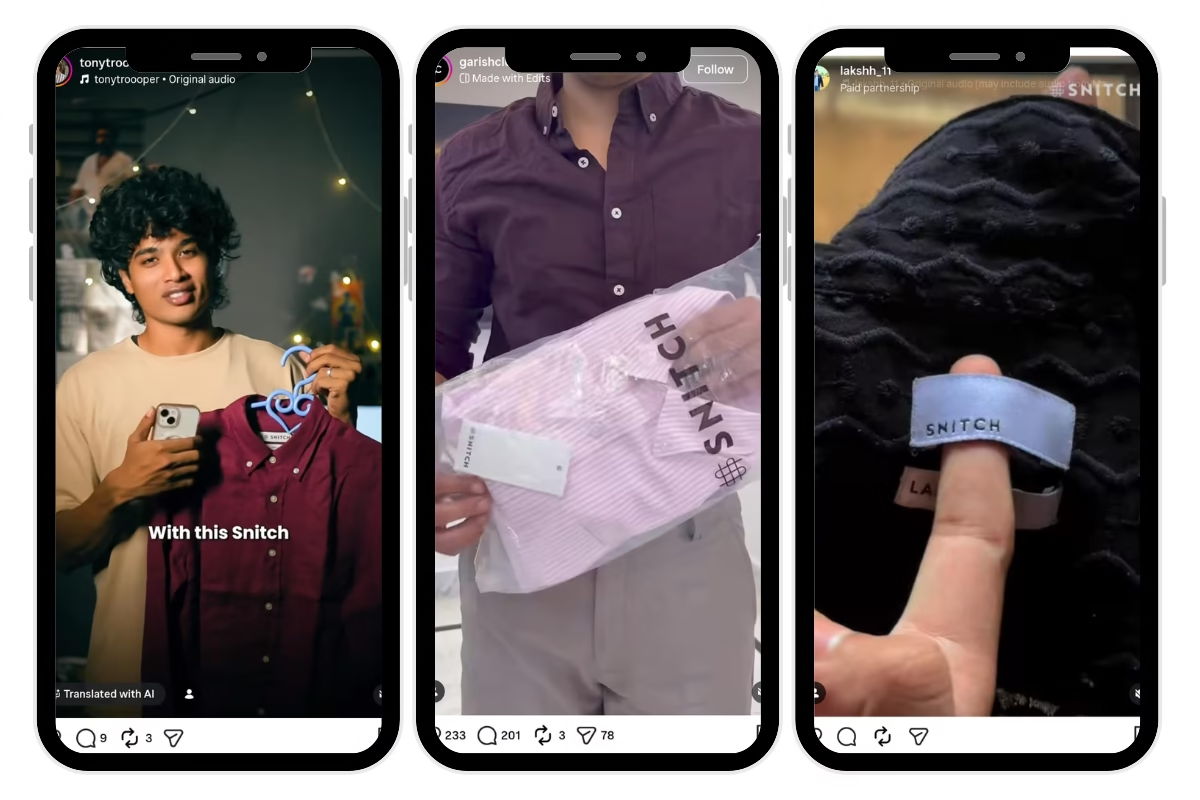
One of the most important is the “Snitch Squad”, where the brand works with micro-influencers instead of only big celebrities. SNITCH collaborates with creators who may have as few as 1,000 followers.
These creators post content wearing SNITCH outfits, making the brand feel more real and relatable. Since people trust content from everyday creators more than big celebrities, this helps build stronger engagement and trust.
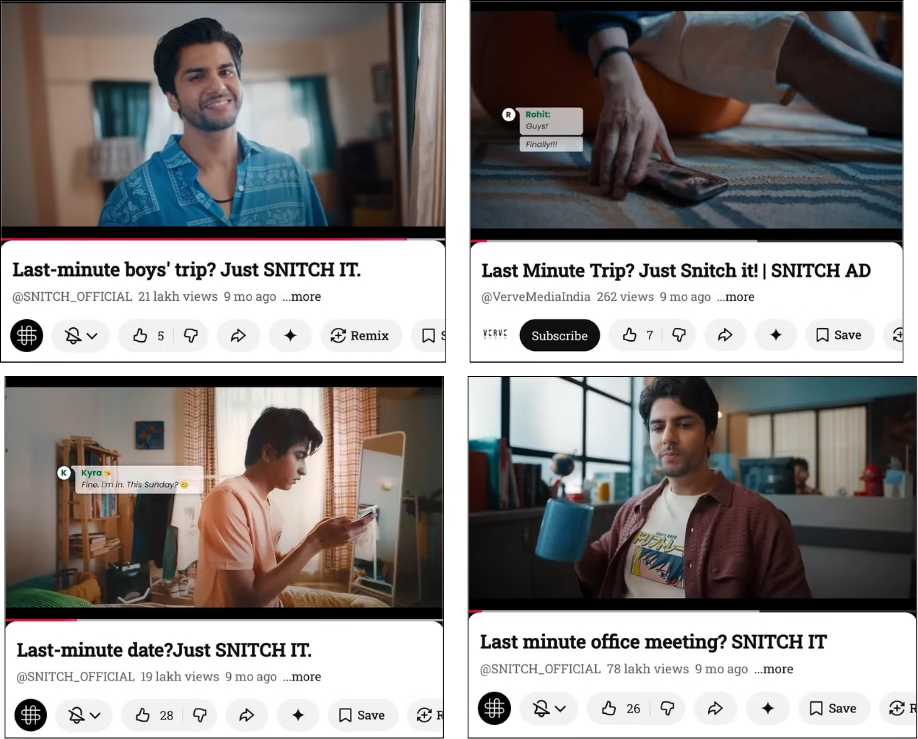
6.2 Last Minute? Snitch It.” campaign
Another key strategy is their “Last Minute? Snitch It.” campaign, which focuses on speed and convenience. This campaign targets young consumers who want quick fashion choices. It shows that you don’t need a lot of time to look stylish, perfectly matching SNITCH’s fast fashion approach.
6.3 Content Creation that Feels Natural
SNITCH also focuses on creating content that feels natural and not overly promotional. Instead of hard-selling products, the brand creates posts that blend into users’ feeds.
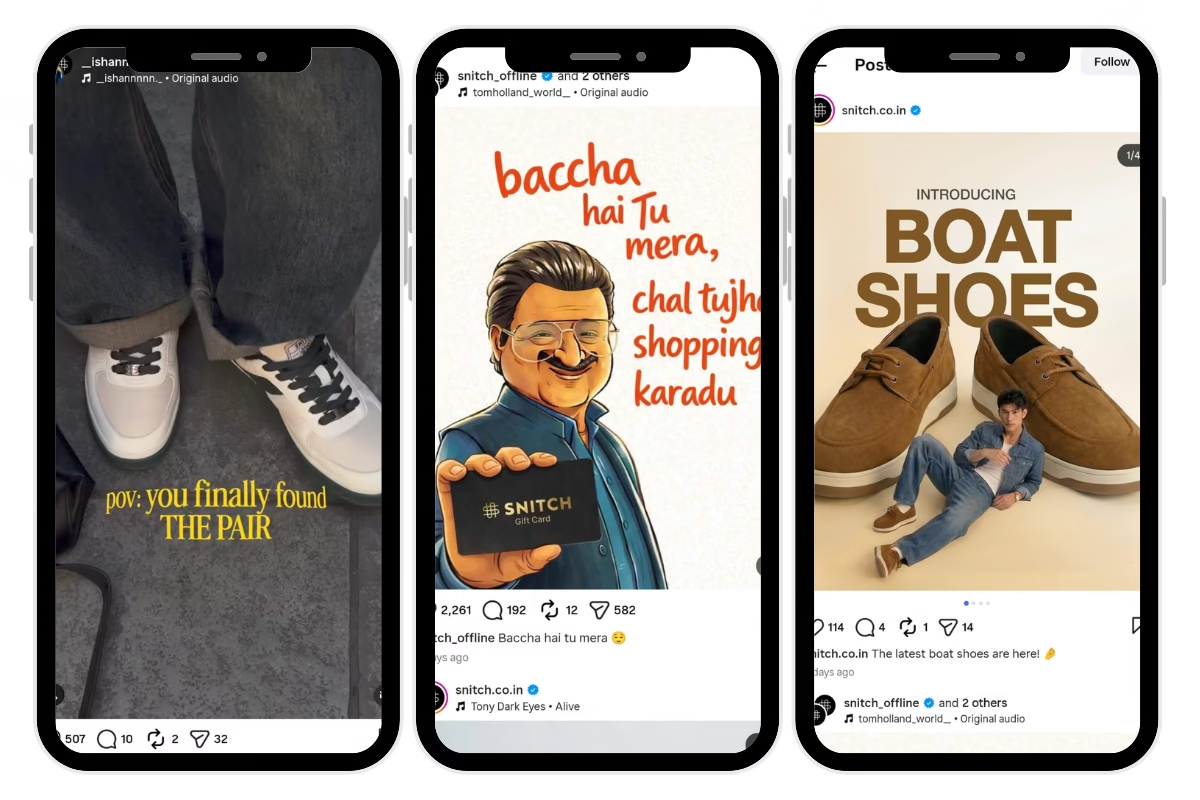
Along with this, they launch 200+ new styles every month, allowing them to quickly catch and respond to the latest fashion trends. This keeps their content fresh, relevant, and engaging.
6.4 Community Building
Another important factor is community building. SNITCH doesn’t just use social media to sell products, it uses it to build relationships.
Customers often share their own photos and experiences, which helps in creating organic word-of-mouth and stronger brand loyalty.
6.5 Online Presence With Offline Growth
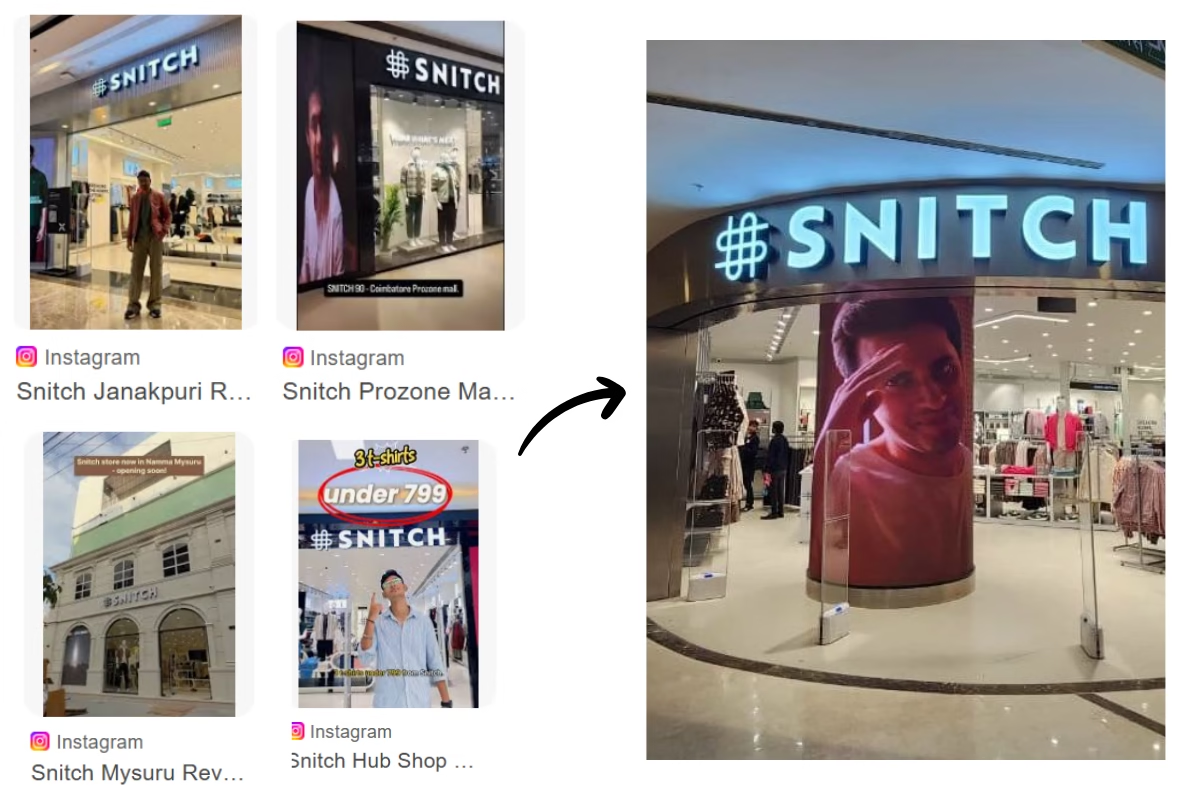
SNITCH connects its online presence with offline growth.
Its strong visibility on social media helps drive customers to its physical stores. This has supported the brand’s rapid expansion to 100+ stores in a short period of time.
7. What Are the Core Elements That Make SNITCH Work So Well?
SNITCH’s success is not built on a single strategy, it’s a combination of well-executed pillars that work together seamlessly.
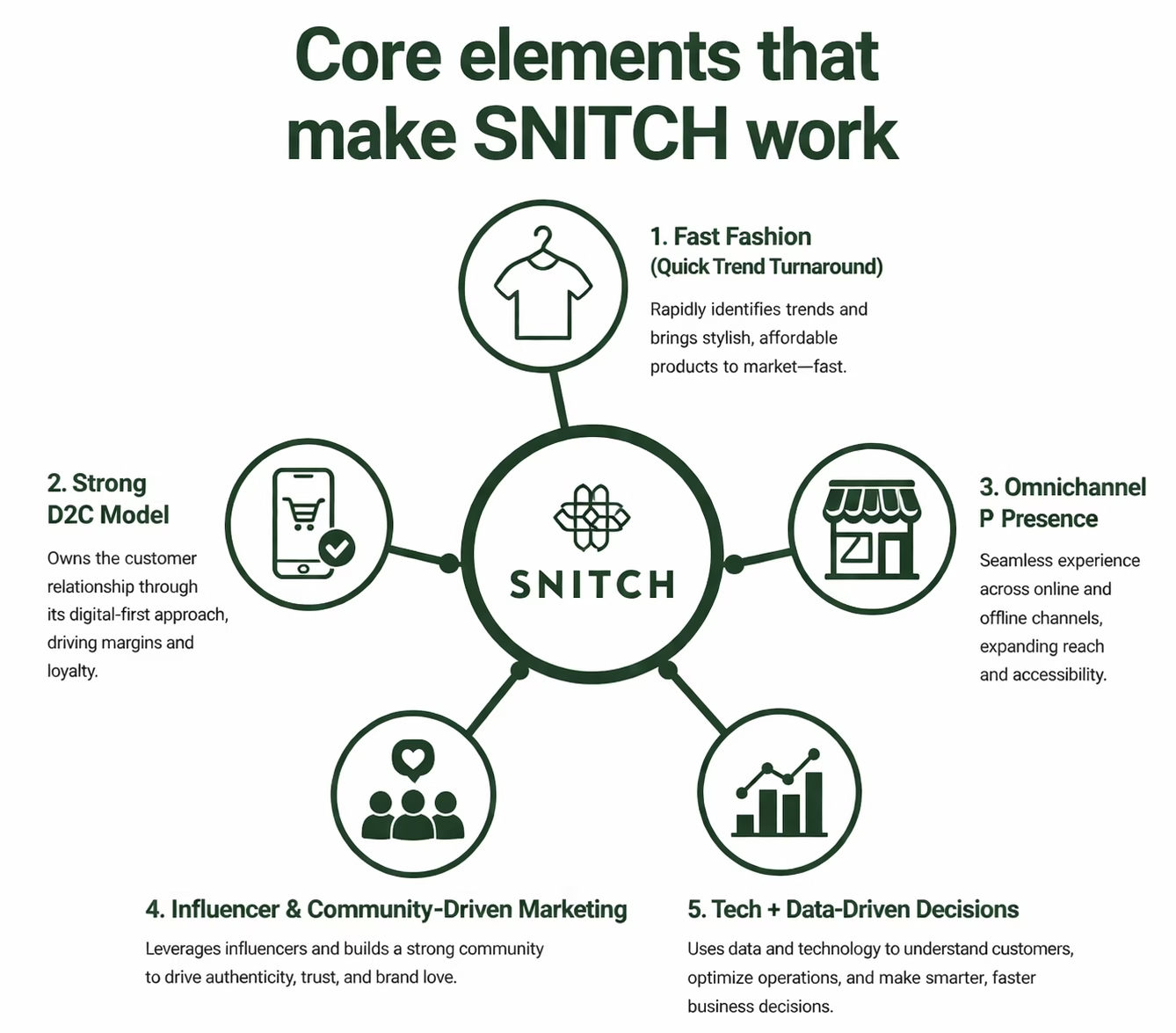
- Fast Fashion (Quick Trend Turnaround): Rapidly identifies trends and launches new styles, keeping the brand constantly fresh and relevant.
- Strong D2C Model: Owns the entire customer journey—leading to better margins, deeper insights, and stronger brand control.
- Omnichannel Presence: Seamlessly connects online and offline experiences, making shopping convenient and accessible.
- Influencer & Community-Driven Marketing: Builds trust and relatability through creators, social proof, and engaged communities.
- Tech + Data-Driven Decisions: Uses data to understand customer behavior, optimize inventory, and drive smarter growth strategies.
8. How SNITCH Became an Omnichannel Fashion Pioneer?
SNITCH has quickly grown from a digital-first D2C brand into a strong omnichannel brand. Instead of treating online and offline separately, it connects both into one system.
Its strategy revolves around what customers see online helps drive them to stores, and their store experience encourages them to shop online again.
Here are the key omnichannel strategies SNITCH uses:
8.1 “Phygital” Retail to Drive Growth
SNITCH follows a phygital approach, combining physical stores with digital strength to create a better customer experience.
Many customers first discover SNITCH online, but visiting a store allows them to touch, feel, and try the products. So, the brand doesn’t just see stores as just places to sell products. Their stores act as experience centers and brand showcases where customers can explore the brand in real life.
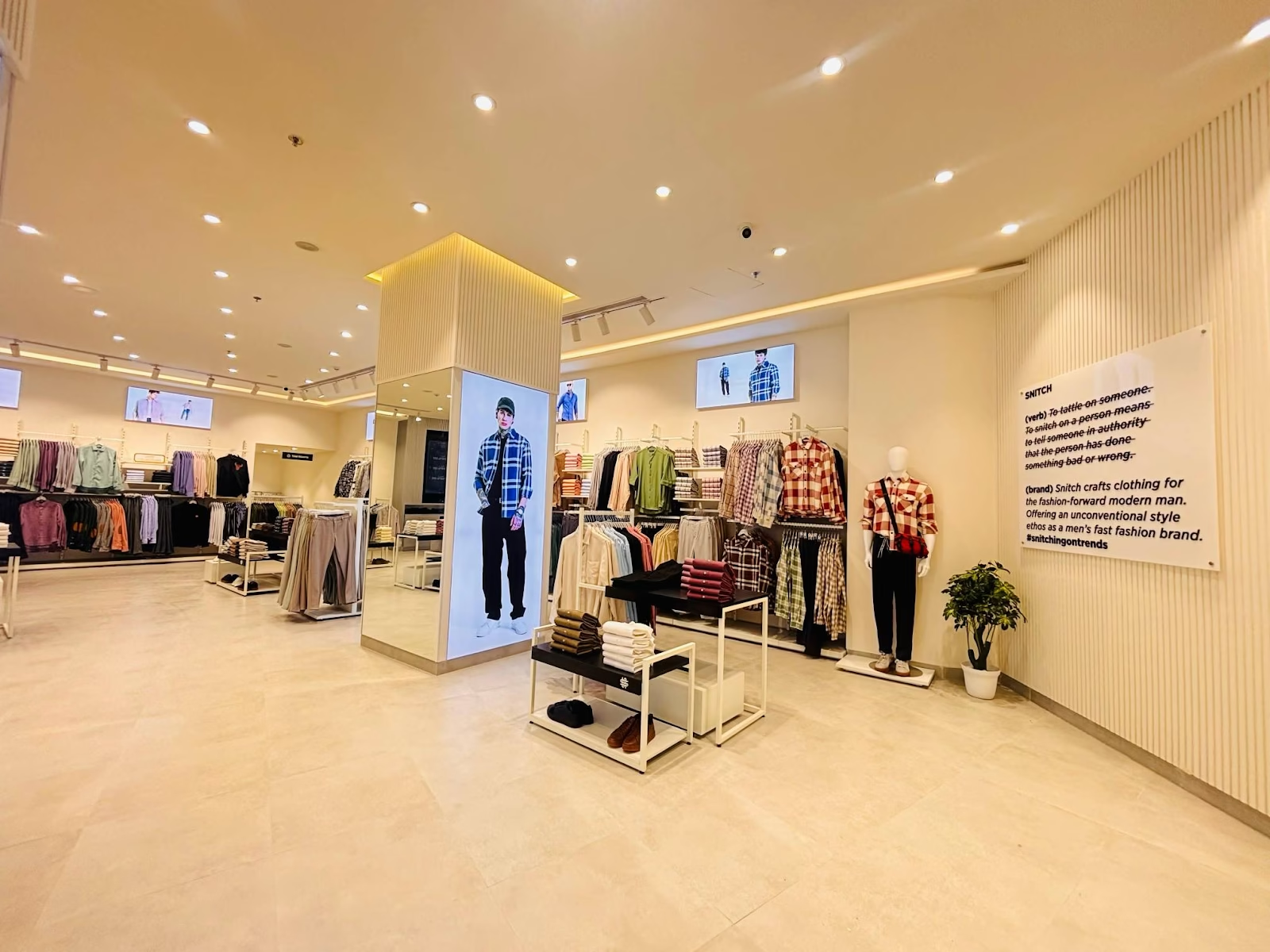
Furthermore, SNITCH has expanded rapidly from being an online-only brand to 100+ stores across India, with plans to grow even further.
It focuses on opening stores in prime high-street locations like major shopping areas in cities, where customer footfall and visibility are high. This helps the brand attract serious buyers and build a strong premium image.
This increases confidence and often leads to higher spending, store purchases are almost 2x higher in value compared to online orders.
8.2 Integration of Quick Commerce for Faster Delivery
SNITCH is taking its omnichannel strategy a step further by using quick commerce (Q-commerce) to deliver products faster.
Instead of using only warehouses, SNITCH treats its physical stores like mini-warehouses. This allows the brand to deliver products quickly from nearby locations.
With its service, often called “Snitch Quick,” customers can get their orders delivered in as little as 60 minutes. This is especially useful for last-minute fashion needs, like an outfit for an event.
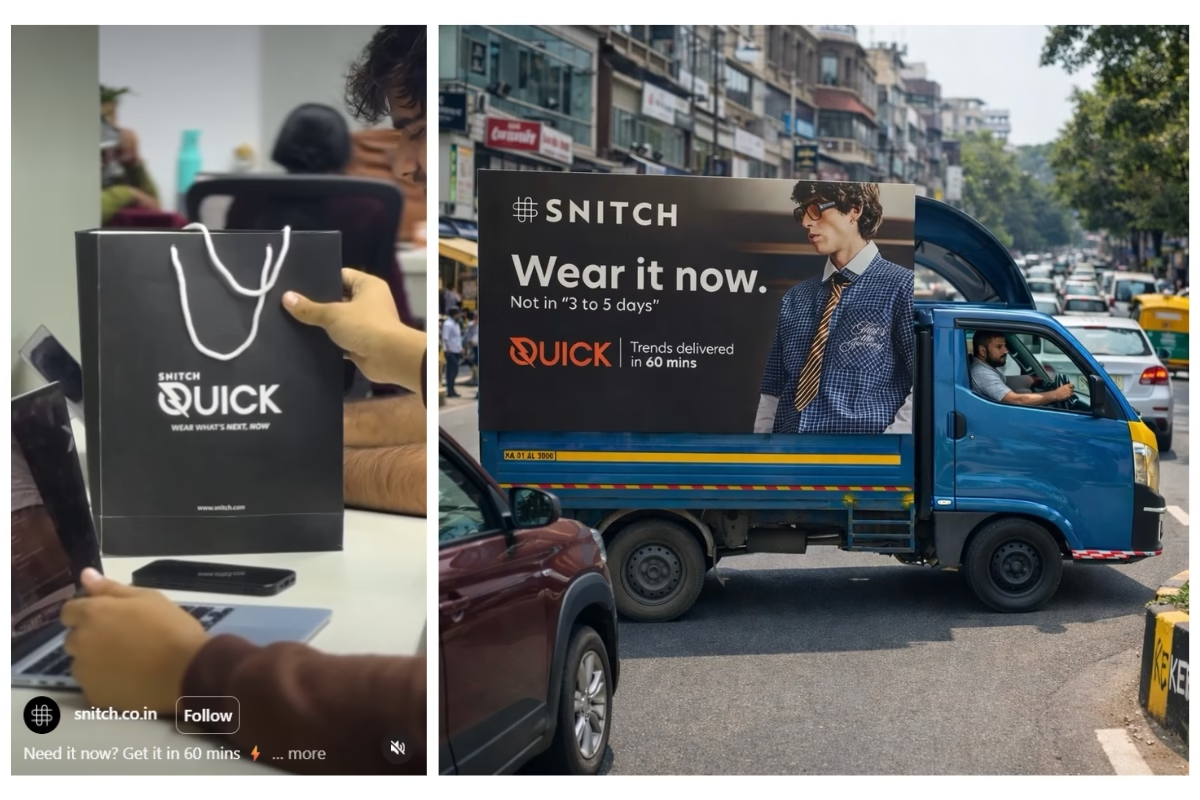
To make this possible, SNITCH uses strong technology systems to keep its inventory updated in real time. This means customers can see what is available across stores, the website, and the app, and get faster deliveries without delays.
This model is already working in major cities like Bengaluru, Mumbai, and Delhi, helping SNITCH combine speed, convenience, and availability.
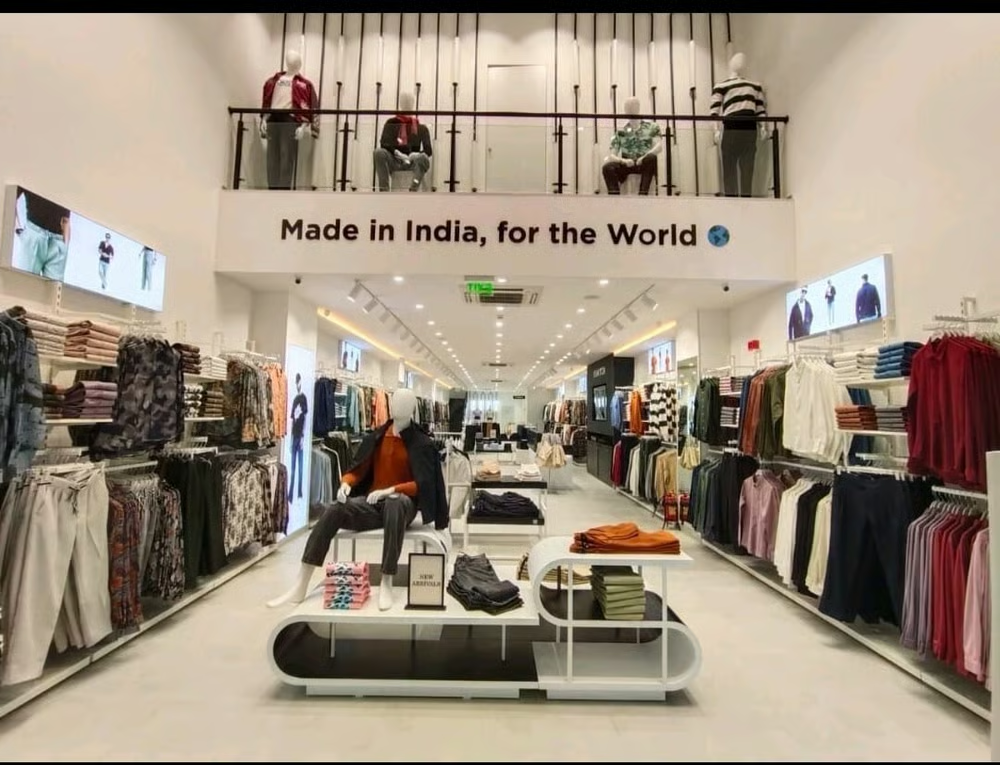
8.3 Store Experience & Visual Merchandising
When you walk into a SNITCH store, it feels clean, organised, and easy to explore. The products are displayed in a way that quickly catches your attention, and the overall look of the store matches the brand’s style.
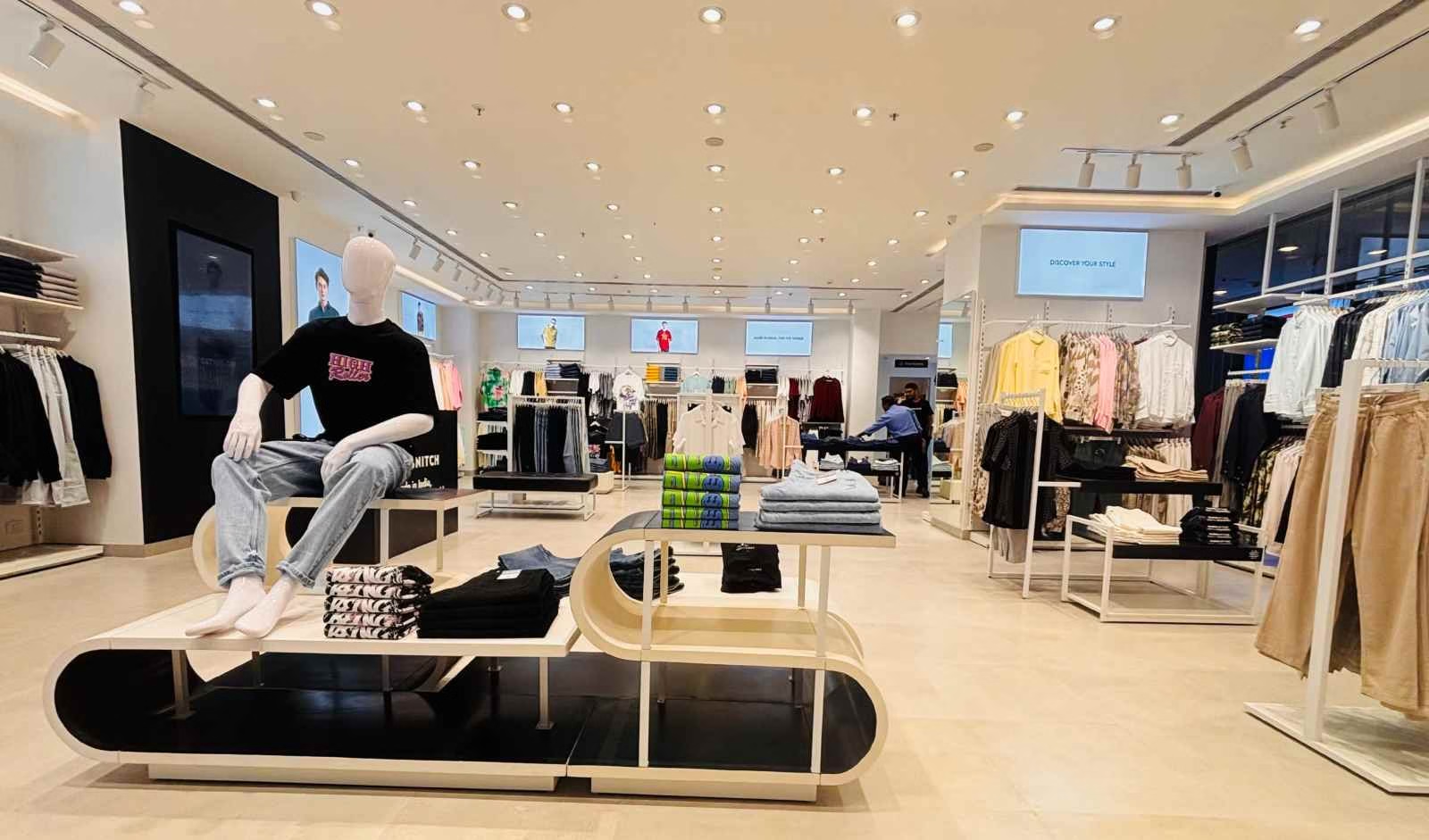
This is done on purpose.
The store is not just a place to sell products, it is a place where customers can understand the brand better. Good lighting, clear layout, and attractive displays make it easier for people to browse and try products.
8.4 AI-driven personalization
Another important part of SNITCH’s strategy is AI-driven personalization with their style assistant. The brand uses technology to understand customer preferences based on past purchases, browsing behavior, and wishlisted items.
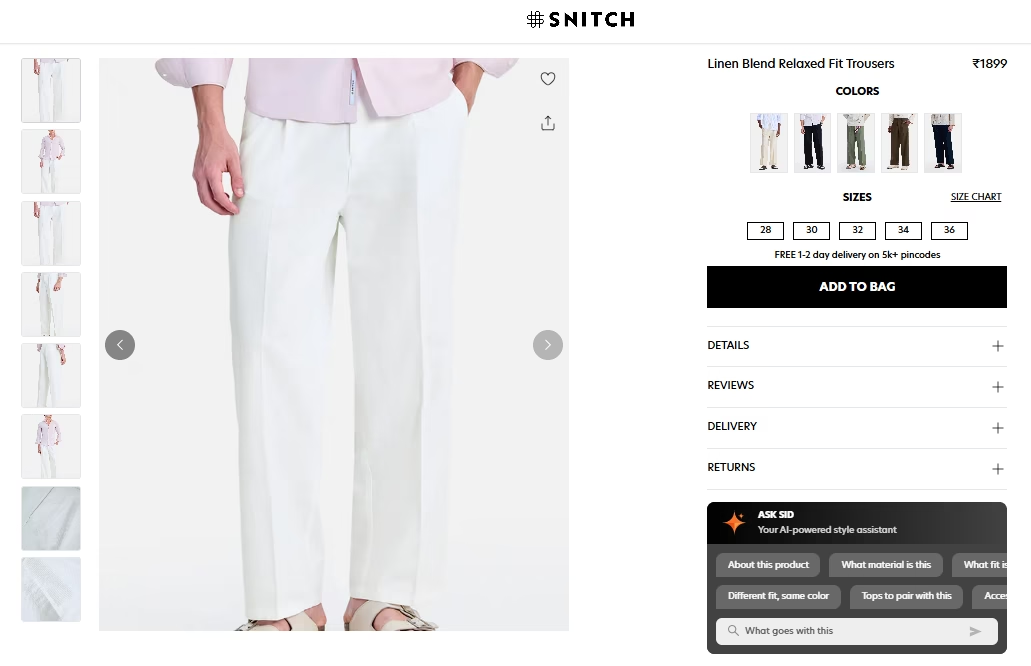
Their app then recommends outfits that match individual style, along with the latest fashion trends. This helps customers discover products more easily without spending too much time searching.
Over time, these recommendations become more accurate, making the shopping experience smoother, faster, and more relevant for each customer.
8.5 Multi-Channel Distribution for Growth
SNITCH follows a smart multi-channel strategy to reach customers across different platforms while still focusing on its own ecosystem.
The majority of its sales, around 80%, come from its own website and app. These platforms help the brand build direct relationships with customers, improve margins, and drive long-term loyalty.
At the same time, SNITCH is present on marketplaces like Amazon, Myntra, Ajio, and Flipkart. These platforms help the brand reach new customers and increase visibility.
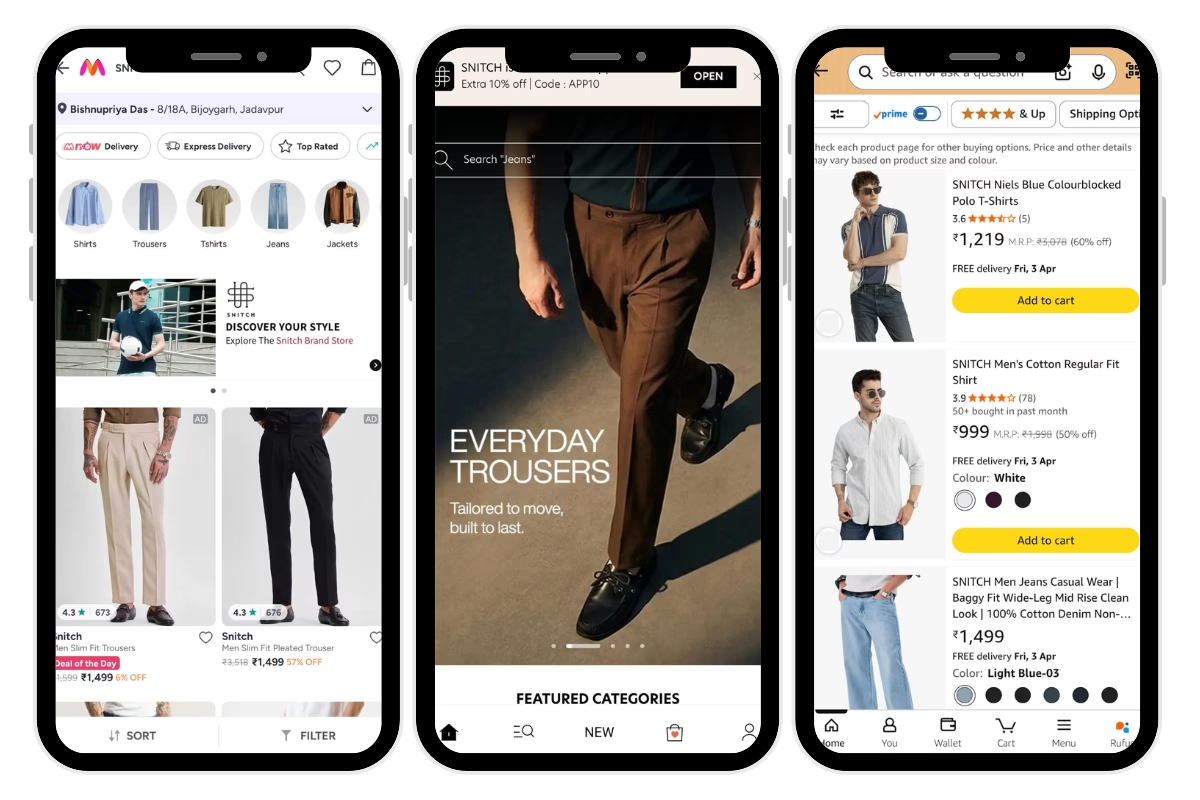
Once discovered, many of these customers are guided toward SNITCH’s own platforms for repeat purchases.
SNITCH has also started expanding internationally by entering the United Arab Emirates market through platforms like Noon and Namshi. This helps the brand test demand in global markets.
8.6 Hybrid Marketing to Drive Growth
SNITCH uses a hybrid marketing approach, combining both digital and offline strategies to match its omnichannel expansion. One key strategy is hyperlocal campaigns.

SNITCH runs targeted digital ads for people located near its stores. This helps drive more footfall, as nearby customers are encouraged to visit the store.
Read more – How To Scale Up Your Store Sales By Increasing Footfall?
Another important approach is creator-led offline events. SNITCH turns store launches and new collection drops into engaging on-ground events.
These often include micro-influencers and collaborations with artists, making the launch more exciting and culturally relevant.
9. Why We Admire SNITCH — And What We Learned?
SNITCH focuses on giving customers exactly what they are looking for in today’s fashion. From observing SNITCH, these are the key lessons that stand out:
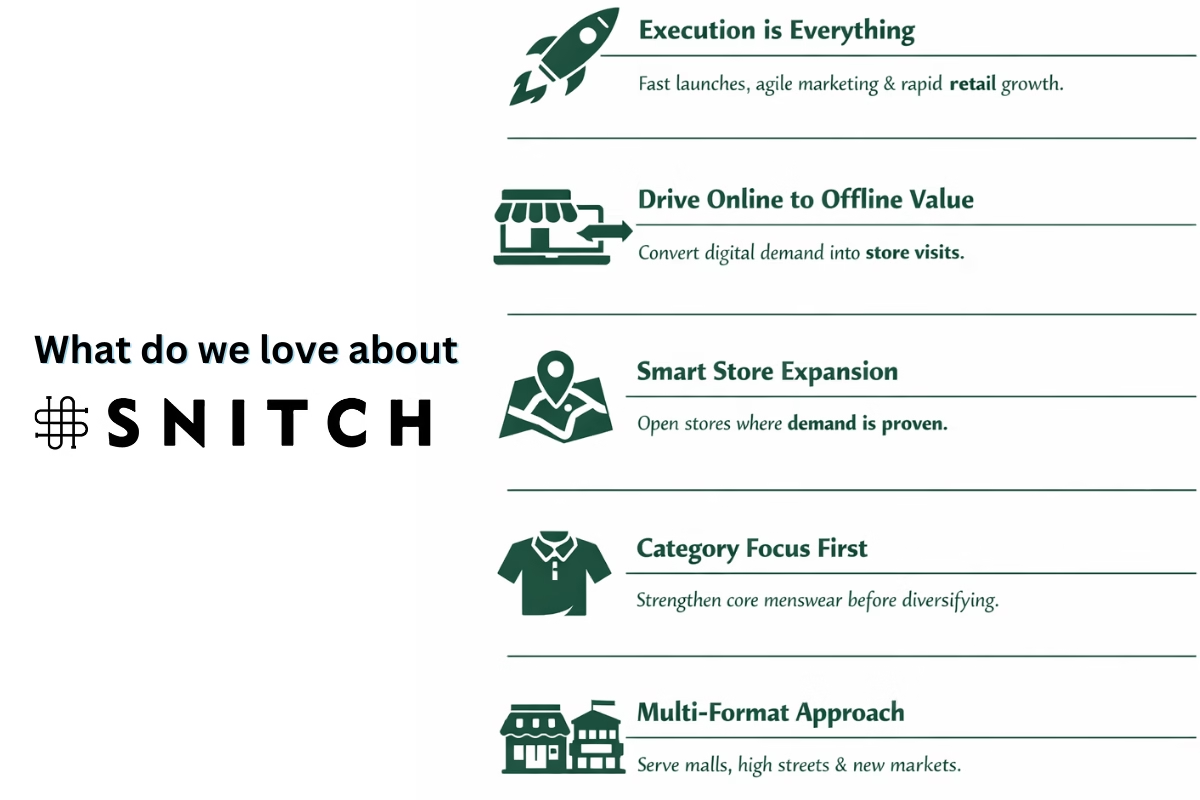
- Execution is everything: Strategy alone does not create growth. SNITCH moved fast on product launches, marketing, and retail expansion, showing that disciplined execution turns ideas into scale.
- Drive higher customer value from online to offline: The brand first builds strong demand online and then converts that interest into store visits, improving customer lifetime value across channels.
- Smart store expansion: Instead of opening stores blindly, expansion follows proven demand, helping reduce risk while accelerating omnichannel growth.
- Category focus before diversification: SNITCH strengthened its core menswear categories first, building brand authority before gradually expanding into newer segments.
- Multi-format retail approach: Different store formats allow the brand to serve malls, high streets, and emerging markets efficiently while optimizing costs and reach.
While we haven’t worked directly with SNITCH, these learnings show how strong execution and omnichannel thinking can drive rapid growth.
10. Conclusion
SNITCH’s strategy revolves around delivering value at every touchpoint. Looking ahead, SNITCH is also exploring advanced technologies like Artificial Intelligence and livestream shopping. Their vision is to create a more interactive experience where customers can see products, get styling tips, and engage with the brand in real-time.
If you’d like to discuss how we can help optimize your Omnichannel Marketing strategies, feel free to reach out to us at alibha@daiom.in
For more such deep-dives and insights, follow and stay tuned to DAiOM.
Subscribe to our NEWSLETTER!