
Personalization is one of the most debated strategies in marketing today, with brands experimenting across multiple stages and levels to get it right.
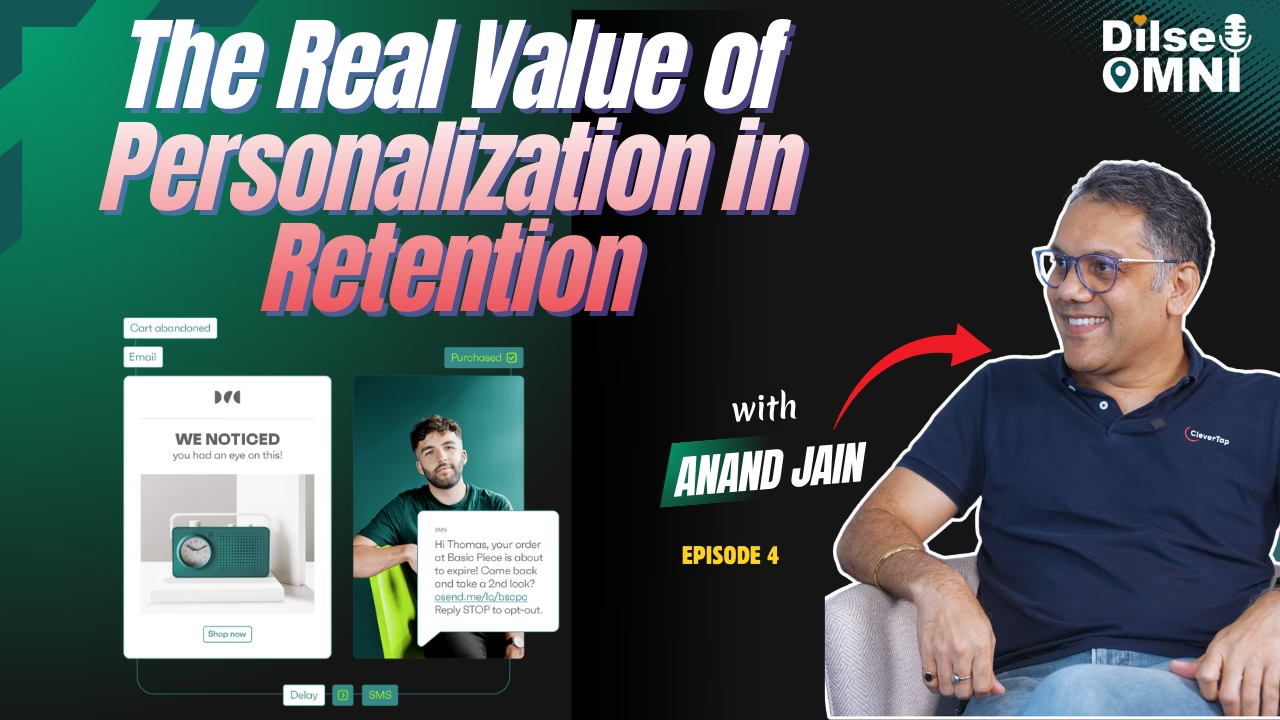
This blog is inspired by insights from our latest DilSe Omni podcast with Anand Jain, co-founder of CleverTap, where one idea stood out clearly: retention isn’t driven by louder marketing, but by making customers feel truly seen.
In a world flooded with choices, discounts and ads, loyalty belongs to brands that understand customer context, behaviour and intent, where individualization moves from a “nice to have” to the real engine of long-term retention.
We’ve all been there. You get a marketing email that proudly uses your first name, which feels oddly unsettling, only to see it promoting a product you literally just bought three days ago. Or that weird ad that follows you around the internet for a winter jacket you clicked on back in July, even though it’s November now. You’re not being personalized; you’re being hunted. And honestly? It feels more like spam than care.
Here’s the uncomfortable truth: most brands aren’t doing personalization. They’re just doing segmentation and calling it personalization. And the gap between the two is massive.
The marketing world loves to talk about personalization like it’s some magic wand that’ll solve all customer retention problems. But if we’re being real, most of what we see is just clumsy automation dressed up in your first name. The real shift happening in marketing isn’t about sending more messages, it’s about understanding what your customers actually intend to do, not just what they’ve already done.
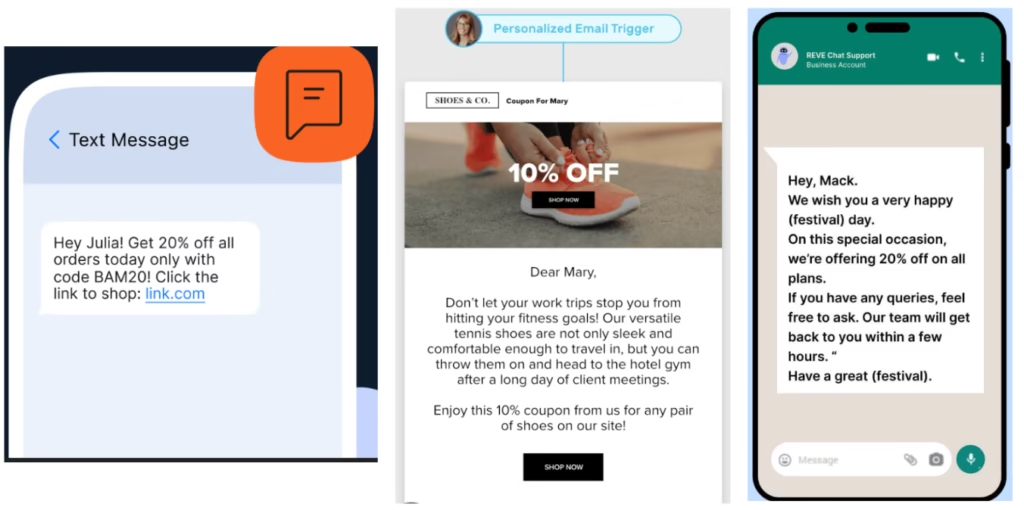
This blog dives into four counter-intuitive truths about personalization that’ll completely change how you think about customer relationships.
Table of Contents:
1. The 4 truths about personalization
These aren’t just theoretical concepts, they’re backed by real industry insights and powered by the modern data platforms that are reshaping customer loyalty.
- The Best Personalization Feels Like Nothing at All
The ultimate goal of personalization isn’t to feel personalized. It’s to feel like air, invisible, omnipresent, but never noticed.

In Marketing, we call this “individualization,” and it’s completely different from regular personalization. When something is truly individualized, you don’t stop and think, “Wow, this was personalized for me!” You just read it, register the information, and move on. It’s seamless. Natural. Like a text from a close friend.
Think about the difference between how your best friend communicates with you versus how a brand messages you. Your friend’s text feels natural. You don’t pause to analyze it as “personalized.” You just understand it and respond. That’s the gold standard. That’s individualization.
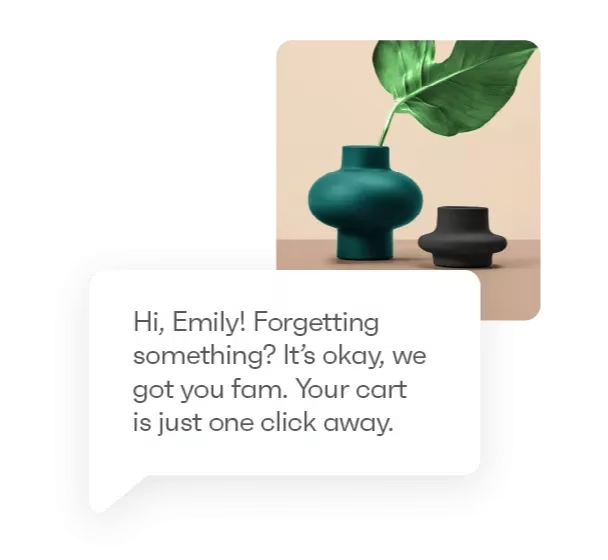
Truly deep personalization is called individualization, where as an individual, you do not even feel that something is personalized to you. It feels natural. It just feels like air. You don't feel it, but it's all around you.
The paradox here is stunning:
The better the personalization, the more invisible it becomes.
Most brands are chasing the wrong goal. They’re trying to make personalization obvious, they want you to notice it, to feel special. But that’s exactly what makes it feel like spam.
- Brands Learn More From What You Don’t Do
This is where personalization gets really interesting. Most marketers are obsessed with positive signals, what customers click, what they buy, what they engage with. But the most valuable insights come from what customers don’t do.
These are called “negative signals,” and they’re absolute gold for understanding human intent.
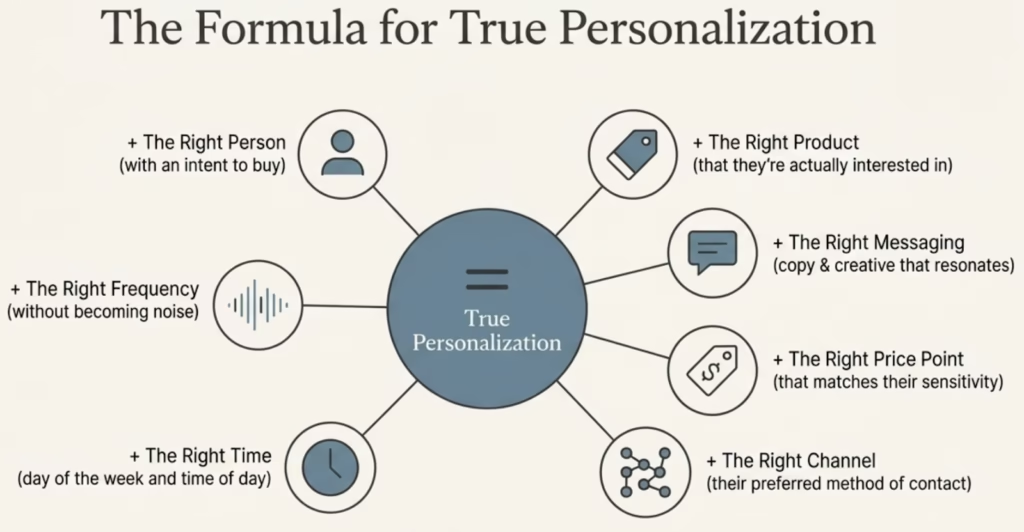
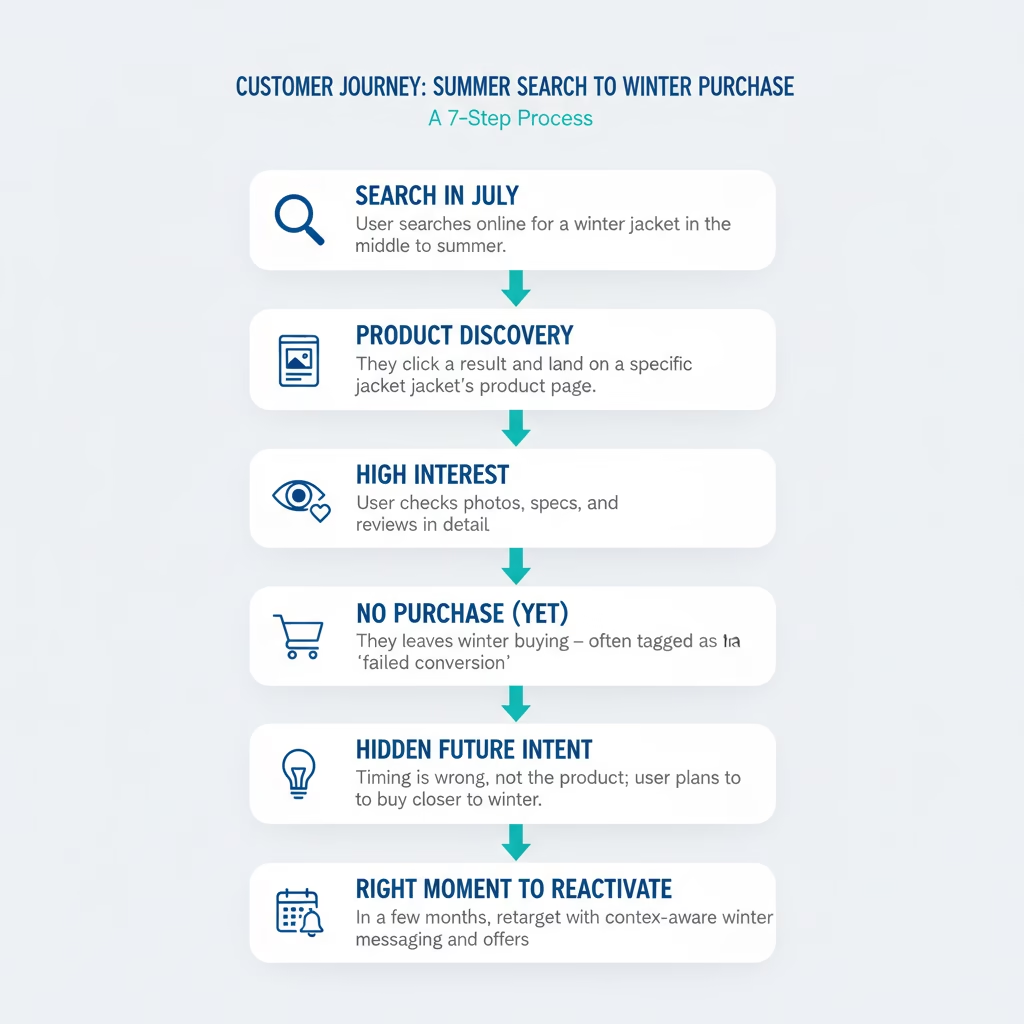
Let’s say someone searches for a winter jacket in the middle of July. They find it, click on it, look at all the details, add it to their cart, then leave. A basic analysis would mark this as a “failed conversion.” Wrong. This isn’t a failure; it’s a window into future intent.
The context is timing. They probably want that jacket, but not right now. In a few months, when winter actually rolls around? That’s your moment.
Or consider this: someone clicks an ad for a t-shirt, lands on your site, clicks through to the product page, adds it to their cart, and abandons. Simple interpretation: they lost interest.
Deeper analysis: the size they wanted was out of stock. The intent to buy was strong. The system failed them, not the other way around.
This is where most “personalization” strategies completely miss the mark. They’re not capturing the full context. They’re not asking: Why did this person NOT do something? Was it timing? Availability? Price? Trust? Understanding the “why behind the no” is infinitely more valuable than celebrating the “yes.”
- A Standalone Data Platform Is a Hero With No Arms
The Customer Data Platform (CDP) is the foundation of modern marketing. It’s supposed to be the central hub, the place where all customer data lives, where all insights are generated, where the “what should we do next?” questions get answered.
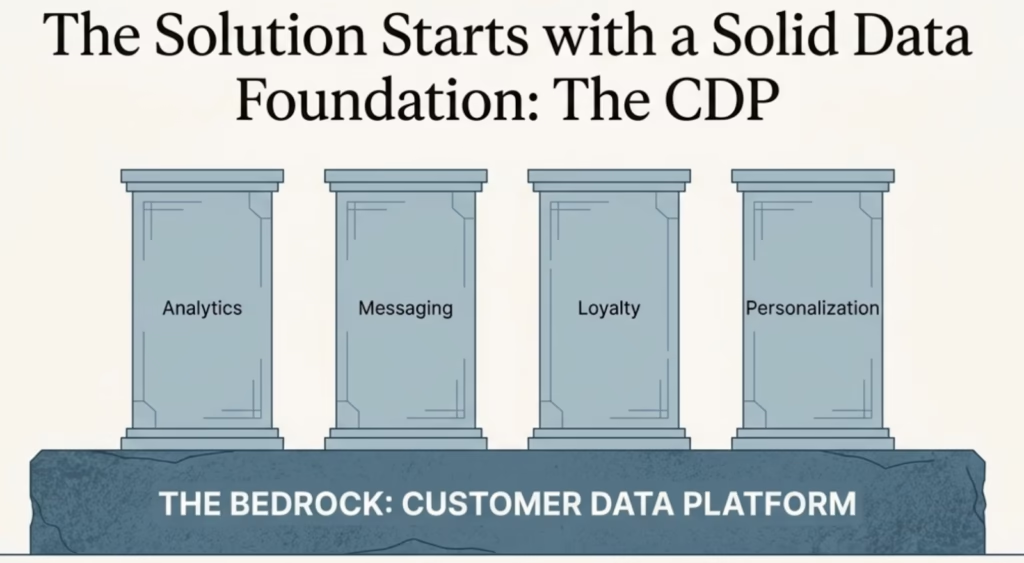
But a CDP that can only store and analyze data without the ability to act on it is fundamentally useless.
Think of it like this: imagine a character who can see exactly what’s happening, understands the threat completely, knows precisely what needs to be done, but has no arms. So they’re stuck. Helpless. That’s a standalone CDP.
In the movie Sholay, there’s a character named Thakur. He can see the villain Gabbar. He understands the danger. He knows the solution. But he’s paralyzed, literally without the means to act.
A CDP is like that. It knows which customer segments are most likely to transact, but it doesn't have the ability to reach out to its customer base. It requires a marketing automation solution.
Your CDP identifies a golden opportunity. It knows exactly which customers are about to buy, what they want, the perfect time to reach them. But then what? That insight has to travel from your CDP to your messaging platform, your recommendation engine, your personalization layer. And somewhere in that journey, all the nuance gets lost.
This is the real “big data problem” of modern marketing. It’s not that we don’t have enough data. It’s that the data is trapped in separate houses, unable to communicate effectively. And every time data travels between disconnected systems, rich context evaporates.
- Modern CDPs Aren’t Just for ‘Customers’ Anymore
Traditionally, a CDP was basically a fancy database for your “known customers”, the people who’d signed up, made a purchase, or otherwise raised their hand and identified themselves. That was it.
Why? Because storing and processing data used to be expensive. Prohibitively expensive. So brands only tracked their known customers because those were the ones generating revenue.
Modern CDPs now store data on everyone, including anonymous website visitors. This isn’t just an upgrade; it’s a fundamental evolution in what’s possible.
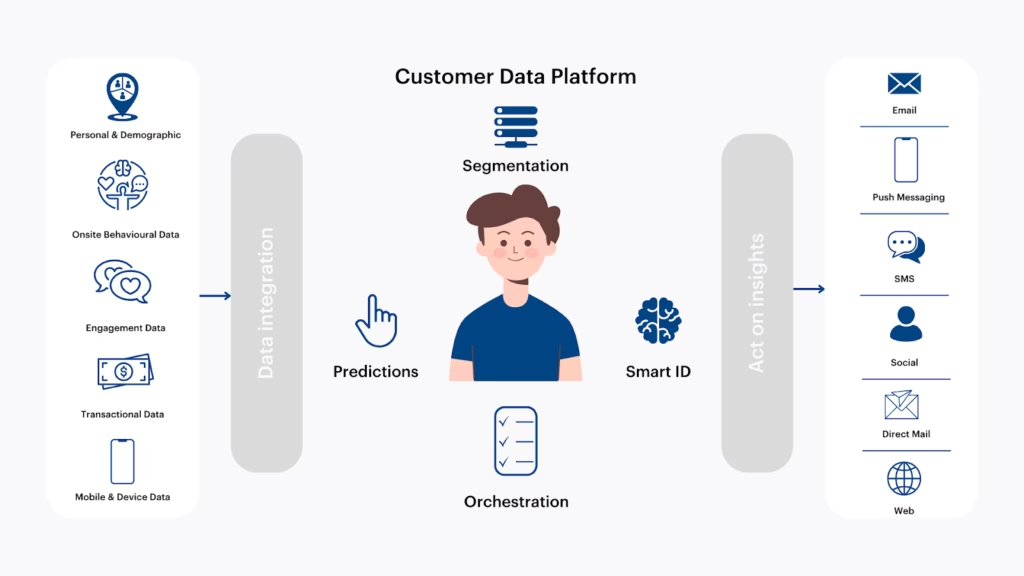
Here’s what this means in practice:
First Touchpoint Is Recorded. Modern platforms capture the very beginning of a customer’s journey. Which specific ad campaign brought them to your site? Which ad copy did they click on? This initial context becomes a powerful tool to tailor messaging months down the line, when they might be ready to convert.
The Entire Journey Is Saved. A travel app can store data on what amenities a user is browsing for. Someone searching for hotels with pools two months before their trip has completely different needs than someone searching two days before. This temporal context is a massive intent signal that most brands completely ignore.
Product Properties Are Absurdly Granular. When someone views a t-shirt, a modern CDP can store up to 2,000 different properties about that single event. The brand. The color. The material. The size. When it was added to inventory. Price history. Competitor comparisons. Everything.
The implication? Data platforms are no longer just recording what already happened. They’re sophisticated prediction engines designed to capture future intent at massive scale, with granular detail, for every single visitor, whether they’re a known customer or someone who just landed on your site for the first time.
This completely reframes what personalization can be. You’re not just reacting to past behavior anymore. You’re getting ahead of future needs.
2. Why Most Brands Get It Wrong: The Data Silo Problem
So if modern CDPs are so powerful, why does most personalization still feel like spam?
Because the underlying architecture is broken.
Most marketing stacks look like this: your CDP over here, your messaging engine over there, your recommendation engine in another corner, your analytics platform somewhere else entirely. They’re all siloed. They’re all supposed to work together, but they don’t. Not really.
Each system sees only a tiny slice of the customer’s story. The messaging engine doesn’t have access to all the rich data the CDP collected. The recommendation engine uses slightly different definitions and calculations than the personalization layer. Data flows between systems, sure—but context doesn’t.
This is why you get emails promoting products you just bought. Why ads follow you for items that are out of stock. Why the “personalization” feels so aggressively off-target. Each system is working with incomplete information.
The fundamental issue: data flows, but context does not.
3. The Solution: One Platform, End-to-End
Here’s what the best-in-class brands are doing: they’re moving away from siloed stacks and toward integrated platforms where the CDP, analytics, messaging orchestration, and personalization all live in the same ecosystem.
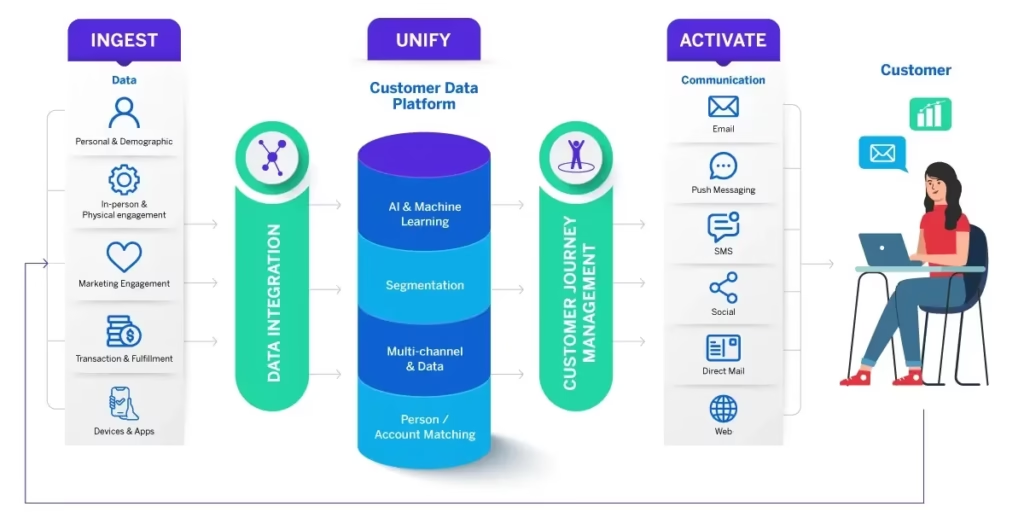
Think about what this enables: when a customer shows an intent signal, the platform doesn’t have to route that insight through multiple disconnected systems. It stays intact. All 500 properties transfer. All the context arrives. The messaging engine, recommendation engine, and personalization layer all have access to the full truth.
This unified architecture ensures that both data and context flow freely. The platform finally has the “arms” to act on insights instantly.
The implications are massive:
- Real-time activation instead of delayed, context-blind campaigns
- True personalization because every system understands the full picture
- Better customer experience because messages actually align with customer intent and timing
- Reduced spam because you’re only reaching out when there’s genuine relevance
4. The Two Dilemmas Every Brand Faces
There are two critical decisions every company must make about their CDP strategy. And honestly? Most get them wrong.
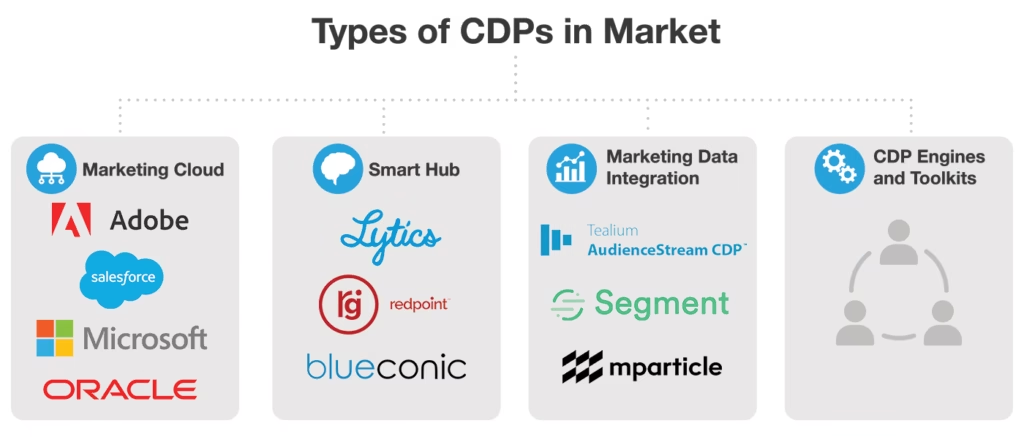
- Should You Build or Buy?
The answer, with very few exceptions, is buy. Unless personalization is literally your core business, do not try to build a CDP internally.
What starts as an amazing internal initiative becomes a side project. It gets starved of focus, resources, and budget. The team gets pulled in other directions.
The Pace of Technology. This space is evolving fast. New approaches, new capabilities, new standards emerge constantly. Staying on top of it requires dedicated expertise.
Dedicated Focus. Specialized CDP companies think about this problem 24/7. Their revenue depends on getting it right. Innovation is constant. Support is deep. They’re obsessively focused on solving this exact problem.
- Standalone CDP or Integrated Platform?
Buying a standalone CDP and patching it with multiple tools creates complexity, lost context, and fragmented insights, resulting in systems that never see the full customer picture.
A standalone CDP is incredibly insightful but incomplete. It can identify every opportunity, but it can’t act on any of them. Every insight has to travel through multiple systems, and with each hop, nuance disappears.
The alternative…a truly integrated platform, solves this at the foundation level. Everything is built within a single ecosystem. Data and context flow seamlessly. Activation is instantaneous. The platform has both the insight and the arms to act on it.
5. Conclusion
Personalization is a key strategy whenever customers interact with brands on digital platforms, and it extends just as strongly into offline and CRM experiences.
Yet the real challenge isn’t lack of data; it’s how that data is structured and used. Most marketing stacks are built in silos, where information can’t flow freely enough to create meaningful context.
That’s why choosing your tech stack is not just a technical call, but a strategic decision that shapes the entire customer experience. When CDP, analytics, messaging and personalization come together in one integrated platform, brands can finally deliver communication that’s timely, relevant and almost invisible, where personalization stops feeling like spam and starts feeling like care.
Check out the full video to dive deeper into this conversation.