

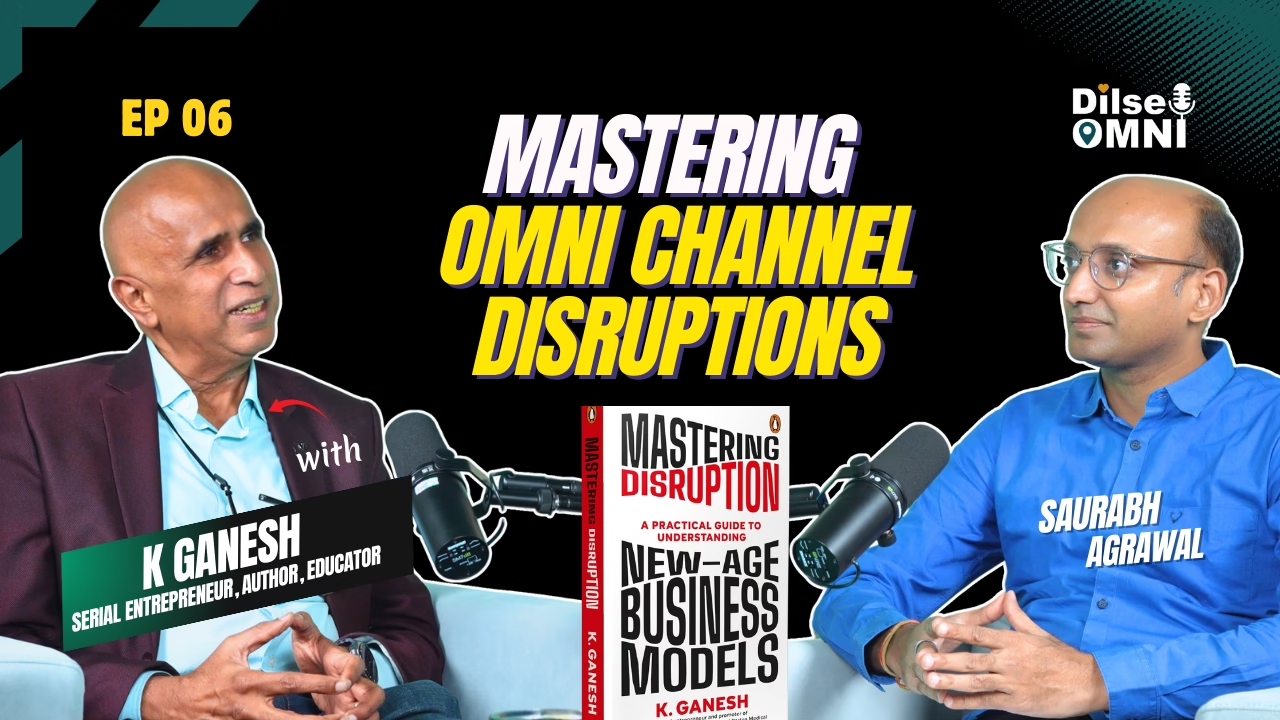
In this episode of Dilse Omni Podcast, Saurabh and K Ganesh talk about why disruption is the only logical playbook when you are up against entrenched incumbents. Ganesh’s core belief is that trying to beat large, cash-rich players at their own game is a losing strategy; instead, startups should use technology, data, and a fresh business model to change the rules itself.
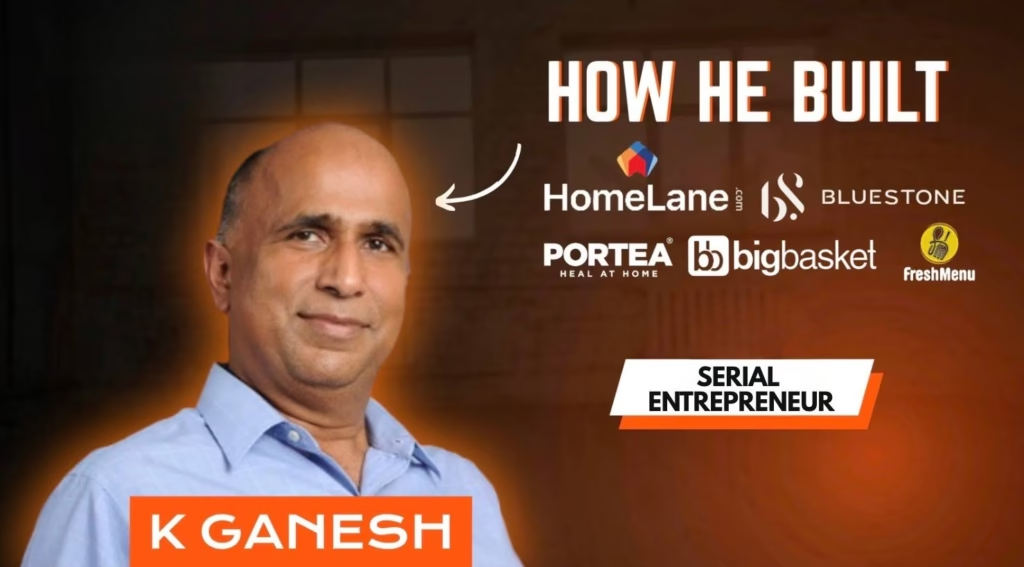
He illustrates this with his portfolio: TutorVista bet on cross-border online tutoring long before “edtech” was a buzzword, BigBasket reimagined grocery as a planned, data-led delivery experience, and Bluestone treated jewellery as a digitally discovered, omni-channel purchase rather than a pure-store category. The pattern is clear: disruption comes not from better PowerPoint, but from asking, “What about this category is broken for the customer, and what would it look like if we rebuilt it today with internet, data, and mobile in mind?”
Find Your Real Advantage: Know your “right to win"
Ganesh urges founders to start with a simple question: “Why will we win here?” instead of “Is this a big market?”
Big sectors like food, education, healthcare, or housing matter only if the team has a clear edge—strong domain knowledge, a distribution advantage, or a business model that incumbents can’t easily copy.
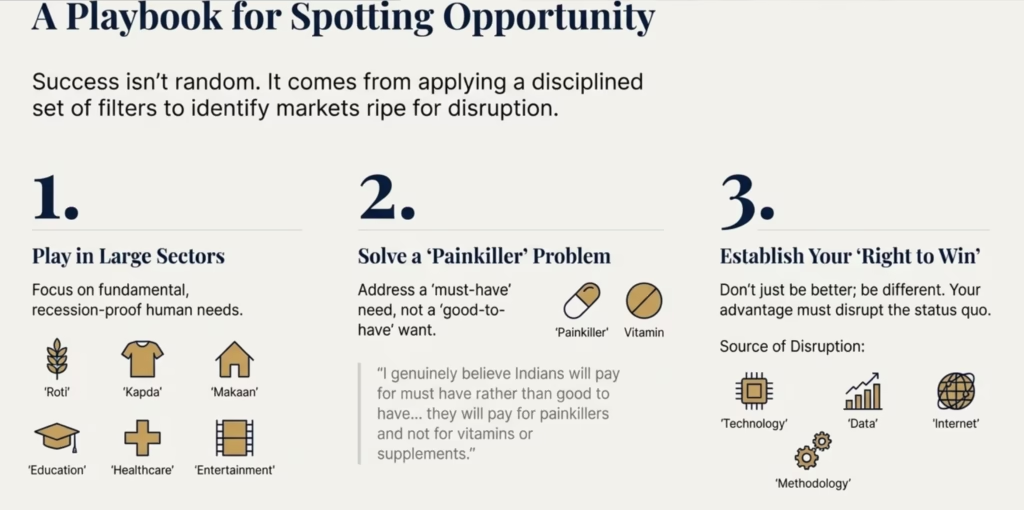
Ganesh’s 3-Step Playbook:
- Start with large sectors: Look at big spaces, but don’t chase them just because they’re trending. Size alone isn’t a strategy.
- Solve real painkillers: Build for problems that truly hurt customers, and validate early with simple unit-economics and a clear business plan.
- Define your “right to win”: Only move forward if you have a clear edge—domain depth, distribution, or a model incumbents can’t copy. If that edge isn’t real, it’s better to stop early than force a weak idea.
Venture Studio vs VC vs accelerator
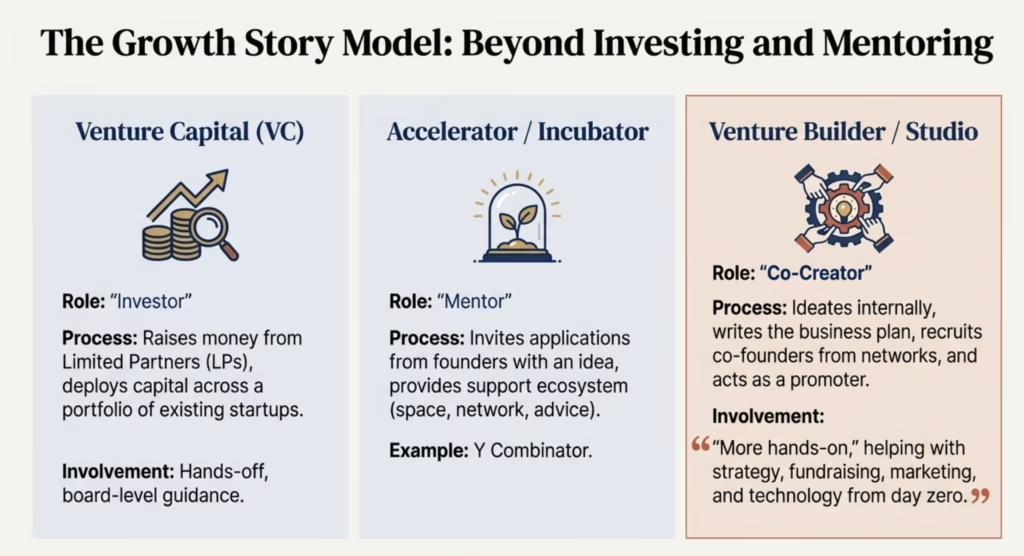
One of the most useful parts of the conversation is how simply he explains the difference between a venture capital fund, an accelerator, and a venture studio like Growth Story.
Traditional VCs raise pooled money from LPs, invest in a portfolio, charge a management fee plus carry, and work on a 7–9 year fund cycle.
Private equity players do something similar but at later stages, with larger cheques and shorter horizons.
Accelerators/incubators invite early founders, provide space, mentorship, and networks, and often take small equity in return.
Growth Story, on the other hand, behaves like a co-founder factory: it originates ideas, writes the first draft of the plan, brings in founding teams, and stays hands-on with strategy, fundraising, and early marketing and tech. It is neither a passive investor nor a typical accelerator; it is parallel entrepreneurship at scale, with BigBasket, Bluestone, Portea, HomeLane and more as proof points.
Omnichannel and the power of unified data
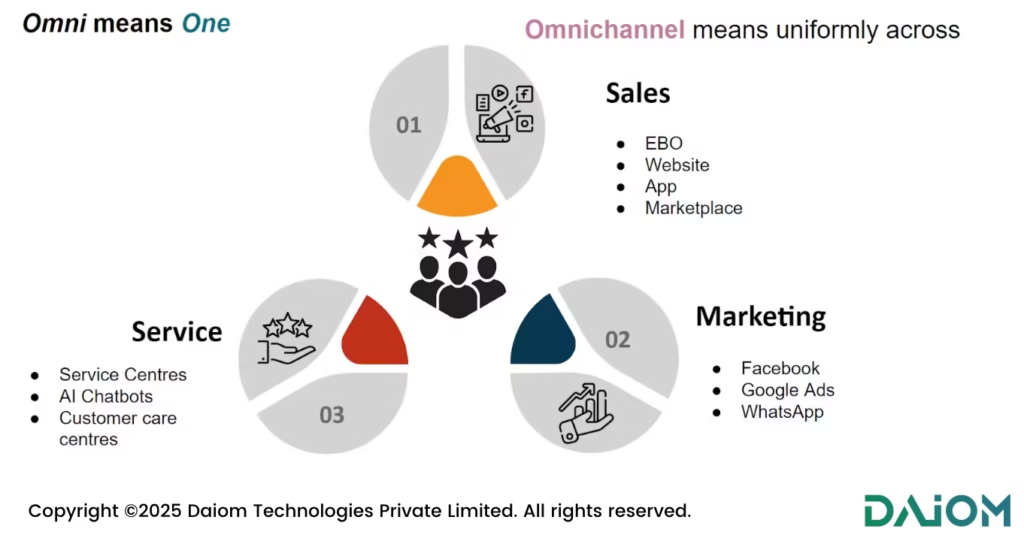
Running through the episode is a clear conviction: omni-channel is not “website plus stores,” it is a unified customer experience stitched together by data. Ganesh and Saurabh stress that for omni-channel to work, the customer layer and data layer must be integrated so that there is truly a single customer view across online and offline touchpoints.
That unified view unlocks real levers, personalised journeys, smarter assortment decisions, better inventory placement, and more efficient marketing because you are not treating the same person as five different “users” in five different systems. For D2C brands evolving into offline, or legacy brands going digital, this is the difference between “multiple channels” and genuine omni-channel.
Metrics that matter (and those that don’t)
Ganesh is openly skeptical of vanity metrics. He calls out numbers like GMV and follower counts as slide-friendly stats that look impressive but say very little about how strong or durable a business really is.
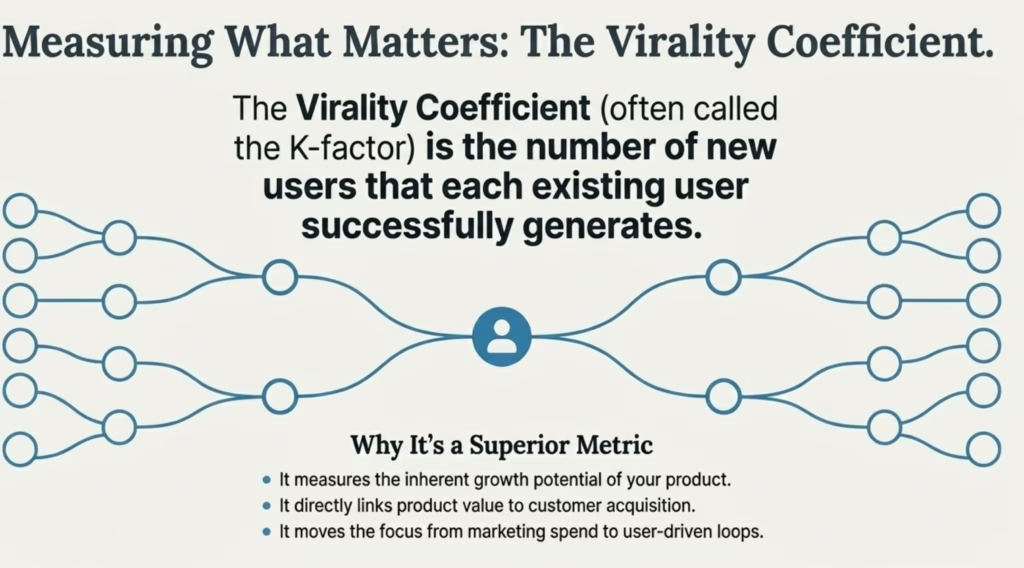
Instead, he pushes founders to obsess over the unglamorous fundamentals: unit economics, retention, contribution margins, cash flows, and even the virality quotient. He cites examples like Dropbox and PayPal, where built-in virality (referrals that genuinely lowered acquisition costs) became a real growth engine, not just a marketing gimmick.
Pipeline Vs Platform Business Model
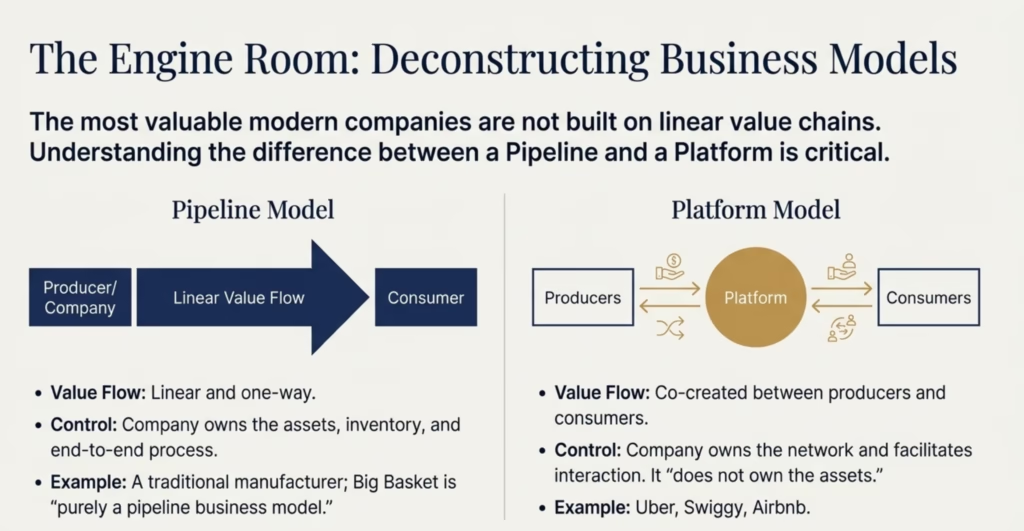
He also talks about the difference between pipeline and platform business models, and why founders must be clear about which one they are building. BigBasket, for example, followed a pipeline model—owning supply, managing inventory, and delivering value end-to-end.
In contrast, Amazon evolved into a platform model, creating an ecosystem where buyers and sellers interact, with Amazon enabling scale through technology, logistics, and data.
Ganesh explains that neither model is “better” by default, but confusing the two is dangerous. Each demands different economics, execution muscle, and growth expectations, and success comes from designing the business around the right model from day one.
What entrepreneurs can do next:
For entrepreneurs listening from Delhi, Bengaluru, or any other startup hub, this episode is a nudge to think deeper and act sooner. Some simple next steps inspired by Ganesh’s playbook:
- Pick a large, enduring space (health, education, food, housing, entertainment) and ask what is fundamentally broken for the customer.
- Define your “right to win”: skills, insight, or access that gives you a non-generic edge.
- Design disruption, not just differentiation: use tech, data, and model innovation to rewire how value is created and delivered.
- Start collaborating now: help a founder part-time, join a young team, or pilot a side project to build your entrepreneurial muscle.
If you are serious about omnichannel, disruption, and building in an abundant India, this conversation is worth not just listening to once, but revisiting with a notebook open.
The biggest takeaway from this episode?
Don’t try to beat giants by playing their game, use technology and customer insight to change the rules instead. Step into big markets only when you clearly know why you can win there, and build with an integrated mindset by collaborating openly and bringing all your customer data together across channels.
If you’re ready to level up your brand, understand how AI and Omnichannel work together, and hear real stories from real experts — subscribe now and join me on this journey.
Let’s decode omnichannel — DilSe.