

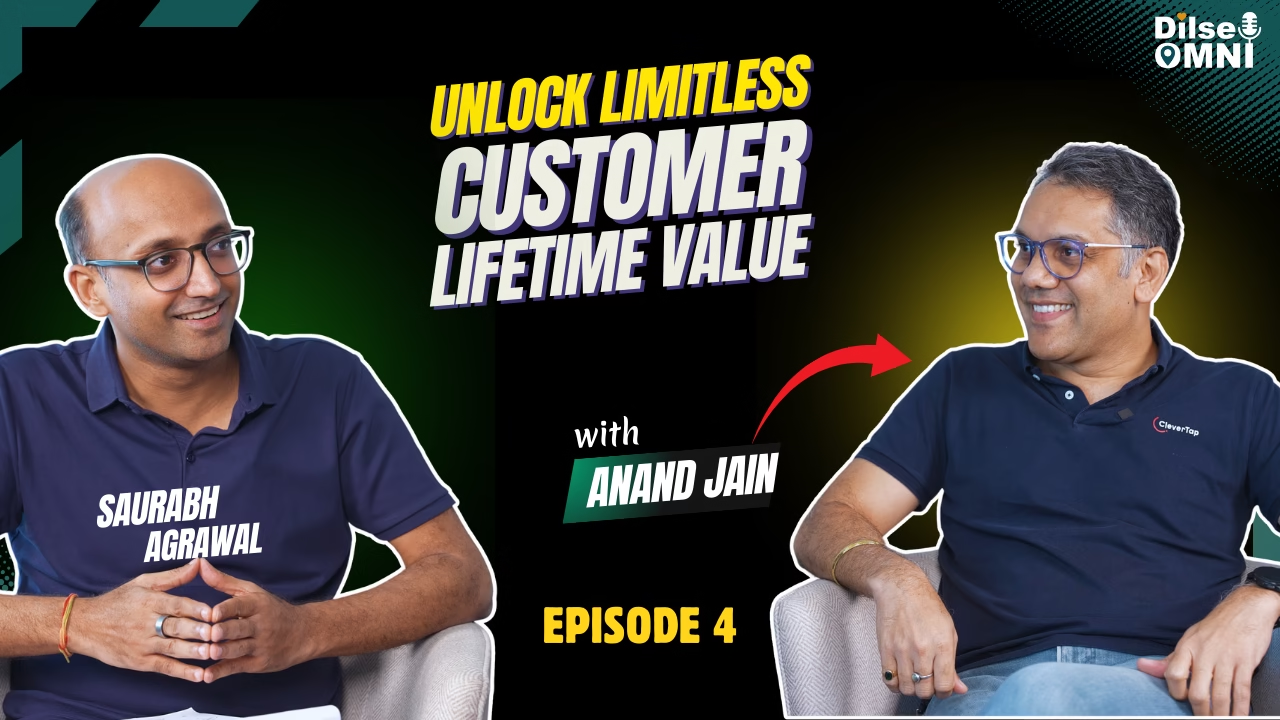
Ever had one of those moments where a harsh email accidentally kickstarts a great relationship? That’s exactly what happened between Saurabh Agrawal and Anand Jain. Back in Christmas 2021, while Saurabh was busy watching the movie 83, a major campaign broke, panic set in, and a few strongly-worded emails flew around.
Tense emails were exchanged, and they spent time fixing bugs…and somehow, through all the chaos, mutual respect was born.
“When the going gets tough, the tough gets going. I really admire that about you,” Saurabh told Anand, reflecting on how CleverTap responded to feedback not with defensiveness, but with action.
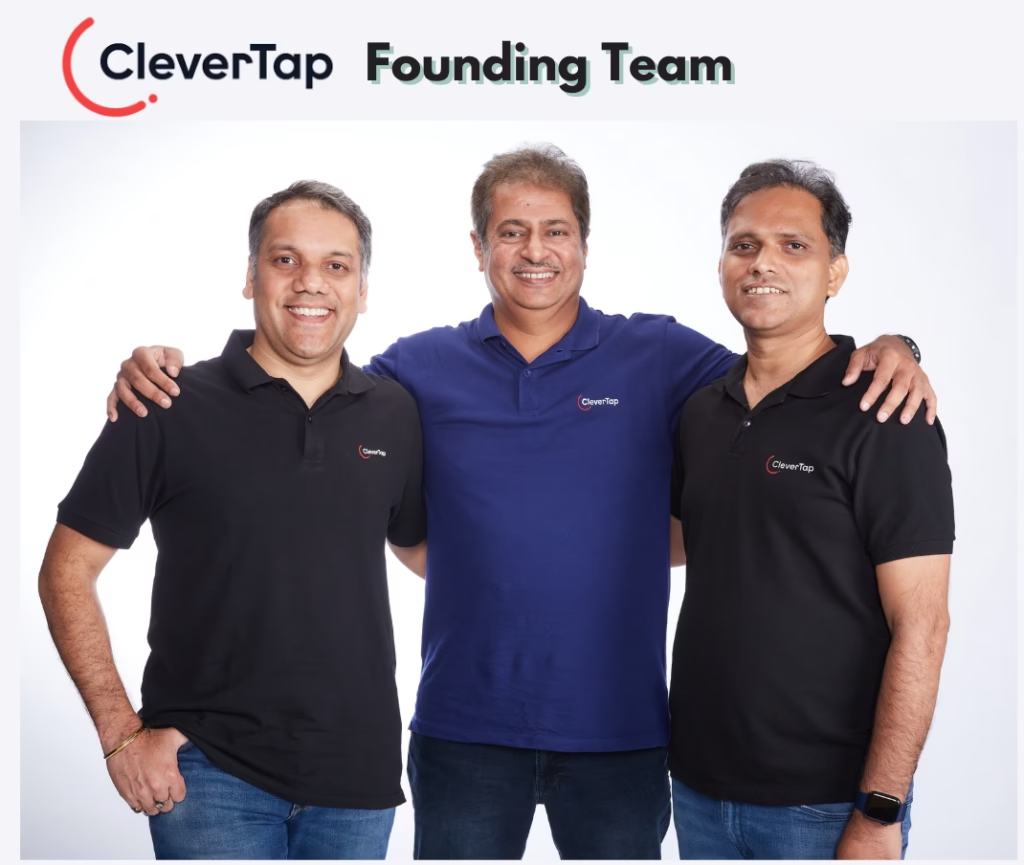
Anand’s response captures his philosophy perfectly:
“We are not perfect as a company. We’re not perfect as a product but every day you become better. The only way to become better is to listen to your customers.”
The Journey from Burpp to CleverTap
Before CleverTap, Anand had already tasted entrepreneurship, and its disappointments. In 2006, he returned from the US and launched Burrp, a restaurant discovery and review platform. The idea was solid, inspired by platforms like Yelp. But timing wasn’t on his side.
“The VC ecosystem was not as mature as you see it today… Very early VC ecosystem, not too many entrepreneurs in India. It was very hard for me to scale this up,” Anand shared.
Without venture funding, and with no existing mapping solutions or databases in India, they had to collect everything themselves, menus, photographs, every single data point. By 2009, Burrp merged with Network 18’s Infomedia business.
What’s remarkable is how Anand reflects on watching Zomato, which started around the same time, become one of CleverTap’s biggest customers today.
Why Customer Data Shouldn't Live in Silos?
Anand observed that the Customer data was scattered everywhere, web analytics in one tool, mobile analytics in another, A/B testing somewhere else, SMS and email handled by different vendors.
The engineer’s brain went into overdrive. What if there was a platform that unified all this data and let you act on it instantly? If a customer struggles on your homepage, pop up help. If someone abandons their cart, send a friendly nudge.
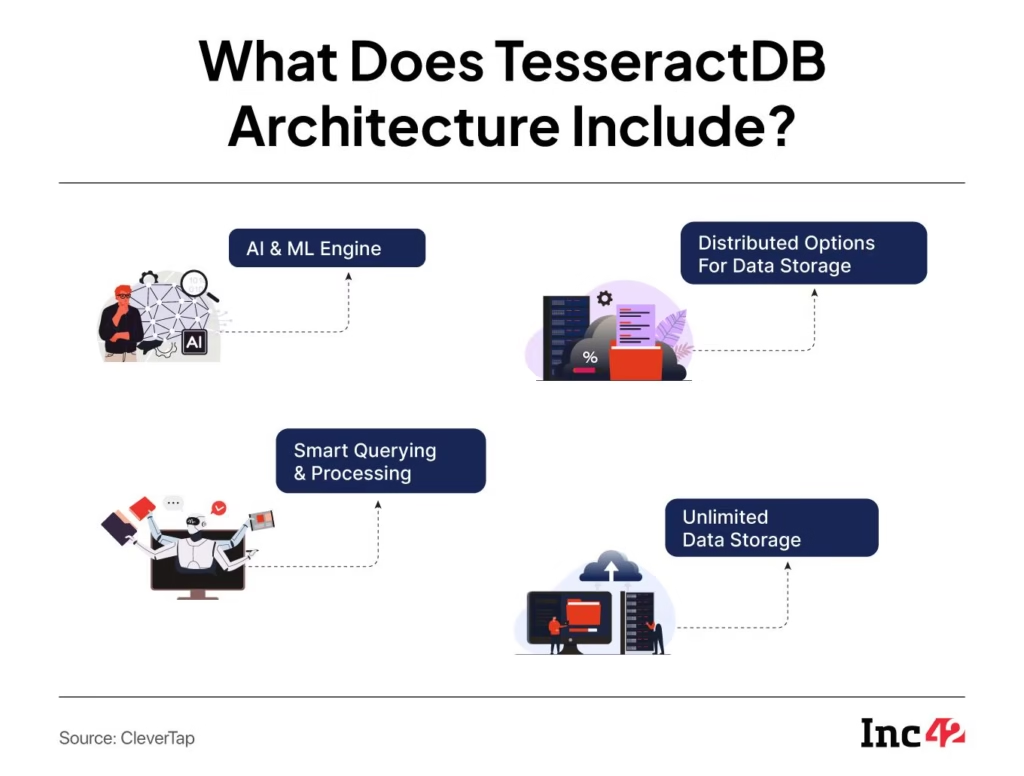
In 2013, after four years at Network 18, Anand, Sunil, and Suresh took the plunge and started CleverTap. The next three years were spent building TesseractDB – a database that could store all customer data in one place and activate it instantly for analytics, predictions, and personalization.
Why Retention Marketing Became Everyone's Obsession
Saurabh posed a question that’s on every growth marketer’s mind: “Why is everyone crazy about this whole retention marketing?”
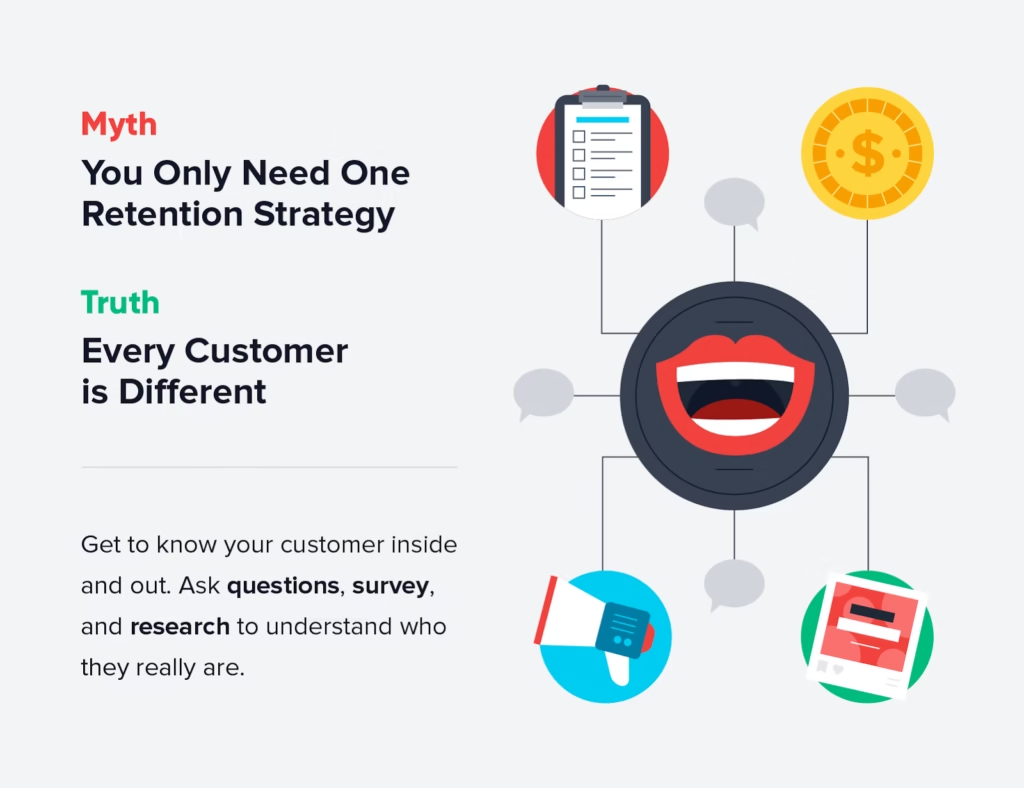
Anand explains the core mistake early consumer brands made: they were obsessed with acquisition—grabbing users fast—only to realise they were paying to acquire the same customers again and again. Users walked in through the front door and slipped right out the back.
His insight is simple but powerful: retention shouldn’t be desperation. It’s about earning loyalty, building trust, and winning the customer again and again through real value, not gimmicks.
Anand said: “Talking to your own customer is practically free.” Compare that to the spiraling costs of digital ads, where you’re not even sure if you’re acquiring a genuinely new user or someone already in your database.
The Hidden Gold Mine: Leads Who Never Converted
Saurabh shared a practice that transformed his approach: “In digital-first brands, you have five times more leads who have not bought but signed up but never purchased. If you focus on those as well, the marketing efficiency really kicks in.”
Anand agreed: “Anyone that has ever shown an interest in your product… that means someone took the effort to show up on your website or download your app. Not everything leads to a purchase. In the real world also, we may walk into a mall, check out products, try them on… and mentally take a note that we’ll come back later.”
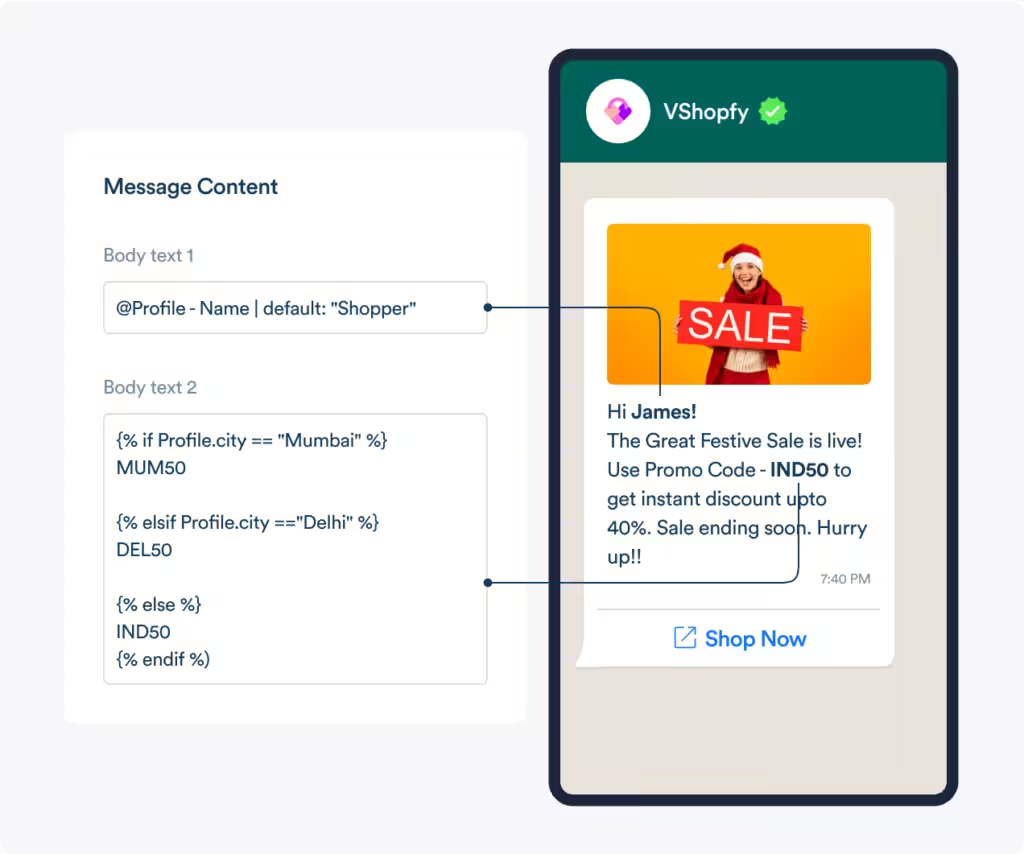
These “warm” leads already know your brand. Reaching them at the right time, through the right channel, with the right product recommendation dramatically improves conversion rates.
Decoding Lifetime Value (LTV): It's Not a Static Number
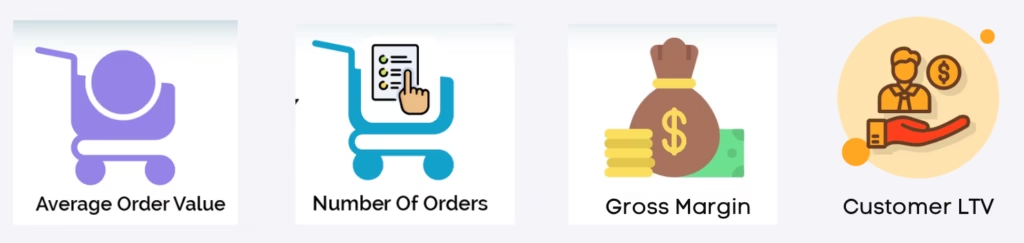
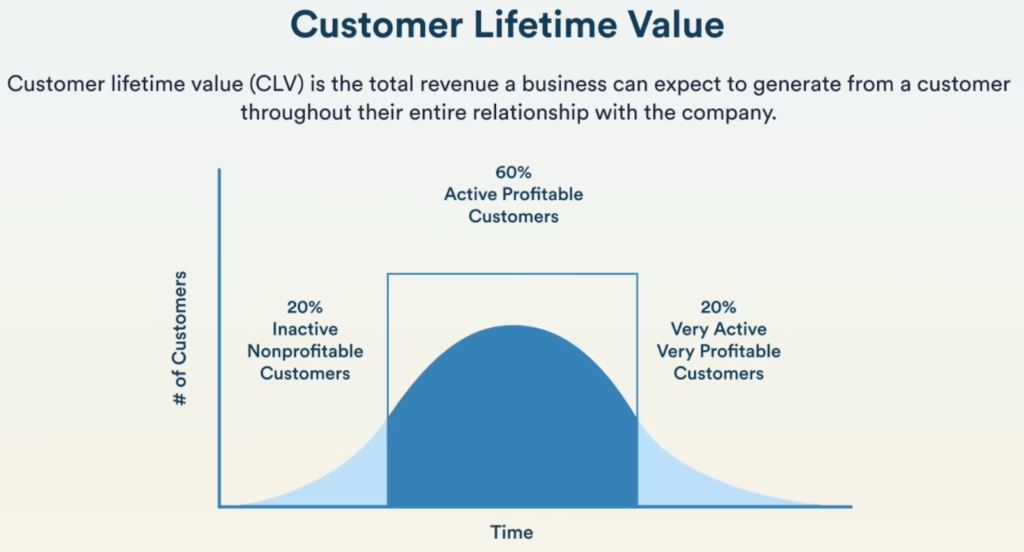
Most of the time brands think that lifetime value is a static number… But Anand said that LTV comprises of four components: average order value, frequency of purchase, gross margin, and the tenure of the customer.
The key insight?
It's a curve that you can continuously lift. We've seen brands with customers for upwards of 10 years—very happy, loyal customers.
Saurabh added a fascinating dimension from his Lenskart days: “I used to think frequency of purchase is once in two years. But slowly I realized they built categories, specs for morning, specs for office, specs for evening, power sunglasses, powered contact lenses. You’re increasing the number of products the same person consumes.”
The Cohort Confusion
Both Saurabh and Anand bonded over a common frustration in the industry: marketers misusing the word “cohort.”
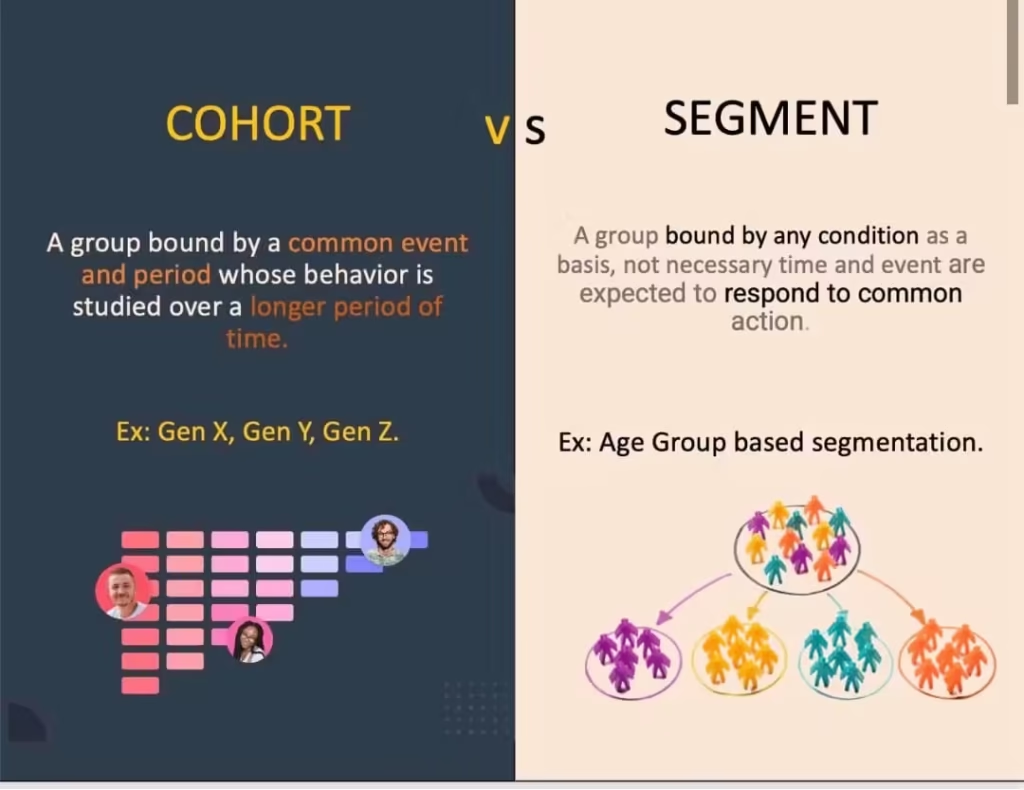
“One of the biggest mistakes marketers make is using this word cohort… ‘Which cohort are you targeting this week?’ They mean segments actually—male cohort, female cohort. This is a gross mistake.,” Saurabh confessed.
A true cohort is a longitudinal study, people acquired at a certain time, tracked over a period. Think Gen Z vs. Gen X. You track their behavior over time and observe patterns.
“Cohorts are mutually exclusive,” Anand clarified. “People in January 2025 will be different than people in February 2025. Net new users, not representing people who came back.”
Under the Hood of Modern Retention Platforms
When asked what powers a modern retention marketing stack, Anand broke it down:
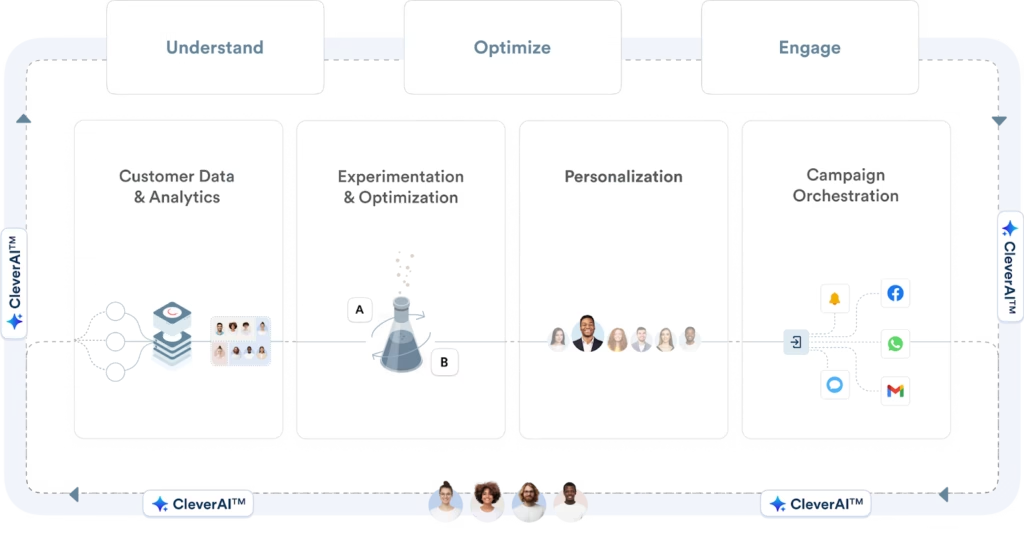
- CDP (Customer Data Platform): The foundation that stores all customer behaviors, not just transactions. “Every behavior… what ad campaign got them in, everything is saved with extremely high fidelity.”
- Analytics: Understanding what’s working and what isn’t.
- Message Orchestration: Not just sending messages, but knowing which channel, what timing, what frequency.
- Offers and Loyalty: Buy one get one? Flat discount? Wallet credits? Getting creative with incentives.
- Personalization: Because sending irrelevant messages all day helps no one.
“AI is sprinkled in everything,” Anand added. But it’s not cosmetic, it’s meaningful.
AI in Retention Marketing
Where does AI actually fit? According to Anand, there are three clear phases where it adds value:
- Discovery: Understanding patterns, finding segments that respond better to certain campaigns
- Content Creation: Using content intelligence to generate copy that matches what’s worked historically
- Execution: Running multiple experiments with tight feedback loops
“The third piece of this puzzle is the trust ladder,” Anand noted. “Humans will start with low trust… It starts with ‘keep everything ready, I will inspect and then hit send’ all the way to ‘this is my business goal, solve it for me.'”
The technology is ready. The bottleneck now is adoption and domain expertise, not AI capability.
The Future of Careers in Retention Marketing
Saurabh raised an important concern: “When I started 10-15 years ago, it used to take 20-30 people to run retention campaigns for a decent-sized company. Now you can do it with two or three people. How do you see careers evolving?”
Anand’s response was thoughtful: “Technology is a friend, not a foe. Don’t try to fight it… Your role will change. What if you could create 50,000 variations of a campaign? It’s not humanly possible to do that in one day. But technology can. Can you become the orchestrator of all this?”
The talent density within individuals will increase. One person might handle campaign execution, copywriting, segmentation, and analytics, as long as they understand the core concepts and know how to leverage the tools.
“It’s a great time to be alive,” Anand concluded. “As a consumer, you’ll appreciate it. As a creator, we appreciate it. And as someone leveraging retention marketing, you’ll love it.”
Book Recommendations from Anand
For those looking to learn from the journeys of others, Anand, a voracious reader who dedicates 45 minutes every night to books, recommended two biographies that shaped his thinking:
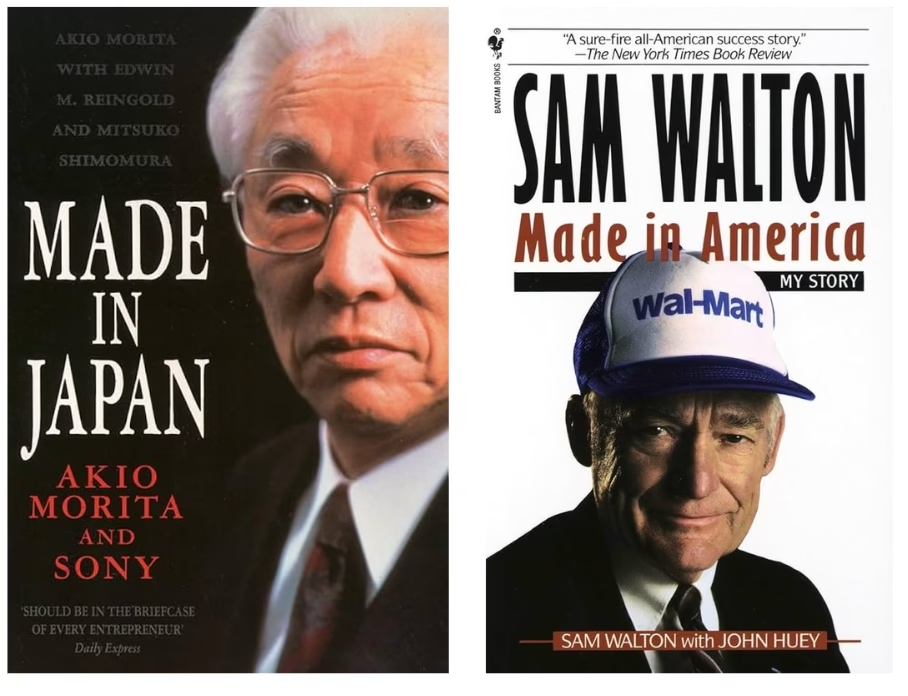
- “Made in America” by Sam Walton: How the Walmart founder built a retail empire from the middle of nowhere in Arkansas.
- “Made in Japan” by Akio Morita: How Sony emerged from the ashes of post-World War II Japan.
Both are stories of resilience, vision, and building something remarkable against the odds, themes that clearly resonate with Anand’s own journey.
The best business relationships often start with honest, sometimes uncomfortable conversations. What matters is how you respond, with defensiveness or with action. That philosophy runs through everything Anand Jain has built, and it’s a lesson worth remembering for anyone in the growth marketing space.