
Summary: Adobe grew its revenue from $3.2 billion in 2008 to $22.6 billion in 2025 by embracing a Data-Driven Operating Model (DDOM) and democratizing data across the organization. This cultural shift empowered every team with insights, drove customer-centric decisions, and fueled sustainable, 10X growth over the last decade.
Table of Contents:
1. What Makes Adobe a Digital Leader?
From $3.2 billion in 2008 to $22.6 billion in 2025, Adobe’s revenue growth tells a powerful story. This 8X–10X expansion didn’t happen by chance — it came from embracing a Data-Driven Operating Model (DDOM) and democratizing data across the organization.
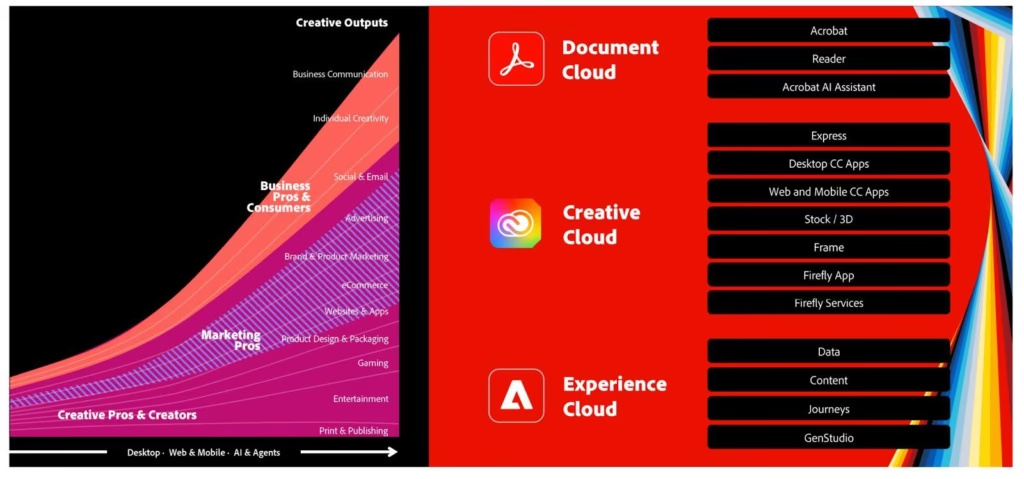
Adobe is now one of the biggest names in digital, powering the way we create, edit, and share. From PDFs, Photoshop, and Premiere Pro to their Creative Cloud, Experience Cloud, and Document Cloud, their tools have become essential. Today, these softwares support everything from creative work to enterprise experiences.
Learn how adopting a data-driven strategy can boost customer retention too in this blog: The Ultimate Guide To Customer Retention Marketing Tools
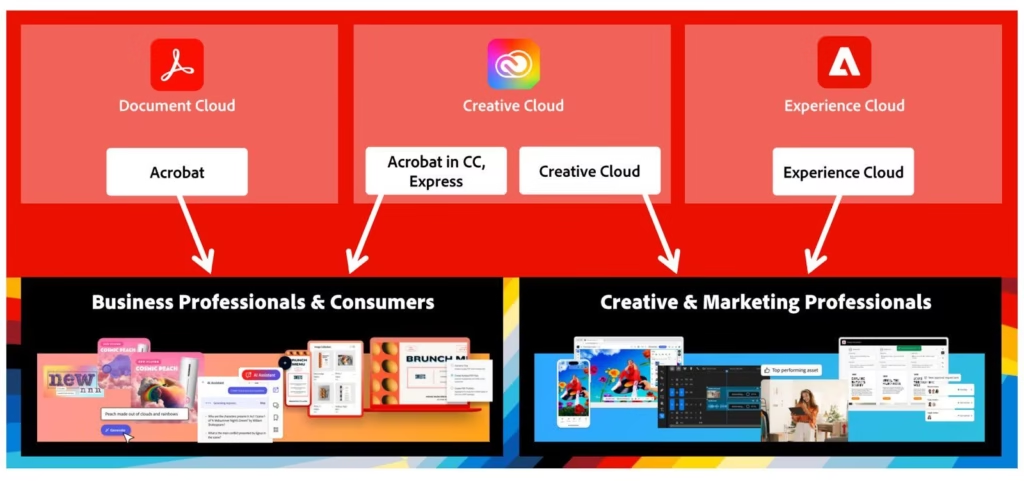
But Adobe wasn’t always the subscription SaaS powerhouse we know. Back in 2008, Adobe sold its products in boxes, think Photoshop CDs on shelves. The turning point came with a bold decision: moving from one-time software licenses to cloud-based subscriptions.
This wasn’t just a pricing tweak; it was a digital pivot. The move from box to subscription became the foundation for Adobe’s growth. Creative Cloud soon emerged as the biggest revenue generator, and the company set a new standard for digital transformation.
At the center of this transformation was the Data-Driven Operating Model (DDOM), not just a framework, but a cultural shift that made data the backbone of every decision.
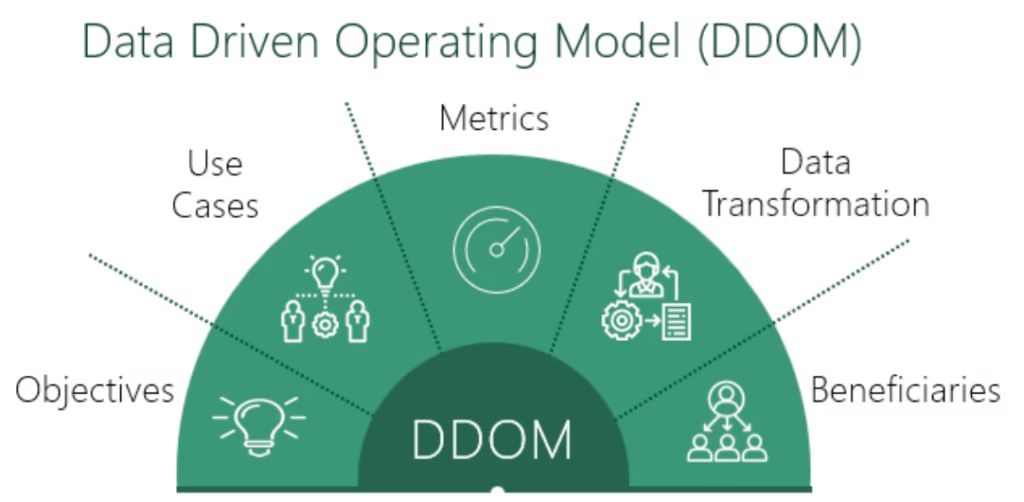
This isn’t just about having a bunch of data; it’s about making that data the heart of every decision you make. It’s about getting everyone in your company on the same page, using the same reliable insights to guide their actions.
2. How Did Adobe Transform with DDOM?
Back in 2008, Adobe faced a massive challenge. The world was rapidly shifting from buying software in a box to cloud-based subscriptions. Adobe knew they had to change, and fast.
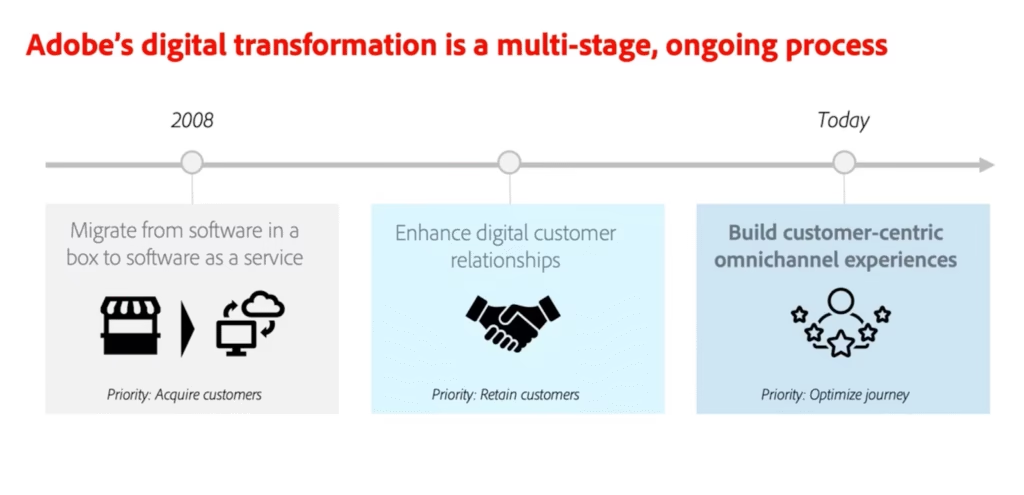
They transitioned from one-time software licenses to a subscription model, which meant customers would pay annually instead of a large upfront fee (which means instead of charging $2000 one time to $600 / annually). It was a complete overhaul of their business model and how they operated.
Adobe understood that in the digital realm, the customer journey is a continuous flow. It’s not just about making a sale; it’s about building a lasting relationship. This journey typically involves several key stages: Discover, Experience, Buy, Use, and Repeat. To truly excel, businesses need to optimize each of these stages.
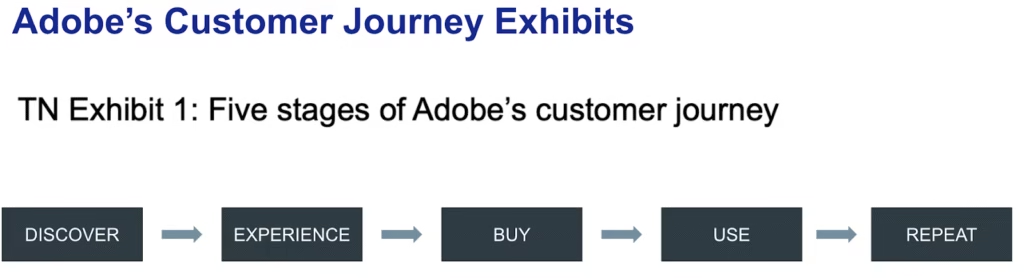
Discover: The initial stage where potential customers first learn about Adobe’s products, often through marketing efforts.
Experience (Try): After discovery, the goal is to get customers to engage with the product, typically via free trials.
Buy: The stage focused on converting trial users and interested leads into paying customers.
Use: The phase after purchase, where ongoing product use and customer retention are essential.
Repeat/Recommend (Renew): The loyalty and renewal stage, focusing on retaining customers and reducing churn.
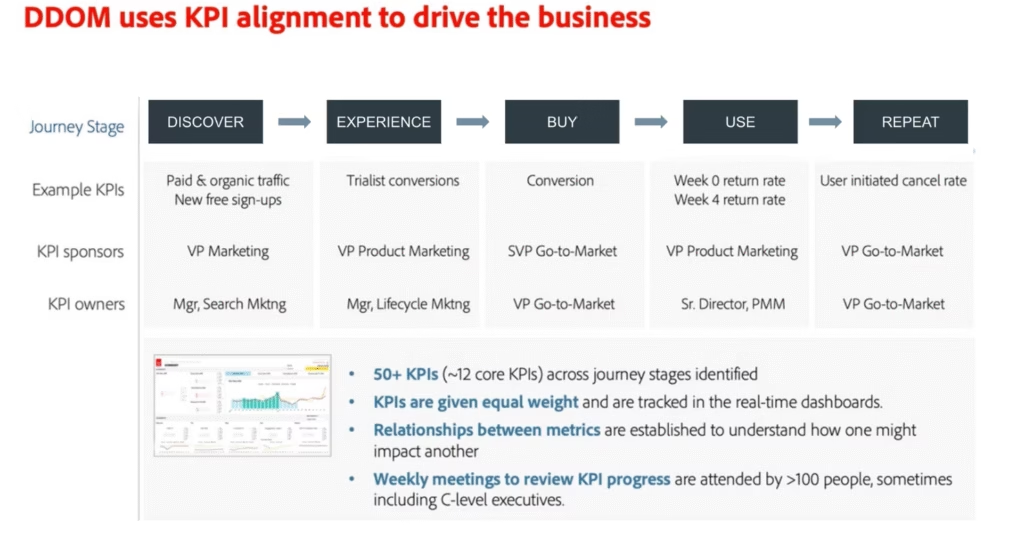
This approach ensures clear accountability through defined KPI ownership and sponsorship at each stage, supporting active management and optimization of the customer journey across departments.
DDOM helped Adobe move from intuition-led decisions to insight-led operations. Here’s how it worked in practice:
- Tracked 50+ KPIs across the entire customer journey
- Built real-time dashboards accessible to everyone
- Automated OKRs for transparency and accountability
- Fixed churn issues that once cost $225M+ per quarter
- Made data literacy part of the culture so every employee could act on insights
3. What Makes Adobe’s Customer Journey Work?
Adobe’s DDOM (Data-Driven Operating Model) shapes every aspect of the customer journey—Discover, Experience, Buy, Use, Repeat, by making data and KPIs core to collective team ownership.
Discover: The initial stage where potential customers first learn about Adobe’s products, often through marketing efforts.
Example KPIs:
Paid & organic traffic
New free sign-ups
KPI Sponsor: VP Marketing
KPI Owner: Manager, Search Marketing
Experience (Try): After discovery, the goal is to get customers to engage with the product, typically via free trials.
Example KPIs:
Trialist conversions (conversion rate from free trial to paid customer)
KPI Sponsor: VP Product Marketing
KPI Owner: Manager, Lifecycle Marketing
Buy: The stage focused on converting trial users and interested leads into paying customers.
Example KPIs:
Conversion rate (from trial to paid, or lead to sale)
KPI Sponsor: SVP Go-to-Market
KPI Owner: VP Go-to-Market
Use: The phase after purchase, where ongoing product use and customer retention are essential.
Example KPIs:
Week 0 return rate
Week 4 return rate (measure of ongoing engagement)
KPI Sponsor: VP Product Marketing
KPI Owner: Senior Director, Product Marketing Management (PMM)
Repeat/Recommend (Renew): The loyalty and renewal stage, focusing on retaining customers and reducing churn.
Example KPIs:
User-initiated cancel rate
KPI Sponsor: VP Go-to-Market
KPI Owner: VP Go-to-Market
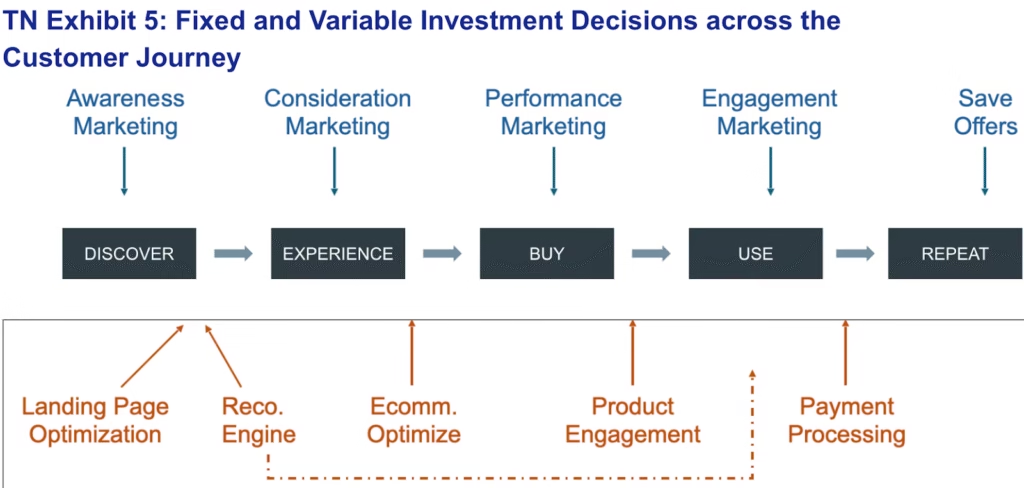
Every stage of the journey has clear KPIs with dedicated teams from marketing, product, and tech sharing accountability, creating a “shared fate” culture.
Fixed responsibilities and variable investments work together to optimize each step, while integrated DDOM dashboards provide transparent, data-driven insights for continuous growth.
Adobe’s use of OKRs further democratizes goal-setting, driving alignment and accountability at all levels, making DDOM a cornerstone of their company-wide success and culture.
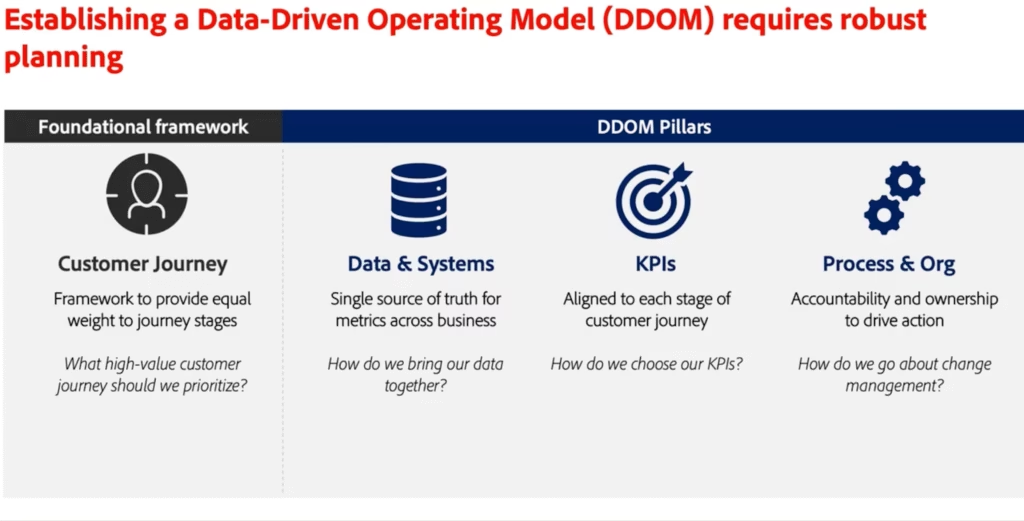
Today, DDOM is a huge part of Adobe Creative Cloud’s success and is deeply embedded in their culture. It’s not just about dashboards and reports; it’s about making data the backbone of every decision.
4. What Can Your Business Learn from Adobe?
Adobe’s journey offers lessons that any company — big or small — can apply:
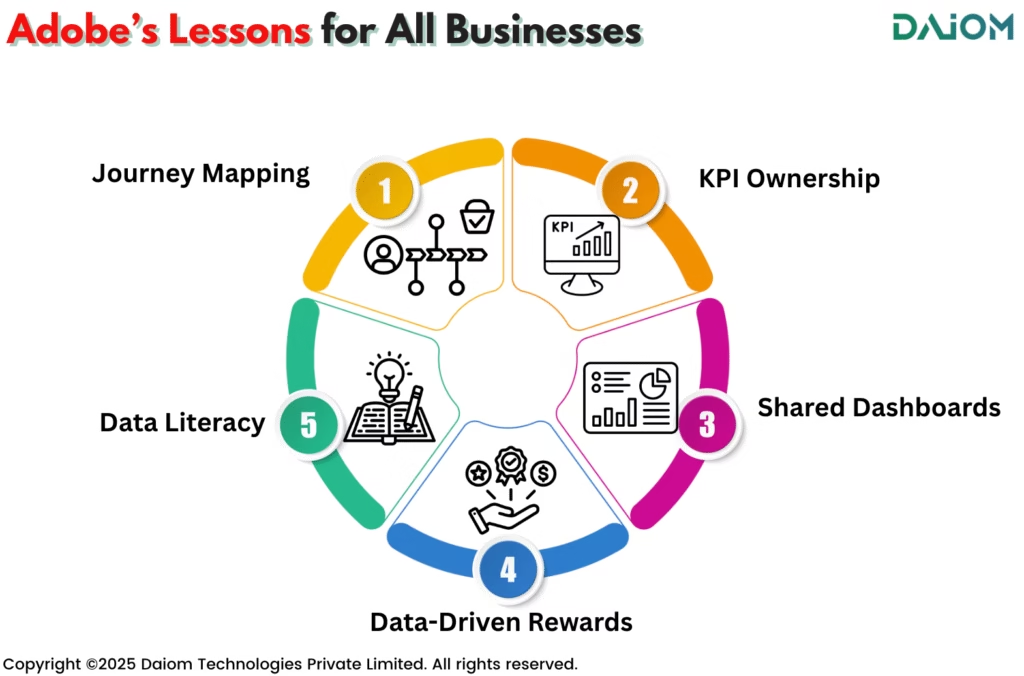
- Start with a clear customer journey map, not just acquisition.
- Assign clear owners for each KPI to avoid confusion.
- Build dashboards that everyone can access and use.
- Reward teams for using data, not just hitting results.
- Make data literacy part of onboarding and training.
Whether a Fortune 500 company or a fast-growth startup, these best practices enable sustainable scale, consistent customer-centricity, and real 10X growth potential.
5. What’s next for Adobe?
Today, Adobe is in its third phase of transformation. The first was entering the creative space, the second was shifting to a subscription model, and now the focus is on generative AI. With innovations like Firefly, AI-powered editing, and Adobe Sensei, they’re moving from reactive analytics to predictive and automated intelligence.
That means:
- Anticipating customer needs before they arise
- Forecasting outcomes more accurately
- Automating insights to act faster
While competitors like Canva and Google are building exciting products for media and video creation, Adobe holds a significant advantage, years of experience working with strong creators and a deep understanding of the creative process. This positions them uniquely to lead the AI-powered creative revolution, making their tools not just powerful, but intuitive for users.
6. Key Takeaways
One of Adobe’s greatest strengths is democratizing data. Instead of keeping insights locked within IT or leadership, dashboards are made available to everyone. When paired with OKRs, this creates transparency, alignment, and speed.
It’s more than a system, it’s a cultural transformation. DDOM has helped Adobe grow beyond just selling software to building an enduring, customer-first company.
And now, with AI layered into DDOM, Adobe is writing its next growth chapter.
If you’d like to discuss how we can help optimize your Omnichannel Marketing strategies, we’d be happy to set up a consultation call. Feel free to reach out to us at alibha@daiom.in.
For more informative content and blog, follow and stay tuned to DAiOM!
Subscribe to our NEWSLETTER!