


This December, our CEO asked the entire team to read Click Here as a mandatory learning exercise. Written by Alex Schultz, the CMO and VP of Analytics at Meta, the book breaks down how modern digital marketing actually works — from strategy and measurement to execution for achieving growth.
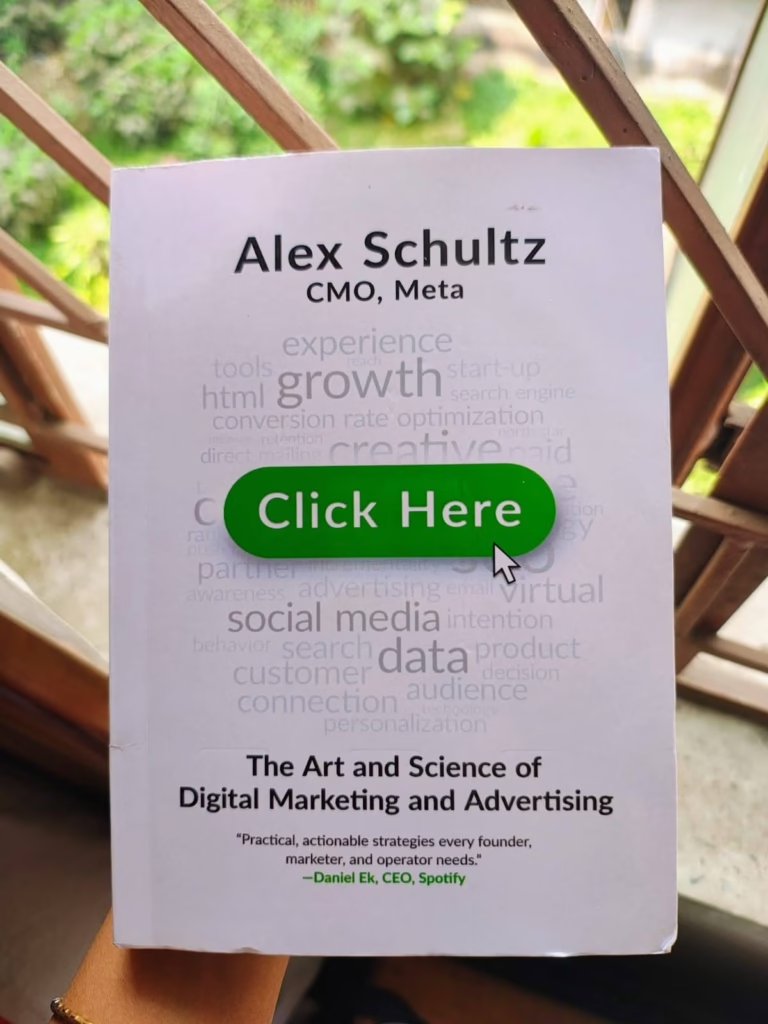
It felt especially valuable because the lessons come from real experience. Schultz draws on his time at eBay and his role in scaling Meta, making the concepts practical rather than theoretical — essentially learning growth marketing from someone who has helped build it at global scale.
He works at the intersection of analytics and marketing, known for pioneering the integration of product, growth, and direct response marketing.
At Meta, he has been instrumental in growing Facebook, Instagram and Messenger to over a billion users, and in building a rigorous, metric-driven growth culture. Currently he is working on scaling Whatsapp especially in the US.
The book is organized into three broad sections, covering everything from fundamental strategy to execution.
As someone relatively new to digital marketing without a background in the field, this book served as an excellent refresher and guide. Here is a narration of the key takeaways for our team.
Think about what the magic moment is for your product and get people connected to it as fast as possible.
Alex Schultz
Table of Contents
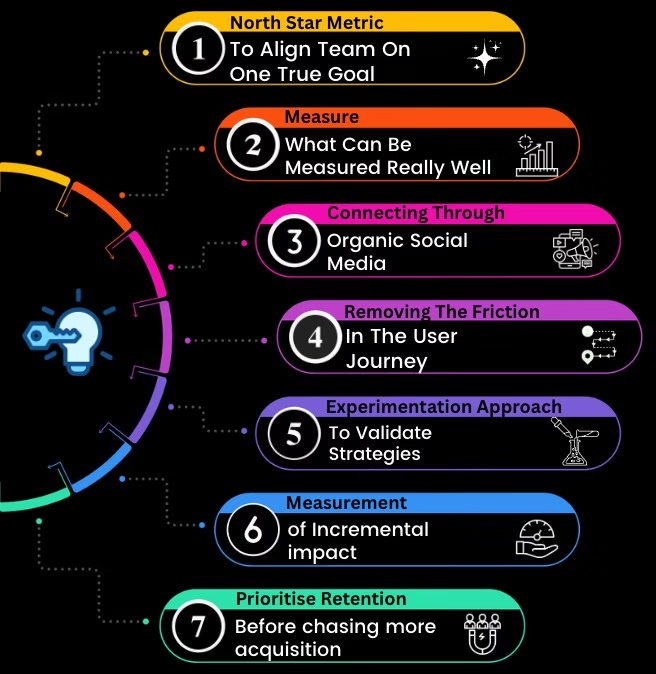
- North Star Metric To Align Team On One True Goal
- Measure What Can Be Measured Really Well
- Connecting Through Organic Social Media
- Removing The Friction In The User Journey
- Experimentation approach to validate strategies
- Measurement of Incremental impact
- Prioritise Retention Before Chasing More Acquisition
- Who should Read “Click Here”?
- Conclusion
1. North Star Metric To Align Team On One True Goal
“Great growth requires great marketing and great marketing requires clarity on what you are trying to achieve- main goal”
This is the north star which any organisation and its team needs to be aligned on and stops teams from pulling in different directions or gaming vanity metrics.
- The North Star is one primary goal (e.g., “monthly active users” or “12‑week retained customers”), not a list of KPIs.
- Its metric must precisely describe that goal (e.g., MAU instead of raw registrations, revenue instead of just orders).
- Every major decision—product, marketing, monetisation—should be tested against “does this move the North Star without breaking trust or experience?”
- The “number two” goal is the biggest threat: constantly flipping focus between multiple top priorities usually means you fail at both.
One of the most transferable ideas from the book is the insistence on a single, clear North Star metric. Schultz argues that while you can measure a million things, you should only have one true goal that aligns your entire team, which he calls the North Star Metric.

Crucially, this North Star isn’t usually revenue, because revenue is a lagging indicator—it’s the result of success, not the driver of it. Instead of obsessing over vanity metrics like page views, it is important to ask: “What number actually proves you are delivering value?” If people are actually using and valuing the product, the revenue will follow.
In product‑led growth (PLG) companies, the North Star can be explicitly defined as a measure of value delivered in the product experience, such as “Monthly active users,” “time spent listening,” or “hours watched,” which then leads to revenue rather than being revenue itself.
However for retail-led businesses, the default instinct is often to pick top-line outcomes (revenue, GMV, store sales) as the North Star, but that doesn’t tell you if customers are actually succeeding or likely to come back.
For an omni-channel retail brand, it’s usually healthier to choose a customer-experience-led North Star (for example, “repeat customers within 90 days,” )
1.1 Example
Schultz shares the story of Facebook’s early days; when Yahoo offered to buy them, Mark Zuckerberg refused because he had a clear vision to “connect the world.”
To measure that, their North Star wasn’t how much money they made, but Monthly Active Users (MAU).
We have also shared an example in our blog one of which is Spotify’s north star being listening time.
Spotify is a great example of how a North Star Metric can drive a company’s success. While Spotify wasn’t the first music streaming app, it quickly became one of the most popular.
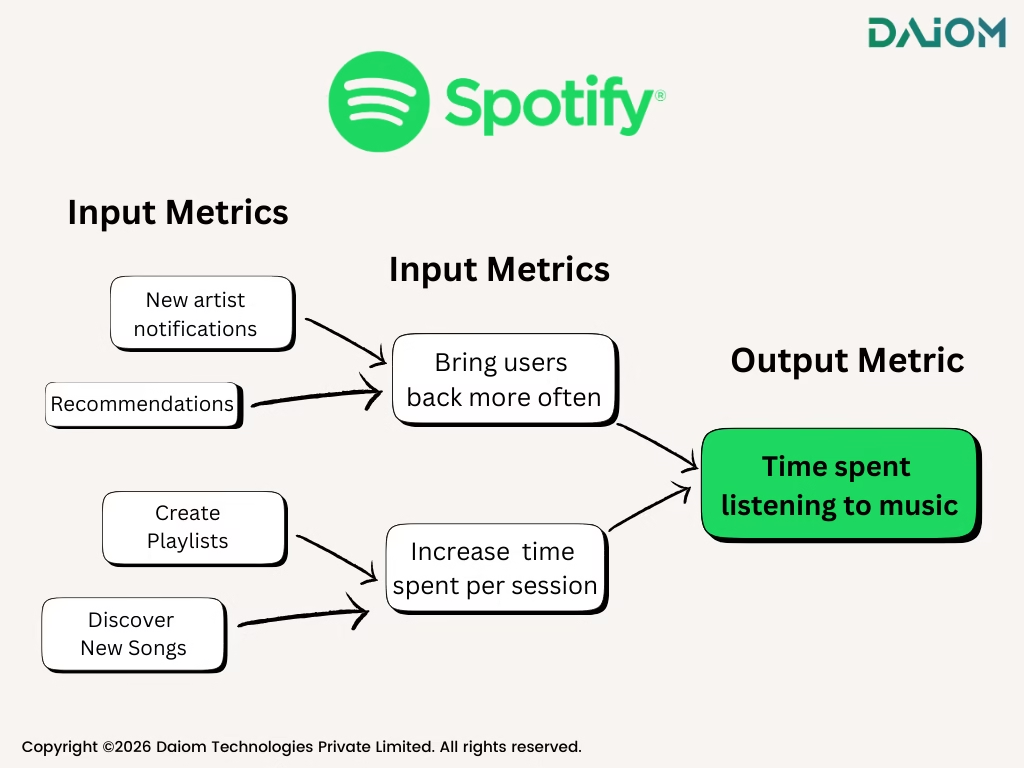
Spotify’s North Star Metric was focused on customer experience—specifically, optimizing listening time. They didn’t just measure how many people were using the app; they focused on how much time users spent enjoying the experience.
2. Measure What Can Be Measured Really Well
“Not everything that matters can be measured, and not everything that can be measured matters.”

Schulz has positioned measurement as essential for real impact but it has to be simple, focused and practical rather than obsessive or over engineered. He argues that you need one clear North Star metric, supported by telemetry and guardrail metrics.
As per Schultz, for measurement, simplicity is beauty:
- Start with one clear North Star metric: Pick a single outcome that represents real business success (for example revenue per customer or repeat purchase rate) so every team works toward the same objective.
- Add supporting telemetry metrics: Track a small set of “how we got there” indicators such as traffic quality, conversion rate, and engagement to understand what is driving the North Star.
- Define guardrail metrics: Identify what must never deteriorate while you grow, such as customer satisfaction, return rates, delivery time, or profit margins.
- Measure real impact through experiments: Use A/B tests, matched-market tests, or on/off campaigns to calculate incremental lift instead of assuming growth came from marketing activity.
- Scale insights with data models and dashboards: Once experiments prove what works, automate tracking so teams can monitor performance continuously and act faster.
- Beware of Goodhart’s Law: When a metric becomes a target, people start optimizing the number instead of the outcome. Regularly review and stress-test your KPIs to ensure they still reflect real progress and not manipulated performance.
We have to measure what matters, but we also have to use common sense to ensure we are optimizing for actual business outcomes, not just manipulating a specific number.
This is the most “scientific” part of the book, but Schultz explains it simply by introducing Goodhart’s Law, which states: “Any observed statistical regularity will tend to collapse once pressure is placed upon it for control purposes.” which in simple words means any metric used as a target ceases to be a useful metric.
In digital marketing, we love data, but if you blindly optimize for a specific number, you will eventually break the system.
Having said that Schultz also highlights that in practice not everything that matters can be measured, even today. For what can be measured, doing it well requires great measurement.
2.1 Example:
Schultz cites the example from their WhatsApp US growth campaigns being measured on one primary North Star metric: incremental monthly active users (MAU). Around this, the team tracks awareness and consideration as telemetry (how they’re driving MAU) and “privacy” as a guardrail metric.

3. Connecting Through Organic Social Media
“In organic social, you’re rewarded for being interesting, and then you’re rewarded again because the more interesting you are, the more you’re shown.”
Social Marketing can be categorised into 3 types – organic social, creator/influencer marketing and paid social.
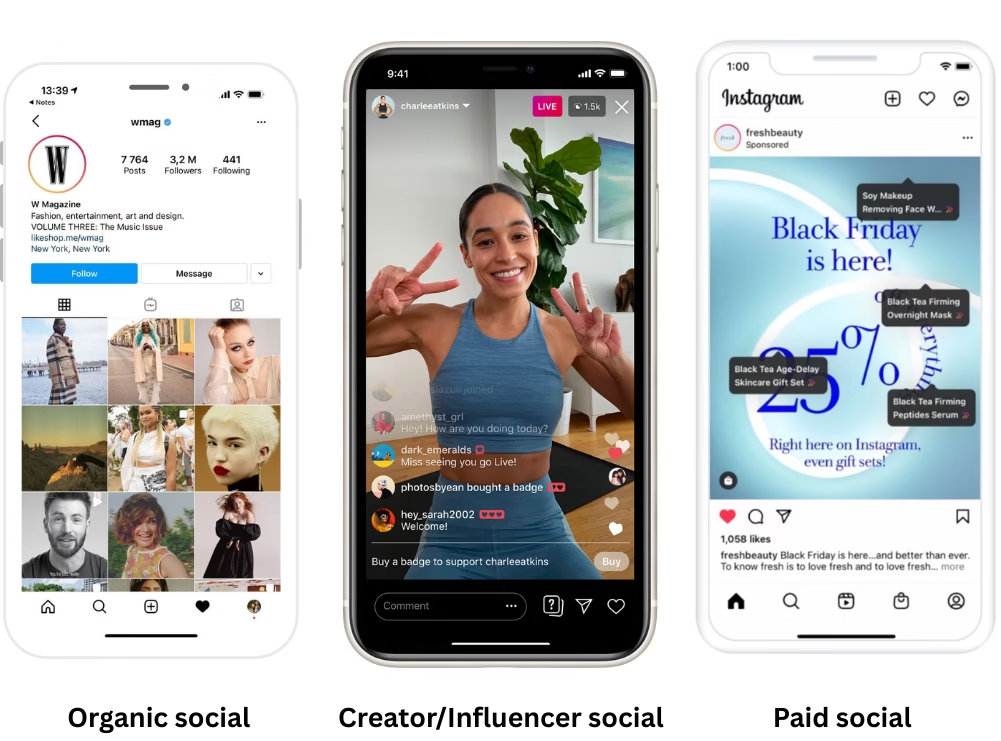
For organic social media, the single most important quality is to be interesting. Organic social succeeds by being genuinely interesting and culturally relevant. In organic social media, you also need to stay engaged.
Every piece of content cannot go viral, but the number of times you step up matters and engage with your audience matters. Schultz emphasizes that social platforms (like Facebook, Instagram, and TikTok) are built on connection.
Key points he highlights:
- Design content native to each platform and format ( For e.g. you should shoot videos vertically for phones , or on Instagram reels and Youtube shorts the videos should be short form not long speeches.)
- You need to create content that generates meaningful interaction and you need to move at the speed of culture.
- Engaging consistently and constantly by creating regular content and engaging with audience is key for organic social
The algorithms are designed to show people what they care about—usually their friends, family, and entertainment. Too many brands treat social organic like a billboard, broadcasting messages like “Buy our stuff! 20% Off!” and then wondering why their reach is zero.
To win at social organic, you have to stop acting like a business and start acting like a creator. You need to create content that generates meaningful social interaction.
3.1 Example
Duolingo has set an example with their fun way of commenting on user’s posts. When users complain about the owl (Duolingo’s logo) chasing them via phone notifications, it chases them on social media too, chiding them to do their lessons in a tongue- in – cheek way.

Schulz highlights content wise , you need to move at the speed of culture. As trends emerge, jump on them and engage with them.
If people aren’t sharing it or talking to each other about it, the algorithm won’t care about it. Organic isn’t “free marketing”; it’s a value exchange. If you don’t give the audience something they want to share, you haven’t earned the right to be in their feed.
4. Removing The Friction In The User Journey
“Mediocre marketing with great conversion flow is way better than brilliant marketing with a broken one”
I used to think that if people weren’t buying, it was because the ad wasn’t catchy enough. Schultz suggests looking closer to home: The Funnel.
- The funnel starts with awareness, where people first discover your brand through an ad, post, or recommendation.
- Then comes interest, where they click, visit your website, or explore your profile because something caught their attention.
- After that is consideration, where they evaluate whether your product is worth their money by comparing prices, reading reviews, or checking alternatives.
- Finally, there is conversion, where they actually complete the purchase. The key idea is that if people are not buying, the problem may not be the ad itself.
It could be that people are not clicking, not finding enough trust signals, getting confused on the website, or facing friction during checkout. The funnel helps you identify exactly where customers are dropping off so you can fix the real issue instead of simply trying to make the ad more catchy.
Conversion is the ‘action’ at the bottom of the marketing funnel that can be defined in several ways; most common are purchases, installs, registrations and leads. Conversion boils down to 2 main factors- 1- correct tracking of conversions both technically and logically 2- how to perform Conversion Rate Optimization (CRO)
Key highlights:
- Choose conversion events that truly reflect value (e.g., activated buyers or retained users), not shallow proxies like registrations.
- Map and log the entire journey (trigger → email/notification → open → click → landing → action) so you can see where users actually drop off.
- Remove steps ruthlessly—single‑page forms, prefilled data, inline actions inside ads—while testing that you’re not degrading quality or long‑term value.
CRO is the art of removing barriers. Schultz talks about the classic AIDA model (Awareness, Interest, Desire, Action).
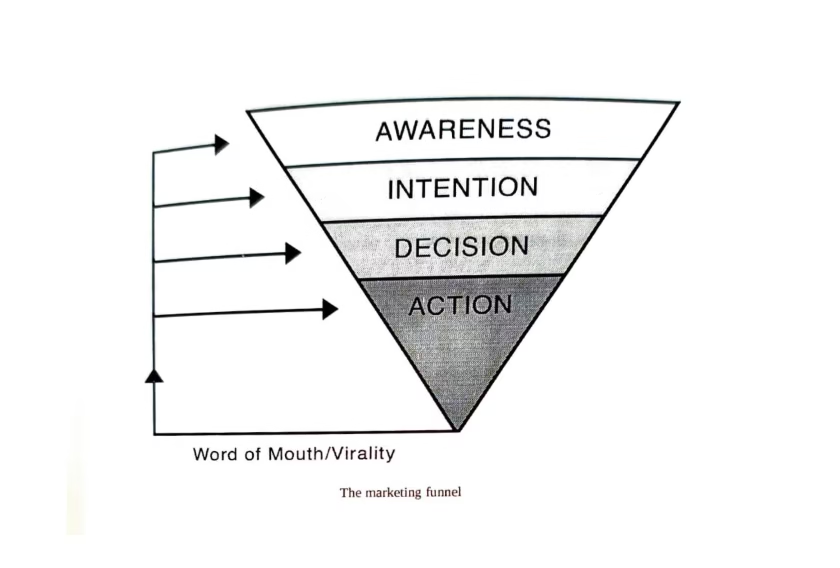
Marketing can get them to the “Interest” stage, but if your website is slow, your checkout is confusing, or you ask for too much information upfront, you lose them at “Action.” Friction is the enemy of growth.
Every extra click, every millisecond of load time, and every confusing form field costs you customers. Before launching a campaign, it is vital to walk through the user flow oneself. If you get annoyed trying to sign up, a customer definitely will.
4.1 Example
Schultz has given the example of removing unnecessary steps in the funnel by getting conversion action inside the creative itself. At Facebook, when they promoted contact importers , they put the authorization into the banner ad rather than having users click through to a landing page first. This gave a massive increase in conversion rate.
Similarly with Meta’s Click to Messaging Ads, the conversion action is to send a message that’s one click from the as to starting a message thread, an approach which is used often for commerce in South East Asia.

5. Experimentation Approach To Validate Strategies
Perfect execution shows whether a strategy works — and we judge it through experiments, common sense, and clear thinking.
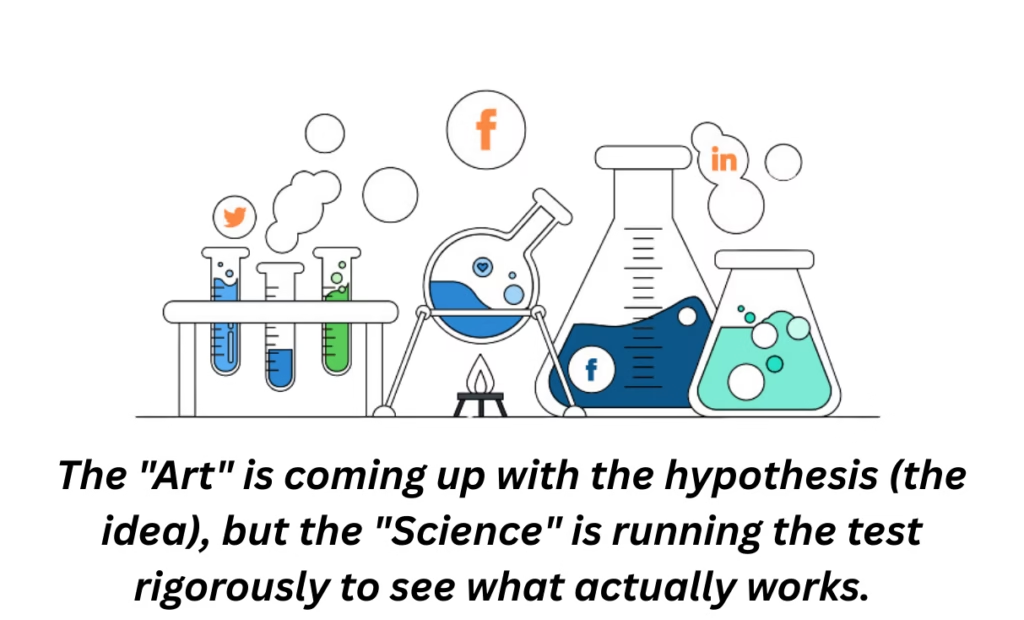
If there is one thing that separates the pros from the amateurs, it’s testing. Schultz emphasizes that nobody knows the answer—not even the CMO of Meta.
The only way to find the truth is to experiment.
Digital marketing allows us to test everything: Creative A vs. Creative B, Landing Page Red vs. Landing Page Blue.
Key highlights:
- Use the best feasible design for the question: user‑level A/B tests on owned surfaces and social; matched‑market or on/off tests for channels like TV and search.
- Treat experiments as a way to estimate incremental lift, then let models scale that insight across campaigns and periods (with periodic back‑tests).
- Celebrate well‑run tests that show no impact; they save future spend and force sharper thinking than “success‑only” stories.
Schultz writes about 3 practical ways of running experiments:
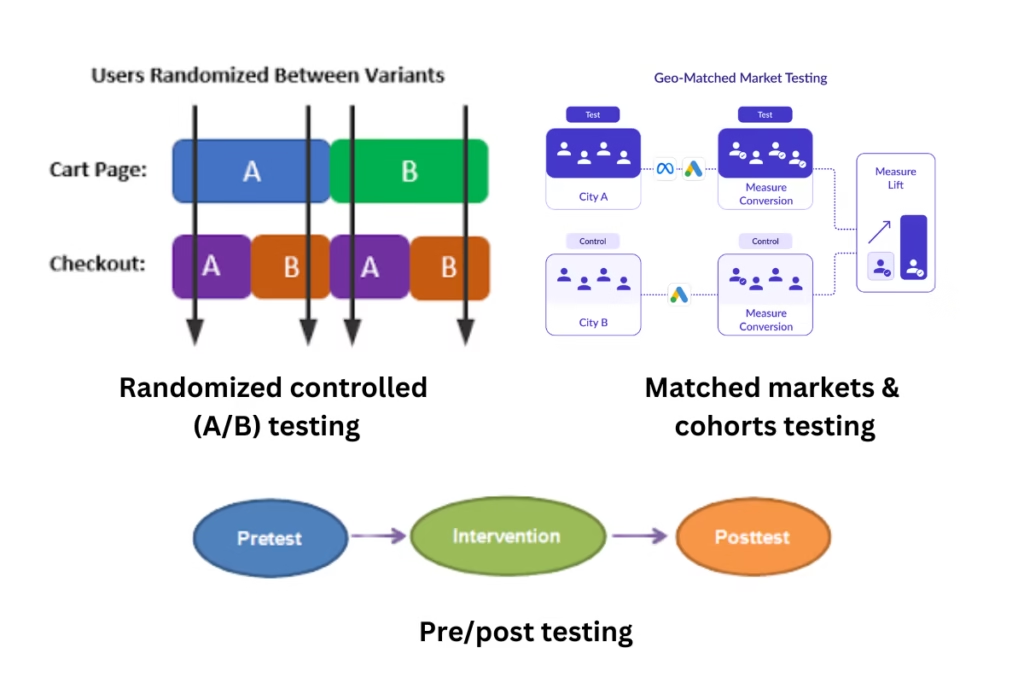
- Randomized controlled (A/B) testing
- Matched markets & cohorts testing
- Pre/post testing
Experimental infrastructure helps in measuring the incremental impact of marketing efforts.
5.1 Example
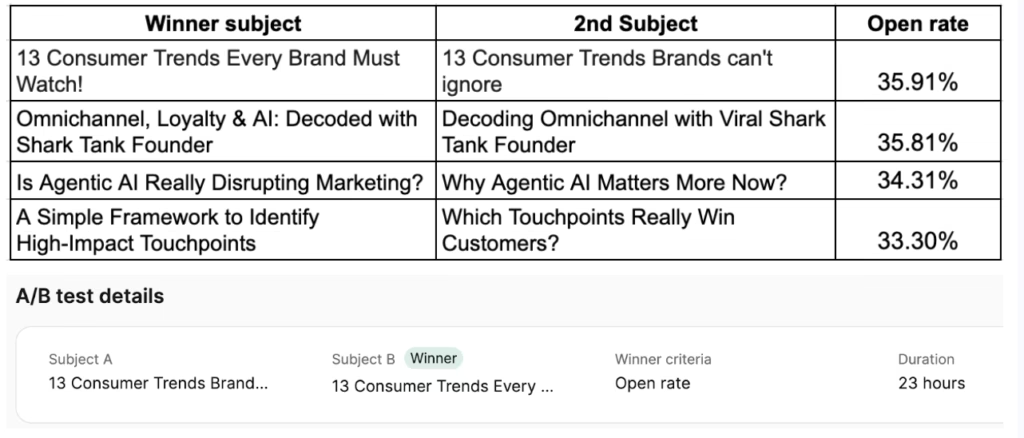
At DAiOM we conduct A/B test experiments with the subject line for our email newsletter. The option which leads to higher open rates is scaled up.
6. Measurement of Incremental impact
“This is imperative to understanding which methods, strategies and campaigns actually work and which don’t”
Schultz has spoken about 2 guiding principles throughout the book
- 1st is that tools evolve but principles are timeless
- 2nd principle is that incremental results are everything
He says that these remain relevant no matter the scale of the business.
Key highlights:
- Run experiments: Test what sales would happen even without your marketing.
- Challenge assumptions: Some channels you trust may add little real impact.
- Spend by true return: Move budget to channels that create the most real growth.
Schultz warns against taking credit for things that would have happened anyway.
Imagine you send an email to a loyal customer who buys from you every week, and they buy something.
Did the email cause the sale?
Or were they going to buy anyway?
Most tracking tools will say, “Look! The email generated revenue!”
But if that person was going to spend that money regardless, the incremental value of that email was zero.
True measurement isn’t just attribution (“Who touched the customer last?”); it’s incrementality (“Did this marketing activity actually change their behavior?”).
We need to look for lift—the difference between the group that saw the ad and the group that didn’t—to understand the real impact of our work.
6.1 Example
Schultz cites Professor Steve Tadelis’s work at eBay, where the team tested turning off paid search ads on the keyword “eBay” and found that most of the people who previously clicked those ads would have come and bought on eBay anyway.
By running proper holdout experiments instead of just looking at last‑click data, they proved that a big chunk of that spend was not generating incremental results and could be cut without hurting sales, which is exactly his point that only incrementality-focused measurement tells you whether your marketing is truly doing anything extra beyond what would have happened anyway.
7. Prioritise Retention Before Chasing More Acquisition
“Churn and resurrection are twice as big as acquisition.”
Schultz implies that the biggest mistake beginners make is focusing entirely on getting new people through the door, comparing this to pouring water into a leaky bucket.
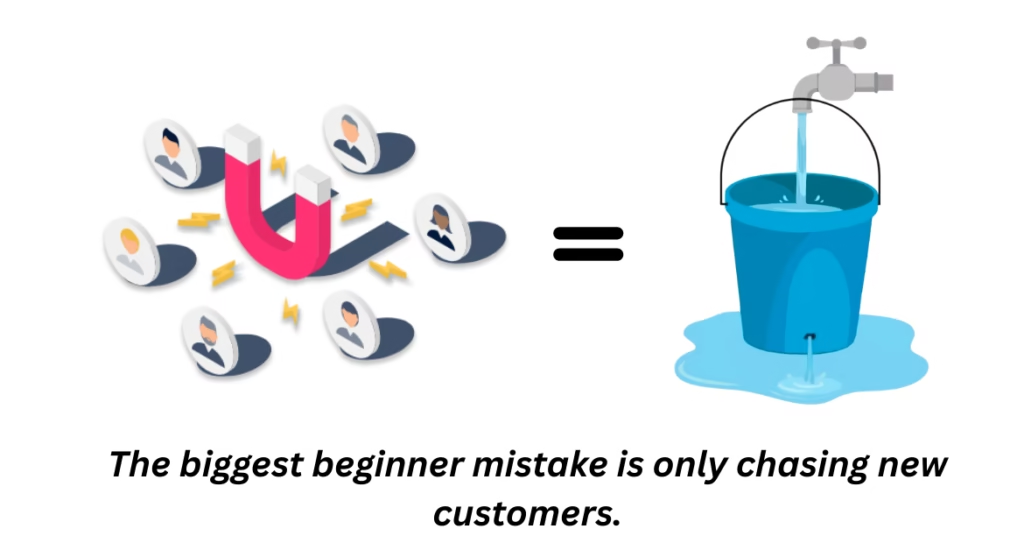
If you spend thousands on ads to get users, but they leave after a week, you haven’t grown; you’ve just burned money.
Key highlights:
- Net growth usually depends more on keeping and resurrecting users than on adding new ones.
- Invest heavily in early‑life and lifecycle experiences (onboarding, habit loops, lifecycle messaging) that flatten the retention curve before scaling acquisition.
- Design product‑led and CRM programs specifically for resurrection—re‑engaging lapsed but high‑value users often beats finding cold new ones.
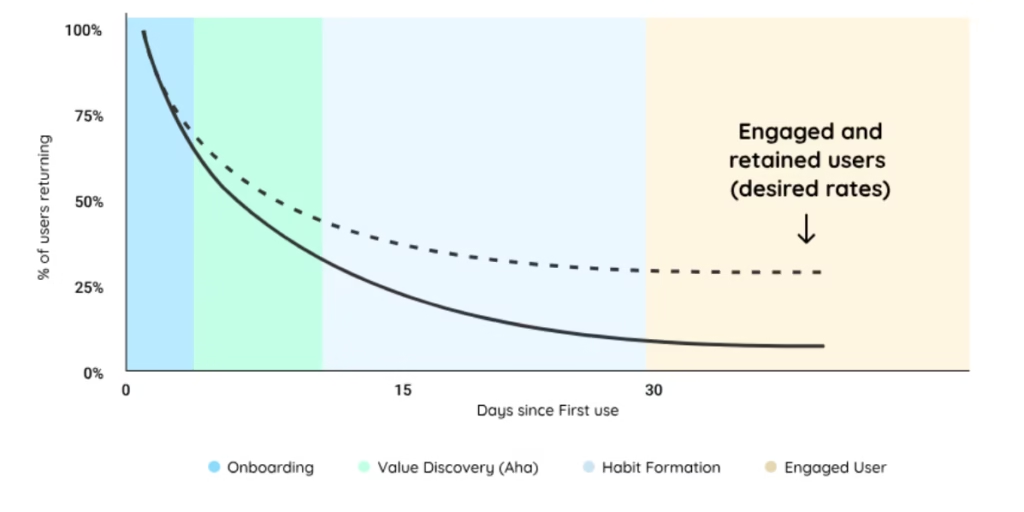
Before turning on the marketing firehose, you must ensure people stick around. Schultz explains that the “Magic Moment”—that instant a user realizes why your product is great—is the key to closing the leak.
If you can get a user to that moment quickly, they become a long-term customer. Growth isn’t just about the “Invite” button or a flashy ad campaign; it’s about giving people a reason to stay.
It’s important to look closely at retention curves—specifically how many people are still active after 30 days—before suggesting we spend more budget on aggressive top-of-funnel marketing.
Using growth accounting
(+Acquisitions−Churn+Resurrections=Net Growth)
(+Acquisitions−Churn+Resurrections=Net Growth), Schultz shows that at Facebook both churn and resurrections were roughly twice the size of new sign‑ups. That meant a 1% improvement in churn or resurrecting inactive users was more powerful than a 1% bump in new registrations.
Product‑led channels (email, push, in‑app prompts) and organic social are most valuable when they’re designed to keep or resurrect high‑value users.
7.1 Example
A powerful example of prioritising retention comes from Netflix.
In its early growth years, Netflix realised that acquiring new subscribers through ads was expensive. If users signed up, watched for a month, and then cancelled, the company was simply paying to refill a leaking bucket.
Instead of only increasing acquisition spend, Netflix focused heavily on retention mechanics:

- Improving personalized recommendations so users quickly found content they loved (the “magic moment”).
- Investing in binge-worthy original content to build habit loops.
- Sending lifecycle emails like “Don’t miss out” to engage users.
Their recommendation engine alone has been widely credited with reducing churn by continuously surfacing relevant content, keeping users active month after month.
The logic was simple: If users stay longer, lifetime value increases. If lifetime value increases, acquisition becomes more efficient.
This perfectly reflects Schultz’s equation: Net Growth = Acquisitions − Churn + Resurrections
Sometimes improving churn by 1% creates more real growth than increasing new sign-ups by 1%.
8. Who should Read “Click Here”?
This book is written in a very accessible way, plain language, clear structure, lots of concrete stories, so it works well for people who are newer to digital marketing and want to understand not just “how to run ads” but how channels, funnels, and measurement fit together into one growth system.

It’s especially useful for founders, early‑stage marketers, and generalists. At the same time, it has a lot to offer experienced practitioners: Schultz goes deep on topics like growth accounting, incrementality vs attribution, marginal vs average ROI, and how to structure teams and experiments at scale.
9. Final Thoughts
Digital marketing has, in many ways, democratized growth. The same channels, auction systems, and measurement tools that once belonged only to global giants are now available to a boutique label, a local clinic, or a D2C startup.
The idea that a sharp growth system can give a small brand leverage comparable to a much larger one is genuinely liberating—especially in markets where capital and distribution have historically been uneven.
At the same time, the landscape is undeniably noisy: new channels, formats, privacy rules, AI tools, It can feel like chaos. Click Here is valuable because Schultz doesn’t try to simplify that chaos away; he organises it. By focusing on a North Star, validating with Retention, measuring what matters and is measurable, and constantly experimenting, the path becomes much clearer.
If you’d like to discuss how we can assist with navigation and optimize your ecommerce conversion strategies, we’re happy to set up a consultation call. Feel free to reach out to us at alibha@daiom.in
For more insights and updates on the latest trends, follow DAiOM!
Subscribe to our Newsletter!